


 한국어
한국어

We’ve all seen the social media videos of people dropping pH reagent liquid into glasses of water, watching them turn a vibrant, majestic purple. The implication is always the same: if your water isn’t alkaline, you are practically drinking poison. But let’s step back from the marketing theater for a second and look at what is actually happening in your glass.
Executive Summary
- Alkaline pitchers and basic mineral cartridges do not purify water; they merely add minerals to whatever contaminants, like heavy metals or PFAS, are already present in your tap.
- The most effective and scientifically sound approach is a dual-stage process: stripping water down to its purest form via reverse osmosis, then rebuilding it to a stable pH range of 8.5 to 9.5 using premium natural minerals.
- Drinking water with an artificially high pH that lacks actual mineral dissolved solids offers no real hydration benefits, as your body easily neutralizes unbuffered alkaline water.
Most of the stuff you buy at the grocery store labeled “alkaline water” is just municipal tap water that has been run through an ionizer or spiked with some baking soda. It is a multi-billion dollar industry built on a very simple, very seductive premise: that changing the pH of your water can magically change the pH of your body. Spoiler alert: it can’t. Your stomach acid, which sits at a highly acidic pH of 1.5 to 3.5, instantly neutralizes any unbuffered alkaline water the moment it hits your gut.
So, does that mean the whole concept is a scam? Not exactly, but the industry has been telling the story entirely backward.
The Great pH Illusion: Alkaline vs. Alkalinity
Here is where most people get tripped up. There is a massive, crucial difference between water that has a high pH and water that has alkalinity. They sound like the exact same thing, but confusing them is why so many cheap filter pitchers on the market are essentially useless.
Let’s break this down. pH is a simple measurement of hydrogen ion concentration. It tells you how acidic or basic a liquid is on a scale of 0 to 14. You can take a glass of distilled water, throw in a tiny pinch of industrial sodium hydroxide, and the pH will instantly shoot up to 10. But that water has zero “alkalinity.” Alkalinity is the water’s capacity to resist changes in pH—its buffering capacity. It is measured by the presence of dissolved alkaline minerals like calcium, magnesium, and potassium carbonates.
If you drink high-pH water with no buffering capacity, your stomach acid destroys it instantly without your body absorbing any beneficial minerals. It is empty alkaline water.
Many cheap countertop filters use simple ceramic balls or mineral beads that quickly leach active sodium or potassium ions into the water. Sure, if you dip a pH test strip into it, you will see a pretty blue or purple color indicating a pH of 9.0 or higher. But after a week or two of use, those cheap media balls degrade, the pH drops back to neutral, and you are left drinking basic tap water again. Worse yet, these basic filters do absolutely nothing to remove the heavy metals, pharmaceutical residues, or microplastics that are increasingly common in municipal water systems across the United States.
You cannot build a healthy house on a rotten foundation. Trying to make water “healthy” by adding minerals to unpurified tap water is like spraying air freshener in a room full of garbage. Sure, it might smell different for a minute, but the underlying problem is still very much there.
What Is Actually Lurking in Your Tap Water?
Before we even talk about raising the pH, we have to look at what we are starting with. The EPA sets Maximum Contaminant Levels (MCLs) for municipal water, but many public health advocates argue these standards are decades out of date. For instance, chromium-6, the infamous “Erin Brockovich” chemical, is still unregulated at the federal level, despite being a known carcinogen. ONEMI water systems are designed with this exact gap in mind, focusing on removing the invisible threats that standard carbon filters leave behind.
Let’s look at how typical tap water compares to what actually comes out of different filtration setups. The numbers tell a pretty stark story.
| Water Source / Filter Type | Typical pH Range | TDS (Total Dissolved Solids) | Contaminant Removal Rate | Mineral Profile |
|---|---|---|---|---|
| Standard US Tap Water | 6.5 – 8.5 | 150 – 400 ppm | 0% (Baseline) | Uncontrolled (often high chlorine/fluoride) |
| Basic Alkaline Pitcher | 8.5 – 9.5 (drops fast) | Increases by 20-50 ppm | 10% – 20% (basic carbon only) | Temporary sodium/calcium leaching |
| Standard Reverse Osmosis (RO) | 5.5 – 6.5 (Acidic!) | 5 – 20 ppm | 95% – 99% | Stripped bare (no minerals) |
| RO + Active Remineralization | 8.5 – 9.5 (Stable) | 40 – 90 ppm | 95% – 99% | Balanced Calcium, Magnesium, Potassium |
Look at that third row. Standard reverse osmosis is incredibly good at cleaning water. It strips out almost everything—lead, arsenic, nitrates, PFAS, you name it. But it does its job almost too well. It strips out the good stuff along with the bad, leaving you with water that is highly pure but chemically unstable and slightly acidic.
When water is stripped of all its ions, it wants to balance itself out. It becomes “hungry” water. If you leave pure RO water sitting in a glass, it will actually pull carbon dioxide out of the air, forming carbonic acid and dropping the pH even further. If you drink it constantly, it can leach tiny amounts of minerals from your teeth and bones to balance its own chemistry. This is the great irony of the water world: the cleanest water isn’t necessarily the healthiest water to drink long-term.
The Real Science of Remineralization: How to Do It Right
So how do we fix this? We don’t want to drink contaminated tap water, and we don’t want to drink acidic, mineral-stripped RO water. The solution is a two-step dance: purify completely, then rebuild intelligently.
This is where the magic of natural remineralization comes in. Instead of using cheap chemical additives or electricity to force a high pH, high-quality systems route the purified RO water through a cartridge filled with crushed, food-grade natural minerals. We are talking about calcium carbonate, magnesium oxide, and potassium silicate. As the water flows over these minerals, it naturally dissolves just enough of them to mimic the process that happens when rainwater trickles down through mountain rocks into natural springs.
This does three things simultaneously:
- It raises the pH to a stable, buffered range of 8.5 to 9.5.
- It adds back the essential electrolytes your body needs for proper cellular hydration.
- It improves the taste, giving the water a smooth, slightly sweet, and rounded mouthfeel.
Let’s talk about a practical gotcha that most filter companies won’t tell you: contact time matters. If you run water through a mineral cartridge at lightning speed, the water doesn’t have time to actually dissolve the minerals. You get almost no benefit. A truly effective system requires a balanced flow rate, ensuring the water spends enough time in contact with the mineral media to achieve a stable equilibrium. If your kitchen faucet fills a gallon pitcher in ten seconds, your remineralization filter is mostly just for show.
I remember visiting a home in a historic neighborhood in Savannah, Georgia, where the municipal water was heavily treated with chloramines to combat old, organic-rich source water. The homeowner had installed a cheap, standalone alkaline filter under their sink. The water tasted metallic, smelled faintly like a swimming pool, but tested at a “perfect” 9.5 pH on their liquid drop kit. They thought they were drinking the elixir of life, but they were actually drinking a cocktail of disinfectant byproducts spiked with calcium dust. Once we ran that water through a multi-stage RO process first, the difference wasn’t just something you could see on a test strip—you could taste the clean, crisp purity instantly.
What to Look For When Shopping for a System
If you are tired of buying heavy plastic bottles of alkaline water from the store and want to set up an honest, high-performing system at home, you need to look past the marketing buzzwords. Don’t buy a system just because it has “alkaline” plastered all over the box in a flashy font.
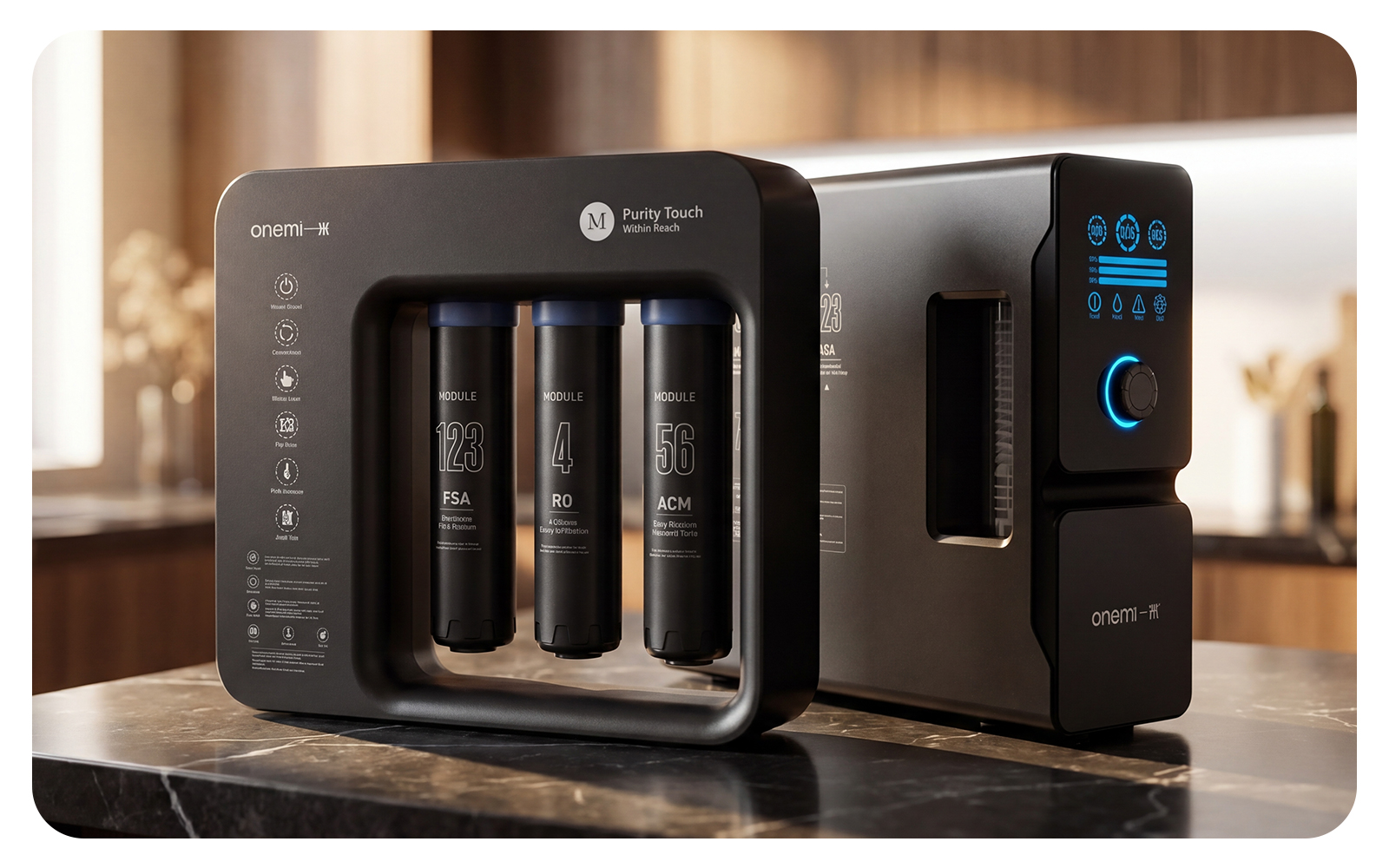
First, make sure the core of the system is a genuine reverse osmosis membrane. If it doesn’t have an RO membrane, it isn’t removing dissolved solids like heavy metals, fluoride, or nitrates. A simple carbon block filter cannot do this, no matter how many stages the manufacturer claims it has. ONEMI filtration systems, for example, pair high-rejection RO membranes with dedicated mineral correction stages to ensure you get both purity and physiological benefit.
Second, check the source of the minerals. You want natural, earth-derived minerals, not synthetic chemical additives. Look for systems that specify the use of calcite (calcium carbonate) and corosex (magnesium oxide) or similar high-purity natural media. This ensures that the alkalinity you are getting is buffered and stable, not a temporary chemical spike that will vanish the moment the water hits your stomach acid.
Third, pay attention to the waste water ratio. Traditional RO systems used to waste four to five gallons of water for every single gallon of pure water produced. Modern, high-efficiency systems have brought this ratio down significantly, sometimes to 1:1 or even better. This isn’t just good for your water bill; it is a sign of a well-engineered system that won’t degrade your mineral cartridges prematurely due to poor system pressure or flow dynamics.
At the end of the day, clean water shouldn’t be a mystery wrapped in marketing jargon. You don’t need miracle promises or pseudo-scientific claims about “micro-clustered” water or “hexagonal” molecules. You just need pure, contaminant-free water that has been gently returned to its natural, mineral-rich state. That is how nature intended us to drink it, and that is exactly what real, high-quality filtration technology delivers.