

 한국어
한국어

Executive Summary
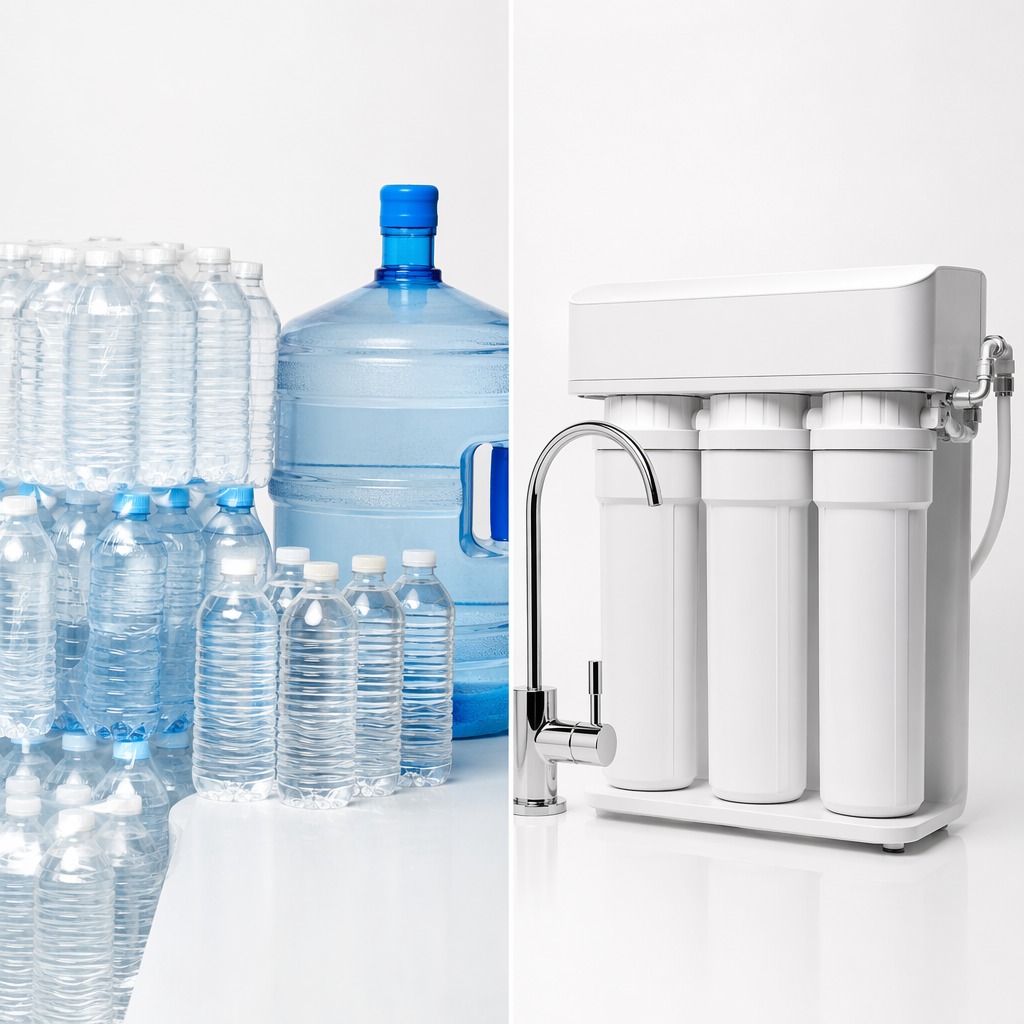
- RO-filtered water costs $0.04 per liter versus $0.95 for bottled — a 23x gap. A family of four saves roughly $1,150 per year after the hardware pays for itself in under three years.
- EU single-use plastics regulation, WHO microplastic contamination findings (93% of bottled samples), and corporate ESG mandates are accelerating the shift from bottled water delivery to point-of-use filtration across import markets.
- Four conversion paths exist for distributors: countertop RO for renters, under-sink for homeowners, gravity-fed UF for off-grid markets, and point-of-entry for commercial accounts — each with distinct margin structures and recurring filter revenue.
What a $0.95-Per-Liter Habit Does to Your Customers’ Books
An 18.9-liter bottled water jug runs about $18 in most markets. That works out to $0.95 per liter. Your retail customers pay it every week without thinking about the math.RO-filtered water costs $0.04 per liter.Not a typo. The gap is 23x.A family of four drops roughly $1,200 a year on bottled water delivery. Swap in an under-sink RO system, and the annual water cost collapses to about $50 in filter replacements. The hardware pays for itself inside three years. After that, it’s pure savings — roughly $1,150 a year staying in the household budget instead of riding away in a delivery truck.Commercial accounts tell an even sharper story. A 100-person office switching from jug delivery to a direct-feed RO filtration system saves $13,000 to $15,000 over five years. Restaurants and hotels see 40-60% shaved off water procurement costs in that same window. These aren’t projections built on optimistic assumptions — they come from removing the truck, the driver, the plastic, and the distributor markup from the equation entirely.The math doesn’t care about loyalty. It just compounds.
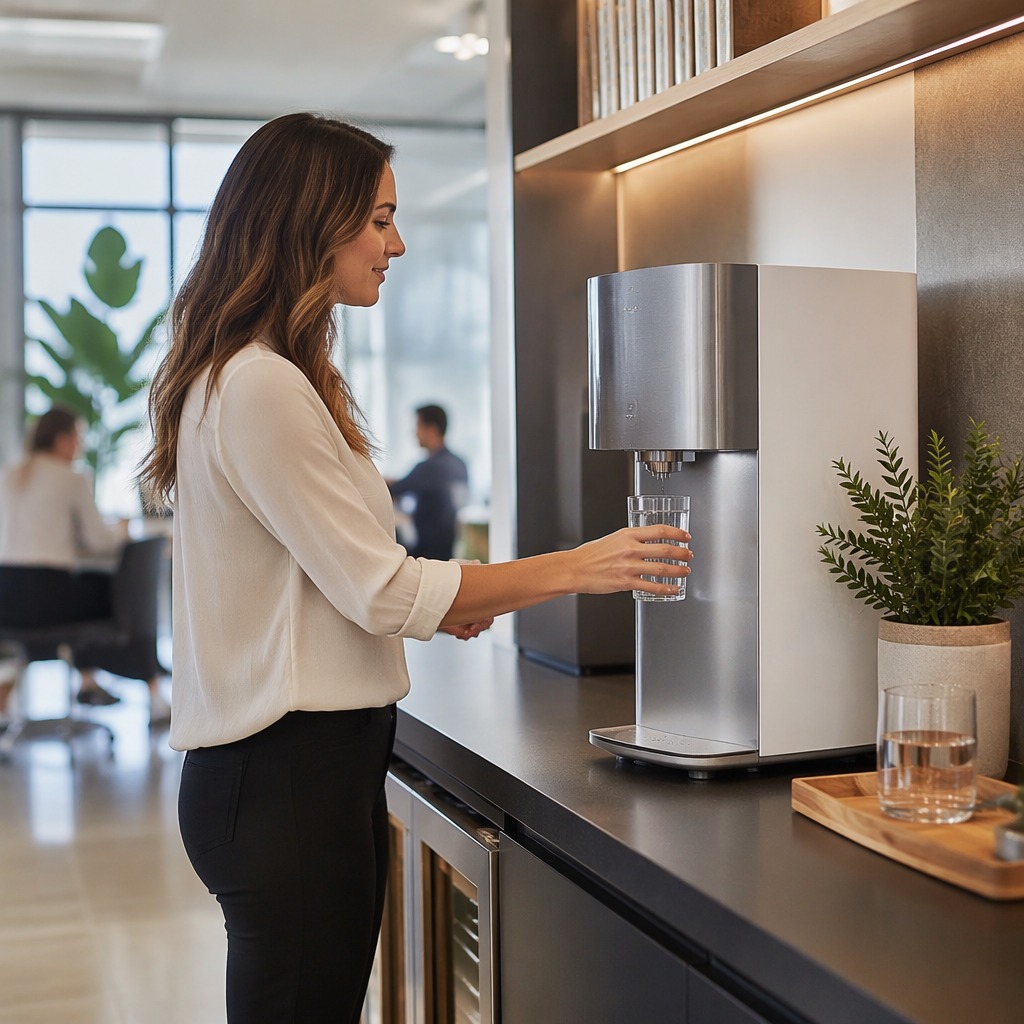
Three Trends Killing Bottled Water Demand in Your Markets
Plastic is becoming a procurement liability. The EU’s Single-Use Plastics Directive set reduction targets that took effect in 2024. Similar legislation is moving through Southeast Asia and Latin America. Importers still pushing bottled water into these regions are swimming against regulatory current — and their distributors know it.Health data isn’t doing bottled water any favors either. A 2024 WHO report flagged microplastic contamination in 93% of tested bottled water samples, with concentrations averaging 325 particles per liter. That number sits uncomfortably next to the product’s premium price tag. Consumers can do the arithmetic: water that sat in plastic for weeks in a hot warehouse isn’t pristine by the time someone twists the cap.Then there’s the manufacturing reality nobody puts on the label. Producing one liter of bottled water consumes three liters of water during manufacturing. Each bottle takes centuries to degrade. For corporate buyers under ESG mandates, that supply chain is increasingly un-defendable in procurement meetings.The conversion opportunity here is straightforward: every bottled water account your distributors serve is a pre-qualified filtration lead. They already pay for water every month. They already understand water quality matters. You’re not selling them a new category — you’re selling them a cheaper, cleaner delivery mechanism for a product they already budget for.
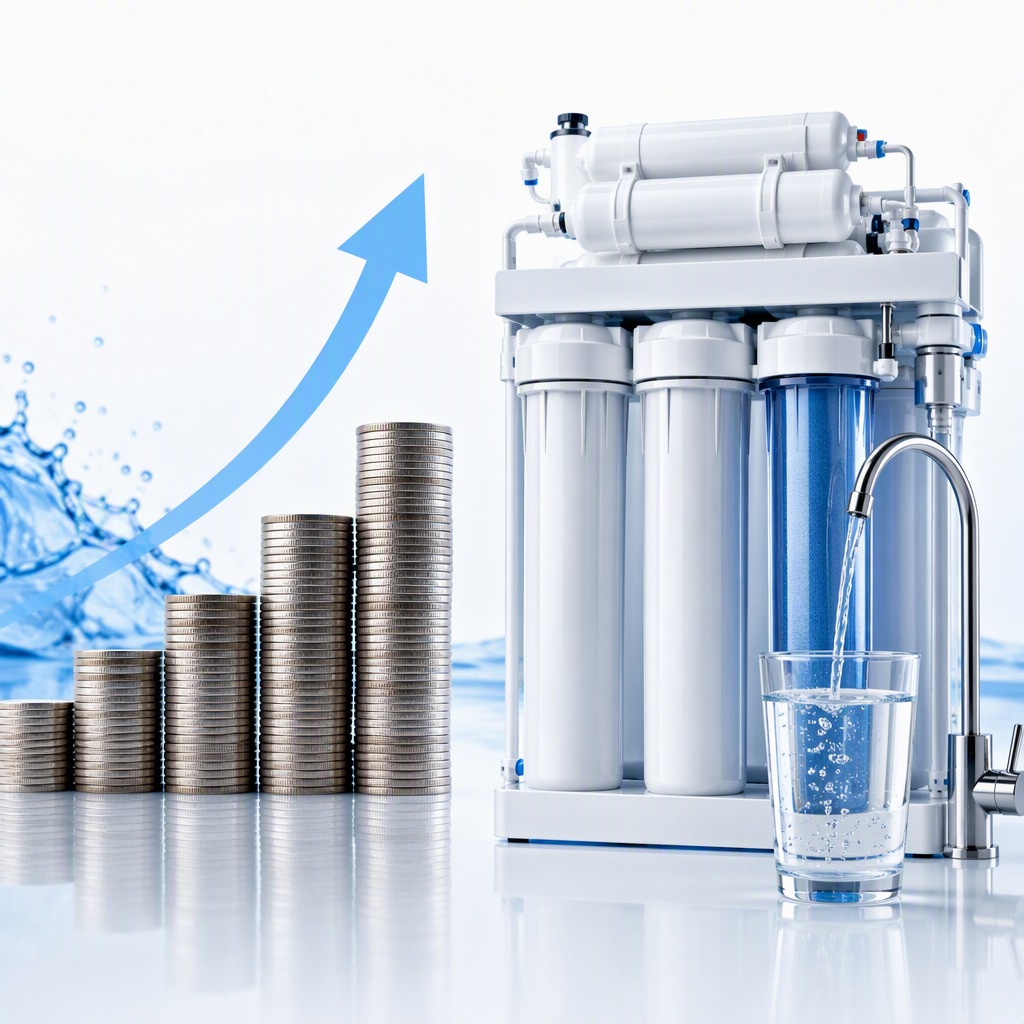
Which Product Categories Win When Bottled Water Loses
Not every bottled water user converts to the same system. The form factor depends on how they live and work. Getting the match right determines whether that conversion sticks or the customer drifts back to delivery.Renters and apartment dwellers gravitate toward countertop units. No plumbing changes, no landlord permission — unpack it, plug it in, done. A countertop RO dispenser with quick-connect fittings moves fast in urban retail channels because it solves the biggest objection upfront: “I can’t modify the kitchen.”Homeowners with utility space under the sink go the opposite direction. They want the system invisible. A 5-stage under-sink RO gives them bottle-quality water from the cold-water tap without a machine occupying counter space. For distributors, this segment drives the bulk of recurring filter cartridge revenue — five stages mean five replacement cycles to manage per household per year.Budget-sensitive households in markets with unreliable electricity often start with gravity-fed ultrafiltration. Zero power, zero installation labor. A two-tank UF setup handles 6-8 liters per hour without drawing a single watt. The entry price is low enough that payback arrives in weeks, not months. For importers serving regions where the grid goes down daily, this category deserves shelf space.For commercial buyers — hotels, office towers, restaurant groups — the economics favor going big. A point-of-entry RO or UF system feeding the building’s entire water line eliminates bottled water across every tap, ice machine, and coffee station simultaneously. The upfront capital is higher, but per-liter cost at commercial scale makes bottled water look like financial malpractice.The common thread across all four segments: the customer already buys water. You’re not creating demand. You’re redirecting it.
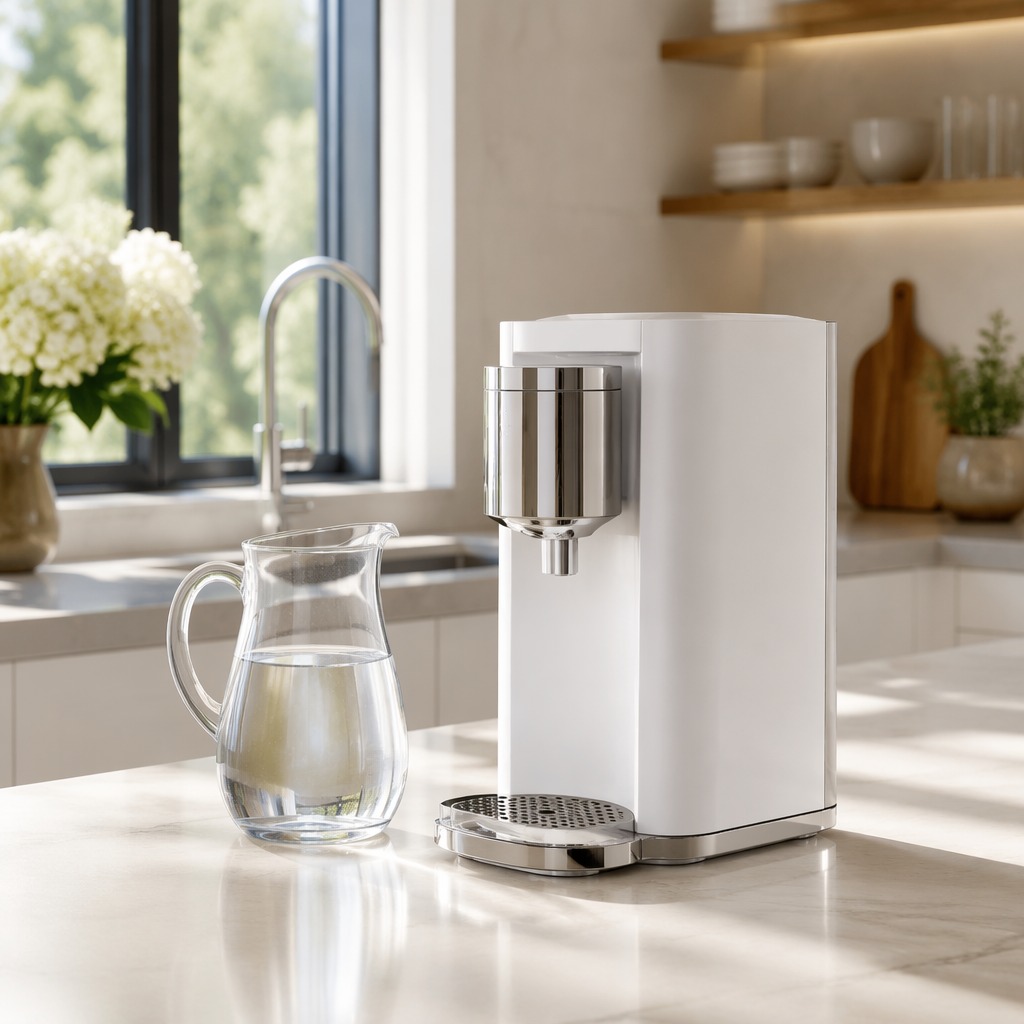
Picking an OEM Partner That Won’t Torch Your Margins
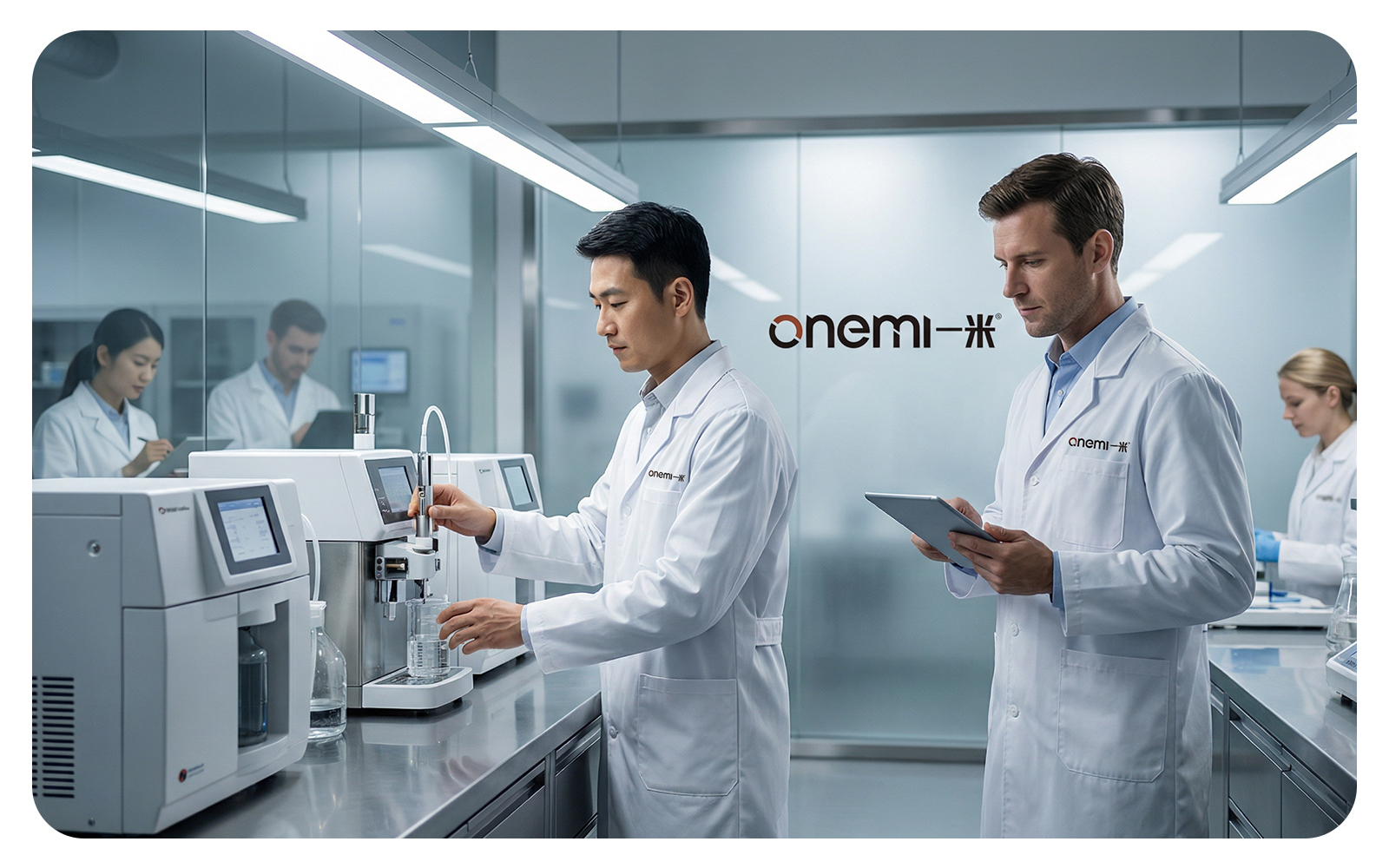
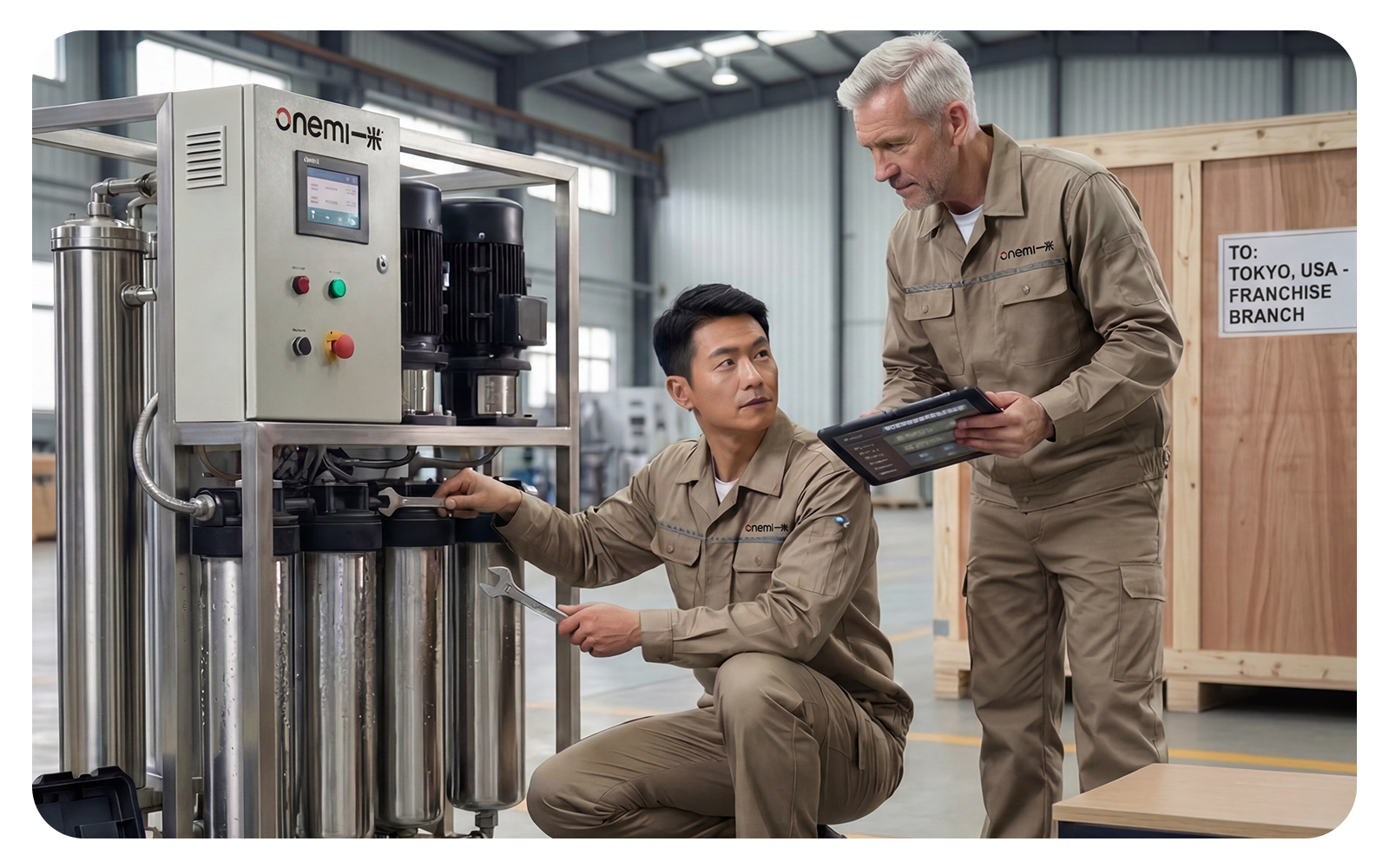
Your supply chain is the only thing separating a smooth import operation from a warehouse full of returns. When you’re sourcing filtration systems to capture bottled-water-to-RO conversions, consistency beats the lowest unit price every time.Start with in-house testing capability. A manufacturer running its own NSF/ANSI 53 and 58 compliance checks catches problems before they leave the factory floor — problems you won’t see until your customer calls six weeks later with a leak under their sink. Contract manufacturing terms should bend toward your market needs: different filter stage counts, housing materials, packaging formats, all without renegotiating the base agreement.Markets with unstable power grids require a different kind of manufacturing expertise. Gravity-fed UF and line-pressure RO units aren’t stripped-down versions of electric systems. They’re engineered differently — flow rates depend on head pressure and membrane surface area in ways an electric-RO factory’s standard design won’t account for. If your target region loses power daily, find a factory that builds no-electricity systems as a core competency, not an afterthought.ONEMI, a Guangdong-based water purification equipment manufacturer, runs certified production lines with in-house lab testing. The full OEM/ODM cycle — housing tooling, filter cartridge matching, finished product QC — happens under one roof. For importers, that consolidates the supply chain into a single point of accountability. Structural leaks, premature membrane degradation, certification gaps — these stop being your problem when the factory catches them before the container ships.
Converting Bottled Water Buyers: Three Points That Actually Close Deals
Sales teams overcomplicate this pitch. Bottled water buyers convert on three things. Everything else is noise.Show them the 36-month math. An RO system breaks even in under three years for a household, under 18 months for a commercial account. Print the TCO comparison on one sheet of paper. Hand it over. The numbers do the work — your rep just has to stay quiet long enough for the math to land.Make them feel the weight. An 18.9-liter jug weighs roughly 20 kg. Someone on their staff lifts that, carries it across the room, and flips it onto a dispenser — hundreds of times a year. Multiply by 50 jugs a month for a mid-size office. Now tell them the alternative is turning on a tap. The labor argument closes faster than the cost argument because it’s visceral.Quote the EPA contaminant candidate list. Multi-stage RO removes heavy metals, PFAS, microplastics, and disinfection byproducts. Bottled water regulations don’t require testing for half of these contaminants. As the EPA’s CCL keeps growing, RO handles whatever gets added next. Bottled water standards stay frozen until regulators revisit them — which can take a decade.That’s the playbook. Cost, convenience, contaminant removal. Bottled water accounts don’t need to be convinced water is important. They just need to see that the way they’re buying it stopped making sense years ago.