
 한국어

- Global replacement water filter cartridges were worth roughly $3.92 billion in 2024 and are forecast to reach $6.45 billion by 2034, per Verified Market Reports.
- Aftermarket cartridges typically sell for $15-35, against $40-70 for OEM filters — a 30-60% gap that is quietly shifting replacement revenue away from appliance brands.
- The certification gap is the real moat: NSF/ANSI 42, 53 and 401 plus WQA Gold Seal separate documented performance from cheap lookalikes, and that is where importers and OEMs should compete.
The replacement market is bigger than the hardware market
Most of the money in water filtration is not in the machine. It is in the cartridge that gets swapped out every six months for the life of the appliance. A point-of-use system is sold once; its filters are sold for years afterward.
That is why the numbers lean the way they do. Verified Market Reports put the global replacement water filters and cartridges market at about $3.92 billion in 2024, with a forecast to reach $6.45 billion by 2034 at a 6.2% CAGR. For context, Fortune Business Insights pegged the entire US water purifier market at $6.75 billion in 2024 — and industry estimates attribute roughly 42% of that to replacement and upgrade demand. The aftermarket is not a side business. It is the durable, recurring half of the category.
For an importer or a private-label brand, the implication is blunt: if you sell the machine but lose the cartridge, you have sold the one-time ticket and handed the annuity to someone else.
OEM versus aftermarket: where the money actually goes
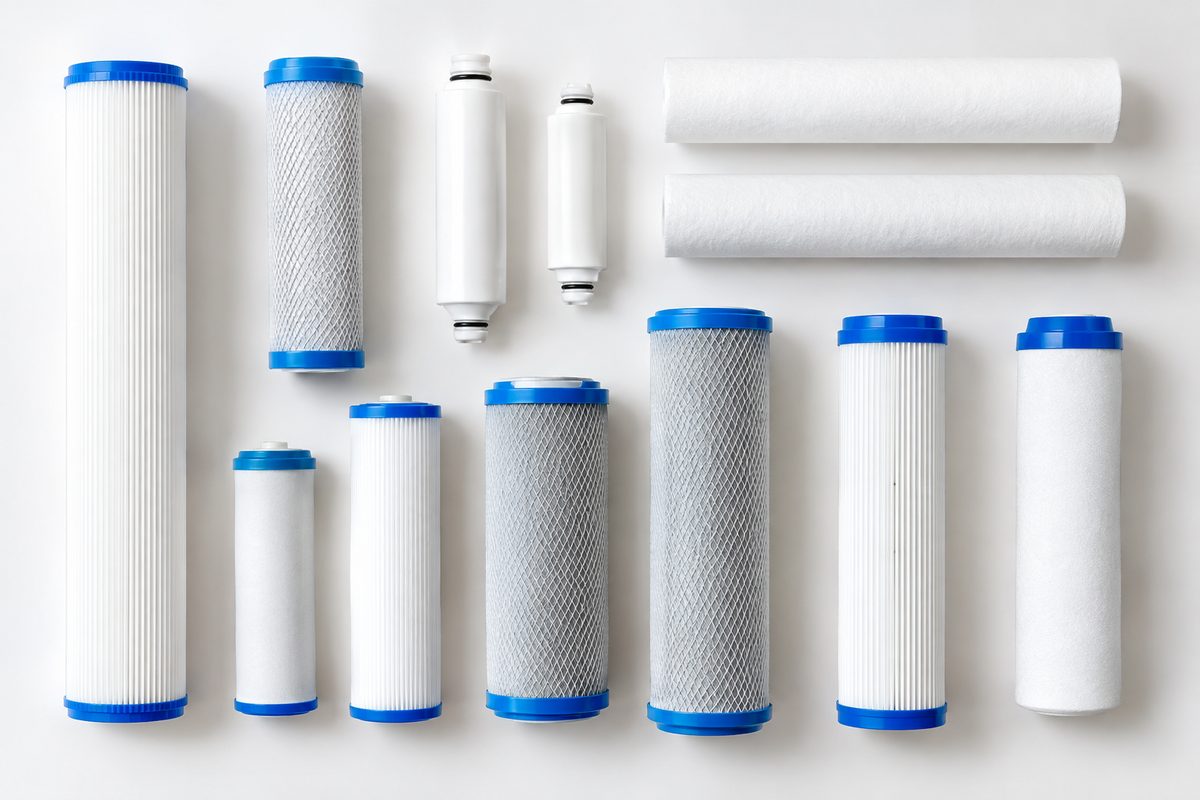
OEM filters are made by, or under license from, the appliance manufacturer and are engineered to exact flow-rate, micron and housing specifications. Aftermarket filters are third-party cartridges built to fit those same models, usually at a steep discount.
The price spread is the whole story. OEM refrigerator and under-sink filters for major brands run $40-70 per piece. Aftermarket equivalents sell for $15-35 — a 30-60% cut. That gap is what pushes budget-conscious homeowners and landlords toward compatible cartridges, and it is why replacement brands have grown so fast. In the US, a single replacement-filter specialist now holds over 70% share of the compatible cartridge market by some estimates.
But cheap is not the same as equivalent. Two cartridges can share near-identical dimensions while using different seal positions, flow directions, media, or micron ratings. A physically compatible filter that does not match the system’s operating pressure, flow rate or contaminant-reduction claims can leak, starve the system, or simply fail to filter what it claims.
| Factor | OEM filter | Aftermarket filter |
|---|---|---|
| Average cost | $40-70 | $15-35 |
| Certification | Standard for the model | Varies widely by maker |
| Fit guarantee | Exact | Usually compatible, not guaranteed |
| Contaminant reduction | Verified to spec | Documented only in certified products |
| Filter life | Rated, typically 6 months | Claimed 6 months, often shorter |
The certification gap is the real differentiator
Where aftermarket products fail, they usually fail on documentation, not on plastic. A 2019 independent study tested ten aftermarket refrigerator filters and found three of the ten failed to meet their claimed chlorine-reduction rates after just two months of use, with some showing higher-than-expected lead and cyst bypass. That is the risk hidden inside a lower sticker price.
This is why certification matters more than any marketing claim. NSF/ANSI 42 covers aesthetic reduction — chlorine, taste and odor. NSF/ANSI 53 covers health-related contaminants like lead, cysts and VOCs. NSF/ANSI 401 covers emerging contaminants such as pharmaceuticals and herbicides. WQA Gold Seal is an additional independent trust marker. A cartridge that carries these can document its performance; one that does not is asking the buyer to take the seller’s word for it.
For an OEM or importer, certification is not a cost center. It is the barrier that separates a defensible aftermarket product from a price-war commodity, and it is what lets a brand charge closer to OEM money instead of racing to the bottom.
What the aftermarket squeeze means for OEMs and importers
For appliance brands, the aftermarket is a threat to the razor-and-blades model. For independent manufacturers, it is the opening. The same dynamics that let third-party cartridges win share also let a well-engineered, certified supplier win that share on behalf of a private-label brand.
The winning position is not the cheapest cartridge. It is the cartridge that fits exactly, meets the system’s pressure and flow specs, and carries certification the buyer can verify. Sellers who can document an exact model match and the relevant operating specifications win repeat orders; sellers who cannot are stuck competing on price alone.
Recurring revenue is the second lever. A replacement cartridge is a subscription in disguise. Buyers who commit to a documented, certified replacement schedule deliver predictable repeat volume, which is why subscription and auto-reorder models have become the fastest-growing channel in residential filtration.
Sourcing cartridges that can actually win the aftermarket
If you are importing cartridges or building a private-label line, verify the specification before the price. The go/no-go list is concrete: the system model number or original part code, the replacement’s dimensions, the cartridge and housing format, the locking mechanism and O-ring seats, operating pressure and temperature limits, rated flow and pressure drop, filter media and micron rating, and the model-specific certification and contaminant-reduction claims. Physical fit alone does not guarantee functional compatibility.
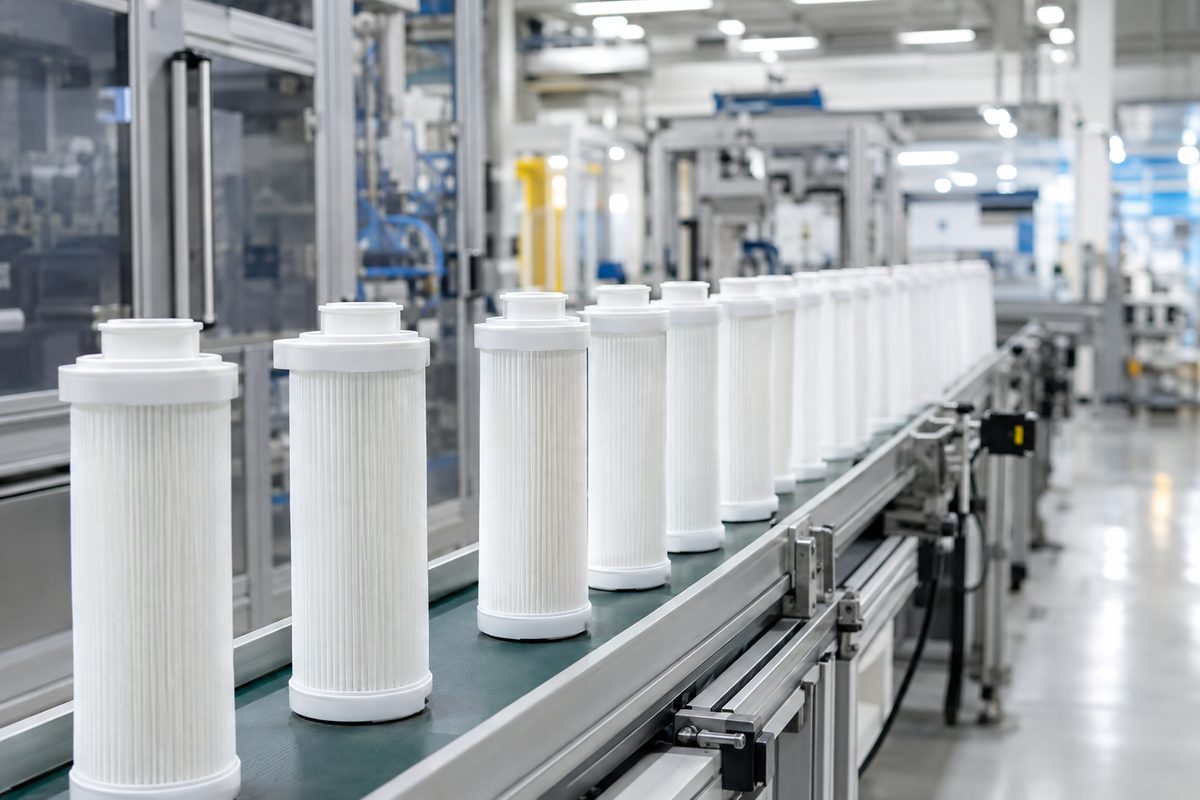
On the manufacturing side, the same discipline applies. A cartridge supplier that controls its own media, does its own pressure-drop testing and holds NSF/ANSI 42 and 53 certification is a different partner from a trading company that assembles lookalikes. For buyers sourcing from China, certification status, documented testing and a factory that can ship consistent, serialized product matter more than a low unit price.
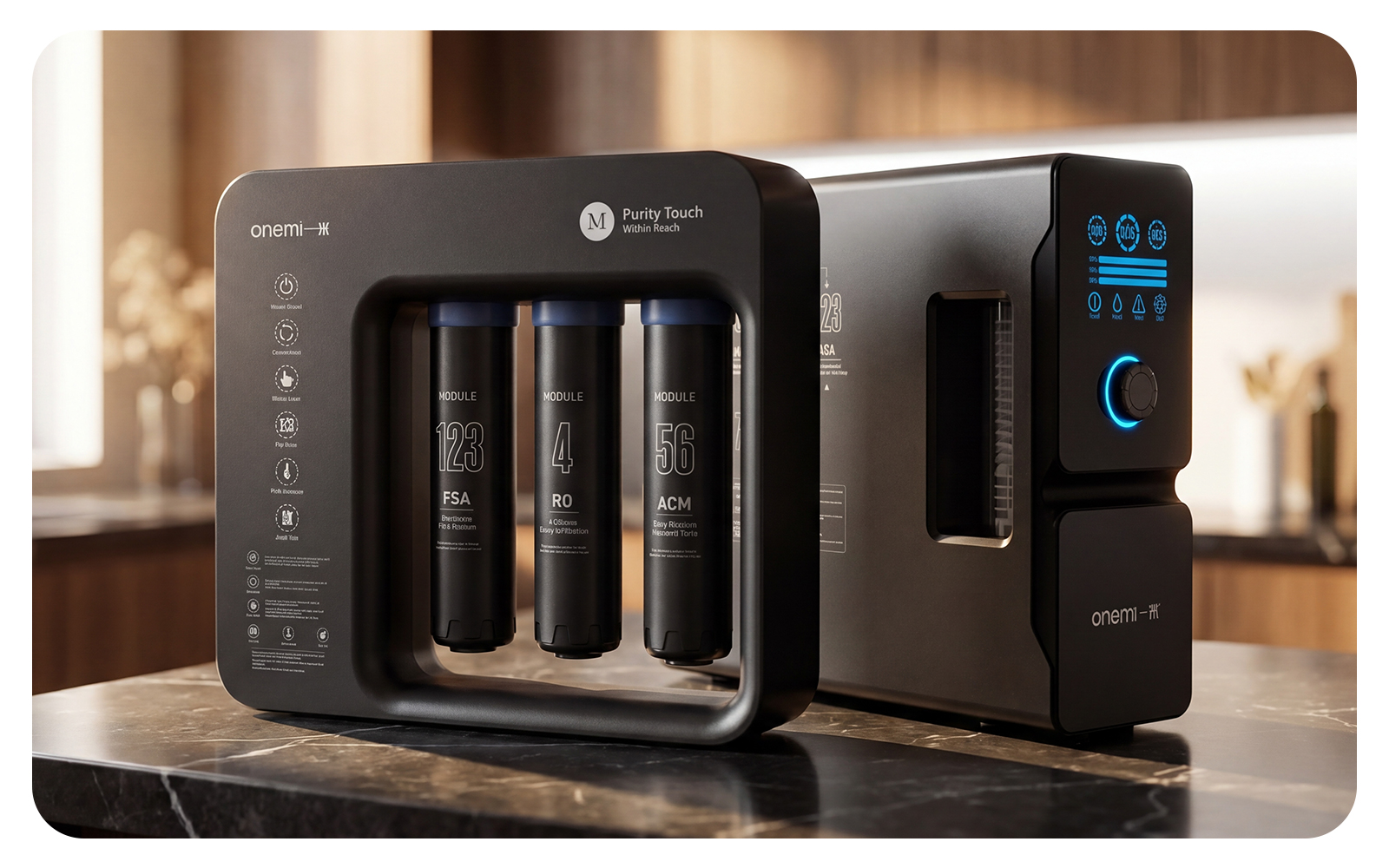
ONEMI, a Guangdong-based water purification equipment manufacturer, produces replacement cartridges and filter housings alongside its under-sink RO and whole-house systems. Sourcing and OEM details are available on the OEM/ODM factory page, with cartridge and parts specifications on the filter cartridges and parts page and certification documentation on the certifications page. For a deeper read on replacement economics, see filter cartridge sourcing and recurring revenue and the B2B filter cartridge replacement guide.
The aftermarket is not going anywhere. Hardware gets cheaper, but the cartridge keeps the water clean and the revenue flowing. The brands and importers who control the cartridge — with documented fit, certified performance and a repeat purchase loop — are the ones who keep the margin.