



Quality Control and Supply Chain Excellence in Chinese OEM Water Purifier Manufacturing
When sourcing water purification systems from China, understanding a manufacturer’s quality control infrastructure and supply chain capabilities is as important as evaluating the product itself. For B2B buyers and importers, due diligence on these operational dimensions directly determines long-term reliability, compliance consistency, and cost predictability.
Why Quality Control Differentiates OEM Manufacturers
The Chinese water purification industry is vast, with thousands of manufacturers across Guangdong, Zhejiang, and Jiangsu provinces. However, the gap between top-tier OEMs and commodity producers lies not in component specifications but in systematic quality assurance. A manufacturer with ISO 9001 certification and documented QC protocols demonstrates measurable production discipline that materially reduces defect rates.
For US and EU importers, the cost of a quality failure extends far beyond replacement units — it includes shipping penalties, customs delays, compliance re‑testing, and brand reputation damage. This makes supplier QC capability a risk‑mitigation factor that should be weighted heavily in sourcing decisions.
Key QC Checkpoints in Water Purifier Production
Incoming Material Inspection
Quality begins with raw materials. A reliable OEM tests every batch of activated carbon, RO membrane elements, plastic resins, and electronic components before they enter the production line. This is especially critical for filter media — counterfeit or subgrade carbon blocks and RO membranes are a known issue in the industry.
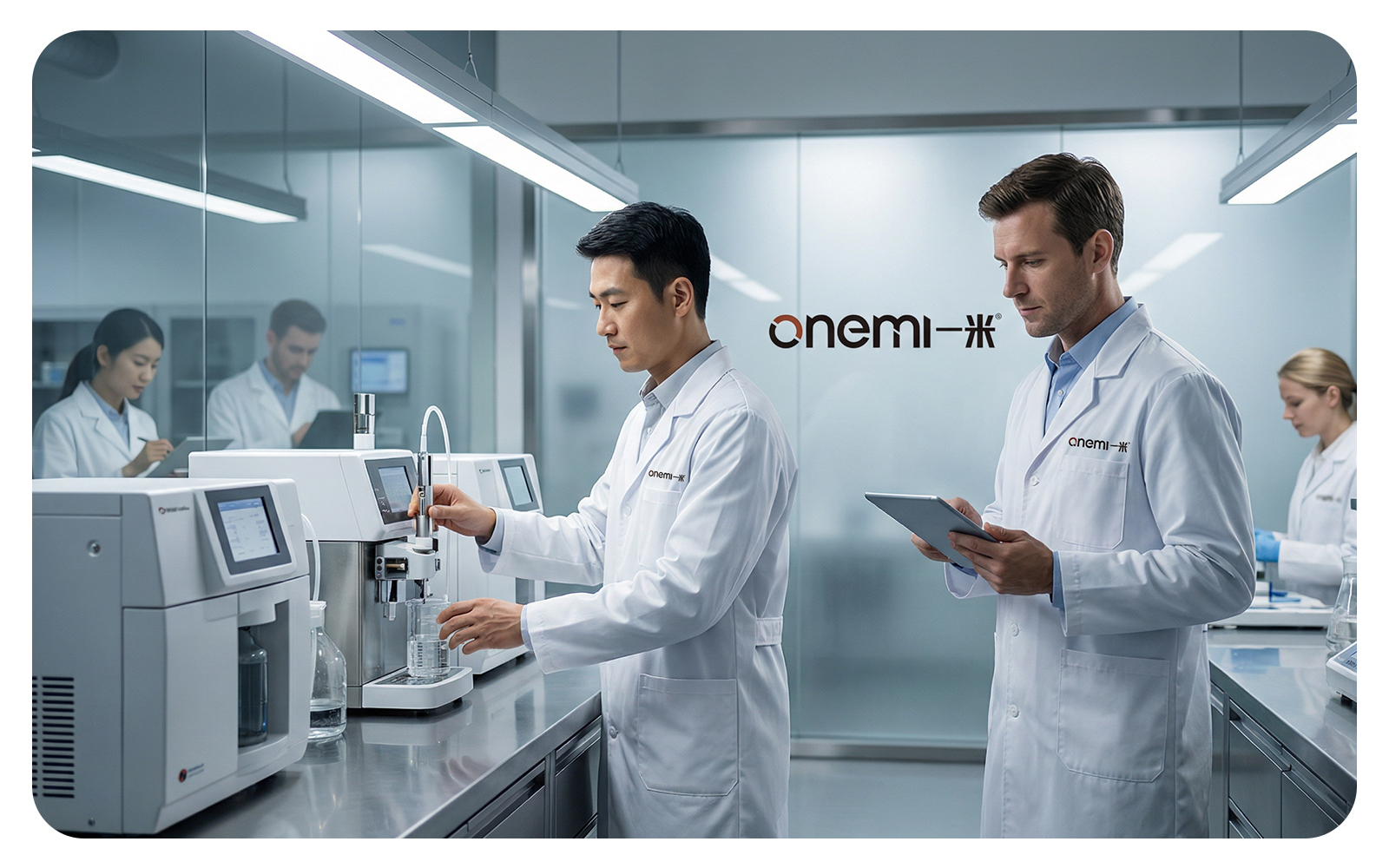
ONEMI, a Guangdong‑based water purification equipment manufacturer, operates an incoming quality control (IQC) station that tests filter media against manufacturer specifications before any material enters inventory. This baseline check prevents defective components from reaching the production floor.
In‑Process Quality Control
During assembly, IPQC inspectors monitor critical parameters including weld integrity on plastic housings, O‑ring seating, solenoid valve operation, and circuit board soldering quality. For tankless RO systems, pressure decay testing at multiple assembly stages ensures leak‑free operation throughout the product lifespan.
Automated testing stations verify electrical safety (dielectric strength, ground continuity) on every unit, not just sample batches. This 100% electrical safety test is a hallmark of a serious manufacturer — only about 30% of Chinese water purifier factories perform it comprehensively according to industry surveys.
Final Quality Assurance
Finished products undergo a final QA protocol that typically includes:
- Functional performance testing (flow rate, recovery rate, TDS rejection)
- Pressure holding test at 1.5× rated working pressure
- Visual inspection for cosmetic defects
- Packaging integrity check for export shipping
- Documentation verification (CE/UL/FCC markings, user manuals, warranty cards)
Supply Chain Advantages of Guangdong’s Water Purifier Cluster
Guangdong province has developed a specialized supply chain ecosystem for water purification manufacturing. Within a 50‑km radius, an OEM can source RO membranes, activated carbon blocks, plastic injection molding, electronic controllers, and packaging materials — often with same‑day delivery. This cluster effect reduces lead times, minimizes inventory carrying costs, and enables rapid design iteration.
For OEM buyers, this means shorter development cycles (typically 45‑60 days from specification to first article) and more flexible minimum order quantities compared to manufacturers in less concentrated regions.
Compliance Documentation and Traceability
A professional OEM maintains batch traceability through serialized production records and test reports. When your products enter the US market, having documented QC records can be crucial for:
- Demonstrating due diligence to customs authorities
- Responding to retailer compliance questionnaires (Walmart, Home Depot, Amazon)
- Supporting liability defense in the unlikely event of a product issue
- Facilitating NSF/UL certification renewal processes
How to Evaluate a Chinese Water Purifier OEM’s QC Capability
Before committing to a supplier, request the following evidence of QC capability:
- ISO 9001:2015 certificate (verify with the certification body)
- Incoming inspection records for the past three months
- IPQC checklist templates used on your product type
- Final QA test reports for 10 randomly selected production lots
- Calibration certificates for key test equipment
- Non‑conformance reports and corrective action records
Conclusion
Chinese OEM manufacturing offers compelling advantages in cost, scale, and supply chain speed — but these benefits are only realized when the manufacturer’s quality control systems are robust enough to deliver consistent, compliant products. By choosing a QC‑focused OEM partner like ONEMI, importers can access the full benefits of Chinese manufacturing without compromising on quality or compliance.
ONEMI — www.onemiro.com Original Content
ONEMI onemiro.com Original Content