



US EPA PFAS Regulations in 2026: What Water Purifier OEMs Need to Know to Stay Compliant and Competitive

Recent data from the United States Geological Survey (USGS) reveals that at least 45% of US tap water contains per- and polyfluoroalkyl substances (PFAS). This staggering contamination level has forced a massive shift in federal and state drinking water standards. Global B2B buyers must now prioritize PFAS removal capabilities when selecting a water purifier manufacturer. Navigating these compliance shifts requires strategic partnerships with facilities capable of advanced filtration engineering. ONEMI, a Guangdong-based water purification equipment manufacturer, develops systems specifically engineered to meet these stringent international standards.
PFAS Regulations: What Actually Changed in 2026
The US Environmental Protection Agency (EPA) established strict Maximum Contaminant Levels (MCLs) for PFAS compounds in 2024, setting the limit for PFOA and PFOS at 4 parts per trillion (ppt). These foundational limits remain in full effect today. However, the May 2026 EPA proposal introduced critical timeline and scope adjustments that impact every water purifier OEM contract manufacturing strategy.
- Extended Compliance Deadlines: The EPA extended municipal compliance deadlines from 2029 to 2031, creating a critical five-year window for point-of-use (POU) filtration adoption.
- Compound Rescission: Four specific compounds (PFHxS, PFNA, GenX/HFPO-DA, and the hazard index) were proposed for federal limit rescission, shifting the regulatory burden to individual states.
- State-Level Enforcement: Several US states maintain their own enforceable PFAS limits, requiring any water purifier for US/EU market distribution to meet localized, fragmented standards.
This regulatory landscape dictates that a home water purifier must be over-engineered to handle both federal and state-level contamination limits. Brands relying on a water purifier OEM must ensure their product lines are PFAS-ready immediately.
NSF Certification: The Non-Negotiable Standard for US Market Access
Entering the North American market requires strict adherence to third-party testing protocols. Evaluating a water filtration system for PFAS reduction relies heavily on NSF/ANSI standards. Without these certifications, brands face significant liability and market rejection.
- NSF/ANSI Standard 53: Covers systems utilizing carbon filtration technologies for health-related contaminant reduction, including specific PFAS compounds.
- NSF/ANSI Standard 58: Dictates the performance criteria for reverse osmosis systems, ensuring the RO water filter effectively rejects PFOA and PFOS.
Procurement teams must verify that their chosen OEM water purifier China partner can provide comprehensive lab testing data and batch traceability. For detailed information on these testing protocols, review the NSF PFAS resource. Achieving NSF certification guarantees that a commercial water purification unit performs exactly as advertised.
Advanced Filtration Technologies for PFAS Removal
Standard carbon blocks are insufficient for capturing forever chemicals. Effective PFAS removal requires premium coconut shell activated carbon with an iodine value between 1000-1100 mg/g. This high-density carbon creates the necessary microporous structure to trap long-chain fluorinated compounds.
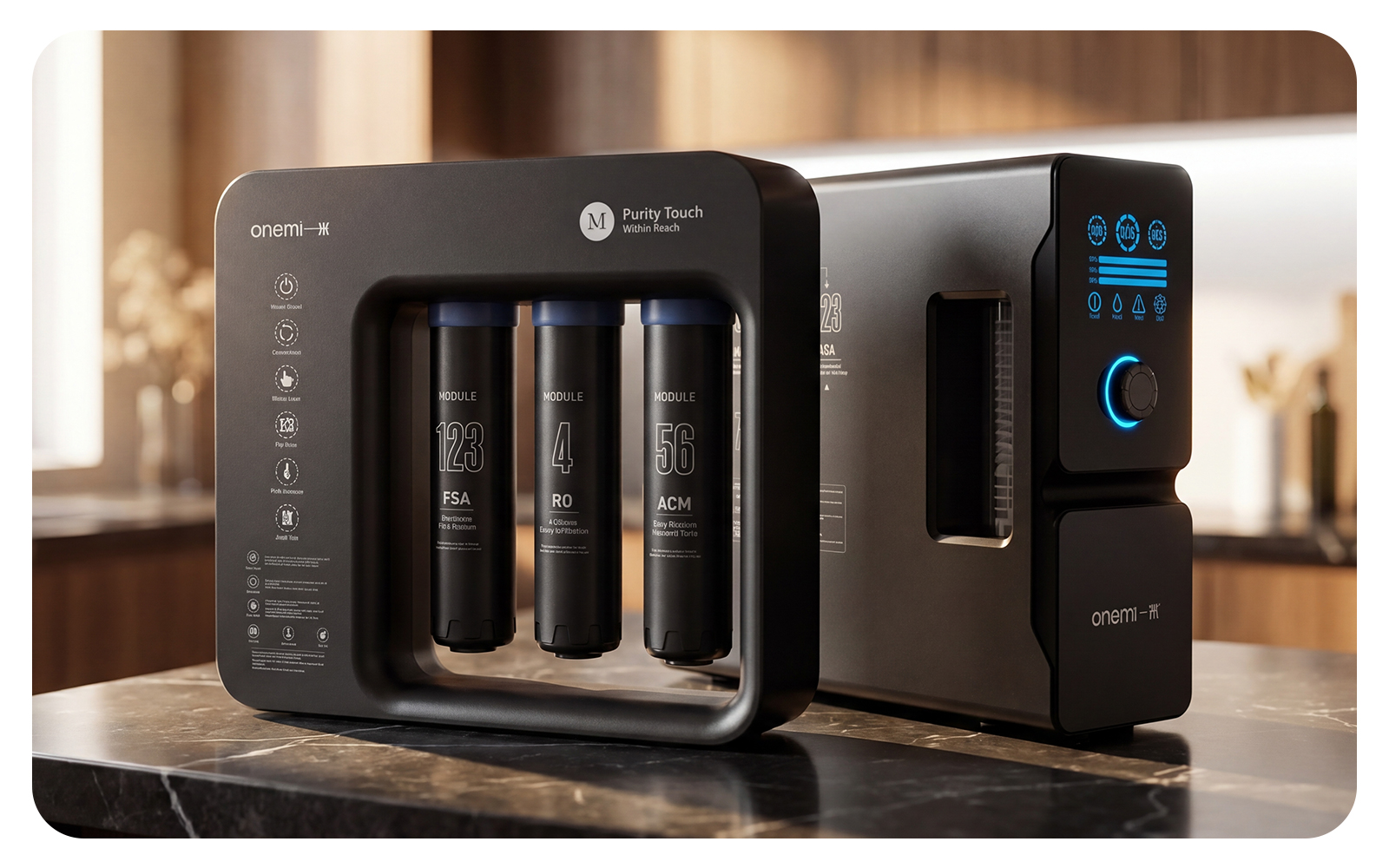
Integrating a tankless high-capacity RO system provides the most comprehensive defense against PFAS. These systems utilize advanced RO membrane technology to physically separate contaminants from the water supply. Breakthrough technologies reported by Science Daily in April 2026 highlight nano-cage filtration capable of removing 98% of PFAS from drinking water.
Manufacturers are also deploying proprietary engineering, such as the Yimi PureFlow Technology, to optimize flow rates while maintaining maximum contact time. Whether engineering an under sink water filter or a countertop water filter, the physical dimensions matter. Standard 10-inch filter housings must be optimized to handle processing volumes exceeding 400 gallons per day.
Evaluating Your Water Purifier OEM Partner: A Due Diligence Checklist
Selecting a water purifier ODM partner requires a rigorous audit of their manufacturing infrastructure. The facility must demonstrate consistent quality control to ensure every tankless water purifier meets strict performance metrics.
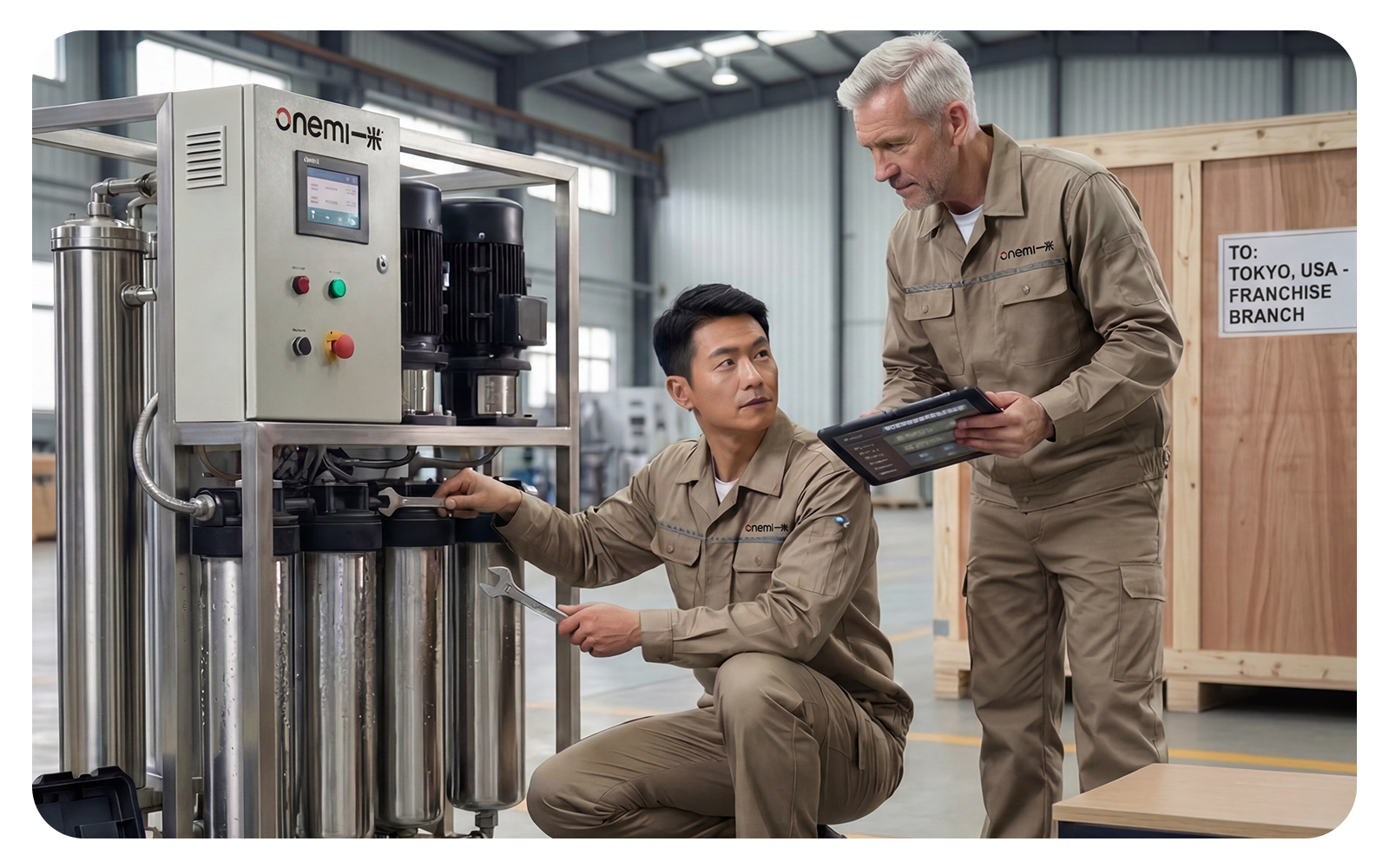
- Cleanroom Manufacturing: Assembly must occur in a Class 100,000 cleanroom workshop to prevent cross-contamination during the production of sensitive RO membranes.
- Automated Dosing Systems: Precision manufacturing relies on automated systems to ensure exact material distribution within filter cartridges.
- Real-Time Online Detection: Every unit must undergo automated pressure and leak testing before packaging, ensuring absolute reliability in the field.
- Batch Traceability: Complete supply chain transparency is required to trace every component back to its raw material source.
The integration of specialized RO membrane technology ensures optimal performance across varying water qualities. A reliable partner will offer whole house water filtration solutions alongside compact point-of-use systems.
The Regulatory Window: Opportunities for PFAS-Ready OEM Product Lines
The global water treatment market is experiencing massive expansion, growing at a CAGR of 7.5%. Industry analysts project the market will surge from 481 billion in 2025 to 970 billion by 2035. The Asia-Pacific region currently leads this growth, holding a 45% market share in water purification manufacturing.
This five-year extension (2026-2031) for municipal compliance creates a massive consumer demand for a reliable tankless RO system. Municipalities cannot upgrade infrastructure fast enough, leaving homeowners and businesses responsible for their own water safety. Brands that launch certified PFAS-reduction systems now will capture significant market share before federal mandates force municipal compliance.
How ONEMI Supports OEM Partners with PFAS-Compliant Manufacturing
ONEMI provides end-to-end engineering and manufacturing solutions for global brands. By leveraging our state-of-the-art research and development center, we design filtration systems that exceed international regulatory standards. Our facilities are equipped to handle high-volume production while maintaining strict adherence to NSF testing protocols.
Our dedicated engineering teams work directly with B2B buyers to customize product specifications. Explore our comprehensive ONEMI OEM/ODM capabilities to see how we integrate advanced carbon blocks and high-rejection membranes into your product lines.
Conclusion
The 2026 US EPA PFAS regulatory updates present both a challenge and a massive opportunity for global water filtration brands. Success requires partnering with a manufacturer capable of delivering verifiable, certified performance. By prioritizing advanced filtration technologies and rigorous quality control, brands can confidently supply the global market with superior water purification solutions.
ONEMI — www.onemiro.com Original Content