



 한국어

- A salt-based softener removes hardness minerals; a salt-free conditioner only stops scale from forming. They are not the same product, and stocking the wrong one loses the sale.
- Retail street price for salt-based units runs roughly $800-$2,500, salt-free conditioners $500-$3,000; the real margin for importers lives in recurring salt and media replacement, not the box.
- Roughly 85% of US homes have hard water, and regions at 15+ GPG are where softeners move fast; conditioners win in sodium-restricted and water-scarce markets.
Every importer eventually hits the same question from a distributor: should I stock a softener or a conditioner? Most answer by quoting unit prices. That is the wrong way to answer, because the two products solve different problems and earn their margin in different places. A salt-based ion-exchange softener removes the calcium and magnesium that make water hard. A salt-free conditioner leaves those minerals in the water and changes their chemistry so they cannot form scale. Sell the first to a home at 15 grains per gallon, sell the second to a sodium-restricted household at 8 GPG, and both customers think you are an expert. Swap them, and both come back angry.
The Cost Stack: What the Box Actually Costs
At retail, salt-based ion-exchange units land between roughly $800 and $2,500 depending on grain capacity, with 32,000-48,000 grain systems the volume sweet spot for 3-4 bathroom homes. Salt-free conditioners run $500 to $3,000, and electronic descalers drop to $200-$600. Those numbers get quoted constantly, but they hide the part importers should care about: the recurring spend. A salt-based system burns through six to twelve 40-pound bags of salt a year at $5-$15 a bag, plus regeneration water that adds up to 5,000-15,000 gallons annually. That recurring salt is a margin stream your distributor can sell month after month.
Salt-free conditioners carry almost no consumable in the same way, but their media cartridge is replaced every 5-7 years. So the economics split cleanly: softeners are a razor-and-blades model with a strong recurring consumable, conditioners are a low-maintenance box with a slow replacement cycle. For a distributor building a subscription or refill program, the softener is the better anchor. For a channel selling to renters or sodium-restricted buyers, the conditioner moves faster and returns less.
Where the Margin Actually Lives
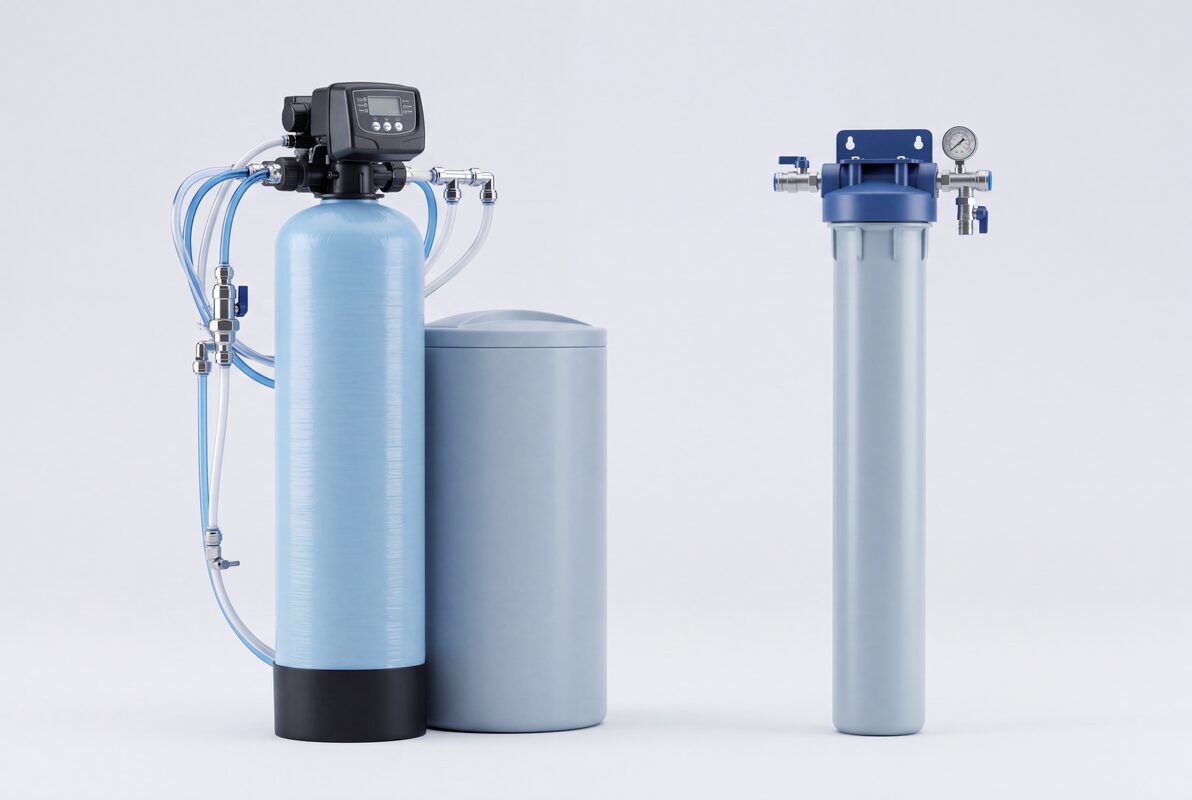
The FOB price of the unit is not where the money is. The margin is in the channel structure: a distributor who can attach salt refills, filter replacement, and installation service to the box earns two to three times the one-time hardware margin over the life of the account. This is why the smart play for an importer is not to source the cheapest softener on Alibaba and resell it blind, but to bring in a line that supports a consumable ecosystem. Ask the factory what replacement media, resin, and bypass valve options they carry before you ask for the unit price.
There is also a compliance angle that changes the unit economics. Parts of California, Michigan, and Texas restrict or ban salt-based softeners because of brine discharge, which pushes those territories toward salt-free conditioners regardless of price. A distributor who stocks only softeners is locked out of those postcodes. If you are building a national catalog, you need both SKUs, and you need to know which regions each one is legal to sell into. If your line also carries RO systems, the softener vs RO sourcing guide walks through that pairing.
How to Stock the Right Mix
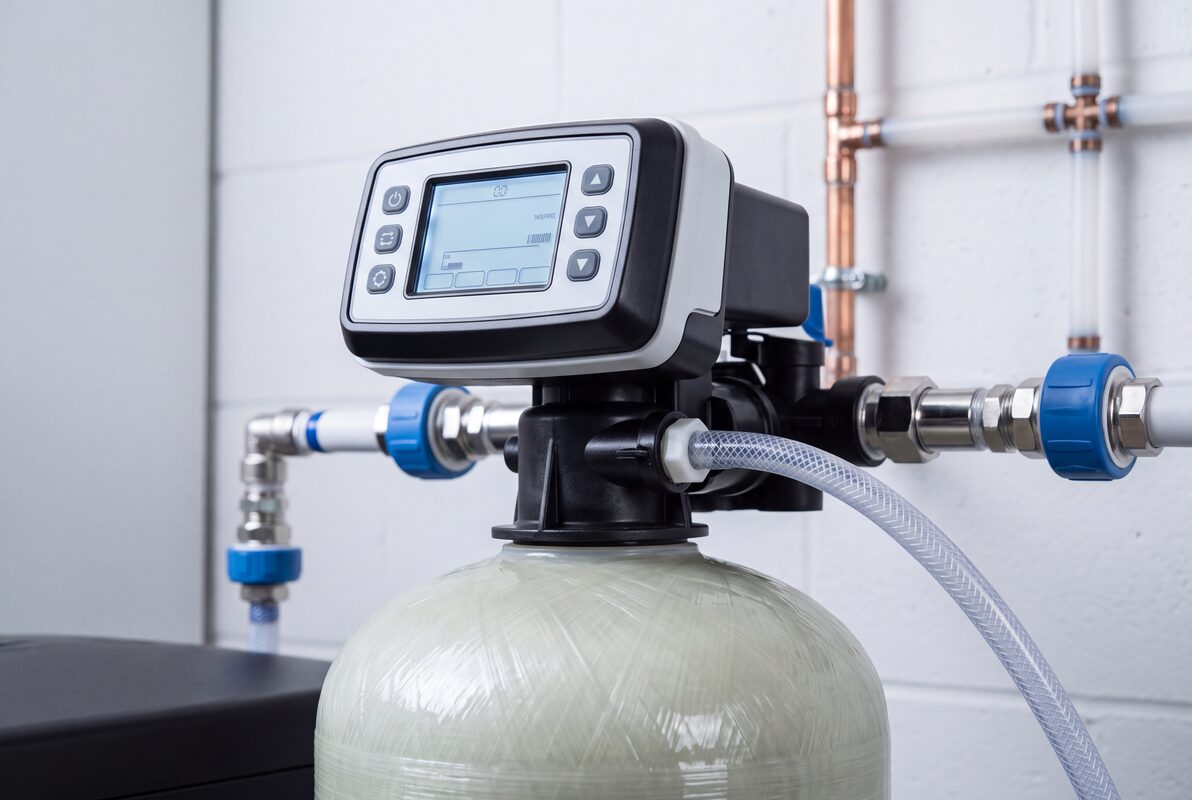
Hardness is the sorting variable, and it is a regional one. Hard water affects roughly 85% of US homes, but the meaningful demand sits above 7 GPG, and the high-velocity markets are the 15-25+ GPG regions across Texas, Arizona, and much of the Midwest. Those are softener territory. Mild to moderate hardness, sodium-restricted buyers, and septic-system homes are where salt-free conditioners win. A distributor serving both ends needs the softener for the hard-water belt and the conditioner for the coastal and low-sodium markets.
For the sourcing side, the questions worth asking a factory are concrete: what resin crosslink percentage and capacity does the softener use, what regeneration volume does the valve draw, and does the conditioner use template-assisted crystallization media rated for how many grains. These specs determine whether the unit will hold up in a 20 GPG market or fail there. A factory that answers in numbers is one worth building a line with; one that answers in adjectives is not.
ONEMI ships both salt-based central softeners and salt-free conditioning systems out of Guangdong, and the conversation should start with the resin and media spec rather than the sticker price. Compare that against your target territory’s hardness profile, and the stocking decision answers itself. For a deeper look at the sourcing mechanics, see the central water softener OEM sourcing guide, and for the salt-free segment’s trajectory, the salt-free conditioner market outlook.
The Decision in One Paragraph
If your distributor sells into hard-water homes and wants a recurring consumable business, stock the salt-based softener and build the salt-refill program around it. If your distributor serves sodium-restricted, septic, or water-scarce regions where brine discharge is restricted, stock the salt-free conditioner and position it as the low-maintenance scale solution. Most serious importers carry both, because the two products are not substitutes for the same customer — they are answers to two different water problems, and the distributor who can tell them apart owns the territory.