


 한국어

- Municipal and well-water customers buy under-sink RO for different reasons, and a single SKU serves neither well.
- City water calls for chlorine/DBP-focused stages; well water needs sediment pre-filtration, iron reduction, and often UV.
- Pressure and certification requirements differ sharply between the two segments, which changes which products a distributor should carry.
A distributor who stocks one under-sink RO unit and sells it to everyone is leaving margin on the table. City water and well water are two different problems, and they produce two different buyers. One is worried about chlorine and disinfection byproducts. The other is dealing with iron, manganese, sulfur, and bacteria. ONEMI, a Guangdong-based water purification equipment manufacturer, builds for both, but the product lines don’t look alike.
For importers and distributors serving the US market, the first decision is which segment to lead with. The US water purifier market was worth roughly $6.75 billion in 2024 and is projected to reach about $10.35 billion by 2032, per Fortune Business Insights. Point-of-use systems make up around 70% of that, and under-sink RO is the anchor of the POU category. The demand is real. The question is how you split it.
Two Buyers, Two Water Problems
The distinction starts with who regulates the water. Municipal systems are treated and monitored under the Safe Drinking Water Act. A private well is not. The EPA does not regulate private wells, and testing falls entirely on the owner. The USGS found roughly 23% of untreated private wells contain at least one contaminant above a human-health benchmark.
That gap changes everything about what a customer needs. A city-water buyer is usually trying to polish water that is already microbiologically safe — they want chlorine taste gone, disinfection byproducts reduced, and lead from aging pipes addressed. The EPA’s Lead and Copper Rule tightened the lead action level to 10 ppb in 2024, which has pushed a lot of older homes toward under-sink treatment.
A well-water buyer is doing the municipal plant’s job themselves. They deal with iron that stains fixtures, manganese, hydrogen sulfide giving a rotten-egg smell, hardness, and the possibility of bacteria. Their water hasn’t been disinfected, so the system has to handle what a city plant already removed.
City Water: The Standard Four-Stage RO Is Still the Workhorse
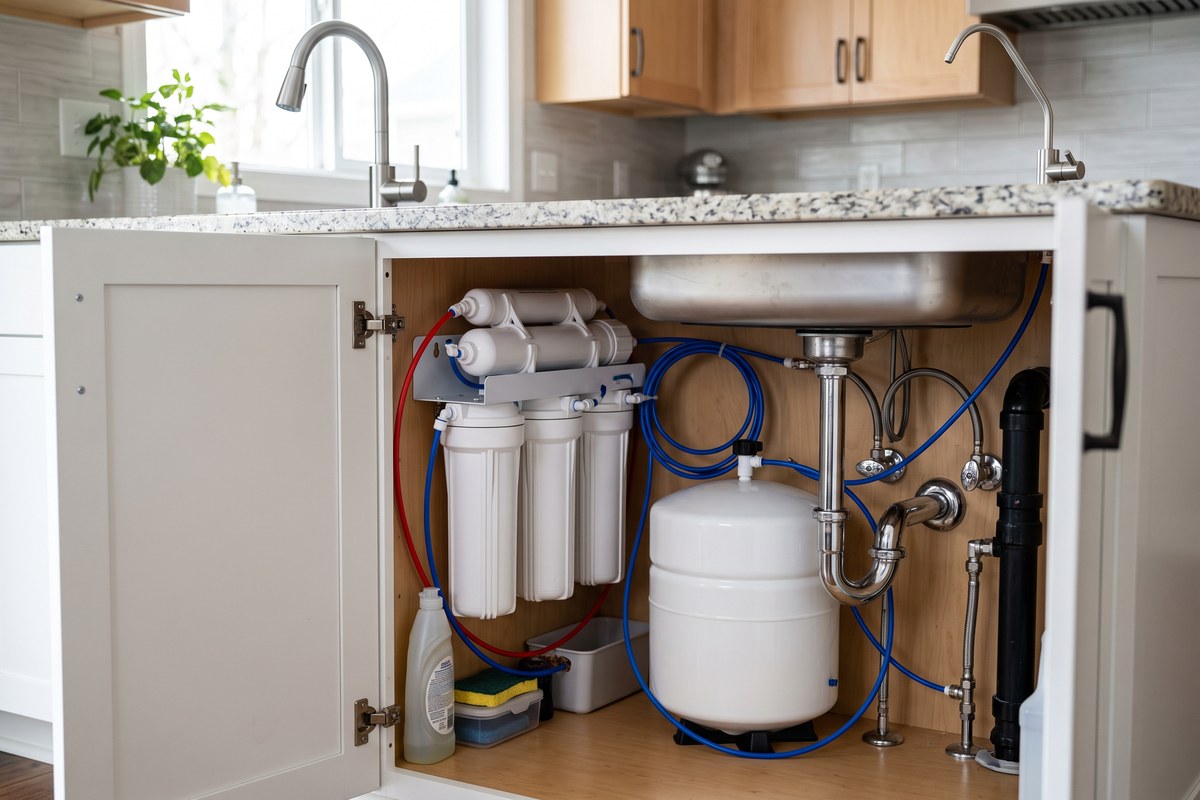
For municipal water, a standard four-stage under-sink RO does most of the work: sediment pre-filter, granular activated carbon, carbon block, and RO membrane. The carbon stages carry more weight here because chlorine and chloramine destroy an RO membrane if they reach it, so the pre-carbon does double duty — it protects the membrane and removes taste and odor compounds.
What a distributor should look for in a city-water SKU: a carbon block with a high iodine number, a membrane rated 95%+ rejection, and certification against NSF/ANSI 42 for aesthetic effects and NSF/ANSI 53 for health effects, particularly lead and disinfection byproducts. Tankless systems in the 400 to 800 GPD range are selling well in this segment because they fit smaller kitchens and cut waste water.
The buyer profile is urban and suburban homeowners, often in apartments or older houses. They want something that fits under a sink and doesn’t demand much of them. Lead time and replacement cartridge economics matter to the distributor more than raw flow rate.
Well Water: A Different Product, Not Just a Bigger Filter
Well water breaks standard RO systems fast. Iron and hardness foul a membrane quickly, and low pressure from a well pump — frequently below the 40 to 60 psi a standard RO wants — slows output and drives up waste. The systems that work on wells are built differently.
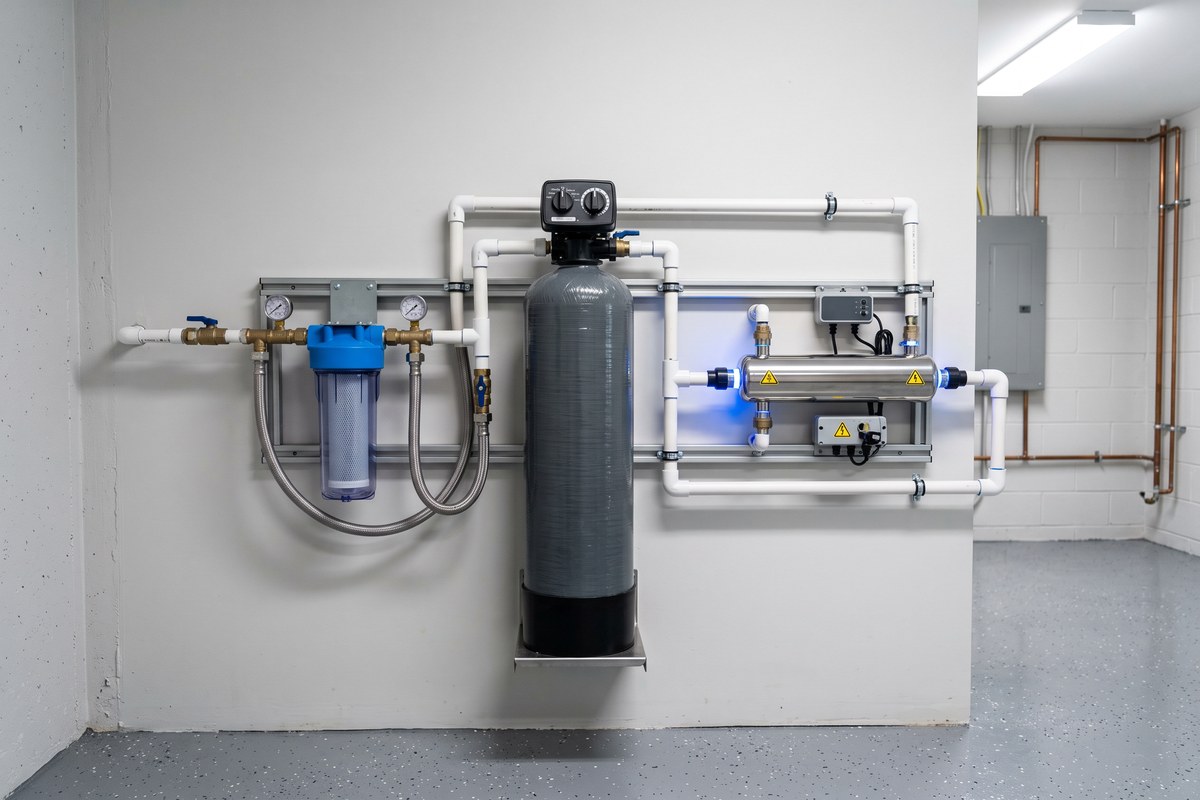
A well-water under-sink RO typically adds three things: a heavier sediment pre-filter to catch sand and silt, an iron-reduction stage upstream, and a permeate or booster pump to restore pressure at the membrane. Where bacteria is a concern, a UV stage goes on the end. Without the pre-treatment, the membrane becomes the thing doing a treatment plant’s job, and it fails early.
For this segment, the certification story changes too. NSF/ANSI 58 for the RO system itself, NSF/ANSI 372 for lead-free materials, and — for any stage that touches iron or sediment — material compliance under NSF/ANSI 61. A distributor selling into rural and exurban markets should expect customers who know their own water test results and ask specific questions.
Pressure, Certification, and the Compliance Layer
The two segments diverge on pressure more than most importers realize. Municipal supply generally holds steady pressure, so a standard system runs fine. Well systems need a pump, which adds cost and a failure point but is non-negotiable if output is going to stay usable at the faucet.
Certification is the other divider. City-water customers buy on brand trust and certification badges. Well-water customers buy on whether the system solves their specific water test results. Both, however, sit under the same US regulatory umbrella: any RO system claiming contaminant reduction should carry NSF/ANSI 58, and anything touching drinking water should meet NSF/ANSI 61 and 372 for materials and lead. For PFAS-conscious buyers, the 2024 EPA limits of 4 parts per trillion for PFOA and PFOS have made NSF/ANSI 53 PFAS-reduction claims a selling point on both sides of the divide.
How Importers Should Split the Line
The practical answer is not one product but two, each with a clear position. A city-water line leads with tankless convenience, certification density, and competitive cartridge pricing. A well-water line leads with pre-treatment robustness, a pressure pump, and UV where the market demands it.
Stocking strategy follows the same logic. Urban and suburban accounts move volume on the standard RO. Rural and exurban accounts move fewer units but at higher margin and with a steadier replacement-cartridge stream, because a well customer is more likely to pre-treat and replace cartridges on schedule. The two lines share components — membranes, housings, fittings — so sourcing them together keeps inventory simpler than it looks.
For importers, the real lever is configuration flexibility. A manufacturer that can ship the same core RO platform with a sediment-and-iron pre-treatment kit as an option, or a booster pump variant, lets a distributor serve both segments without doubling their SKU count. That’s the kind of modularity worth asking for when you’re evaluating a supplier. See our OEM/ODM factory capabilities and certification support for how ONEMI builds that flexibility in. You can also review the flagship RO product line to see the platform approach in practice.
Planning to stock under-sink RO for both city and well-water markets? Contact ONEMI for modular platform options and certification documentation.