

 한국어

- Direct-flow (tankless) RO is now the default under-sink spec; 800 GPD is the floor, with 1000 and 1200 GPD becoming the standard high-flow order.
- A 2:1 pure-to-drain ratio (about 67% recovery) is table stakes — legacy 1:3 tank ratios flush three liters for every one kept.
- Verify the pump head, pre-filter stage count, and live NSF 58 / 42 / 372 certificates before committing to a container order.
Direct-flow reverse osmosis stopped being a premium differentiator a couple of years ago. For importers it is now the default spec on any serious under-sink order, and the number printed next to “GPD” is where the real decisions get made. Reverse osmosis already owns roughly 35–42% of the U.S. water purifier market — a market Fortune Business Insights sized at $6.75 billion in 2024 and projects to reach $10.35 billion by 2032 at a 5.5% CAGR. What is changing inside that share is flow rate: the 800 GPD machines that looked aggressive in 2024 are now the entry point, and buyers are writing 1000 and 1200 GPD into their purchase orders.
Why direct-flow left the storage tank behind
The old architecture — a 50 GPD membrane feeding a 4-gallon pressurized tank — solved exactly one problem: membranes were slow, so you banked purified water to have any on demand. It also created a set of new ones. The tank eats cabinet space. The water sits and can pick up a plastic taste. The pressure bladder eventually wears out, and when it does the whole system stops delivering.
Direct-flow (tankless) RO sidesteps all of that by using a much larger membrane — 400 GPD and up — driven by a booster pump, producing water fast enough to serve the faucet directly. No tank, no stagnant storage, no bladder to fail. An 800 GPD membrane delivers around 2.1 liters per minute at standard test conditions (25°C feed, 65 psi applied pressure). A 1000 GPD membrane pushes that to roughly 2.6 L/min.
The trade-off is electrical. Direct-flow needs a booster pump and will not run without power, where a tank system can still trickle water during an outage. For kitchens and offices with a live outlet under the sink, the space savings and fresher water usually settle the argument.
What 800, 1000, and 1200 GPD actually measure
GPD — gallons per day — is a rated membrane output under controlled lab conditions, not a promise about what comes out of the tap. Real flow falls with colder inlet water and lower line pressure. A membrane rated 800 GPD at 25°C can deliver noticeably less in a northern winter when the feed runs at 8°C, because both rejection and flux respond to temperature.
The number still matters for sourcing. It sizes the booster pump and the flow restrictor, and it tells you what the system can sustain under continuous draw — filling a stock pot, feeding an ice maker, serving a small office tea point. When two suppliers quote the same GPD but different pumps, the pump is where the cheaper one usually cut corners.
800 vs 1000 vs 1200 GPD, side by side
| Spec | 800 GPD | 1000 GPD | 1200 GPD |
|---|---|---|---|
| Rated output (25°C) | ~2.1 L/min | ~2.6 L/min | ~3.1 L/min |
| Typical pure-to-drain | 2:1 | 2:1 | 2:1 to 3:1 |
| Approx. recovery | ~67% | ~67% | 67–75% |
| Best fit | 3–4 person kitchen | high-use home / small office | office / light commercial |
These are typical figures, not universal ones. Two 800 GPD machines from different factories can behave very differently depending on membrane quality, pump head, and whether the flow restrictor is actually matched to the membrane — which is the next point.
The membrane is only half the spec
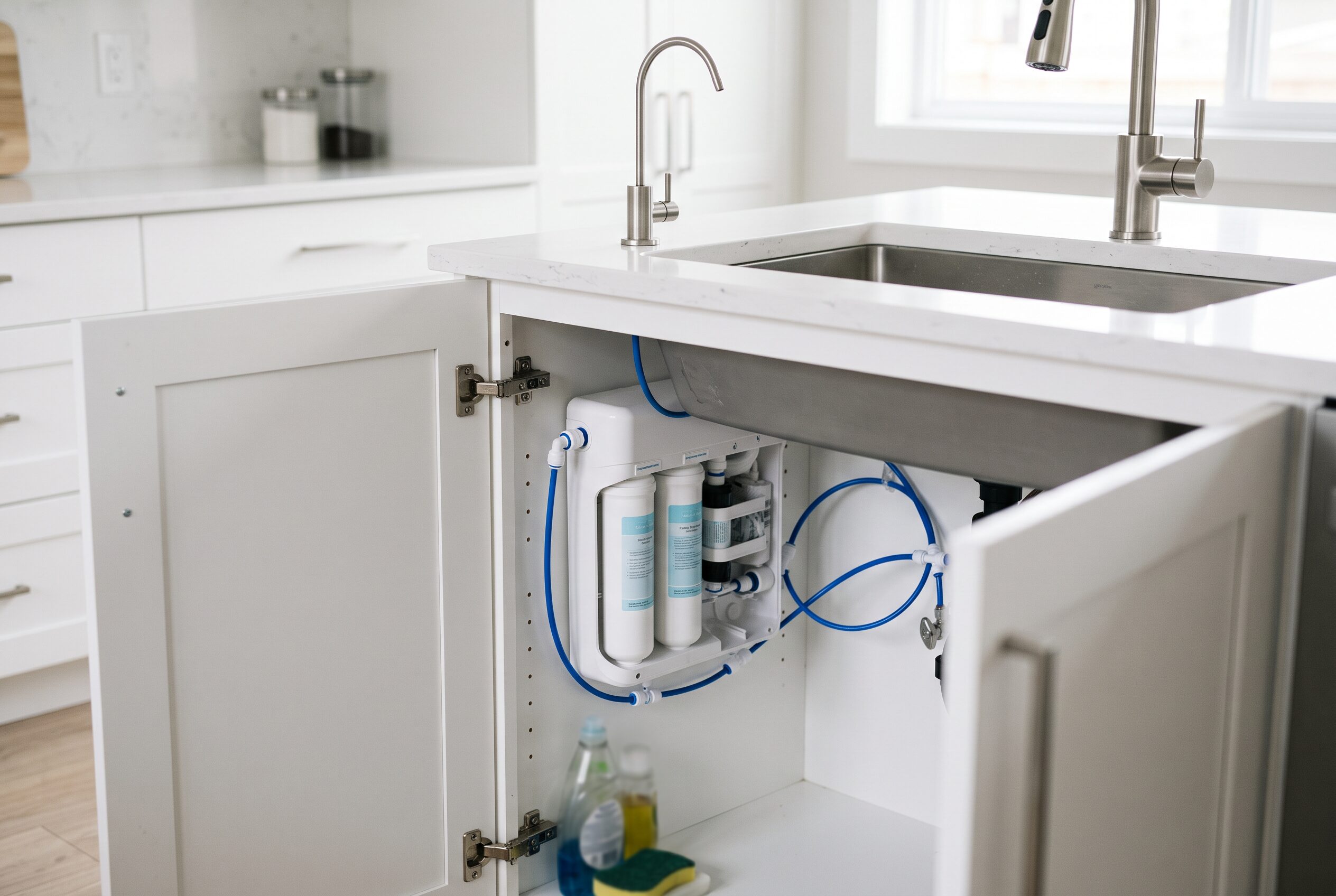
A 1000 GPD membrane bolted to an undersized pump never reaches its rating. Most thin-film composite membranes need 50–80 psi of applied pressure to hit rated flow, and the booster pump has to overcome that while also pushing against the flow restrictor. Importers who compare GPD and ignore pump wattage and head are comparing half a spec.
Then there are the pre-filters. Even a direct-flow system needs a sediment pre-filter and a carbon block ahead of the membrane. Skip the carbon stage and chlorine attacks the thin-film composite membrane and shortens its life. A proper high-flow system is a four- or five-stage chain: PP sediment → carbon block → RO membrane → post carbon, with an optional remineralization or UV stage at the tail.
Reading the drain ratio
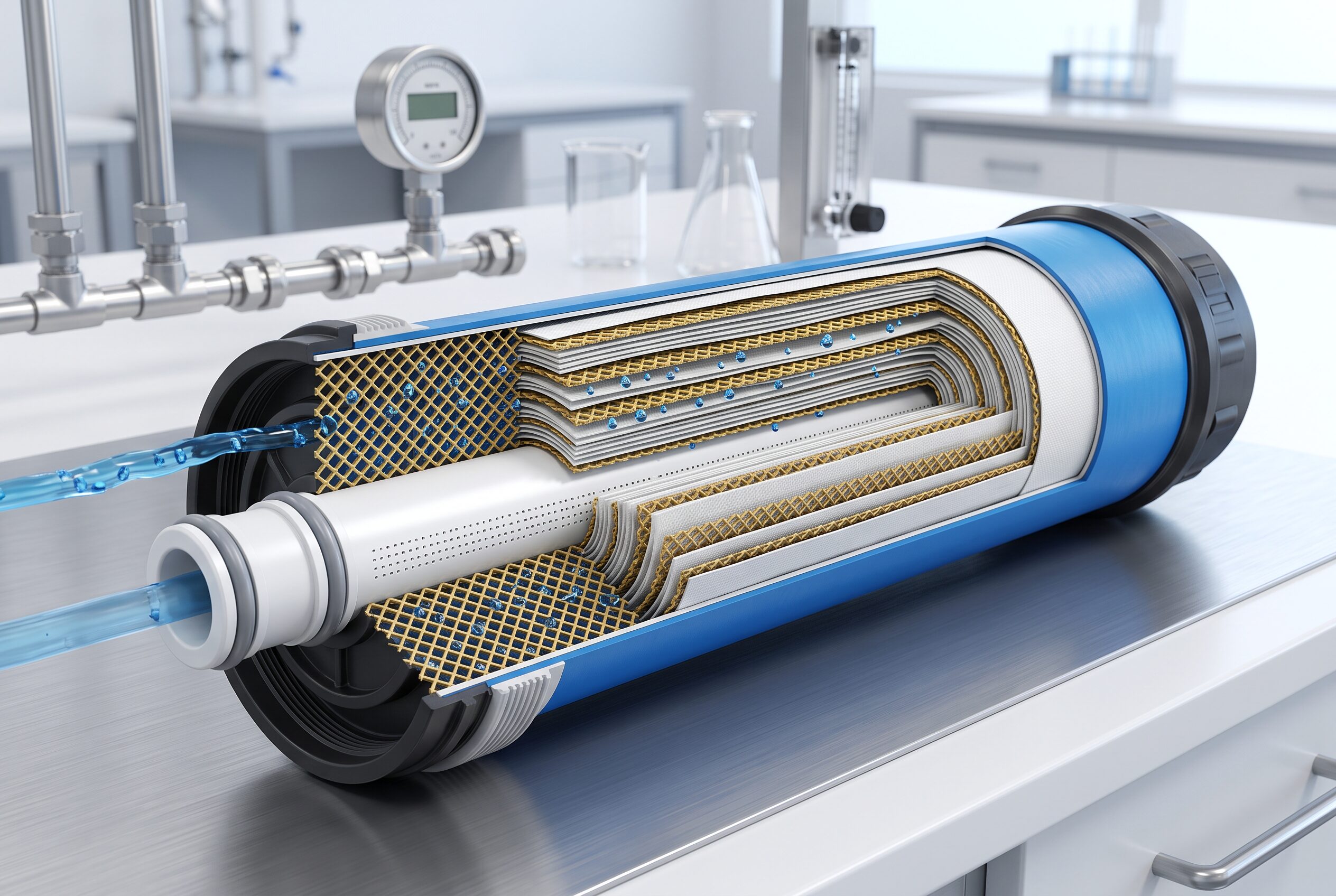
Every RO membrane makes two streams: permeate (the purified water) and concentrate (the reject). The pure-to-drain ratio is the clearest single indicator of membrane and restrictor quality. Legacy tank systems ran as poor as 1:3 — one liter kept for every three flushed down the drain. Modern direct-flow systems run 2:1 or better. A 2:1 ratio is about 67% recovery; 3:1 is about 75%.
For an importer, a claimed 3:1 ratio deserves a water-bill check, not just a spec-sheet read. Higher recovery means the concentrate is more concentrated, which fouls the membrane faster unless the system flushes properly. A factory that promises 3:1 and a 24-month membrane life in hard water is worth a skeptical question or two.
Certification before anything else
For the U.S. market, the membrane falls under NSF/ANSI 58; the carbon stages under NSF/ANSI 42 for chlorine taste and odor; and the wetted materials under NSF/ANSI 372 for lead-free compliance. “CE marked” and “RoHS” matter for Europe, but they are not a substitute for NSF when a container is landing in a U.S. warehouse. See the full breakdown in our certifications overview.
One recurring point of confusion: an NSF 58 listing covers the specific membrane and system as certified, not the brand by default. Ask for the actual certificate, match the model number on it to the system you are buying, and confirm the certificate is current. A three-year-old certificate for a different SKU is a red flag, not a formality.
What to verify before you commit
Five things are worth pinning down in writing before placing a container order, and they sit neatly in an OEM program built for importers — the same terms covered in our OEM/ODM factory page:
- Pump head and wattage — and whether it is rated for 50 Hz or 60 Hz. A frequency mismatch is a common cause of short pump life on cross-region orders.
- The flow restrictor value, matched to the membrane’s rated GPD.
- Flush valve or automatic flushing, which extends membrane life in hard-water regions.
- Filter change cadence and cartridge format — twist-lock versus inline — because that decides how the end user maintains the machine and how you sell the consumables.
- Real test data: a TDS rejection of 90% or better under the target region’s water conditions, not only the factory’s lab sheet.
Where ONEMI fits
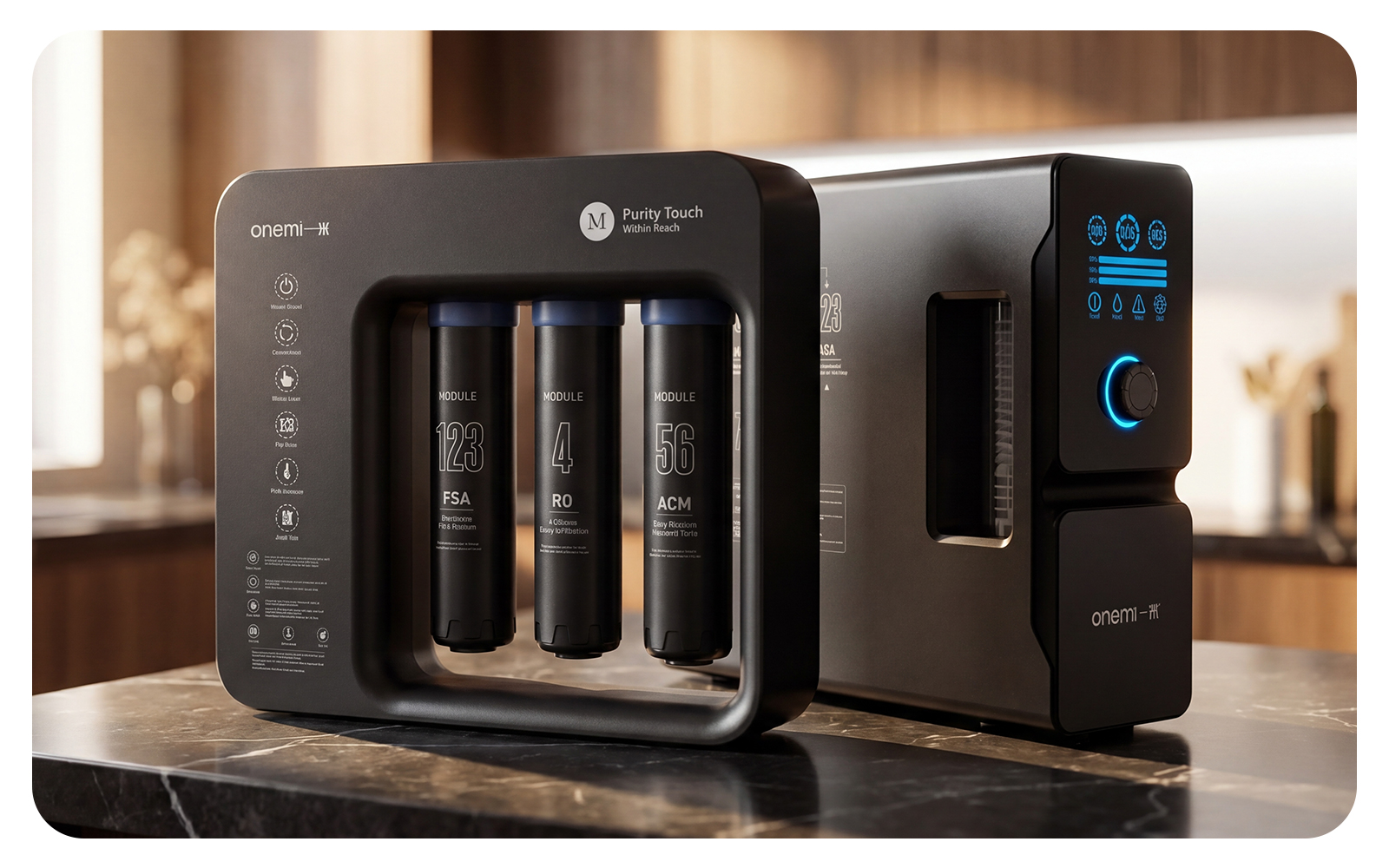
ONEMI, a Guangdong-based water purification equipment manufacturer, builds direct-flow RO systems across the flow range. The lineup runs from 100 GPD under-sink units and 400 GPD smart systems through to high-flow direct-flow machines produced to order for OEM buyers — see the 100 GPD under-sink system and the 400 GPD smart purifier. The membrane filtration spec across the range is 0.0001 μm (0.1 nm), and the factory handles the full chain — membrane, pump, and restrictor matching — rather than assembling whatever components arrive that week.
For a buyer deciding between an 800 and a 1000 GPD build, the factory’s job is to make the choice about the application, not about which parts happen to be in stock. That is the difference between a matched system and a number on a box.
The 2026 sourcing bottom line
Direct-flow RO is mature. The 2026 differentiator is no longer “tankless” — everyone is tankless now — it is execution: a membrane, pump, and restrictor that are actually matched, an honest drain ratio, and certification that survives a check. Importers who verify those three things see fewer returns and fewer support tickets. The GPD on the box matters less than whether the chain behind it holds together.