
 한국어

Facility managers split office water into two camps: a pallet of five-gallon jugs hauled up the freight elevator, or a plumbed-in dispenser that filters building water on-site. On a per-bottle invoice the difference looks trivial. On a three-year facilities budget it is not. This article walks through the numbers, the filtration hardware, and the compliance paperwork a buyer should demand from a supplier — before the contract is signed.
- A 25-person office typically saves 40–60% over three years by switching from jug delivery to a plumbed-in dispenser, once delivery surcharges and rental fees are counted.
- Bottled coolers filter nothing — the jug is the quality ceiling. A bottleless unit shifts the spec burden to its internal filtration stages and NSF/ANSI 42/53/58/61 certifications.
- For importers, the real margin lives in the consumable: cartridge and membrane replacement schedules, not the dispenser unit itself.
The Three-Year Cost Gap Nobody Puts in the Proposal
The advertised per-jug price is not the cost of bottled water. It is the tip of an invoice that grows a line at a time. A 25-person office burning through 8–12 five-gallon bottles a month pays roughly $8–$14 per jug, plus a cooler rental of $15–$35 per unit, a delivery fee of $10–$25, and a fuel surcharge of $5–$15 per visit that has crept in since 2022. Quarterly sanitization bills another $25–$50. All of it compounds 3–8% a year under the escalation clauses buried in most delivery contracts.
Total cost of ownership over three years tells the story the monthly invoice hides. Industry pricing comparisons put a 25-person bottled setup at roughly $4,860–$7,020 over three years, against about $3,204 for a flat-rate bottleless unit that includes installation, filters, and maintenance. That is a 40–60% spread — and it widens every time a delivery truck’s fuel surcharge ticks up.
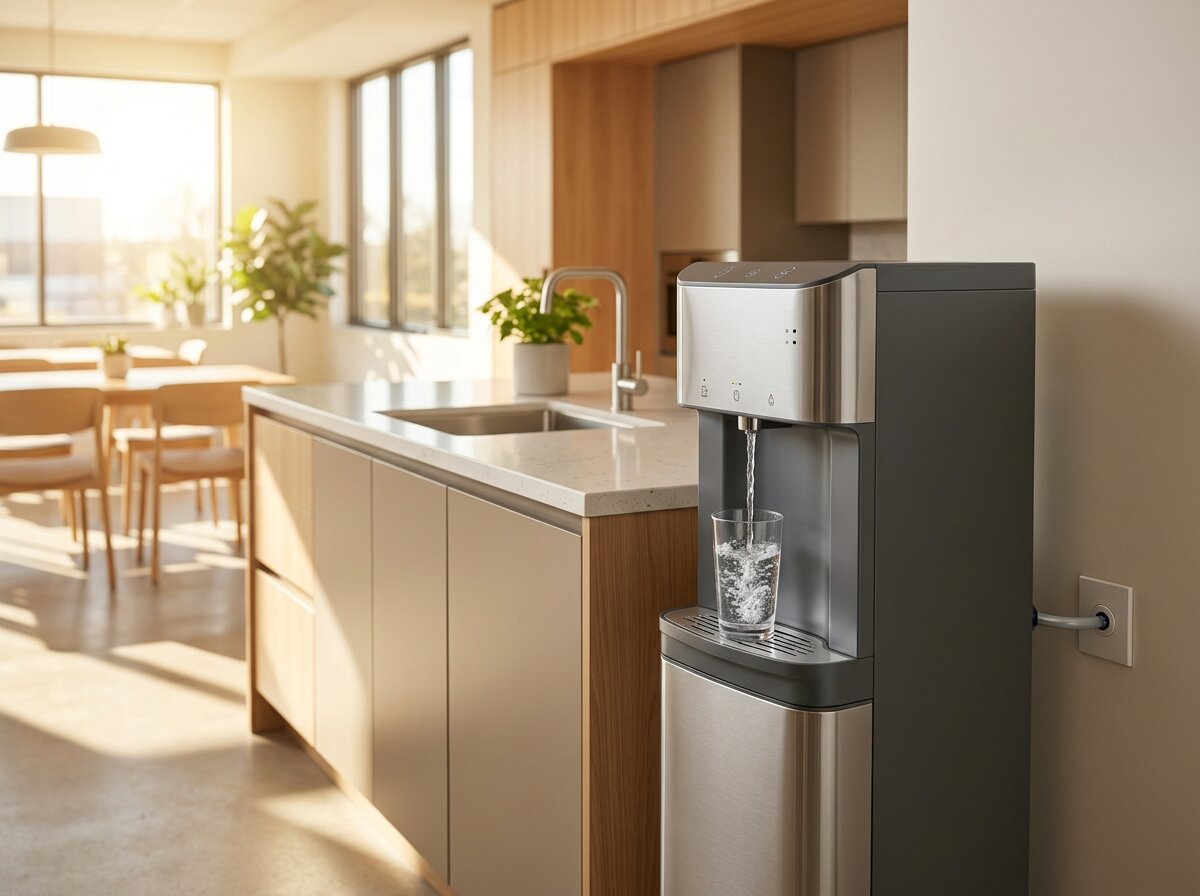
The split shows up in broader market data too. Point-of-use water treatment for offices alone was valued around $2.94 billion in 2025 and is projected to roughly double by 2033, growing near 9.6% annually (Grand View Research, 2025). Offices and education together account for about 27% of commercial water purification demand, according to QYResearch’s commercial purifier segmentation — a segment that keeps tilting toward plumbed, multi-stage equipment.
What You Are Actually Buying: Filtration, Not Water
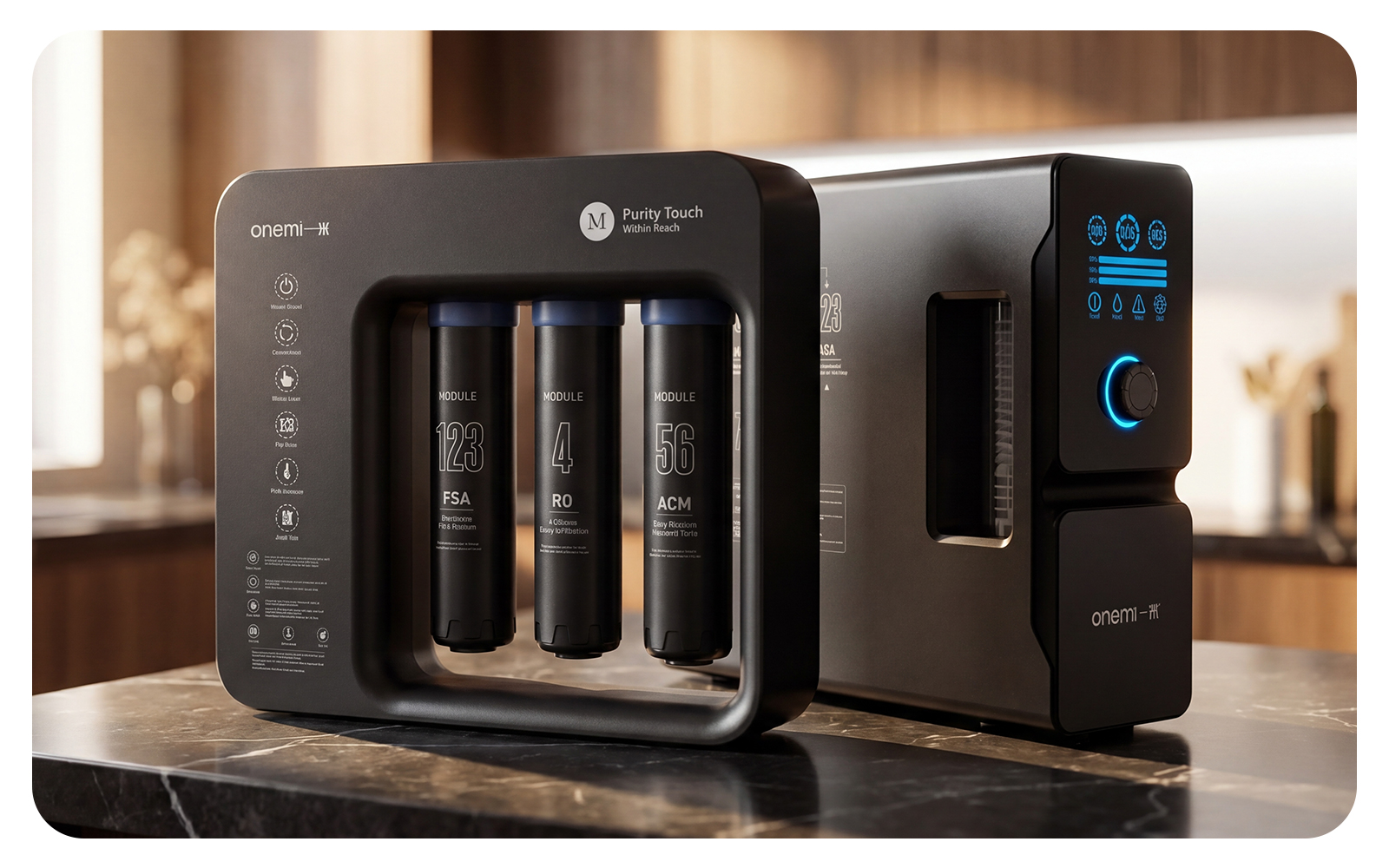
The core difference between the two options is not where the water comes from. It is where the filtration happens. A bottled cooler does no filtration at all — the five-gallon jug is the quality ceiling, and that ceiling is set by the bottler’s plant, not your facility. A bottleless dispenser connected to the building line moves the responsibility into the machine: a sediment prefilter, a carbon stage, and — on serious commercial units — a reverse osmosis membrane and UV sterilizer.
That hardware has measurable behavior. A reverse osmosis membrane is rated by rejection rate, not marketing language. A properly spec’d RO stage removes 95–98% of dissolved solids, with NSF/ANSI 58 certification requiring at least 75% TDS reduction under test conditions. The sediment and carbon stages ahead of it are what protect the membrane and control chlorine, taste, and odor. If the incoming water is hard or high in particulates, a dedicated reverse osmosis system upstream of the dispenser is the difference between a 12-month membrane and a 36-month one.
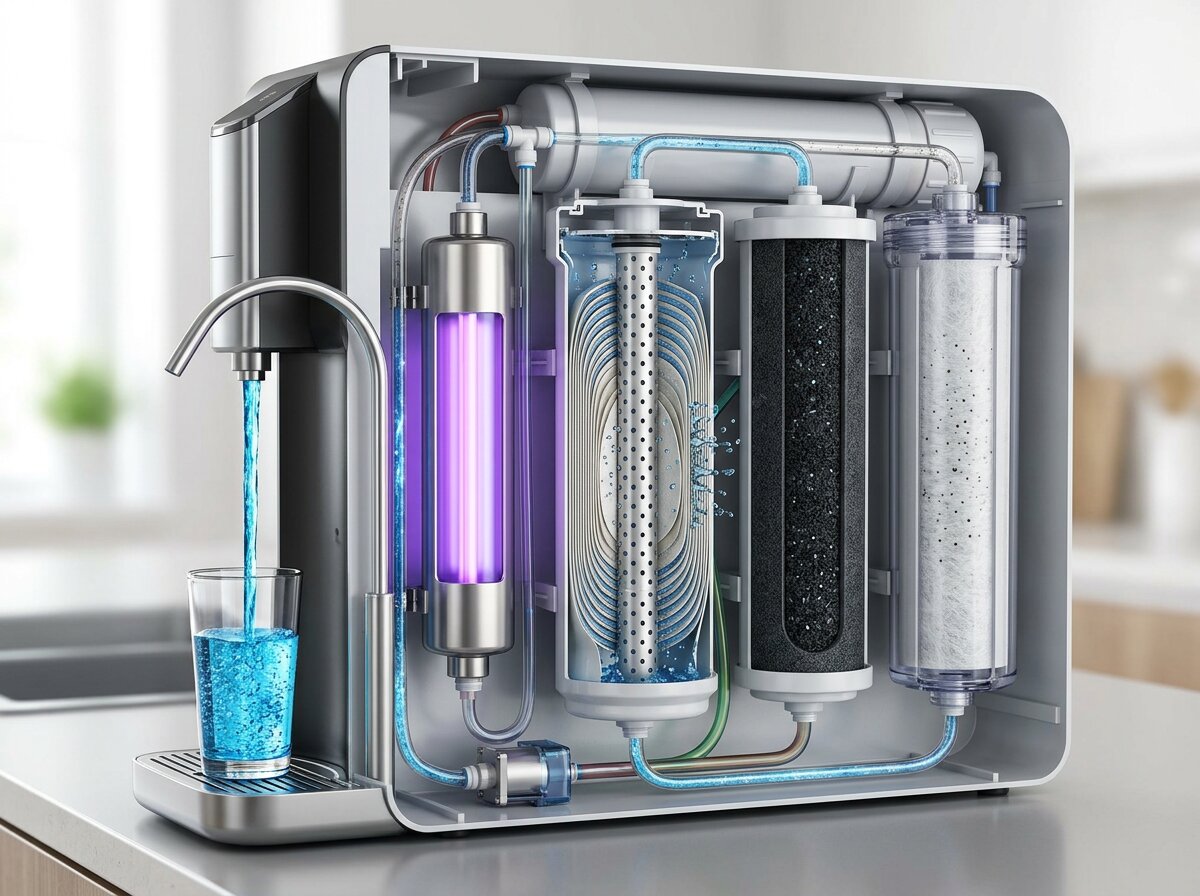
For an importer or distributor, this is where the product actually gets evaluated. The dispenser cabinet is commodity hardware. The filtration stage count, the membrane rating, and the cartridge replacement interval are the spec that separates one factory’s quote from the next.
Compliance Paperwork: What a Supplier Should Hand You
A bottleless office dispenser touches the building’s potable water line, so the compliance questions start at the plumbing code, not the brochure. In the US market, the load-bearing standards are NSF/ANSI 42 for aesthetic effects, 53 for health effects, and 58 for reverse osmosis systems. Anything that touches drinking water — fittings, tubing, the filter housing itself — falls under NSF/ANSI 61, and the lead-content requirement is NSF/ANSI 372, which caps weighted average lead at 0.25%.
California adds Proposition 65 on top: any wetted component with lead, cadmium, or phthalates above the state’s safe-harbor levels carries a warning label obligation, and the 2025 short-form label rule now requires naming the specific chemical. A buyer sourcing for a multi-state rollout needs the supplier to document this before the container lands, not after.
The practical ask from a contract manufacturer is three documents: the NSF/ANSI test reports for the specific model, the certificate of conformity for NSF/ANSI 61/372 wetted parts, and a Prop 65 assessment for California distribution. A factory that cannot produce these is selling hardware, not a compliant product.
Sourcing the Unit: The Spec Sheet Questions
When you move from buying a service to buying a product, the questions change. A manufacturer such as ONEMI, a Guangdong-based water purification equipment maker with in-house membrane and cartridge production, is evaluated on the same terms as any other supplier — here is the short list that separates a serious hot cold water dispenser factory from a trading company quoting a catalog photo:
- Hot-water capacity and recovery rate — a dispenser that serves 30 people at lunch needs a tank that recovers in minutes, not a household unit with a 1.5-liter reservoir.
- Membrane and cartridge model numbers — are replacements proprietary or standard 10-inch/12-inch cartridges? Proprietary cartridges lock in margin but lock in the buyer too.
- Flow rate at the tap and pressure requirements — some units demand 40+ psi incoming pressure, which matters for buildings with weak or well-sourced water.
- Energy draw and standby rating — hot/cold units run a compressor and a heating element; the annual energy cost is a line item, not an afterthought.
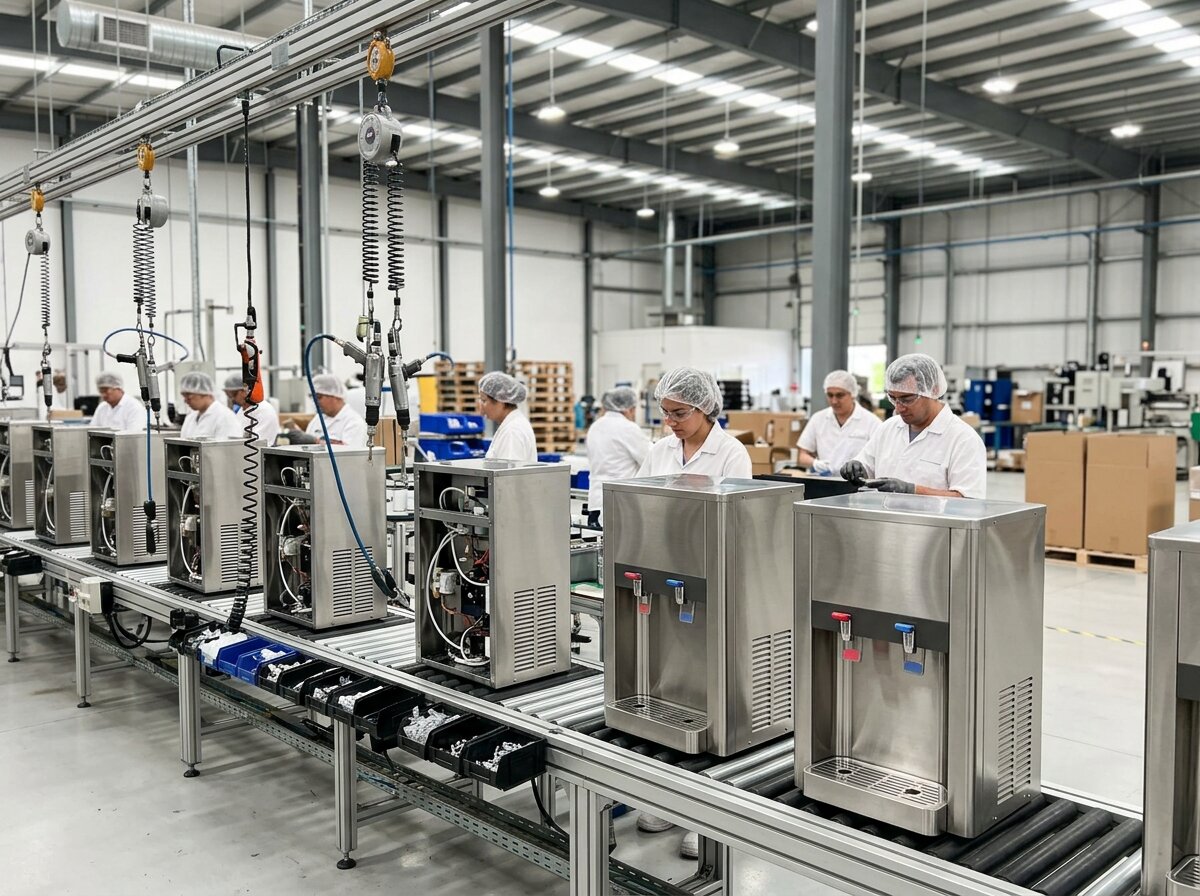
One detail that routinely gets skipped: the inline water cooler supplier relationship determines the consumable pipeline. If the dispenser uses a common cartridge format, the buyer can source replacements from multiple channels. If it is keyed to a proprietary fitting, every future filter order routes back to one vendor. For a distributor building a long-term account, that single decision is worth more than the unit price.
The Consumable Is the Business
For OEM and distribution buyers, the dispenser unit is the entry ticket. The recurring revenue is the filter cartridge and RO membrane. A plumbed office unit needs its sediment and carbon cartridges swapped on a 6–12 month cycle and its membrane on a 2–3 year cycle, depending on incoming water quality and volume. That is a built-in replacement stream attached to every installed machine — the same razor-and-blade economics that drive the wider aftermarket cartridge market.
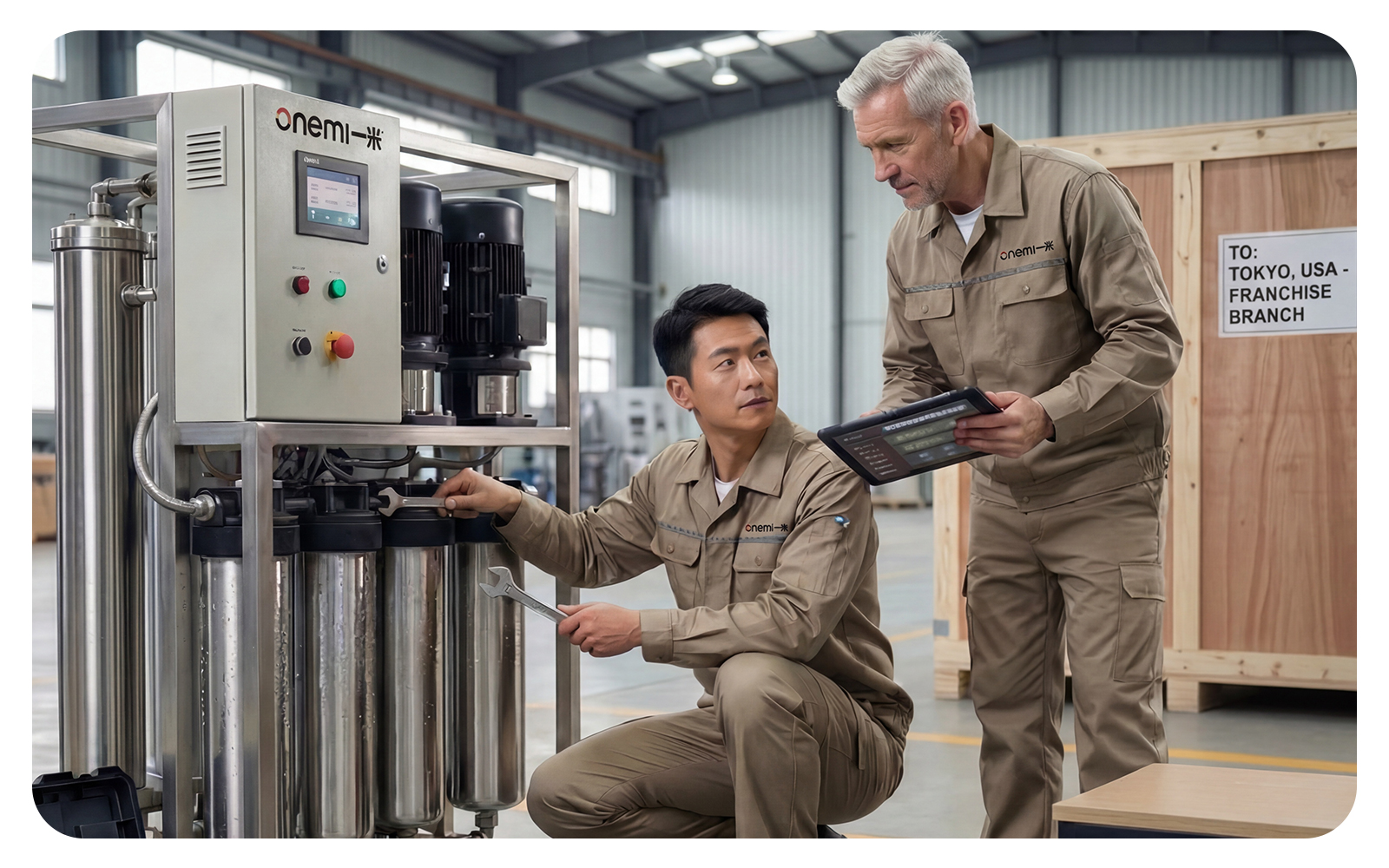
This is why a water filter cartridge supplier with its own membrane sourcing has a structural advantage. When the factory controls the cartridge and the membrane sheet, the distributor’s landed cost on replacements drops, and the end customer’s maintenance cost stays predictable. The unit price on the dispenser is negotiable; the cartridge cost over five years is what actually determines the account’s profitability.
Where This Is Headed
The office segment is not standing still. The units being installed now are increasingly IoT-connected — remote filter-life monitoring, usage telemetry, and touchless dispensing are becoming standard on new commercial deployments, not premium add-ons. UV and ozone terminal sterilization is moving from hospitals into office specifications as post-pandemic hygiene expectations harden into procurement checklists.
For a buyer, the strategic question is simpler than the spec sheet. Bottled delivery rents water quality from a third party and pays for logistics forever. A bottleless unit buys the filtration outright and turns it into a controlled asset — one with a predictable service cycle and a recurring consumable stream. The office that understands the difference stops negotiating over per-jug pricing and starts specifying the machine.