


 한국어

- A restaurant runs four to six water-fed machines, and each one fails differently: espresso scales, ice evaporators calcify, and fountain syrup goes flat under chlorine
- Roughly 70% of commercial ice machine service calls and about half of espresso machine calls trace back to water chemistry, not the equipment itself
- Consolidating a kitchen’s piecemeal cartridges onto one platform typically cuts filtration cost 30-50% — that recurring cartridge margin is where a distributor actually earns
A restaurant runs six water-fed machines, and each one fails differently
Walk the back of a full-service kitchen and count the equipment hooked to the water line. An espresso machine, an ice maker, a fountain or soda dispenser, a combi oven, a steamer, a glasswasher or dishwasher. Six positions, six different failure modes, and in most kitchens, six different filters that arrived one at a time with each new machine.
The result is a maintenance bill nobody can track. Four cartridge types, four replacement schedules, and a service tech who shows up for a “machine problem” that is actually a water problem. Field data keeps pointing to the same number: about 70% of commercial ice machine service calls and roughly half of espresso machine calls are water-related at the root. Scale-choked boilers, corroded fittings, seized valves, failed heating elements. None of them are manufacturing defects.
So restaurant water filtration is not one product. It is three different specs stacked on the same supply line. If a distributor stocks a single “restaurant filter” and calls it done, the customer finds out the hard way — on a Friday night, with the ice machine down.
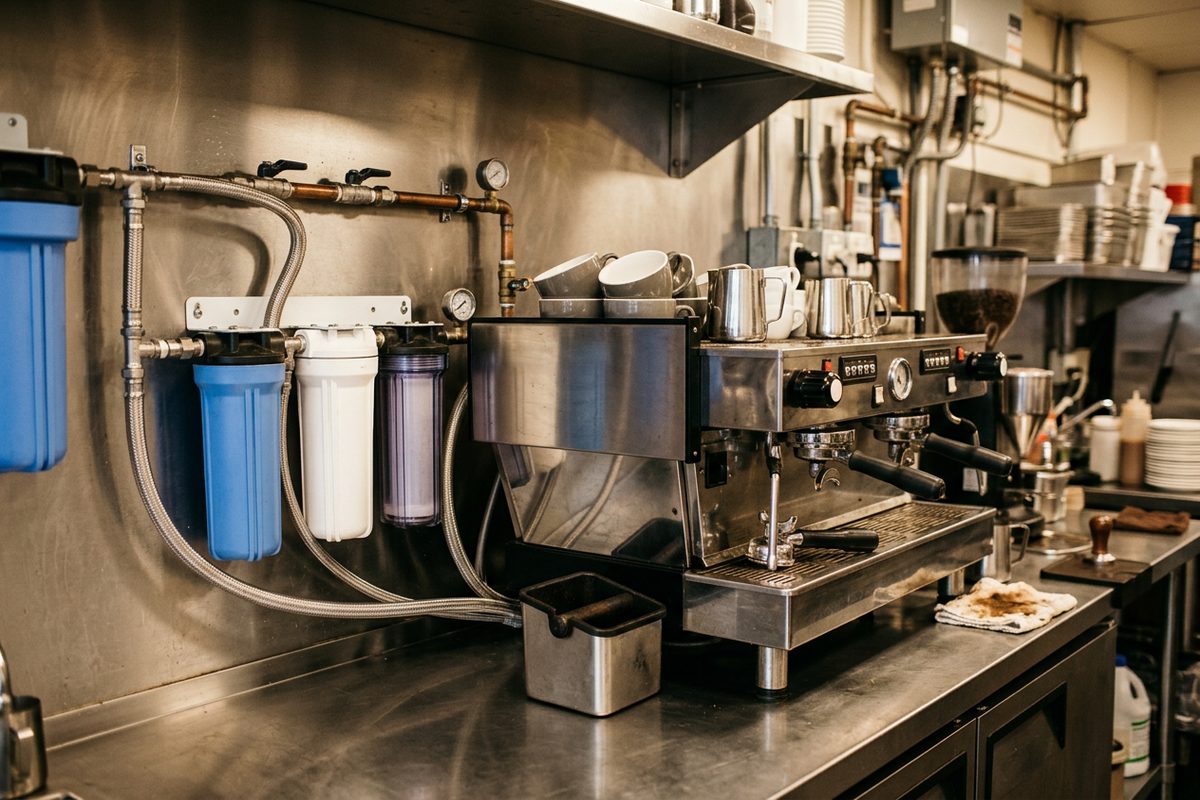
Espresso: scale is the killer, but strip the minerals and the shot dies
An espresso shot is roughly 90-93% water by volume, which makes water the single largest ingredient in the cup. The Specialty Coffee Association’s target sits around 150 mg/L of total dissolved solids, with an acceptable window of roughly 75-250 mg/L. Too far below that and the shot tastes flat and sour; too far above and calcium carbonate scales the boiler and group head.
This is the trap a plain carbon filter falls into. Carbon removes chlorine and taste, which is good, but it does nothing about hardness, and it does not replace the minerals it strips. A machine fed demineralized water will scale less but pour hollow, lifeless espresso. The fix is a cartridge built for the job: carbon block to knock out chlorine, plus scale control for the boiler, tuned to the local hardness so the water still carries enough minerals to extract properly.
Modern machines make this worse, not better. Multi-boiler designs, PID temperature control, and saturated group heads all depend on stable water chemistry. A thin layer of scale on a heat-exchange surface that an old single-boiler machine would shrug off will throw a modern machine’s temperature sensors off, trigger fault codes, and eventually cook the heating elements. The more precise the machine, the less forgiving the water.
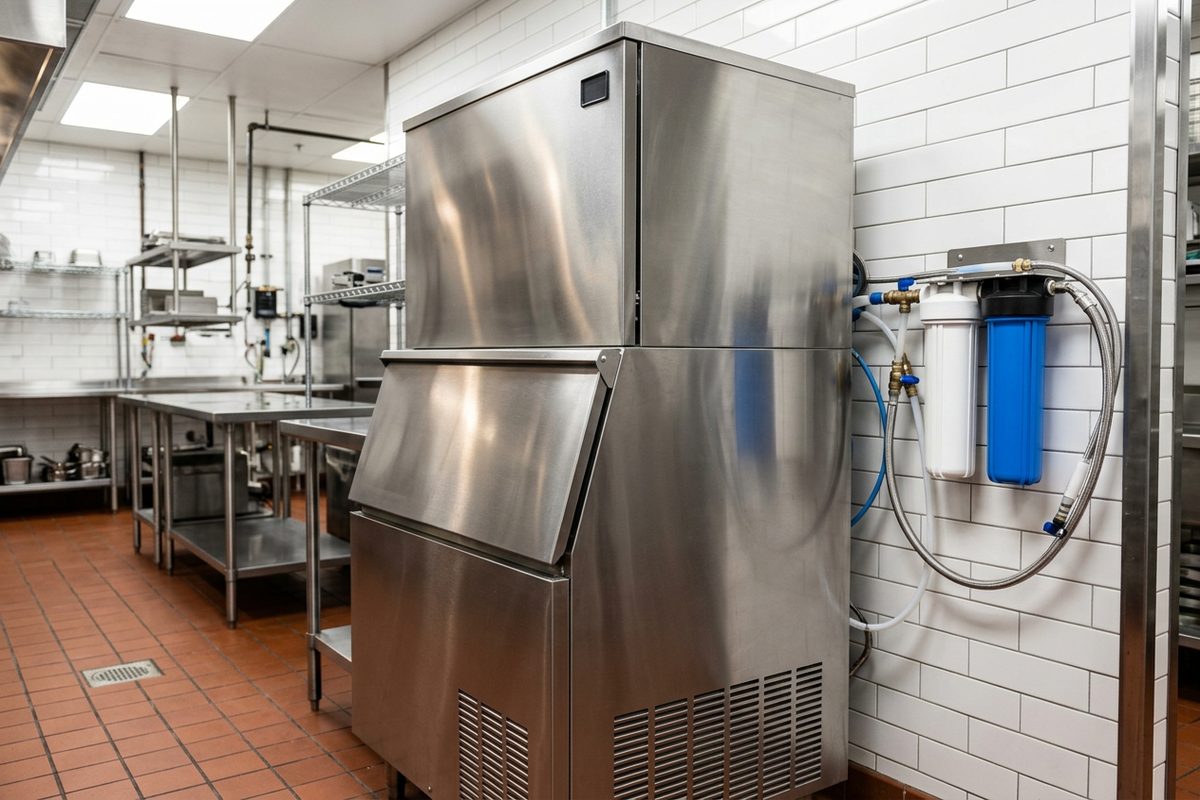
Ice machines: the evaporator is the first thing scale destroys
An ice machine is a heat exchanger first and a water appliance second. Hardness precipitates on the evaporator plate as mineral scale, which insulates the plate, forces longer freeze cycles, and drives up energy cost until the machine simply stops making ice. Chlorine is the second problem: it taints the ice itself, and a drink made with chlorinated ice tastes wrong before the customer can name why.
This is why ice machines need a spec that combines carbon block for chlorine and taste with a polyphosphate or scale-inhibition feed to protect the evaporator. The sizing logic is by volume, not by calendar. A busy cafe’s ice demand outpaces a time-based replacement schedule, so cartridges for this position are usually rated in gallons rather than months.
The stakes are real for the operator: an ice machine that scales up during a heat wave is a revenue outage, not a minor annoyance. For the distributor, it is the single most defensible upsell in the kitchen, because the failure is predictable and the fix is a cartridge swap.
Fountain drinks and steam: chlorine is the silent flavor killer
Fountain soda is mostly water and syrup, and chlorine is the fastest way to flatten the syrup’s flavor profile. Sediment is the second failure: particulates clog the small orifices in the carbonator and dispense valves. A fountain position needs chlorine removal and sediment filtration, and it needs enough flow to keep up with a lunch rush without a pressure drop.
Combi ovens and steamers are the positions most operators forget about until the service bill arrives. A combi oven’s boiler runs hot, pressurized water all day, and scale is what destroys it. Unlike espresso, there is no taste argument to preserve minerals here — this position wants scale control as aggressively as the spec allows, because the boiler is the expensive part and it is not being serviced until it breaks.
Put the four positions side by side and the point is obvious: no single cartridge does all four jobs well. A kitchen that standardizes on one filter for everything is under-protecting the espresso machine and over-paying on the fountain.
The three specs that matter, by position
| Position | Primary water risk | Required filtration | Sizing logic |
|---|---|---|---|
| Espresso machine | Boiler scale + flat extraction | Carbon block + scale control, mineral-preserving | By local hardness |
| Ice machine | Evaporator scale + tainted ice | Carbon block + scale inhibition | By gallons |
| Fountain / soda | Chlorine flattens syrup | Carbon block + sediment | By flow rate |
| Combi oven / steamer | Boiler scale | Aggressive scale control | By hardness + volume |
What ties these together is a shared platform: one head, interchangeable cartridges, so the kitchen orders one part number family and swaps cartridges per position instead of chasing four brands. That is the consolidation story, and it is where the money is.
Consolidation is where the 30-50% savings live
Most kitchens accumulate filtration the expensive way: a filter ships with each machine, and the operator ends up paying four different suppliers for four cartridge types on four schedules. Consolidating those onto a single platform does two things. It cuts the procurement and service overhead, which is where the 30-50% savings claim comes from, and it converts a chaotic maintenance line item into a recurring, predictable cartridge contract.
For an importer or distributor, the attraction is the recurring revenue, not the one-time system sale. A restaurant goes through ice-machine cartridges by the gallon and espresso cartridges by the season. Lock the platform in and the margin repeats on a schedule the customer cannot postpone without risking downtime. The commercial water purification market is already large and moving: food-service and hospitality account for roughly a third of commercial demand, and the segment is growing well into double digits year over year.
What a distributor should actually stock
The winning line is not the deepest catalog; it is the smallest set of SKUs that covers all four positions. A carbon-block-plus-scale-control cartridge family, a high-volume ice-machine cartridge, a sediment pre-filter, and a point-of-use RO for the still-water tap and cold-brew dilution covers nearly every restaurant kitchen without a wall of inventory.
Certification is the non-negotiable part of the pitch. Food-service buyers ask for NSF/ANSI 42 for chlorine and taste reduction and NSF/ANSI 58 for reverse osmosis where a still-water line or coffee spec demands it, and they expect the wetted components to meet NSF/ANSI 61 materials requirements. A supplier that can show the paperwork closes the account faster than one that shows a lower price. For buyers sourcing a private-label restaurant line, the starting point is an OEM water purifier manufacturer that already carries the certification base and can tune cartridge specs to a target region’s hardness.
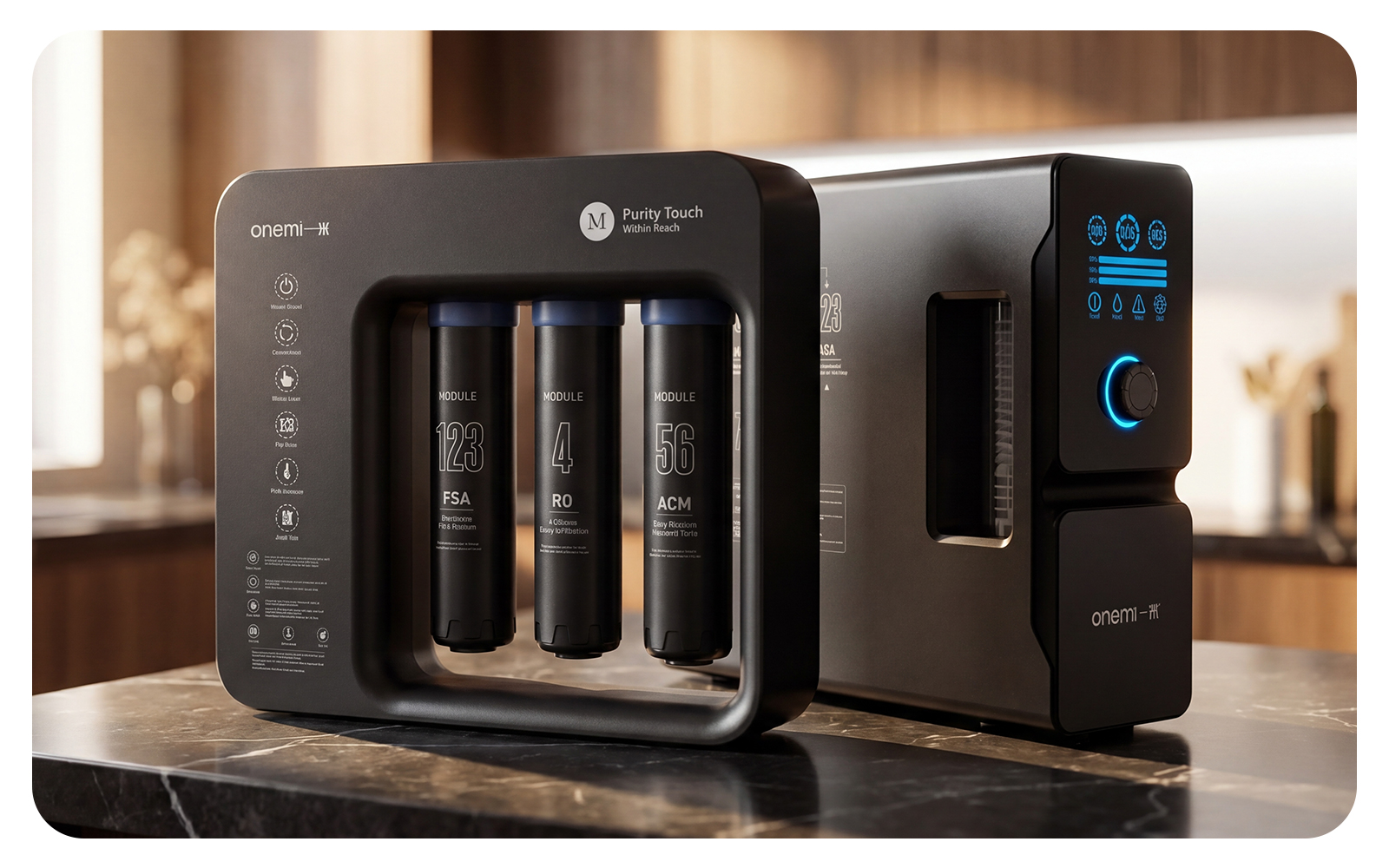
ONEMI, a Guangdong-based water purification equipment manufacturer, builds commercial filtration and RO platforms for exactly this kind of consolidation play. The factory carries CE, UL, FCC, and RoHS across its finished systems, with NSF held at the filter-cartridge level, and supports private-label and OEM programs where the cartridge spec is matched to the local water chemistry the customer actually ships into. For a deeper look at how a factory partner structures MOQ, certification, and lead time, the OEM FAQ walks through the procurement questions distributors ask most. Point-of-use RO for a cafe’s still-water tap and cold-brew line sits alongside the commercial RO system range, and a bottleless instant dispenser rounds out the front-of-house side.
The bottom line for a restaurant operator is simple: water is the cheapest ingredient and the most expensive one to ignore. For the distributor who stocks the right three specs and sells the consolidation, the recurring cartridge is the margin that keeps paying long after the machine sale closes.