



 한국어

- The EPA’s nitrate ceiling of 10 mg/L (as nitrogen) has stood since 1992, but roughly 15% of Americans on private wells sit outside any routine municipal testing regime.
- A USGS survey found 7% of domestic wells exceeded the 10 mg/L limit, concentrated in shallow wells under agricultural land where nitrogen fertilizer is the dominant source.
- Nitrate reduction is an optional claim under NSF/ANSI 58, not an automatic one — importers must verify the named claim, because “RO certified” does not equal “nitrate certified.”
Nitrate is the contaminant that hides behind a number. It has no taste, no odor, no color, and a private well owner can drink it for years without knowing. The only reason anyone ever finds out is a test, and the only reason a private well gets tested is that the owner decides to do it. That gap between “should be tested” and “actually tested” is exactly where a rural water filter market has been building for three decades — and it’s a market most importers still treat as an afterthought.
The 10 mg/L ceiling has been fixed since 1992
The US Environmental Protection Agency set the maximum contaminant level for nitrate in drinking water at 10 milligrams per liter, measured as nitrogen, back in 1992. The number hasn’t moved since. It exists for a single health reason: methemoglobinemia, the “blue baby” condition in which nitrate converts to nitrite in an infant’s stomach and reduces the blood’s ability to carry oxygen. The World Health Organization’s guideline sits a hair higher, at 11.3 mg/L nitrate-nitrogen, but the US ceiling is the one importers build against.
The rule has a structural blind spot. The 10 mg/L MCL is enforceable for public water systems, which must test and report. It is not enforceable for private wells, which no agency routinely tests. That distinction is the entire commercial opening. About 15 percent of Americans draw drinking water from their own private wells, and in agricultural regions those wells sit directly under the thing that causes the problem.
The demand is rural, and it’s not going anywhere
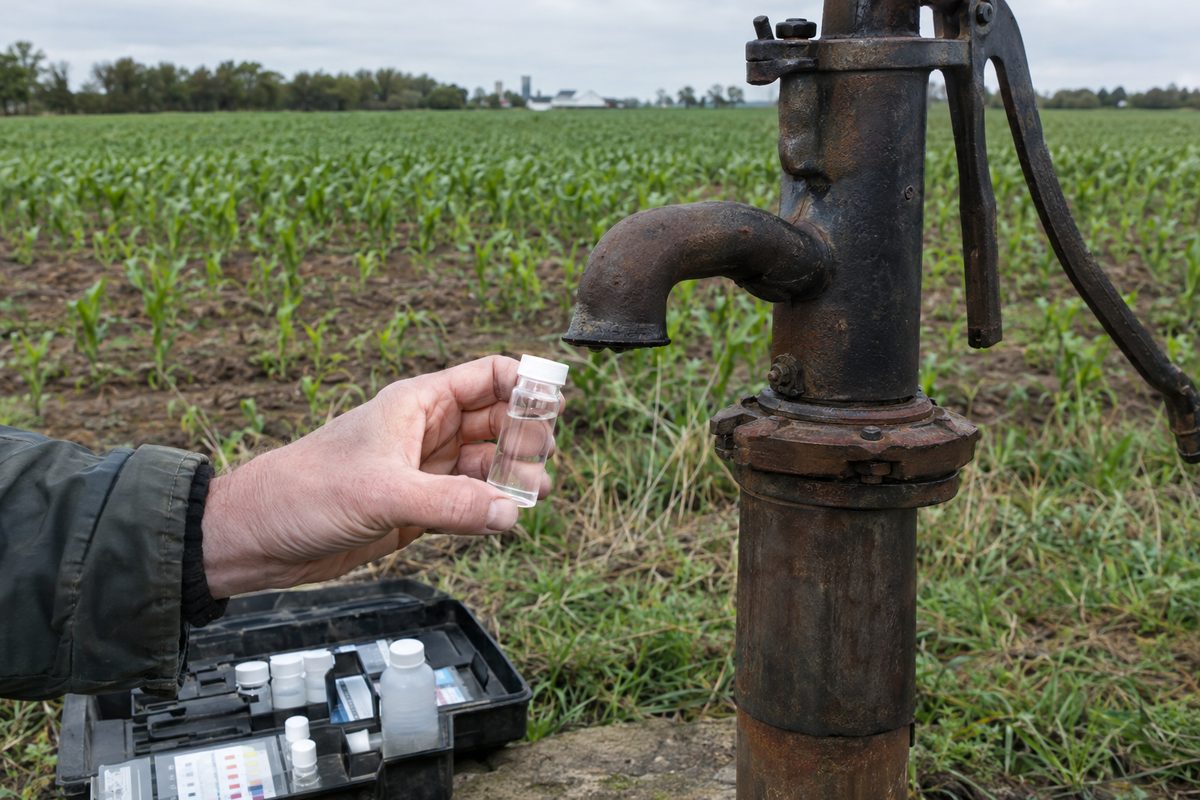
Nitrate contamination is a geography problem before it’s a technology problem. The dominant source is nitrogen fertilizer — synthetic and manure — applied to farmland and washed into shallow groundwater. A United States Geological Survey study found 7 percent of 2,388 domestic wells nationwide exceeded the 10 mg/L ceiling, versus about 3 percent of public-supply wells, with the highest concentrations in shallow wells under 100 feet deep in agricultural areas.
Three facts make this demand durable rather than faddish. First, shallow wells near crop fields and livestock operations are structurally exposed — this is geology, not a passing event. Second, private well owners are the ones responsible for testing and fixing, which means every contaminated well is a potential point-of-use sale with no utility standing in the middle. Third, boiling the water makes nitrate worse, not better, because it concentrates the nitrate instead of removing it. A homeowner who discovers nitrate can’t boil their way out — they either buy bottled water indefinitely or install treatment.
Three technologies remove nitrate; two belong in a stock list
Nitrate is a dissolved anion, which narrows the field of what actually works. Three technologies are recognized for nitrate removal, and they are not interchangeable on a spec sheet.
| Technology | Mechanism | Nitrate claim | Typical fit |
|---|---|---|---|
| Reverse osmosis | Membrane rejection | NSF/ANSI 58 (optional claim) | POU under-sink, premium |
| Anion exchange | Resin ion swap | NSF/ANSI 61 media | POE whole-house, high nitrate |
| Distillation | Boil + condense | — | Very low volume, niche |
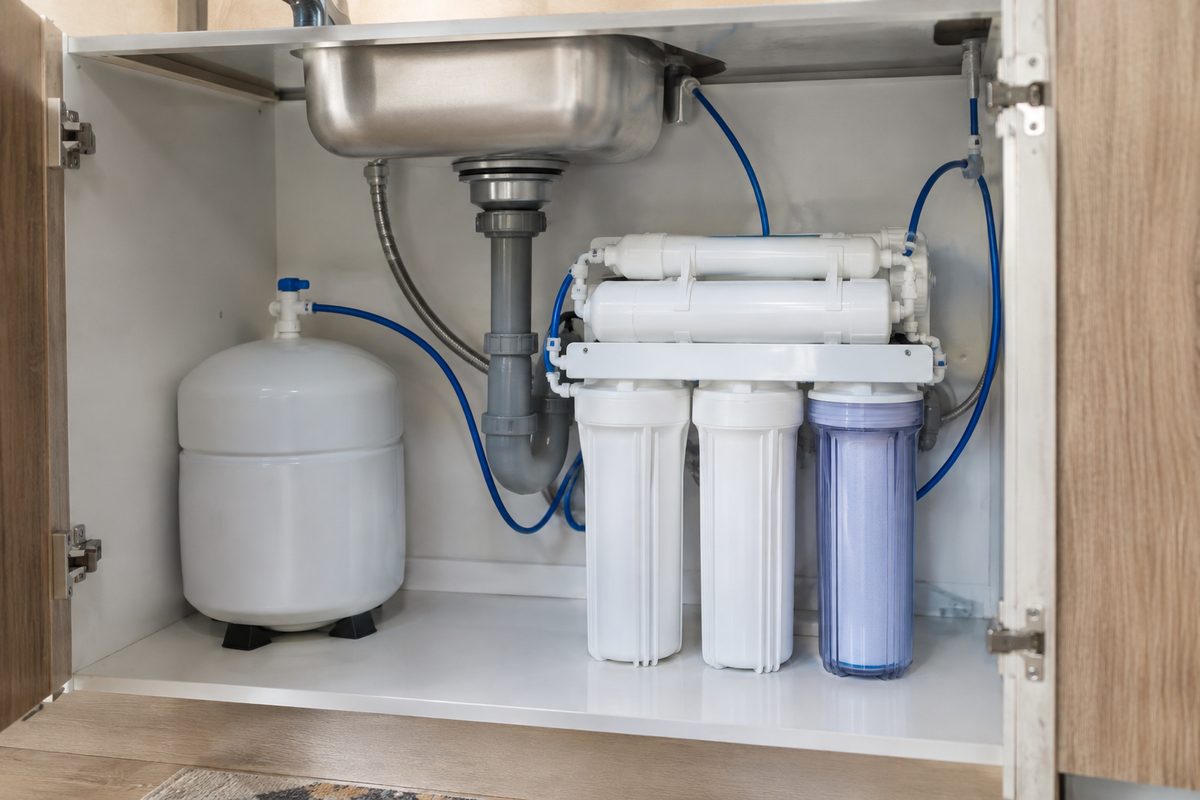
Reverse osmosis rejects nitrate mechanically at the membrane, alongside TDS and a long list of other contaminants. It’s the workhorse for a point-of-use kitchen install and the easiest system for an importer to stock at scale. Anion exchange swaps nitrate ions for chloride ions on a resin bed — effective, and the right call for whole-house treatment, but it adds a regeneration step and a chloride discharge that some jurisdictions scrutinize. Distillation works but produces water slowly and at a high energy cost, so it’s a niche, not a line item.
For the importer, the practical split is this: RO covers the point-of-use demand at a price point that moves volume, and anion exchange covers the whole-house severe-nitrate cases. Most stock lists should lead with RO and offer anion exchange as the up-sell.
The certification gate: “nitrate” has to be named
This is where sourcing mistakes get expensive. Nitrate reduction is not automatic on an RO certification. Under NSF/ANSI 58, the standard for reverse osmosis systems, nitrate/nitrite reduction is an optional claim — it appears on the listing only if the manufacturer tested for it and it’s named on the certificate. An RO system certified for TDS reduction may have no nitrate claim at all.
The sourcing rule is blunt: “RO certified” is not the same as “certified to remove nitrate.” An importer buying for a rural well-water market has to verify that the nitrate/nitrite reduction claim is actually named on the NSF listing for the specific model, not assume it. NSF/ANSI/CAN 372 sits alongside, capping the lead content of the wetted parts themselves at 0.25 percent, which matters for US market entry under the Safe Drinking Water Act’s lead-free definition.
ONEMI’s nitrate-reduction line
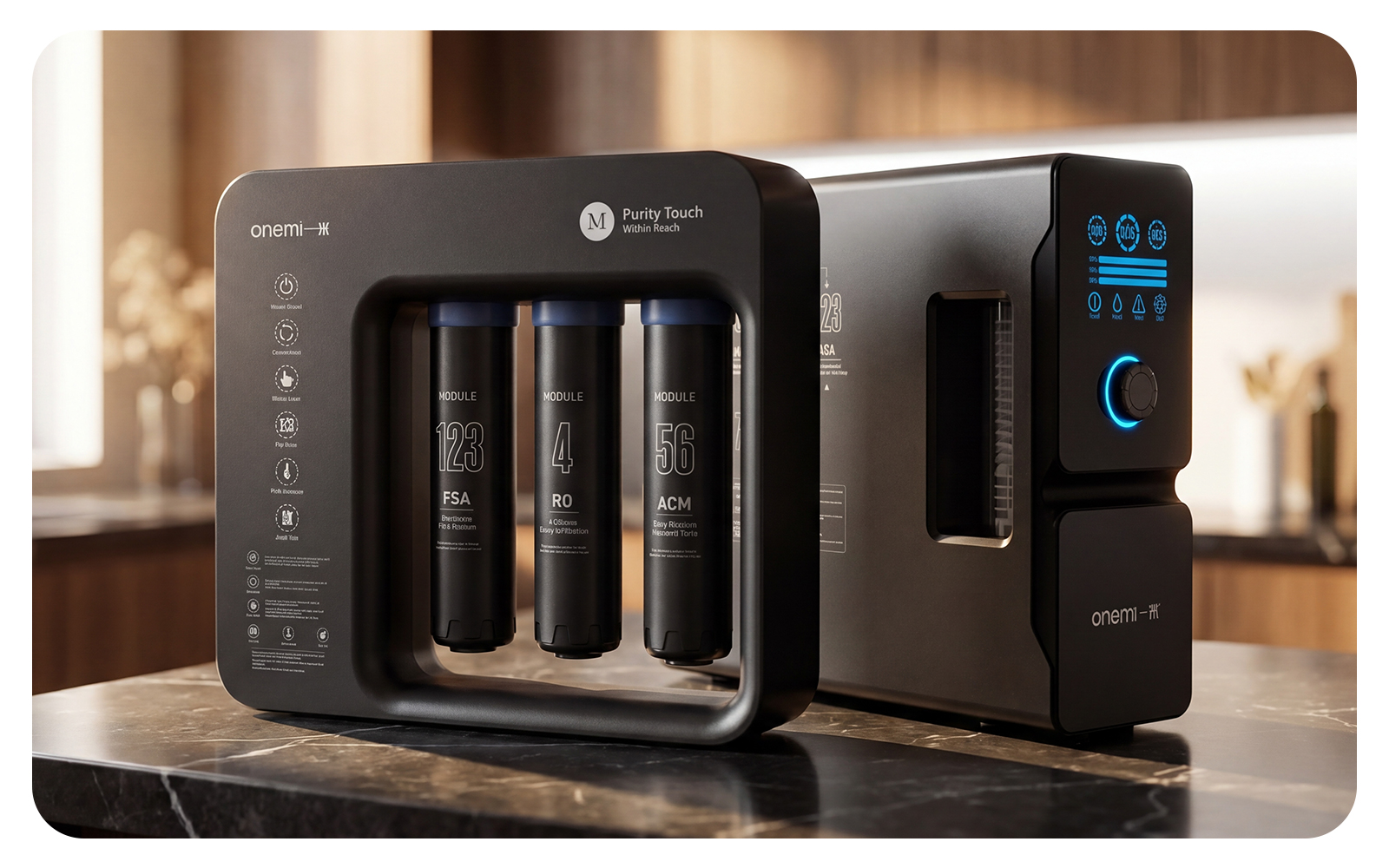
ONEMI, a Guangdong-based water purification equipment manufacturer, builds the two products that carry the rural well-water conversation: under-sink reverse osmosis systems and the nitrate-rated filter cartridges that slot into them.
The under-sink RO line — including the 100G RO system and the 400G smart unit — uses the membrane to reject nitrate alongside TDS, with CE, UL, FCC, and RoHS on the whole unit and NSF certification on the filter cartridges. For importers targeting the US rural market, the cartridges can be engineered toward the nitrate claim on the NSF/ANSI 58 listing, which is the piece that turns a generic RO sale into a nitrate-specific one. The full compliance picture is on our water filter certification page.
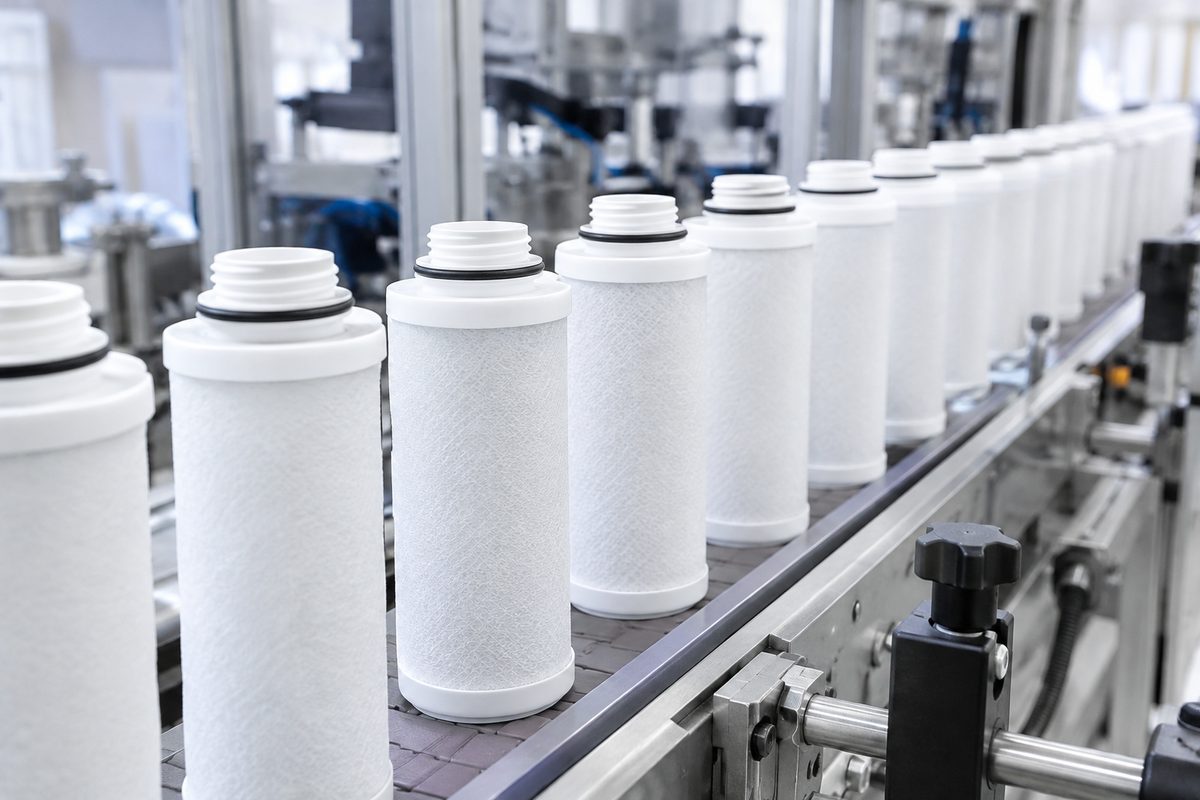
The recurring-revenue angle is the reason to care. A nitrate-rated cartridge is a consumable with a defined replacement interval, and a well owner who filters nitrate out of their water is a repeat customer for the life of the well. In agricultural counties where nitrate levels rise and fall with fertilizer season, the reorder cadence is a predictable annual or semi-annual cycle. For the OEM and private-label buyers we work with, that cartridge stream compounds against the installed base — the unit sale is the entry, the filter sale is the margin. See our OEM/ODM factory capabilities for how the line is built to order.
The importer’s move
Nitrate is not a headline contaminant. It doesn’t get the attention PFAS gets, and it doesn’t have a new regulation stamping a fresh deadline on it — which is precisely why it’s still underpriced as a sourcing opportunity. The 10 mg/L ceiling has been fixed since 1992, the exposed population is a stable 15 percent slice of the country, and every contaminated well is a point-of-use sale waiting for a distributor to show up.
The importers who win this market are the ones who treat it as a regional play: stock NSF/ANSI 58 RO systems with the nitrate claim verified, pair them with nitrate-rated replacement cartridges, and price the reorder stream into the unit economics. The demand doesn’t spike and fade — it sits in the groundwater, year after year, and it moves only when someone installs the right filter.