

 한국어

- The US water softener market is worth roughly $3.18 billion in 2025 and is forecast to reach $4.34 billion by 2031, a 5.28% CAGR, with hard water touching about 85% of households (USGS, Mordor Intelligence).
- Demand splits by state geology: Arizona and Texas are salt-based strongholds (250-350+ ppm), California is pivoting to salt-free and high-efficiency valves under 2025 conservation rules, and Florida pairs moderate hardness with hurricane-driven demand.
- Salt-based ion-exchange still holds about 80% of global softener revenue, but salt-free conditioning is growing fastest at 9.8% CAGR, while a 2025 resin supply shock squeezed the food-grade SAC resin supply chain.
Why Softener Demand Is Tied to State Geology, Not Just Marketing
Most water treatment buyers learn the same lesson within a few shipments: a softener that sells in Phoenix does not automatically sell in Miami. Hard water is a geological fact, not a preference. The U.S. Geological Survey classifies hardness on a scale where soft water runs 0-60 ppm, moderately hard 61-120 ppm, hard 121-180 ppm, and very hard anything above 181 ppm. Roughly 85% of American households live with some degree of hard water, which means the softener category carries a demand floor that does not swing with consumer sentiment the way a discretionary appliance would.
For importers and private-label brands, that floor is useful but not uniform. The buying trigger, the preferred technology, and the regulatory constraint all change as you move from the Colorado River basin to the Edwards Aquifer to the Floridan Aquifer. A distributor stocking one SKU nationwide leaves margin on the table in three out of four regions. This article maps what actually differs across Arizona, Texas, Florida and California, and where a factory partner needs to adjust the bill of materials.
The Four-State Hardness Profile
Hardness readings vary by utility and by season, but the regional pattern is stable enough to plan inventory against.
| State | Typical hardness (ppm) | Source water | Dominant buyer logic |
|---|---|---|---|
| Arizona (Phoenix) | 250-350+ | Colorado River / groundwater | Scale prevention is a maintenance necessity |
| Texas (San Antonio) | 280-300 | Edwards Aquifer (limestone) | Appliance protection and plumbing longevity |
| California (Southern) | 180-300 | Mixed surface/imported water | Regulation-driven; efficiency is the selling point |
| Florida | 0-120 | Floridan Aquifer | Moderate hardness plus storm preparedness |
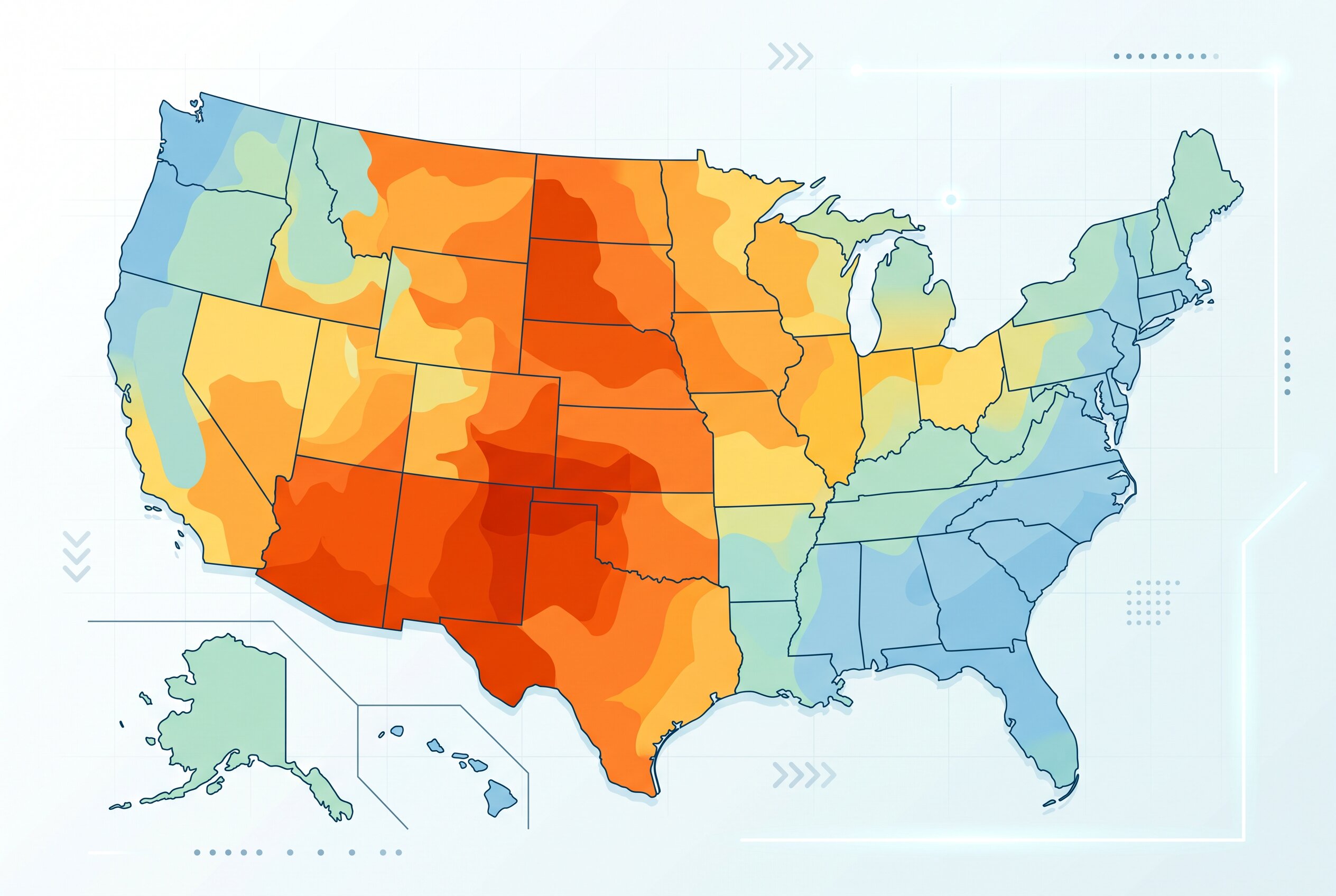
The spread matters because it changes the conversation. In Arizona, a dealer is not selling “soft water” as a lifestyle upgrade; they are selling protection against scale that a customer can already see on their fixtures. In Florida, where municipal hardness often sits under the “hard” threshold, the same softener pitch falls flat and the buyer needs a different argument entirely.
Arizona and Texas: The Salt-Based Stronghold
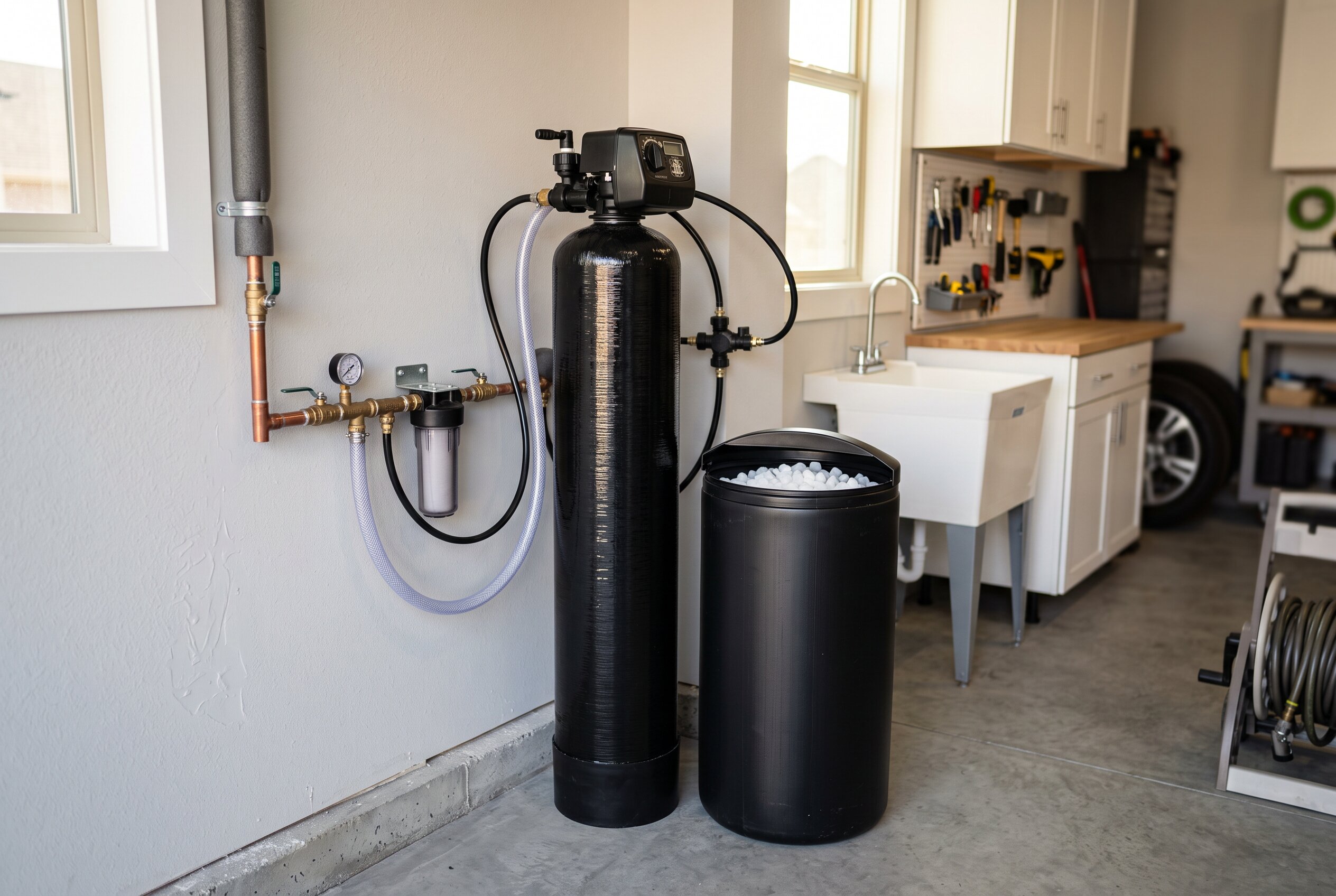
Southwestern utilities draw heavily from the Colorado River and limestone aquifers, both of which load water with calcium and magnesium carbonates. The U.S. Department of Energy has documented that scale buildup can cut water heater efficiency by as much as 30%, which turns softening from a comfort purchase into a repair-avoidance calculation. That is why salt-based ion-exchange remains the workhorse here: it removes hardness minerals outright rather than just preventing them from sticking.
Globally, salt-based systems generated about $2.65 billion in 2025 revenue, roughly 80% of the softener market. The technology is mature, the chemistry is predictable, and the customer already understands the salt-refill routine. For an importer, the Arizona-Texas corridor is the safest place to move volume in single-tank and twin-tank configurations, because the water is hard enough that the customer feels the difference immediately and renews the purchase loop through salt and resin replacement.
Operationally, the brine discharge that makes salt-based systems effective is also what regulators watch. Any factory quoting these states should be able to ship demand-initiated regeneration valves rather than fixed timer valves, because the high-efficiency valve is fast becoming the default expectation even outside formal mandates.
California: Regulation Is Rewriting the Catalog
California is where the softener market gets interesting for sourcing teams. The state’s water conservation framework took effect on January 1, 2025, tightening the conditions under which self-regenerating softeners can be installed. Local water boards have gone further: in October 2024, the Central Coast Regional Water Quality Control Board issued a cease-and-desist order over chloride contamination from traditional softener discharge. The direction is clear – the state is pushing buyers toward salt-free conditioning, high-efficiency metered regeneration, and anything that reduces brine load on municipal wastewater.
That regulatory pressure is a real business signal. Salt-free systems, which condition minerals rather than remove them, accounted for about $660 million of global revenue in 2025 and are growing at a 9.8% CAGR – the fastest in the category. For a private-label brand selling into California, the pitch is not “softer water” but “compliant, no-brine, no-salt-handling.” That is a different SKU, a different manual, and a different liability posture. A factory that only understands ion exchange will keep quoting the product California is trying to phase out.
Florida: Moderate Hardness, Storm-Ready Demand
Florida breaks the pattern in a useful way. The Floridan Aquifer keeps municipal hardness relatively low – typically 0-120 ppm – so the classic hard-water pain point is weaker than in the Southwest. But two forces keep the softener and whole-house category alive. First, the Southwest Florida Water Management District adopted a mandate in May 2025 requiring all new residential installations after June 2026 to use high-efficiency or demand-initiated regeneration valves, effectively retiring legacy timer-based models. Second, hurricane season creates a recurring spike in whole-house filtration and treatment demand, as homeowners harden their plumbing against supply disruptions.
The Florida buyer is more likely to bundle a softener with sediment pre-filtration and a whole-house carbon stage than to buy a softener alone. For importers, that means the margin is in the bundled system, not the standalone tank, and the factory relationship needs to span more than one product line.
Salt-Based vs Salt-Free vs RO: The Sourcing Logic
Choosing what to stock comes down to what the water actually needs and what the local rulebook allows.
| Technology | What it does | Best fit | Watch-out |
|---|---|---|---|
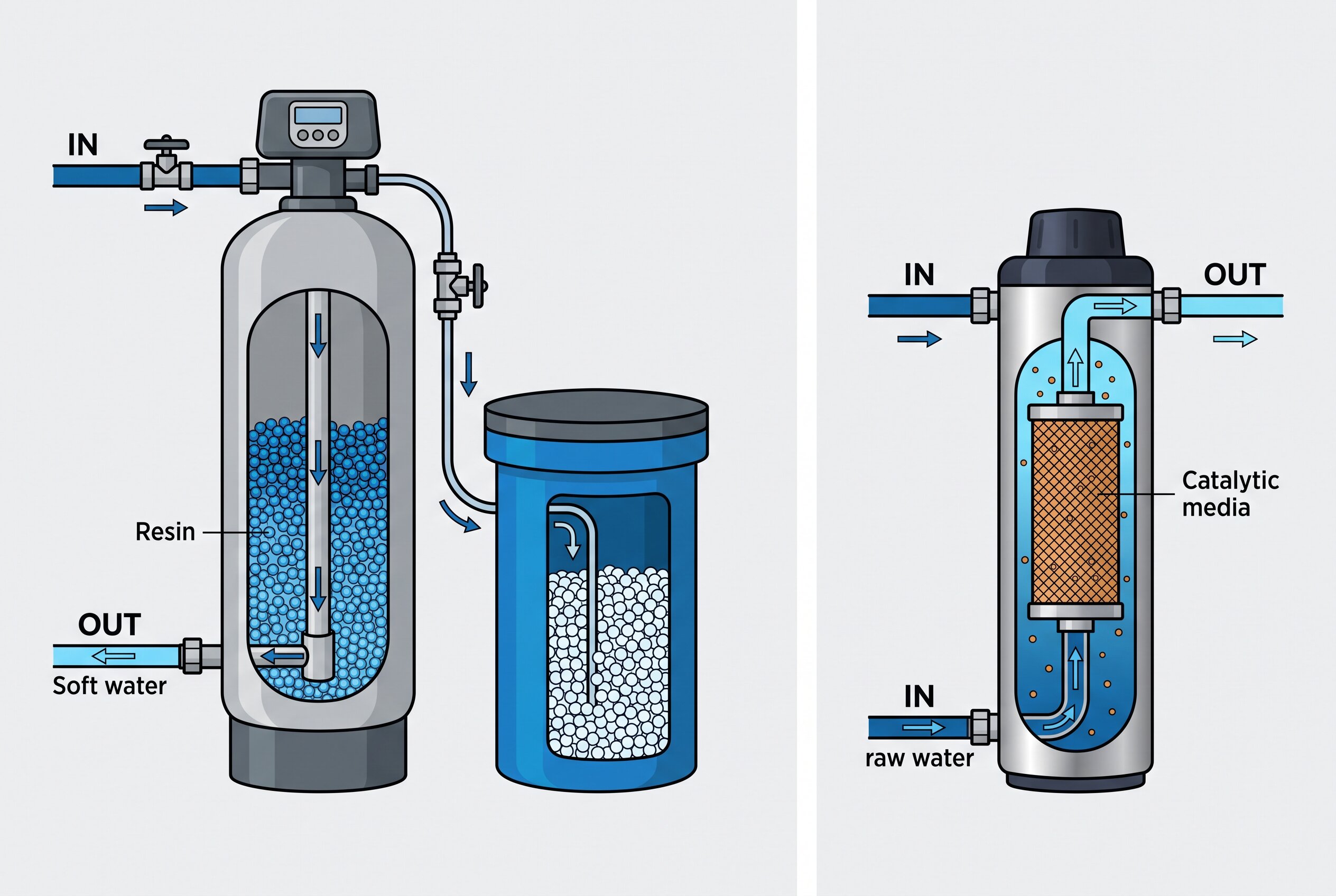
| Salt-based ion exchange | Removes calcium/magnesium via resin + brine regeneration | Arizona, Texas, hard-water commercial sites | Brine discharge rules; salt handling |
| Salt-free conditioning (TAC/catalytic) | Crystallizes hardness minerals so they do not scale | California, moderate-hardness homes | Does not remove hardness; performance claims under scrutiny |
| RO (point-of-use) | Removes dissolved solids for drinking water | Whole-home bundles, drinking-water upgrade | Not a whole-home softener replacement |
One caution from 2025: a salt-free TAC system maker settled a class-action lawsuit in February 2025 over greenwashing and false zero-maintenance claims. The takeaway for importers is not to avoid salt-free technology – it has a real place – but to keep marketing claims conservative and verifiable. Overselling a conditioner as a softener invites the same legal exposure.
The Resin Shock and Why Delivery Lead Times Matter
Supply chain visibility is now a sourcing criterion, not a nice-to-have. In June 2025, a major ion-exchange resin producer declared force majeure at its Louisiana plant, and analysts estimated an 18-22% global supply gap in food-grade strong acid cation (SAC) resin as a result. SAC resin is the core consumable inside every salt-based softener, so any importer holding inventory or planning Q4 builds needs a factory that can show resin sourcing depth and buffer stock.
This is also where contract manufacturing terms become concrete. Ask a prospective partner how they handle resin allocation, whether they hold safety stock, and what their SKD/CKD options look like if freight costs shift. A factory that answers these questions with specifics is worth more than one that answers with a price sheet.
How ONEMI Fits a State-Specific Sourcing Strategy
ONEMI, a Guangdong-based water purification equipment manufacturer, builds softeners and whole-house systems to regional specifications rather than shipping a single global SKU. For the salt-based Southwest market, the relevant capability is demand-initiated regeneration valves and resin sourcing depth; for California, it is salt-free conditioning and high-efficiency metered regeneration; for Florida, it is bundled softener-plus-prefiltration systems. The factory’s OEM and ODM track record, backed by CE, UL and RoHS certification, spans private-label cartridges, custom-branded units, and wholesale programs for distributors building a regional catalog.
If you are mapping a state-by-state softener line, start from the water data in this article and work backward to the bill of materials. The geology does not change – but the valve, the resin spec, and the marketing claim should.
Looking for a softener factory that ships to regional spec? Talk to ONEMI about OEM and ODM water softening systems, or review our softener lineup and whole-house water treatment before you brief your next order.