


 한국어

- More than 23 million US households draw water from private wells — roughly 15% of the population — and none of it is regulated under the Safe Drinking Water Act.
- Iron (0.3 mg/L), manganese (0.05 mg/L) and sulfate (250 mg/L) are only secondary standards; hydrogen sulfide and coliform bacteria carry no enforceable federal limit at all.
- Well water treatment is a point-of-entry, media-and-lamp business — importers who stock oxidation-filtration, air-injection and UV systems capture recurring consumable revenue that the RO aisle can’t match.
23 million households, zero federal oversight
Start with the number that should stop an importer cold. The EPA estimates more than 23 million US households get their drinking water from private wells — roughly 15% of the population, over 43 million people. Not one of those wells is regulated by the Safe Drinking Water Act. That’s the gap.
Public water systems answer to enforceable limits. A private well owner answers to nobody but themselves. The EPA and CDC recommend annual testing for coliform bacteria, nitrates and whatever local geology might add, but testing rates stay low. A USGS study of 2,100 private wells found that roughly one in five contained at least one contaminant above a human-health benchmark.
For a distributor or importer, this isn’t a policy footnote. It’s an installed base of 23 million households that is permanently, structurally underserved — and every one of them is a potential sale for point-of-entry treatment equipment.

What’s actually in the water
Well water problems split into two buckets: the ones that stain and the ones that make people sick. Importers need to know which is which, because they drive different equipment.
Iron and manganese are the staining pair. The EPA’s secondary maximum contaminant levels — the aesthetic, non-enforceable guidelines in 40 CFR 143.3 — set iron at 0.3 mg/L and manganese at 0.05 mg/L. Above those you get reddish-brown or black staining on fixtures and laundry, plus a metallic taste. Sulfate, capped at 250 mg/L, brings a bitter taste and, at high levels, a laxative effect. None of these are health emergencies. All of them are “my water is ruining my house” complaints — and complaints sell treatment.
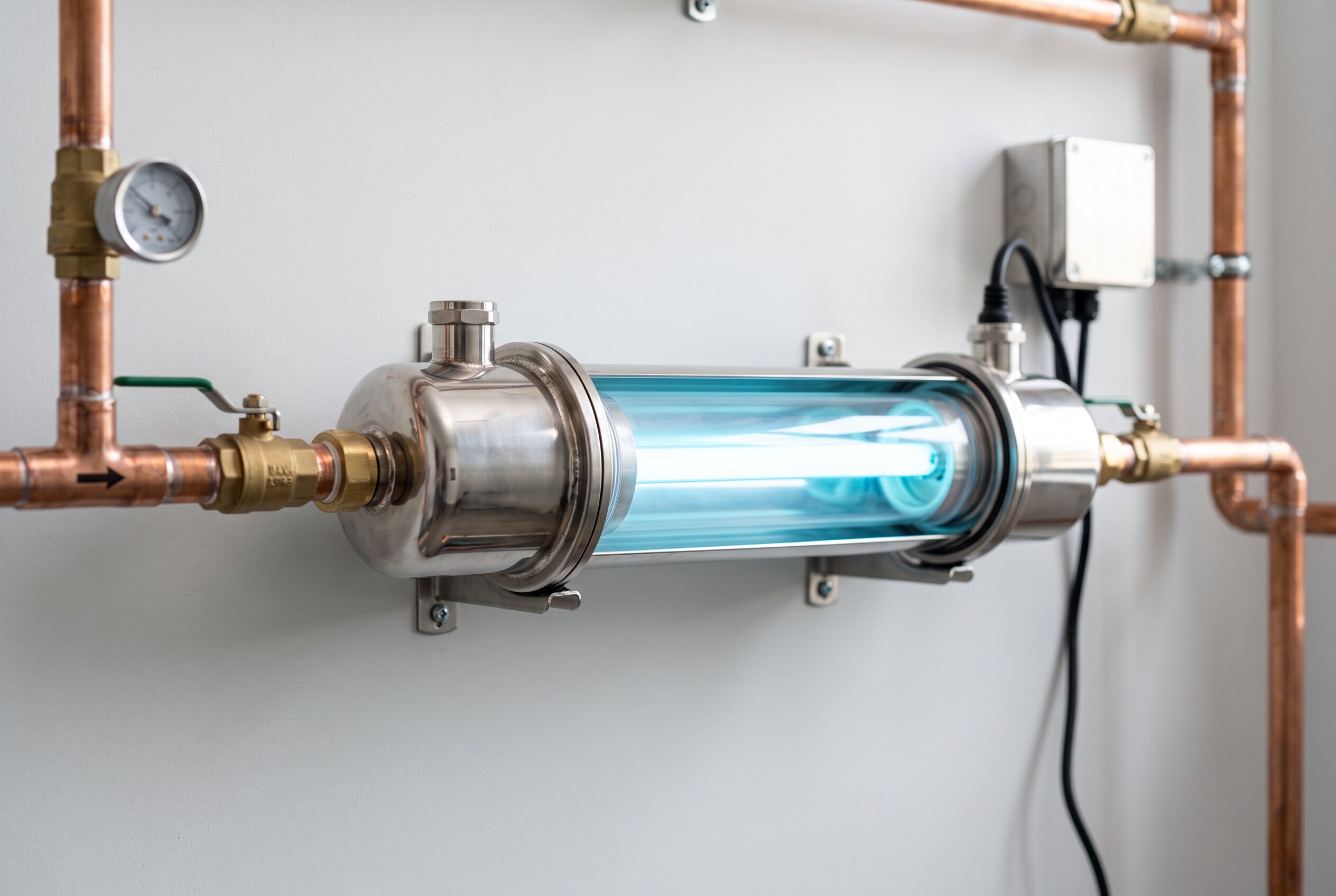
Hydrogen sulfide is the rotten-egg smell. It has no SMCL at all. Coliform bacteria — the fecal contamination indicator — is the one that actually matters for health, and it’s the reason UV sterilizers move in this market. The sequence matters too: iron blocks UV light, so iron has to come out before UV can do its job.
The technology stack, in plain terms
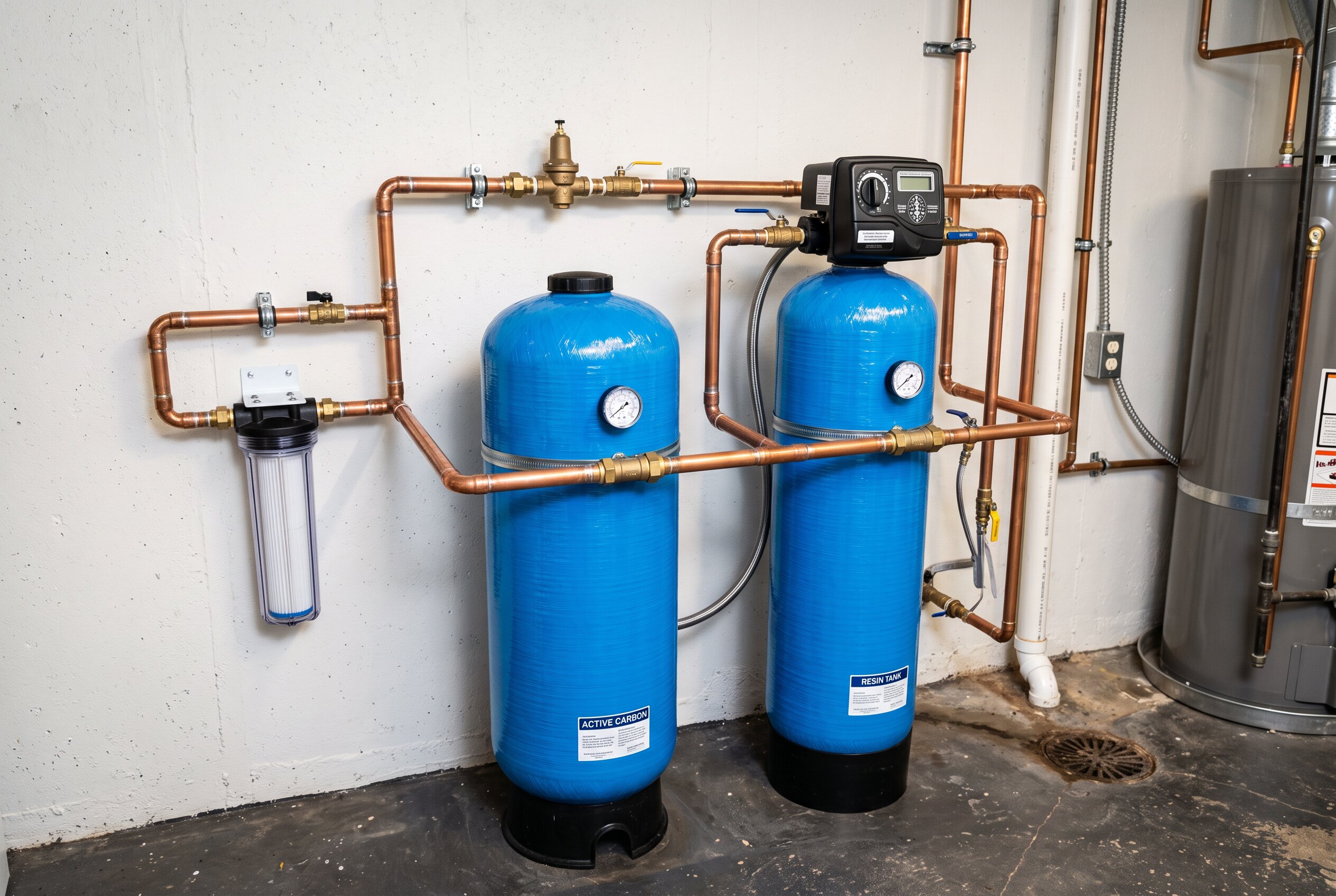
Iron and manganese removal is an oxidation problem. Dissolved iron and manganese are invisible in solution; you oxidize them into solid particles, then filter the particles out. The oxidants are air, chlorine, ozone or potassium permanganate. Air injection is the residential default because it’s chemical-free and low-maintenance. Manganese greensand and catalytic media do the same job inside a filter bed.
Sulfur removal is air injection’s specialty — aerating the water converts dissolved hydrogen sulfide to a solid the media bed traps. Bacteria call for UV disinfection, placed after particulate is gone. A complete well-water stack usually runs sediment pre-filter, then iron/sulfur filter, then a softener if hardness is present, with UV as the final gate.
| Problem | Signal | Treatment | Recurring consumable |
|---|---|---|---|
| Iron | rust stains, metallic taste | oxidation + filtration (air injection / greensand) | filter media |
| Manganese | black staining | catalytic media / greensand | greensand, KMnO4 |
| Hydrogen sulfide | rotten-egg smell | air injection oxidation | air-injection media |
| Coliform bacteria | positive test result | UV sterilization (after filtration) | UV lamp (annual) |
| Hardness | scale, soap scum | ion-exchange softener | salt |
Why this segment beats the crowded RO aisle
Point-of-use RO is a bloodbath. Everyone stocks it, prices race to the bottom, and differentiation is thin. Well water treatment sits on the other side of the same house: point-of-entry equipment sized to a home’s flow rate, installed by a professional, and married to recurring media and lamp replacement.
That last part is the point. An iron filter needs media replacement. A UV system needs a new lamp every year. A softener needs salt. The equipment sale is the entry; the recurring consumables are the margin. For an importer building a SKU line, that’s a revenue stream the RO aisle doesn’t offer as cleanly.
What to check when you source
Sourcing well-water equipment isn’t the same as sourcing a countertop pitcher. Three things matter. Media and valve quality come first — the valve is the only moving part on an oxidation-filtration system, and a cheap one fails inside a year and poisons the whole account. Sizing comes second — a system rated at 8 gpm installed on a 12 gpm household will be returned. Certification comes third — NSF/ANSI 42 and 53 for carbon and filtration, NSF 55 for UV, and the cartridge-level certifications that US buyers actually look for.
Ask the factory about media specs, valve brand, and whether they’ve shipped into the US market before. A factory that quotes an iron filter as a black box is guessing. One that can tell you the media type, the backwash flow rate and the valve duty cycle is the one worth a sample order.
ONEMI’s well-water line
ONEMI, a Guangdong-based water purification equipment manufacturer, builds the components of that stack — from sediment pre-filters and ultrafiltration units for bacteria to whole-house filtration and softening. For importers, the value is in the combination: a single supplier for the point-of-entry line means one certification trail, one quality standard, and consolidated shipping through an OEM/ODM factory.
The well-water segment won’t stay a niche for long. Water quality anxiety in the US is rising, and the 23 million households on wells aren’t moving onto municipal water any time soon. Stock the equipment that fixes their specific problems, and you’re not chasing a trend — you’re filling a gap that’s been there for decades.