

 한국어
한국어

Walk into any medium-sized office park in Parque das Nações in Lisbon or the industrial zones of Maia, and you will see a familiar, frustrating sight. Tucked next to the modern reception desk or hidden in the corner of the staff canteen sits a stack of blue, 18.9-liter plastic water jugs. Or worse, a recycling bin overflowing with empty 1.5-liter PET bottles from the local Continente or Pingo Doce. It is a logistical headache that office managers quietly tolerate every single day.
Executive Summary
- Portuguese offices with 50 employees discard between 7,500 and 10,000 single-use plastic bottles annually due to outdated trust in municipal tap water quality.
- Transitioning to point-of-use (POU) filtration systems reduces corporate carbon footprints while addressing localized pipe corrosion and chlorine taste issues common in older urban centers like Porto and Lisbon.
- Implementing mains-fed water dispensers cuts corporate drinking water expenses by 60% to 80% compared to traditional bottled water delivery contracts.
Managing this is a logistical nightmare. Someone has to sign for the deliveries, lift those heavy 20-kilo jugs onto the dispenser, find a storage closet that isn’t already packed with old IT equipment, and coordinate the return of empty containers. It is an expensive, inefficient loop that continues simply because “that is how we have always done it.”
The Psychology Behind the Plastic Pileup in Portuguese Workplaces
Why do Portuguese businesses remain so fiercely loyal to bottled water? The answer lies in a deep-seated cultural skepticism toward tap water, a legacy of the late 20th century when municipal water infrastructure across Portugal was still undergoing modernization. Today, the Entidade Reguladora dos Serviços de Águas e Resíduos (ERSAR) consistently reports that over 98.5% to 99% of mainland Portugal’s tap water is safe to drink. Yet, the average Portuguese citizen still consumes roughly 110 to 130 liters of bottled water per year, a habit that naturally bleeds into the corporate environment.
It is not just about safety; it is about sensory experience. In coastal areas like the Algarve or the Lisbon metropolitan area, tap water often carries a heavy chlorine taste or a high mineral hardness that makes it unpalatable straight from the faucet. In older historic districts, such as downtown Porto or Lisbon’s Alfama, the public water mains might be perfectly clean, but the internal plumbing of the buildings themselves consists of aging galvanized iron or copper pipes. This introduces metallic undertones and occasional turbidity that make employees run straight back to bottled alternatives.
Let’s look at the actual numbers. A typical Portuguese company with 50 employees operates approximately 220 to 240 business days a year. If each employee drinks a modest 1 liter of water per day, the office consumes up to 12,000 liters of water annually.
| Water Source | Annual Plastic Waste (50-Pax Office) | Estimated Annual Cost (€) | Storage & Labor Requirements |
|---|---|---|---|
| 1.5L Single-Use PET Bottles | 6,500 – 8,000 bottles | €2,400 – €3,200 | High; daily restocking and recycling management |
| 18.9L Returnable Carboys | 400 – 550 heavy jugs | €3,500 – €4,800 | High; requires dedicated floor space and heavy lifting |
| Mains-Fed Filtered Dispenser | Zero plastic waste | €600 – €1,200 (fixed lease/filter) | Negligible; automatic operation and annual servicing |
When you break down the math, the ecological toll is staggering. A single mid-sized company in Portugal contributes up to 10,000 individual plastic bottles to the waste stream every year just to keep its workforce hydrated. Even with Portugal’s relatively high recycling awareness, a significant portion of these PET bottles ends up in landfills or incinerators, contradicting the ESG (Environmental, Social, and Governance) targets that modern Portuguese enterprises are desperate to meet.
The Technical Reality of Filtering Portugal’s Tap Water
To successfully replace bottled water, an office filtration system cannot just be a simple carbon pitcher sitting in the breakroom fridge. It must handle the specific chemical profile of Portuguese municipal water. Water hardness in Portugal varies dramatically by geography. In the northern regions, such as Minho or Douro, the water is generally soft, but can be highly acidic and prone to picking up metals from old pipes. In the south, particularly in the Alentejo and Algarve, the water is notoriously hard, rich in calcium and magnesium carbonates that cause rapid scale buildup in heating elements and cooling blocks.
An effective workplace system must employ a multi-stage filtration strategy to combat these regional variations. First, a sediment pre-filter removes micro-particles, rust, and silt that are common in older urban pipe networks. Next, an activated carbon block filter absorbs chlorine, volatile organic compounds (VOCs), and agricultural runoff residues that occasionally seep into groundwater supplies in the central agricultural plains. For areas with high limescale issues, a polyphosphate or ion-exchange stage is critical to prevent the dispenser from clogging and to ensure the water tastes crisp and clean.
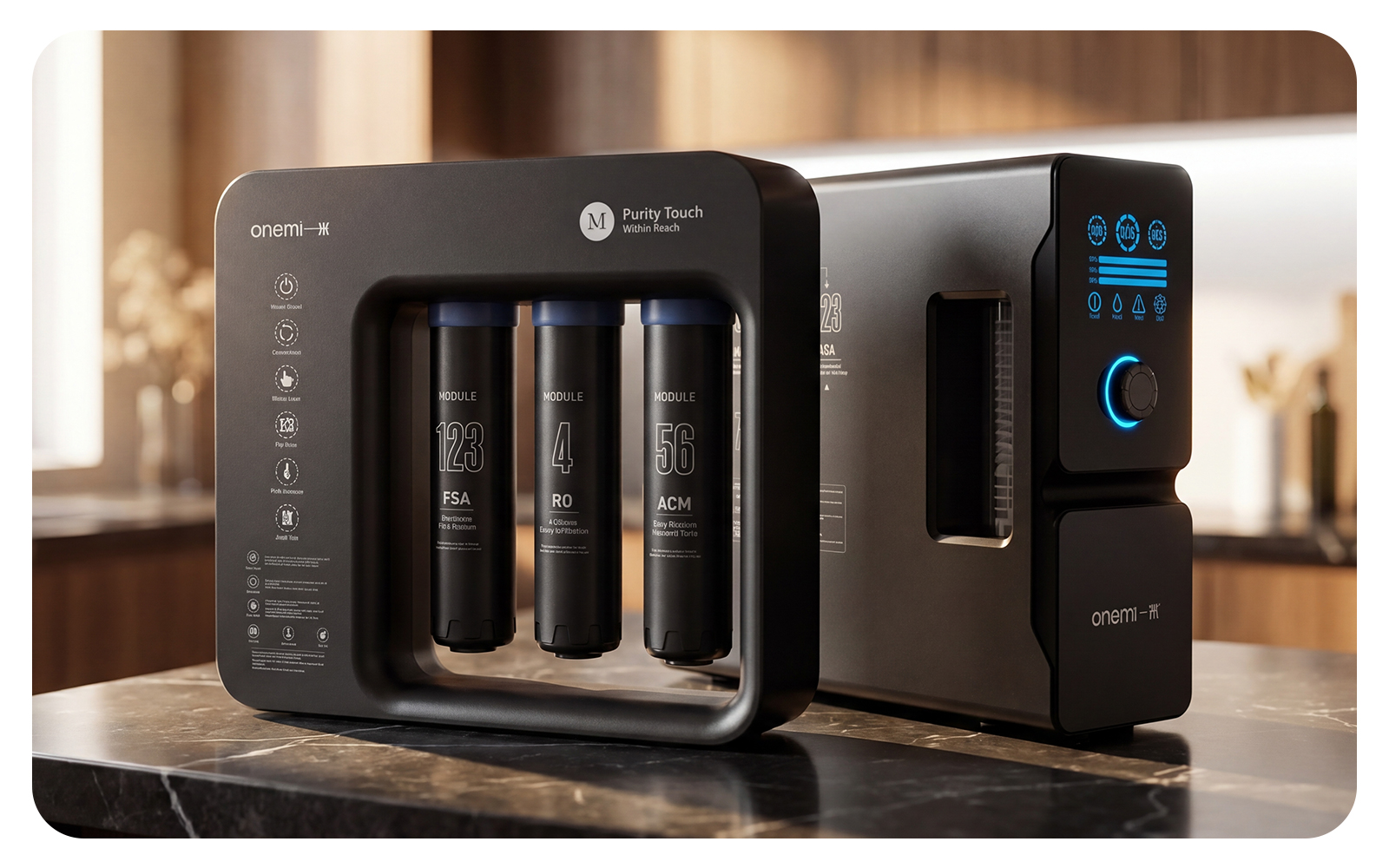
This is where advanced systems like ONEMI come into play, integrating high-capacity filtration membranes with direct-chill cooling technology. By chilling the water instantly as it flows from the mains, these systems prevent the bacterial growth that can sometimes occur in the stagnant reservoirs of traditional water coolers. It is a continuous, closed-loop process that guarantees the water dispensed at 4:00 PM on a Friday is just as fresh and bacteriologically pure as the water drawn at 9:00 AM on Monday morning.
Do you really want your office manager spending three hours a week inventorying water deliveries?
The Real-World Financial Math of the Switch
Let’s look at a concrete case. A logistics firm based in the industrial area of Vila Nova de Gaia was spending roughly €380 per month on a contract for 18.9-liter water carboys for their 60-person office. This did not include the electricity cost of running two outdated, energy-inefficient cooling dispensers that constantly hummed in the background, nor did it account for the lost productivity of the administrative assistant who spent hours tracking deliveries, processing invoices, and cleaning up water spills.
The firm decided to cancel their delivery contract and install two plumbed-in water purifiers connected directly to their municipal water supply. The financial shift was immediate. Instead of a variable monthly bill that spiked during the hot summer months in Portugal, they transitioned to a flat-rate monthly lease that covered both the equipment and the twice-yearly preventive maintenance visits. Their annual drinking water expenditure dropped from over €4,500 to a fixed €1,400. Over a three-year period, this single administrative change saved the company more than €9,000 while permanently removing thousands of plastic containers from their supply chain.
Here is a practical gotcha that most office managers overlook when making the switch: the physical location of your water mains. Unlike a standalone bottled cooler that you can plug into any standard electrical outlet in the middle of a hallway, a mains-fed dispenser requires a water connection. In many modern Portuguese office buildings, water access is strictly limited to the kitchen pantry or the bathrooms. Running a thin, flexible 1/4-inch food-grade tube through drop ceilings or behind baseboards is usually straightforward, but it does require an initial site assessment. If your breakroom is located more than 15 meters away from the nearest water source, you may need to plan for a slightly more complex installation process or consider localized under-sink filtration units instead.
Implementing a Zero-Plastic Water Strategy in Your Office
Transitioning away from plastic bottles requires more than just installing new hardware; it requires managing employee expectations and habits. If you simply install a new dispenser without explaining why, employees might suspicious of the “tap water” and continue to bring their own single-use bottles from home. The change must be framed as an upgrade to their daily workplace experience.
Start by providing every employee with a high-quality, double-walled stainless steel reusable bottle branded with your company logo. This eliminates the need for disposable plastic or paper cups at the dispenser station, which often just replace one waste problem with another. Pair this with clear, transparent communication about the filtration technology now installed in the building. Sharing the water quality test results or explaining that the ONEMI system uses sub-micron filtration to remove 99.9% of impurities can go a long way in dismantling the cultural bias against tap water in Portugal.
To ensure a seamless transition, follow this implementation checklist:
- Conduct a site audit: Identify water inlet points, drainage options, and electrical outlets in your preferred breakroom locations.
- Analyze your local water: Determine if your region suffers from high limescale (Algarve/Alentejo) or potential pipe sediment (historic Lisbon/Porto) to select the correct filter media.
- Choose the right capacity: Ensure the dispenser’s hourly cooling capacity matches your peak usage times, such as the mid-morning coffee break or the post-lunch rush.
- Establish a maintenance schedule: Filters must be changed at least every six to twelve months, depending on usage volume, to maintain water quality and flow rates.
By taking these steps, Portuguese businesses can easily align their daily operations with the national push toward a circular economy, drastically reducing municipal waste while providing a healthier, more cost-effective hydration solution for their teams.