



Water Filter Cartridge Replacement: How Often and Why It Matters
If you own a water filtration system, you already know it removes contaminants and improves water quality. But there is one question that many users overlook — how often should you actually replace the filter cartridges? And more importantly, why does it matter? ONEMI breaks down everything you need to know about filter replacement schedules and consequences of neglecting them.
Why Regular Filter Replacement Is Critical
Filter cartridges are the heart of any water purification system. Over time, they trap sediments, chemicals, and microorganisms. Once the filter media is saturated, it can no longer effectively remove contaminants. Worse still, a saturated filter becomes a breeding ground for bacteria, turning your “purification” system into a contamination source.
Filter Replacement Schedule by Type
Different filter stages have different lifespans. Here is the general guide for standard RO (reverse osmosis) systems:
PP Sediment Filter (3–6 Months)
The first line of defense. It traps large particles like sand, rust, and sediment. If you notice reduced water flow or visible sediment in your filtered water, your PP filter is likely clogged. In areas with high turbidity, you may need replacement every 2–3 months.
Activated Carbon Filter (6–12 Months)
Carbon filters remove chlorine, volatile organic compounds (VOCs), and unpleasant tastes and odors. Once saturated, they stop working — and worse, trapped organics begin to decompose, giving your water a strange smell. This is the most common cause of “my water filter smells bad.”
RO Membrane (2–3 Years)
The RO semi-permeable membrane removes up to 99% of dissolved solids, heavy metals, and bacteria. A properly maintained RO membrane can last 2–3 years, but only if the preceding filters (PP + carbon) are changed on schedule. Neglecting pre-filters will quickly foul the expensive RO membrane.
Post-Carbon (T33) Filter (6–12 Months)
Also known as the polishing filter, this final stage improves taste. It should be changed at the same interval as the main carbon filter. Some users report a sour or powdery taste when this filter expires.
UF Membrane (12–24 Months)
If your system has an ultrafiltration (UF) stage, it typically lasts 1–2 years. UF membranes are less prone to fouling than RO but still need periodic replacement.
Signs That Your Filter Needs Replacement
Do not wait for the calendar to tell you. Watch for these warning signs:
1. Bad taste or odor: The most obvious signal. If your water starts tasting metallic, plastic-like, or has a musty smell, replace the carbon filter immediately.
2. Reduced water flow: A significant drop in flow rate usually means the sediment or carbon filter is clogged.
3. Higher TDS readings: If you use a TDS meter and notice readings rising above 50 ppm (from a baseline of 10–20 ppm), your RO membrane may be failing.
4. Visible sediment: Particles appearing in your glass of filtered water indicate the sediment filter has failed.
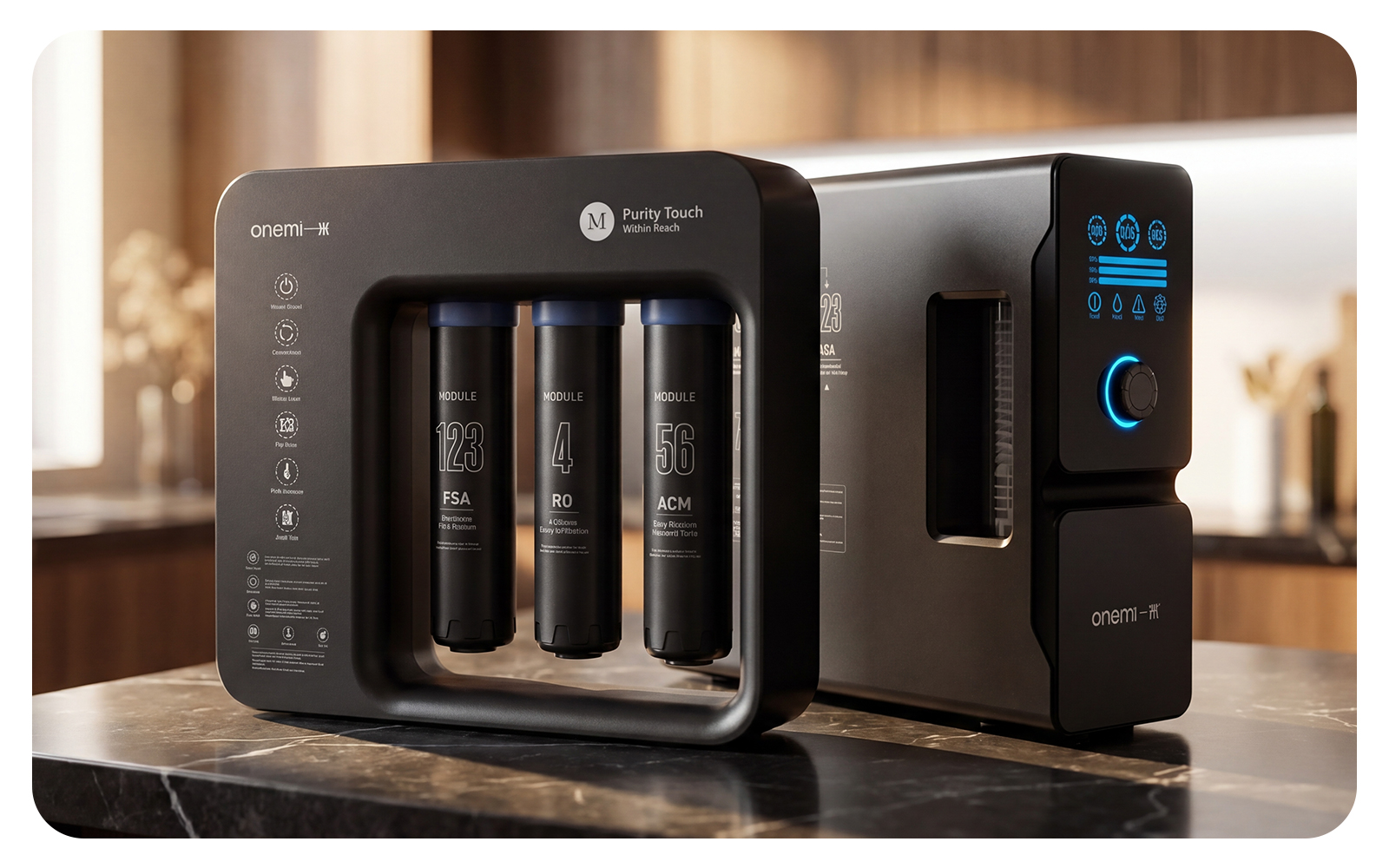
5. System error indicators: Many modern systems like the ONEMI X2A series feature smart displays that alert you when filters need replacement. Do not ignore these alerts.
What Happens If You Skip Filter Changes?
Skipping filter replacements has three consequences:
- Health risk: Bacteria and mold grow inside saturated filters. Studies show that expired carbon filters can have bacterial counts 100x higher than replacement-grade filters.
- RO membrane damage: The RO membrane costs significantly more than pre-filters. A fouled RO membrane due to neglected pre-filters means a much more expensive repair.
- Energy waste: Clogged filters increase the pump load, consuming more electricity and reducing system efficiency.
ONEMI’s Smart Filter Management
ONEMI addresses this with its Yimi PureFlow Technology integrated into the X2A series. The intelligent display tracks filter usage in real-time, showing remaining lifespan for each stage. When a filter is near expiration, the system alerts you automatically — no need to remember dates.
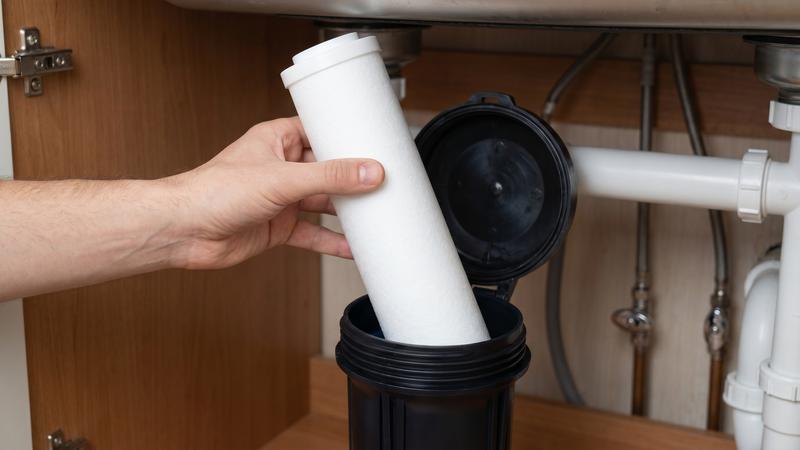
The ONEMI replacement filter kits are designed for foolproof installation: color-coded connectors and quick-twist cartridges make replacement a two-minute job without tools. Each kit comes with NSF-certified materials, ensuring your water quality remains at the highest standard.
Pro Tips for Extending Filter Life
- Install a pre-filter: Adding an external sediment pre-filter before your main system can extend all internal filters by 30–50%.
- Flush regularly: Most RO systems have an auto-flush feature. If yours doesn’t, manually flush the system once a week.
- Keep it cool: Install your system away from direct sunlight and heat sources to prevent algae growth in the filter housing.
- Use it consistently: Daily use keeps water moving through the system, preventing stagnation. If you travel frequently, flush the system thoroughly after returning.
Recommended Replacement Kit
For standard 5-stage RO systems, look for a complete replacement kit that includes: PP sediment filter, granular activated carbon (GAC), carbon block (CTO), RO membrane, and post-carbon (T33). ONEMI offers bundled kits that include all five stages at a discount compared to buying individually.
Remember: a water filter is only as good as its maintenance schedule. Mark your calendar, set reminders, or better yet — choose a system that reminds you. Your water quality depends on it.
ONEMI onemiro.com Original Content
ONEMI — www.onemiro.com/en/ Original Content