
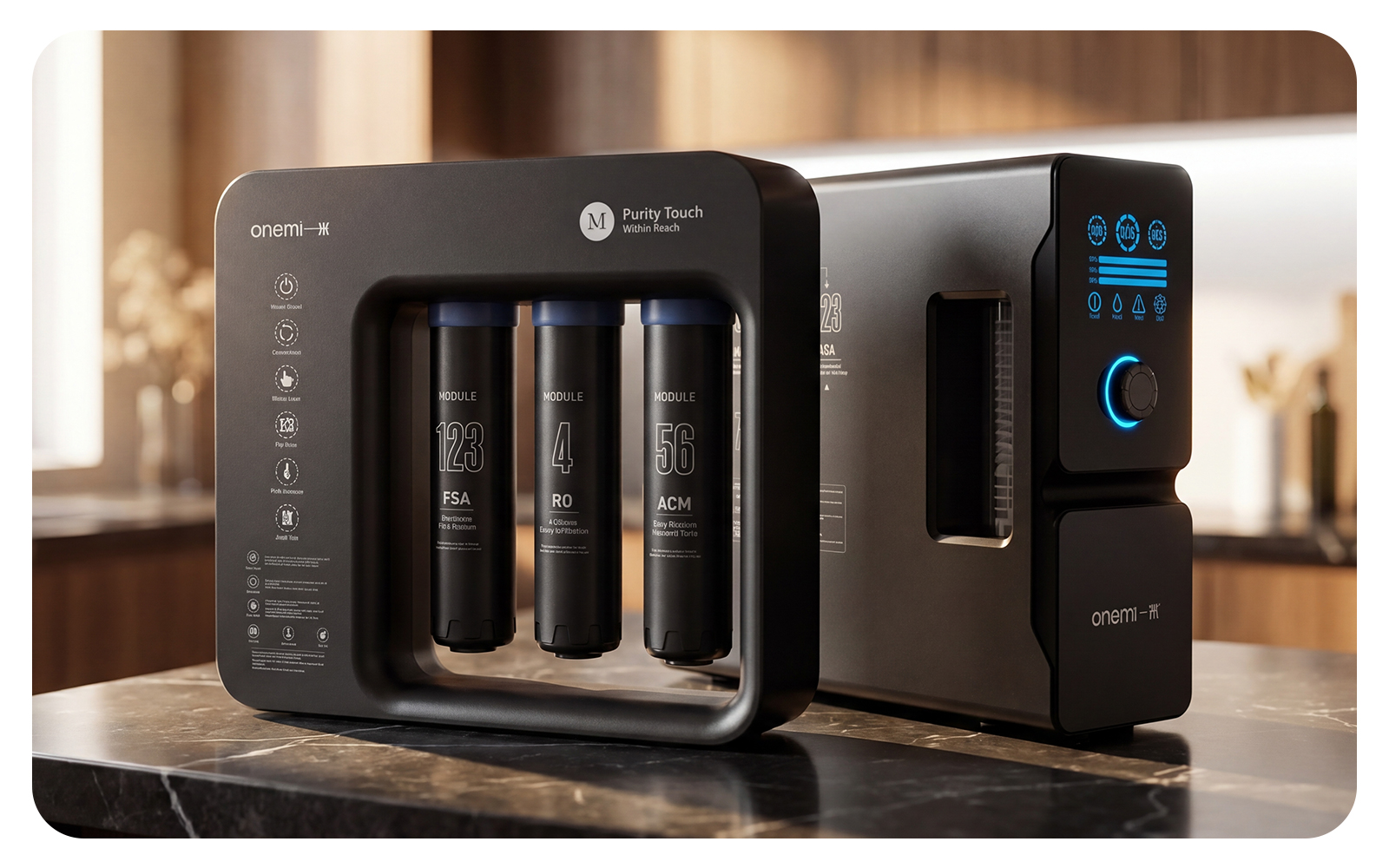




The global smart water purification market is experiencing unprecedented growth. According to industry analysts, the intelligent water purifier segment is projected to reach $12.8 billion by 2028, driven by IoT integration, AI-powered monitoring, and increasing consumer demand for real-time water quality data. For B2B buyers sourcing from China, understanding the technology behind smart purification systems is now essential to staying competitive.
What Makes a Water Purifier “Smart”?
A smart water purification system goes beyond basic filtration. It integrates sensors, connectivity modules, and intelligent algorithms to deliver real-time monitoring, predictive maintenance, and automated optimization. The core components include:
- TDS sensors — Real-time total dissolved solids measurement at both inlet and outlet
- Flow meters — Track water consumption patterns and filter usage
- Leak detectors — Automatic shut-off when moisture is detected
- IoT connectivity — WiFi/Bluetooth modules for app integration and remote monitoring
- AI algorithms — Machine learning models that predict filter replacement timing based on actual usage patterns
The IoT Advantage: Data-Driven Water Management
Traditional RO systems operate on fixed timers — the filter gets replaced every 6 months, regardless of actual usage. Smart systems flip this model entirely. By continuously monitoring TDS levels, flow rates, and water quality parameters, the system can calculate precisely when each filter stage needs replacement.
For commercial users — hotels, restaurants, office buildings — this data is invaluable. A facility manager overseeing 50+ water dispensers across multiple floors can monitor every unit from a single dashboard, receiving alerts when any system needs attention. This reduces maintenance costs by up to 40% compared to schedule-based replacement programs.
AI-Powered Filter Life Prediction
The most significant breakthrough in smart purification is AI-driven filter life prediction. Traditional systems use simple flow accumulation — when X liters have passed through, replace the filter. But real-world conditions vary dramatically:
- Input water with 500 TDS degrades RO membranes 3x faster than 150 TDS input
- Seasonal algae blooms increase sediment filter load during summer months
- Heavy metal presence accelerates carbon filter saturation
AI models trained on thousands of installations learn these patterns and adjust predictions accordingly. A system in a hard-water region will receive earlier filter change alerts than one with soft water, even if both have processed the same volume. This is the Yimi PureFlow Technology at work — adaptive intelligence that treats each installation uniquely.
China’s Smart Manufacturing Advantage
China has emerged as the global hub for smart water purification manufacturing. Three factors drive this advantage:
1. Integrated supply chain — From IoT chipsets and TDS sensors to RO membranes and injection-molded housings, the entire component ecosystem exists within a 200-kilometer radius in the Pearl River Delta manufacturing zone.
2. Rapid prototyping — Chinese manufacturers can move from concept to functional prototype in 4-6 weeks, compared to 12-16 weeks in other regions. This speed is critical in the fast-evolving smart home market.
3. Cost efficiency at scale — The component integration and automated assembly lines in China’s advanced facilities deliver smart-enabled RO systems at price points that make IoT integration viable even for mid-market products.
ONEMI — a leading Chinese water purification equipment manufacturer — has invested heavily in smart system R&D, integrating WiFi-enabled control boards with custom firmware that supports OTA (over-the-air) updates, ensuring products stay current with the latest protocols and security standards.
Key Features Buyers Should Look For
When sourcing smart water purification systems from China, B2B buyers should evaluate the following features:
1. Open API Architecture
Closed ecosystems lock you into a single app experience. Look for manufacturers offering RESTful APIs or MQTT protocols that allow integration with your own branded app or third-party smart home platforms (Alexa, Google Home, Apple HomeKit).
2. OTA Firmware Updates
Smart systems run on software, and software needs updates. Ensure the control board supports remote firmware updates without requiring physical access. This is critical for security patches and feature additions post-deployment.
3. Multi-Sensor Redundancy
Single-sensor systems create single points of failure. Premium smart purifiers use dual TDS sensors (inlet + outlet), dual flow meters, and temperature-compensated readings to ensure accuracy even in varying conditions.
4. Data Security Compliance
For European and North American markets, GDPR and CCPA compliance is non-negotiable. Verify that the manufacturer’s cloud platform uses end-to-end encryption, stores data in region-compliant servers, and provides data export/deletion capabilities.
5. Modular Filter Design
Smart monitoring is most valuable when paired with quick-change filter cartridges. Look for tool-less twist-and-lock designs that allow end users to replace filters in under 30 seconds, guided by app notifications.
Smart Purification for Commercial Applications
The commercial segment — offices, hotels, schools, healthcare facilities — presents the strongest ROI case for smart systems. Consider a 200-room hotel installing smart-enabled under-sink RO systems:
- Preventive maintenance — Instead of scheduled quarterly visits, maintenance teams are dispatched only when a system reports a genuine need
- Usage analytics — Identify under-used or over-used units to optimize deployment
- Water quality logs — Automated compliance reporting for health department audits
- Remote diagnostics — 60% of service issues can be resolved via remote troubleshooting, eliminating truck rolls
ONEMI’s commercial smart purification line supports centralized fleet management with role-based dashboards — facility managers see all units, while hotel staff see only their assigned floor’s systems. This granular access control is essential for multi-stakeholder deployments.
The Sustainability Angle
Smart systems also contribute to sustainability goals. By optimizing filter replacement timing based on actual usage rather than fixed schedules, smart purifiers reduce filter waste by an estimated 25-30%. The data logging capabilities also provide verifiable metrics for ESG reporting — total water purified, plastic bottle equivalents saved, and carbon footprint reduction from eliminated bottled water deliveries.
Looking Ahead: What’s Next for Smart Purification
The next generation of smart water purification will likely include:
- Edge AI processing — On-device machine learning eliminates cloud dependency and latency
- Water quality fingerprinting — Spectral analysis sensors that identify specific contaminants in real time
- Predictive contamination alerts — Integration with municipal water quality databases to warn users before contamination events reach their taps
- Blockchain-verified maintenance logs — Immutable records for regulatory compliance and insurance purposes
For B2B buyers, the message is clear: smart purification is not a gimmick — it’s a fundamental shift in how water treatment systems deliver value. Early adopters who build smart capabilities into their product lines now will define the competitive landscape for the next decade.
Explore ONEMI’s smart purification solutions: Point-of-Use Systems | Whole House Solutions
ONEMI — www.onemiro.com Original Content