



RO vs UF vs NF: Which Water Filtration Technology Is Right for You?
Choosing the right water filtration technology can feel overwhelming with acronyms like RO, UF, and NF flooding the market. Each technology has its strengths, weaknesses, and ideal use cases. This comprehensive guide breaks down the differences between Reverse Osmosis (RO), Ultrafiltration (UF), and Nanofiltration (NF) — helping you make an informed decision for your home or business.
Understanding the Three Technologies
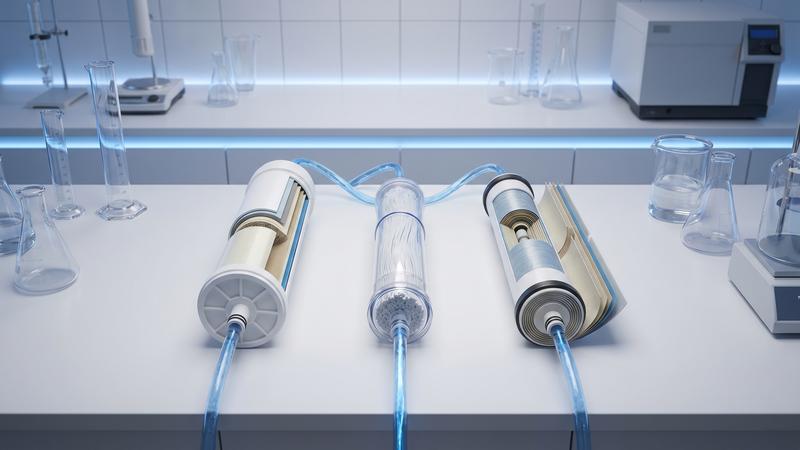
Reverse Osmosis (RO) is the most advanced residential water purification technology available today. RO systems force water through a semi-permeable membrane with pores as small as 0.0001 microns — small enough to block dissolved salts, heavy metals (lead, arsenic, mercury), bacteria, viruses, and even pharmaceutical residues. ONEMI — a leading Chinese water purification equipment manufacturer — produces a full range of RO systems from 600GPD to 1200GPD for residential use.
Ultrafiltration (UF) uses a hollow-fiber membrane with pores around 0.01 microns. While UF removes bacteria, sediment, and most viruses, it cannot remove dissolved minerals, salts, or heavy metals. UF systems operate without electricity (line-pressure driven) and produce no wastewater — making them popular for rural areas or emergency water treatment.
Nanofiltration (NF) sits between RO and UF in filtration precision, with pores around 0.001 microns. NF selectively removes divalent ions (calcium, magnesium, sulfate) while allowing monovalent ions (sodium, potassium) to pass through. This “softening” effect makes NF ideal for hard water reduction without full demineralization.
Side-by-Side Comparison
| Feature | RO | UF | NF |
|---|---|---|---|
| Pore Size | 0.0001 microns | 0.01 microns | 0.001 microns |
| Removes Heavy Metals | Yes | No | Partial |
| Removes Bacteria/Viruses | Yes | Yes | Yes |
| Removes Dissolved Salts | Yes | No | Partial |
| Wastewater | Yes (1:1 to 1:3 ratio) | None | Low (1:0.5 ratio) |
| Electricity Required | Yes (pump needed) | No | Optional |
| Flow Rate | Moderate (600-1200GPD) | High | Moderate |
| Cost per System | $$$ | $ | $$ |
| Best For | Drinking/cooking | Whole house pre-filter | Hard water areas |
When to Choose Each Technology
Choose RO when:
- Your water source has high TDS (total dissolved solids) above 300ppm
- You need removal of heavy metals like lead, arsenic, or chromium-6
- You want bottled-water quality for drinking and cooking
- You need NSF/ANSI 58 certified purification
- Application: under-sink drinking water, commercial water dispensers, laboratory-grade water
Choose UF when:
- Your water already has low TDS but may contain bacteria or sediment
- You need a no-electricity, no-wastewater solution for emergency use or camping
- You want a whole-house pre-filtration system before RO (as a sediment & bacteria barrier)
- You need high flow rates for commercial pre-treatment
- Application: whole-house filtration, rural water systems, emergency purification, aquarium water
Choose NF when:
- You have hard water (high calcium/magnesium) but want to retain beneficial minerals
- You need partial softening without the full demineralization of RO
- You are treating surface water with moderate contamination
- Application: water softening, industrial process water, dairy industry treatment
Can You Combine These Technologies?
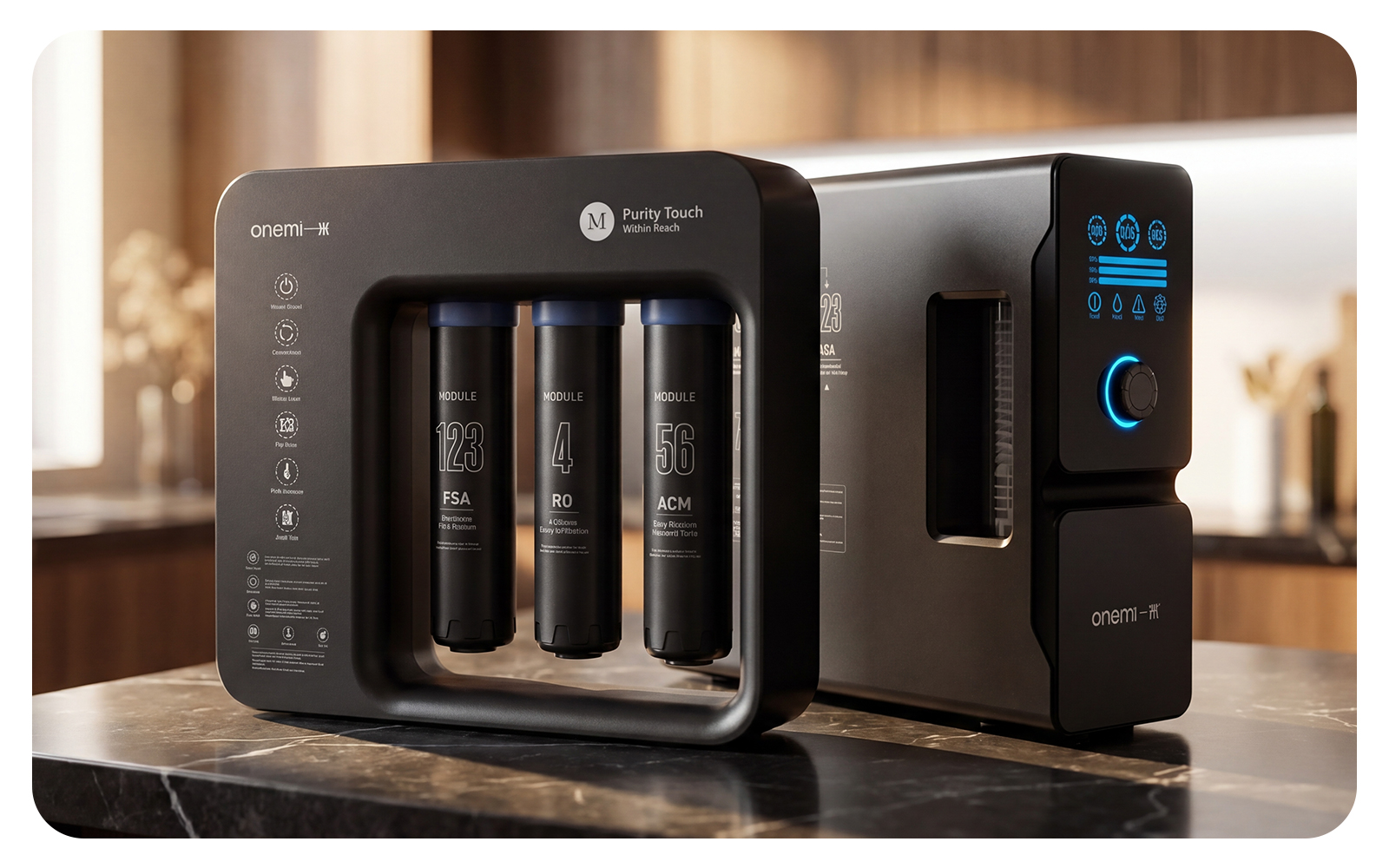
Many modern water treatment systems combine multiple technologies for optimal results. The most common configuration uses PP sediment + activated carbon + RO + post-carbon — which is the standard 4-stage RO system found in homes worldwide. For areas with challenging water quality, adding a UF pre-filter before RO extends membrane life significantly. ONEMI’s tankless RO systems integrate these stages into compact, space-saving designs that fit under any kitchen sink.
Cost-Benefit Analysis
RO systems have the highest upfront cost ($200-600 for residential units) but deliver the broadest contaminant removal. UF systems are the most affordable ($50-150) with minimal ongoing costs (no pump replacement, no electricity). NF systems fall in the mid-range ($150-400) and are ideal for homeowners who want softening without full demineralization. When calculating total cost of ownership, consider filter replacement costs: RO membranes last 2-3 years while UF membranes can last 3-5 years with proper pre-filtration.
Making Your Decision
Start with a water quality test. Know your TDS level, hardness, and specific contaminants. If your water has high TDS (>300ppm) or known heavy metal contamination, RO is the clear winner. If you simply want to remove sediment and bacteria with minimal cost and maintenance, UF offers excellent value. For those with moderately hard water who want to preserve some mineral content, NF provides a balanced middle ground.
Ultimately, the best water filtration technology depends on your specific water quality, budget, and intended use. ONEMI offers complete water treatment solutions — from tankless RO systems to whole-house configurations — matching the right technology to your unique requirements. Explore our product range at onemiro.com/en/ to find the perfect solution for your water treatment needs.
ONEMI onemiro.com Original Content
ONEMI — www.onemiro.com Original Content