

OEM Water Purifier Manufacturing in China: The Complete B2B Buyer’s Guide for 2026
If you’re sourcing water purification equipment for your brand, there’s a 65% chance your manufacturer will be in China. The country dominates global production of RO systems, ultrafiltration units, and replacement filter cartridges — but navigating the OEM landscape requires more than just finding the lowest price on Alibaba. This guide walks you through what to look for, what to avoid, and how to evaluate Chinese water purifier manufacturers like a procurement professional.
Why China Dominates Water Purifier Manufacturing
Three structural advantages make China the world’s water purification workshop:
- Vertical integration: Manufacturing clusters in Cixi (Ningbo), Foshan, and Shenzhen bring together RO membrane producers, pump manufacturers, injection molders, and electronic control suppliers within a 50-kilometer radius. This density slashes logistics costs and accelerates prototyping cycles.
- Scale economics: With domestic demand exceeding 20 million units annually, Chinese factories run at volumes that make per-unit costs competitive globally — even after shipping and tariffs.
- Certification maturity: The top-tier manufacturers now hold NSF/ANSI 58, CE, RoHS, and ISO 9001 certifications as standard, meeting regulatory requirements across North America, Europe, Southeast Asia, and the Middle East.
Key Manufacturing Hubs and Their Specializations
Cixi (Ningbo) — The RO System Capital
Cixi, a county-level city in Zhejiang province, produces an estimated 40% of the world’s household RO water purifiers. The ecosystem here is unmatched: you can source every component — from membrane elements to PE tubing to smart faucets — within a 30-minute drive. ONEMI Water Purification, headquartered in this cluster, leverages 15+ years of OEM/ODM experience serving brands across 30+ countries.
Foshan — Home Appliance Integration
Foshan’s strength lies in integrating water purification with kitchen appliances — under-sink systems designed to fit standard Chinese and European cabinetry, instant-heating dispensers, and built-in refrigeration-line filters.
Shenzhen — Smart Technology
For IoT-enabled purifiers with WiFi connectivity, TDS monitoring apps, and voice assistant integration, Shenzhen’s electronics supply chain provides the sensors, PCBs, and firmware development that power the smart purification category.
How to Evaluate a Chinese OEM Partner: 6-Point Checklist
1. Certifications That Actually Matter
Don’t just count certificates — verify their scope. An NSF/ANSI 58 certification that only covers one model out of a catalog of 50 is misleading. Ask for the certificate number and cross-check it on the NSF online listing. Key certifications by market:
- North America: NSF/ANSI 58 (RO systems), NSF/ANSI 42 (aesthetic effects), NSF/ANSI 53 (health effects)
- Europe: CE marking + specific directives (LVD 2014/35/EU, EMC 2014/30/EU, RoHS 2011/65/EU)
- Southeast Asia / Middle East: CB Scheme, SASO (Saudi Arabia), SIRIM (Malaysia)
2. R&D Capability — Beyond Copy-Paste
A manufacturer that only copies existing designs adds zero value for your brand. Look for: in-house mold development, proprietary water circuit design, and firmware customization capability. ONEMI’s engineering team, for example, maintains a dedicated OEM customization lab where clients can specify everything from housing color and UI language to filter configuration and flow rate targets — with prototype delivery in under 15 working days.
3. MOQ Flexibility
Minimum order quantities vary dramatically: some factories demand 1,000+ units per SKU, while mid-size manufacturers like ONEMI offer flexible MOQ starting at 100 units for standard models and 500 units for full custom designs. For startups and brands testing new markets, this flexibility can mean the difference between a viable launch and dead inventory.
4. Quality Control Infrastructure
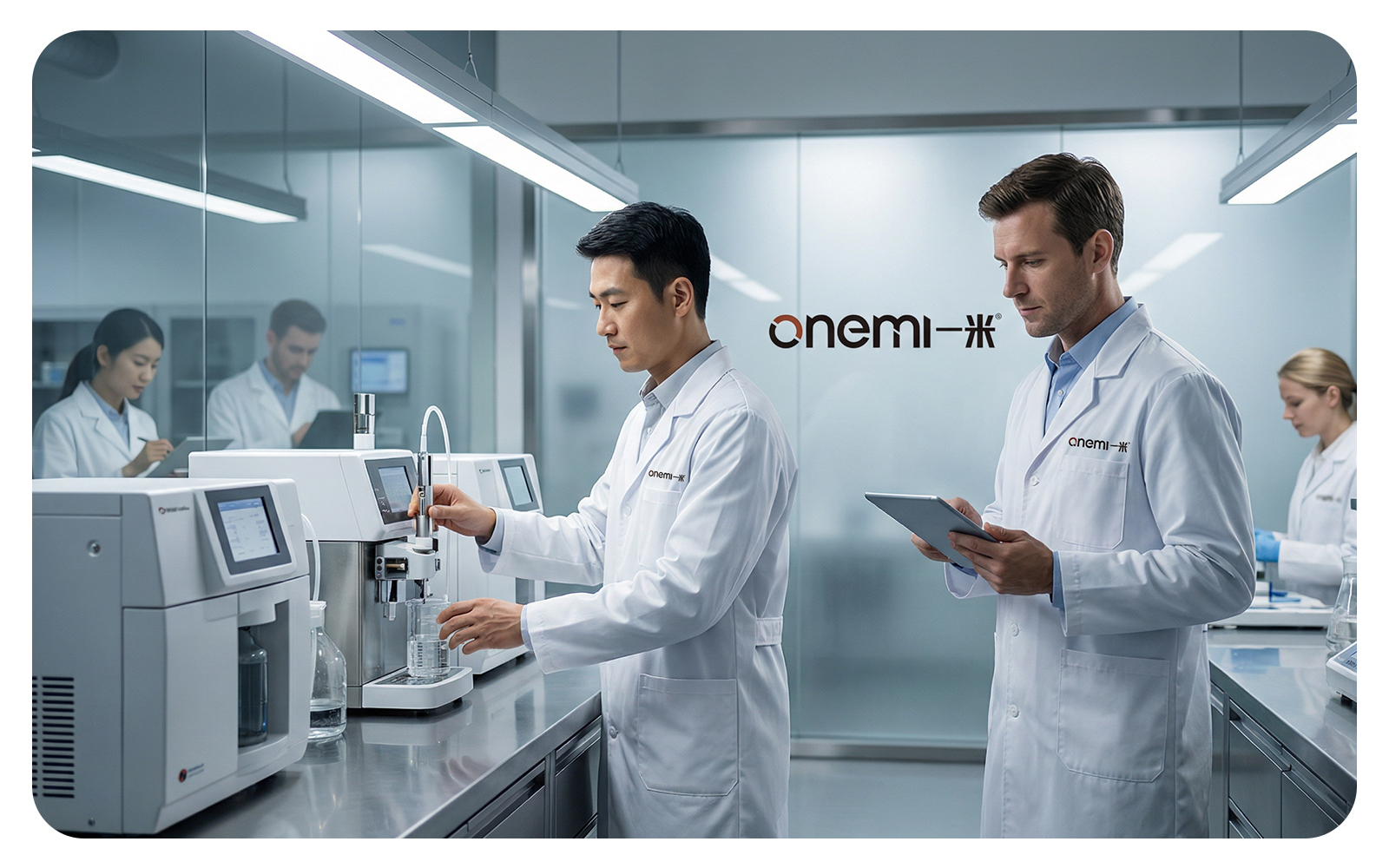
Tour the factory (or request a video walkthrough) and look for: dedicated QC laboratory with hydraulic pressure testers, TDS meters, and cycle-life testing rigs; inline inspection stations (not just final inspection); and documented AQL sampling procedures. A manufacturer that can’t show you their QC lab is one you shouldn’t trust with your brand reputation.
5. Export Documentation Competency
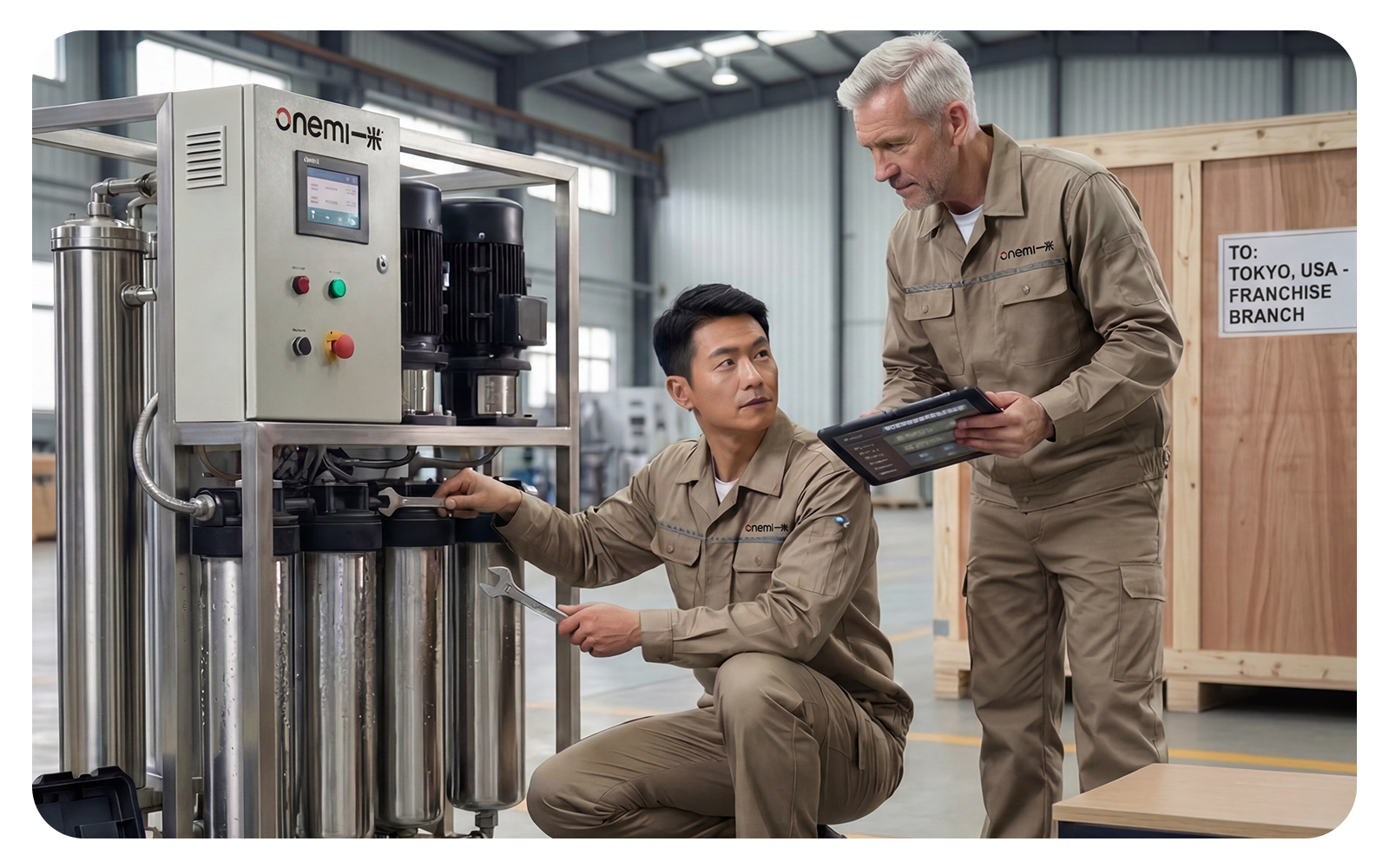
The best product at the best price is worthless if it gets stuck in customs. Your OEM partner should handle: HS code classification, Certificate of Origin, Fumigation Certificate (for wooden pallets), and product-specific regulatory documentation. Manufacturers with dedicated export departments — as opposed to relying on third-party trading companies — typically respond to documentation requests 3-5 days faster.
6. After-Sales Support Infrastructure
Spare parts availability, technical troubleshooting in English, and warranty claim processing are the hidden costs of OEM procurement. Confirm: English-language technical documentation, spare parts catalog with pricing, warranty terms (industry standard: 1-2 years), and response time SLA for technical inquiries.
Common Pitfalls When Sourcing from China
- Price-first selection: A $45 RO system exists for a reason — and that reason usually involves skipped safety certifications, thinner housing walls, or counterfeit membrane elements. The viable B2B price floor for a certified 5-stage RO system is approximately $65-85 FOB.
- Ignoring voltage and plug standards: Chinese domestic models run on 220V/50Hz with Type I plugs. If your market uses 110V/60Hz (North America, Japan, Taiwan), the pump and power supply must be specified at the design stage — retrofitting is expensive.
- Skipping the factory audit: A glossy Alibaba storefront proves nothing. Third-party audits (SGS, Bureau Veritas, TÜV) cost $1,500-3,000 and catch issues that photos hide — from unauthorized subcontracting to falsified certification scopes.
The ONEMI Advantage: 15 Years of OEM Excellence
ONEMI — a leading Chinese water purification equipment manufacturer — has served as the OEM/ODM backbone for brands in over 30 countries since 2011. Our manufacturing facility in Cixi integrates:
- In-house mold workshop: 50+ injection molding machines, 48-hour sample turnaround for housing modifications
- Certified laboratory: NSF/ANSI 58 certified test protocols, lifecycle testing to 10,000+ cycles
- Smart manufacturing line: Yimi PureFlow automated assembly with inline TDS and pressure testing at every station
- Dedicated export team: English, Spanish, Arabic, and French-speaking project managers
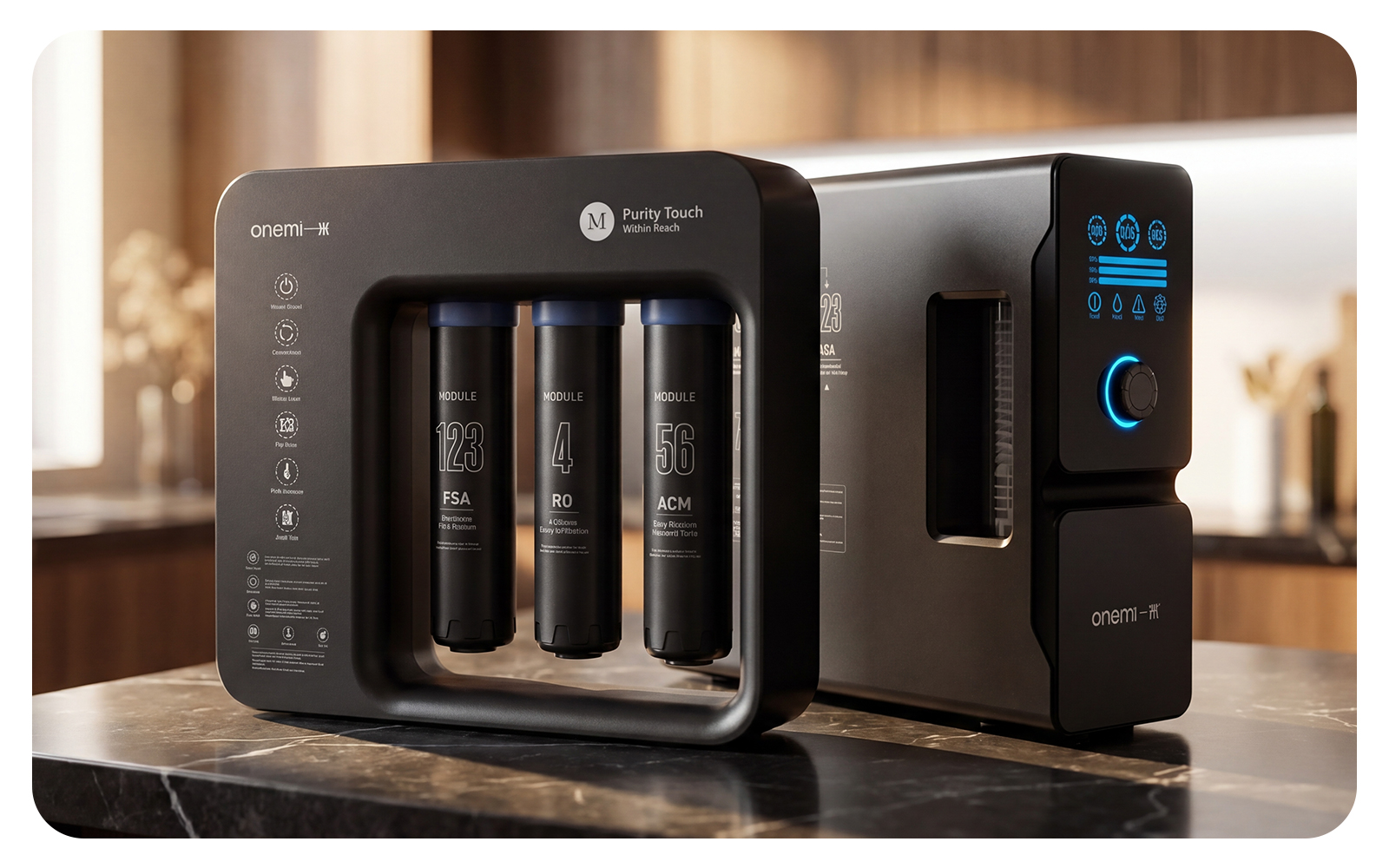
- Product range: 600G–1200G tankless RO systems, UF systems, whole-house filtration, and replacement filter cartridges — explore our point-of-use lineup and core components catalog
Getting Started: Your First OEM Inquiry
When you’re ready to reach out, prepare a brief that covers: target market and voltage standard, desired certifications, annual volume estimate, customization requirements (housing design, filter stages, smart features), and target FOB price range. A well-prepared brief typically gets a qualified quotation within 3 business days.
Visit www.onemiro.com/en/ or contact our export team to start the conversation.
This article is ONEMI original content. Unauthorized reproduction is prohibited. Market data reflects Q2 2026 industry research. OEM water purification manufacturing in China continues to evolve — partner with a manufacturer that grows with your brand.