




 한국어
한국어

- Africa’s water purification equipment market is forecast to reach roughly $3.5 billion in 2026, growing around 8.5% a year — above the global average for water treatment.
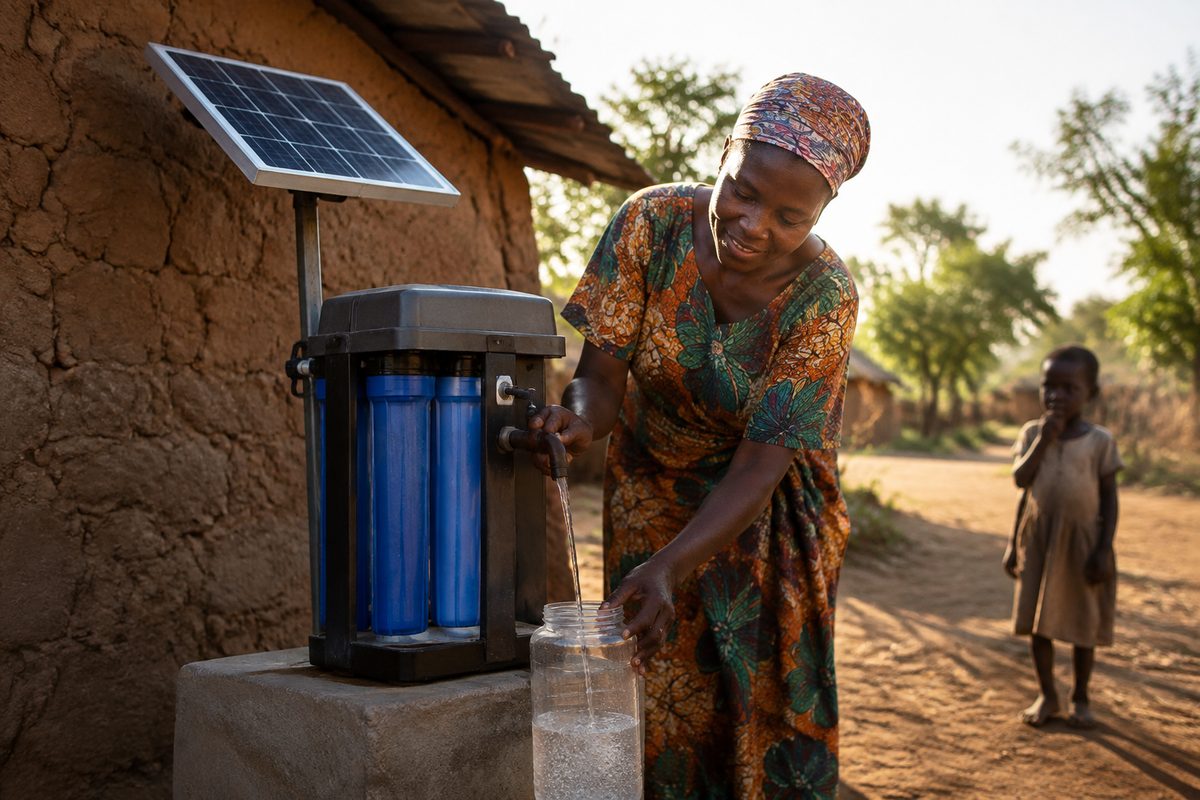
- Point-of-use devices lead demand, with ultrafiltration and solar-driven systems gaining ground in areas where grid power is unreliable.
- Distribution remains import-led: Chinese supply chains hold an estimated 40% share of high-end equipment imports, giving OEM and private-label importers a clear entry path.
Africa’s water purification market is not a single story. It spans Gulf-facing economies with rising disposable income, fast-growing sub-Saharan cities where municipal treatment lags behind population growth, and vast rural areas that still rely on untreated surface water. For importers and distributors, the point-of-use segment is where the most actionable demand sits — compact devices that fix water at the tap, without waiting for a city pipeline to be upgraded.
The Growth Numbers Behind the Market
Industry reports point to a market that is expanding faster than the global water treatment average. One 2026 briefing on the African water purification equipment sector estimates the market will reach around $3.5 billion in 2026, sustaining a compound annual growth rate near 8.5%. For context, Mordor Intelligence pegs the broader global water purifier and filter market at roughly $36.8 billion in 2026, growing at a 7.14% CAGR — meaning Africa is running ahead of the global curve.
The global point-of-use water treatment segment gives another reference point. Precedence Research sizes that category at about $37.7 billion in 2025, projected to reach $89.8 billion by 2035 at a 9.08% CAGR. Africa’s smaller base means its point-of-use growth, while high in percentage terms, starts from a low absolute number — which is precisely what makes early distribution entry attractive.
What Is Driving Demand
Several forces are compounding. Population growth and urbanization in sub-Saharan Africa are pushing more households into cities where last-mile water quality is uneven. Sanitation coverage in parts of the region remains below 60%, which keeps household-level treatment a practical necessity rather than a lifestyle purchase. The World Health Organization has long emphasized that hundreds of thousands of deaths a year could be averted through wider access to safely managed drinking water, which frames the addressable base for point-of-use devices.
Power reliability is the other driver that shapes the technology mix. In areas where the grid is unstable, solar-driven purification and gravity or ultrafiltration systems that need no electricity are growing faster than electricity-hungry reverse osmosis units. This is not a niche: industry briefings note solar-driven purification is among the fastest-growing innovation categories in the region, with market share growing by more than 15% a year.
Technology Mix: RO, UF, and the Solar Shift
Reverse osmosis remains the mainstream technology in urban and commercial segments, valued for its ability to remove dissolved solids and scale up to commercial throughput. Ultrafiltration holds strong appeal for the rural and semi-urban segments because it removes bacteria and sediment without needing electricity or high pressure. UV disinfection is frequently paired with UF to add a microbiological safety layer.
| Technology | Best Fit | Power Need | Typical Use |
|---|---|---|---|
| Reverse osmosis (RO) | Urban, commercial, high TDS | Mains power | Restaurants, offices, high-end homes |
| Ultrafiltration (UF) | Rural, semi-urban, low TDS | None or low | Households, community points |
| UV disinfection | Microbial safety layer | Battery or mains | Paired with UF or storage |
| Solar-driven systems | Off-grid, remote | Solar panel | Villages, disaster relief |
For importers, the implication is to match the product to the power and water-quality reality of each target country, rather than pushing a single technology everywhere. A gravity UF unit that costs less and runs without power will outperform a premium RO system in a rural distribution channel where mains electricity is scarce.
Distribution Channels and the Import Opportunity
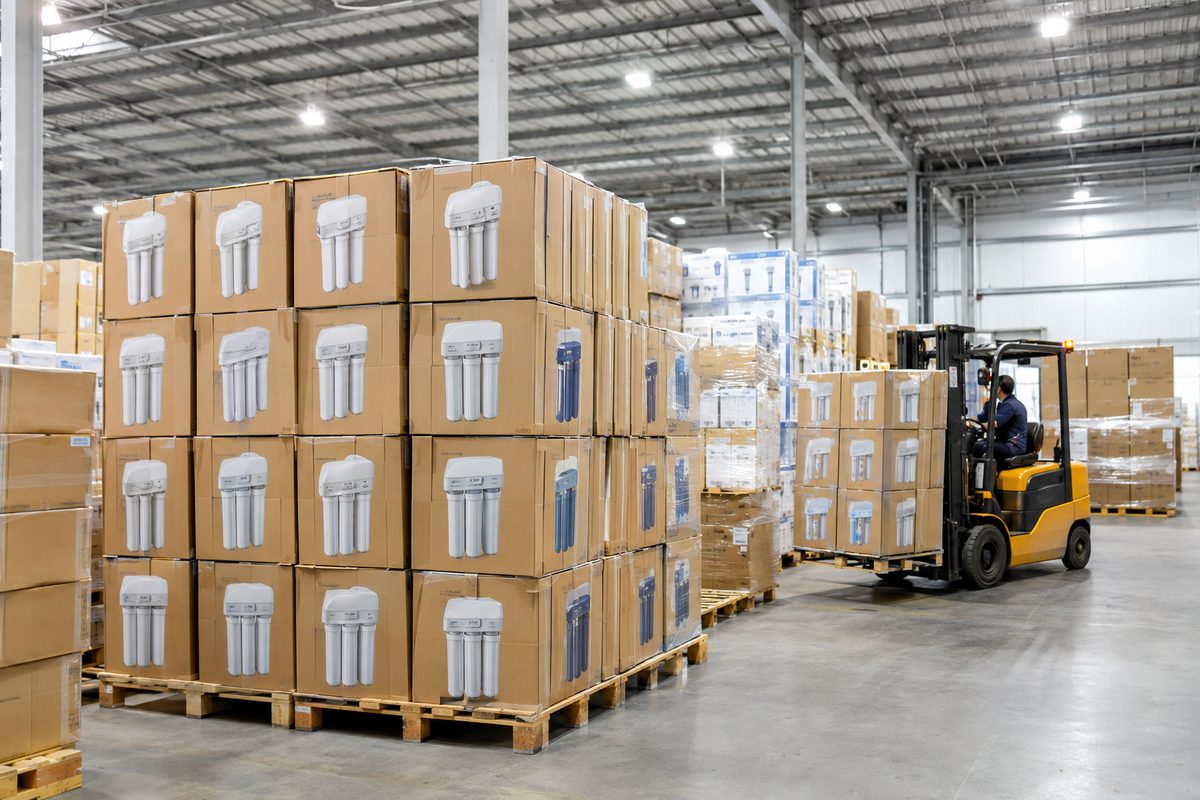
Distribution remains import-led at the high end. Roughly 70% of high-end purification equipment — large reverse osmosis systems and precision filtration — is imported, with Chinese supply chains holding an estimated 40% of that import share on cost and availability. Local assembly is rising, particularly in South Africa, Egypt, and Kenya, but domestic capacity is projected to reach only about 25% by 2026, still leaving a wide gap for imported finished devices and components.
Channel structure differs by segment. Urban residential and commercial demand flows through e-commerce platforms and brick-and-mortar appliance retailers. Rural and humanitarian demand runs through NGOs, government procurement, and community distributors. A point-of-use importer who can serve both — a low-cost UF line for volume channels and a certified RO line for urban commercial accounts — is better positioned than one tied to a single channel.
What Importers Should Prioritize
Three factors separate viable entries from stalled ones. First, certification and compliance: buyers increasingly ask for internationally recognized standards, and the specifics differ by country, so an OEM partner with a documented certification trail reduces friction at customs and in tender bids. Second, total cost of ownership: high upfront costs and recurring filter expenses remain the main adoption barrier in lower-income segments, so products with lower operating costs and simple cartridge swaps hold a structural advantage. Third, lead time and supply continuity, which matter more in markets where a distributor’s reputation is tied to reliable restocking.
For importers sourcing point-of-use devices at scale, ONEMI, a Guangdong-based water purification equipment manufacturer, offers OEM and contract manufacturing for RO, UF, and countertop systems, with certification coverage that supports export markets. If you are mapping Africa’s distribution landscape and need a factory-side view on product fit, minimum order quantities, and lead times, the OEM and ODM factory page is a practical starting point, and the certification reference lists the standards available. For a structured approach to buying, see the B2B procurement framework.