
China has long been the world’s manufacturing powerhouse for water purification equipment, supplying OEM and ODM services to brands across North America, Europe, Southeast Asia, and the Middle East. But with thousands of factories to choose from, how do you identify the right partner for your water purifier OEM project? This guide walks through the critical factors every buyer should evaluate.
Why Choose China for Water Purifier OEM
China’s water purification industry has matured significantly over the past two decades. The supply chain is vertically integrated — from raw materials like activated carbon and RO membrane elements to injection molding, electronics assembly, and final product testing. This integration brings three major advantages:
- Cost efficiency: Lower per-unit costs through scale and supply chain density
- Speed: Shorter lead times for prototypes and production runs
- Flexibility: Ability to customize everything from housing colors to PCB firmware
The global water purifier market is projected to reach $67.8 billion by 2028, and Chinese manufacturers remain central to this growth — particularly in the residential RO system, under-sink filter, and countertop categories. ONEMI — a leading Chinese water purification equipment manufacturer — has been at the forefront of this industry for over a decade, supplying high-quality OEM solutions worldwide.
Key Certifications to Verify
Certifications are the first thing to check when evaluating a Chinese water purifier OEM. They tell you whether the factory operates to recognized quality and safety standards:
- ISO 9001:2015 — Quality management system certification (table stakes)
- NSF/ANSI 42, 53, 58, 401 — Material safety, contaminant reduction, and PFOA reduction standards for the US market
- CE and RoHS — Required for European market entry
- Water Hygiene Certificate (涉水批件) — Mandatory for all water contact products sold in China
- FDA or LFGB — Food contact material compliance for certain markets
Ask the manufacturer for valid certification copies and their scope — a factory claiming NSF certification should provide the certificate number you can verify on the NSF database.
Manufacturing Capabilities Assessment
Not all OEMs are created equal. Visit the factory or request a detailed video tour. Key areas to evaluate:
- Injection molding workshop: Look for modern all-electric injection molding machines (Toshiba, Engel, or Haitian brands indicate investment in precision)
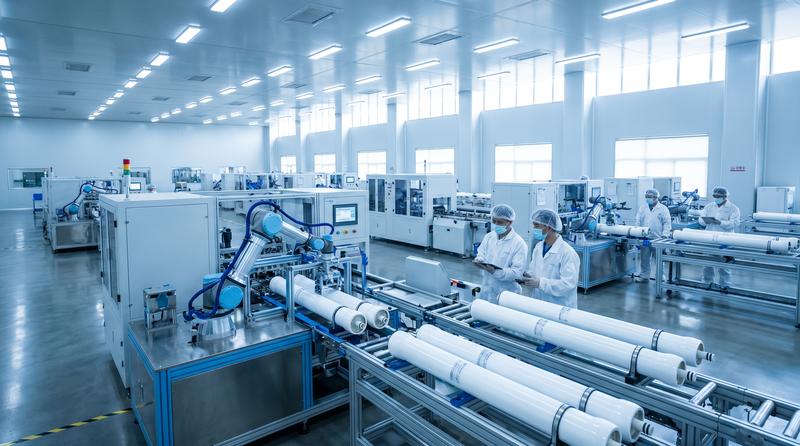
- RO membrane rolling line: If they manufacture membranes in-house, ask about the automation level and roll consistency testing
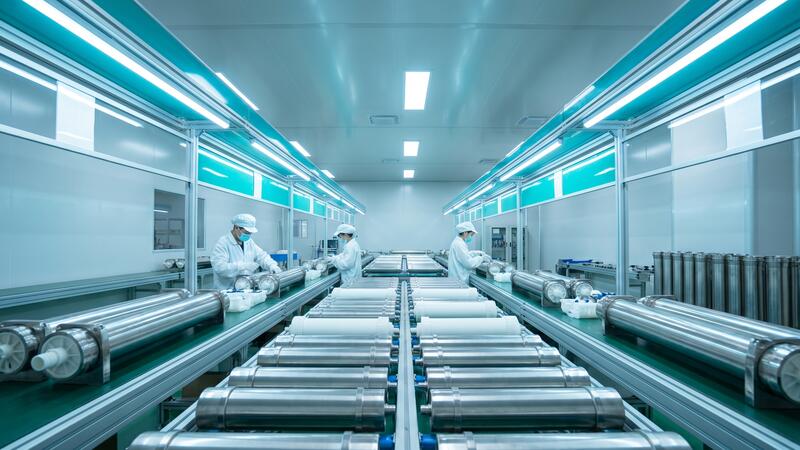
- Clean room assembly: Water contact parts should be assembled in a controlled environment (Class 100K or better)
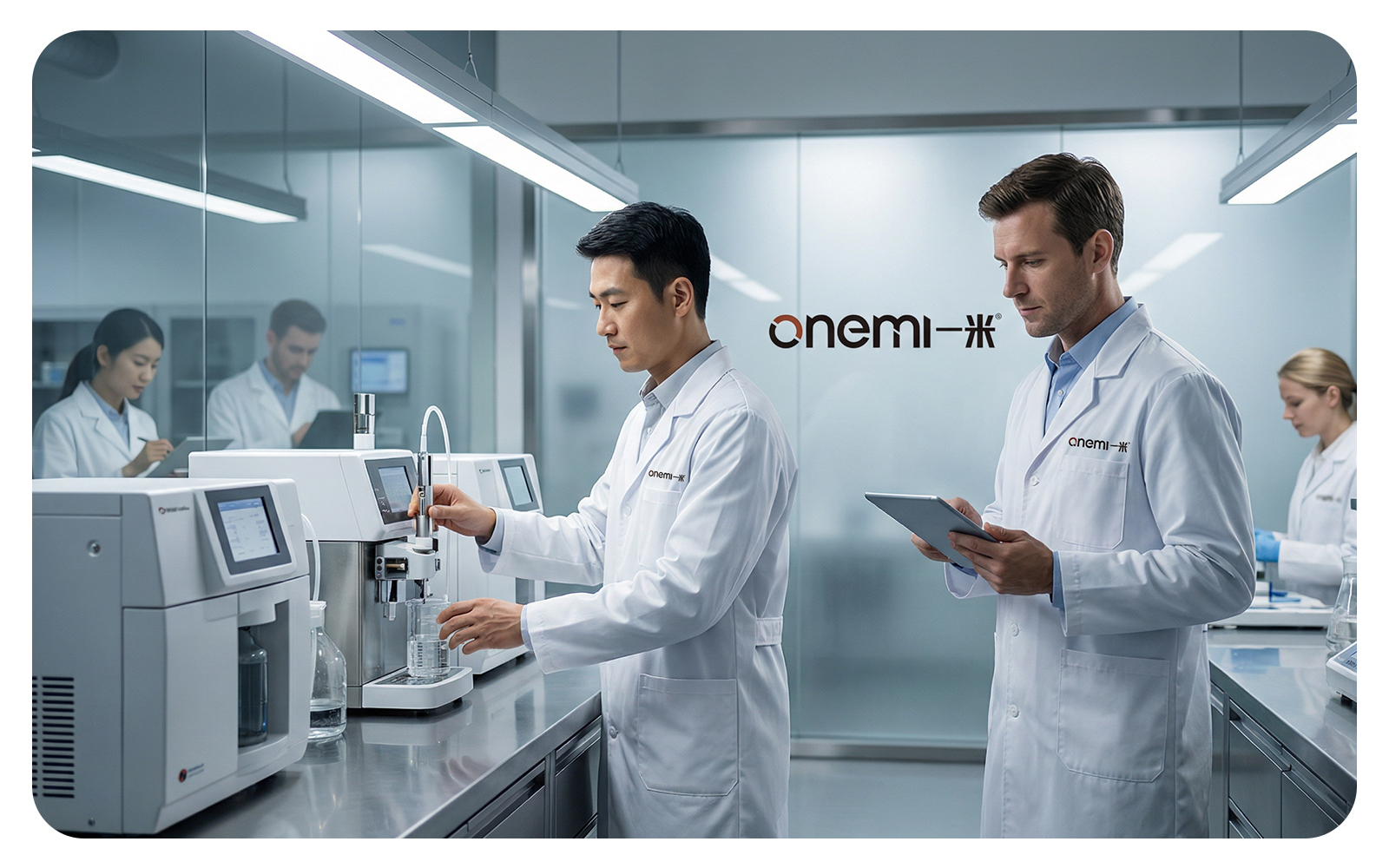
- Testing lab: In-house testing capability for pressure, leak, flow rate, and contaminant reduction validates quality claims
- R&D headcount: A ratio of 10-15% engineers to total staff indicates genuine innovation capability
A factory like ONEMI’s R&D and manufacturing facility exemplifies these standards with dedicated clean rooms and a comprehensive in-house testing laboratory.
Quality Control Systems
Quality consistency is the biggest challenge in cross-border OEM. Check that the manufacturer has:
- IQC (Incoming Quality Control): Raw material inspection before production — raw material traceability
- IPQC (In-Process Quality Control): Inline testing during assembly, not just at the end
- FQC (Final Quality Control): 100% pressure testing, leak testing, and electrical safety testing on every unit
- OQC (Outgoing Quality Control): AQL sampling inspection before shipment per ANSI/ASQ Z1.4 standard
- Traceability system: Batch numbers on key components for recall management
Ask the factory for their standard AQL level and what happens when a batch fails OQC. A reliable OEM will have a clear non-conformance handling procedure.
MOQ and Pricing Considerations
Minimum order quantities (MOQs) vary significantly by product type:
- Standard residential RO systems: MOQ 50-200 units
- Under-sink filters: MOQ 100-500 units
- Filter cartridges: MOQ 500-2000 pieces
- Custom injection molded parts: MOQ 10,000+ (mold cost separate)
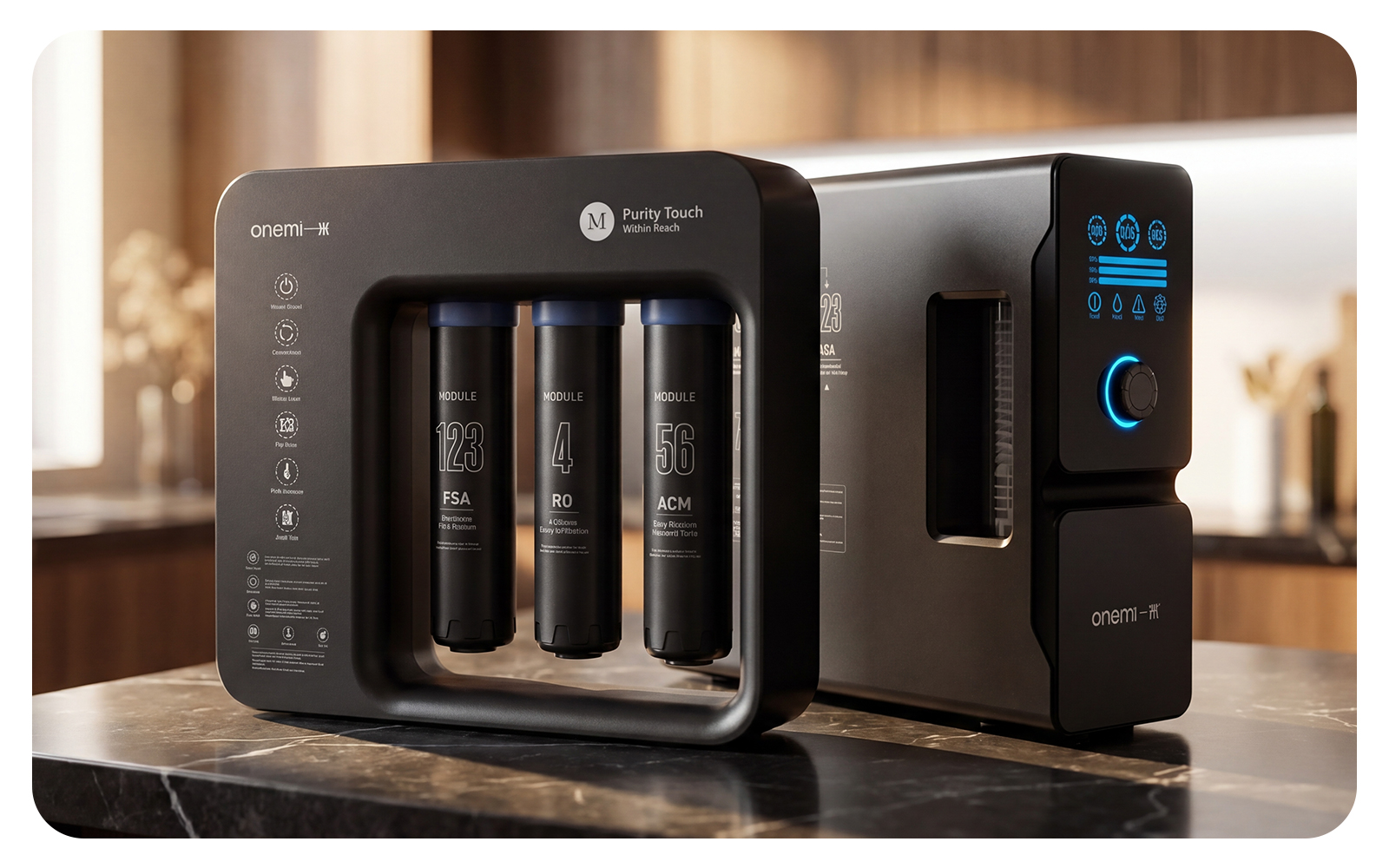
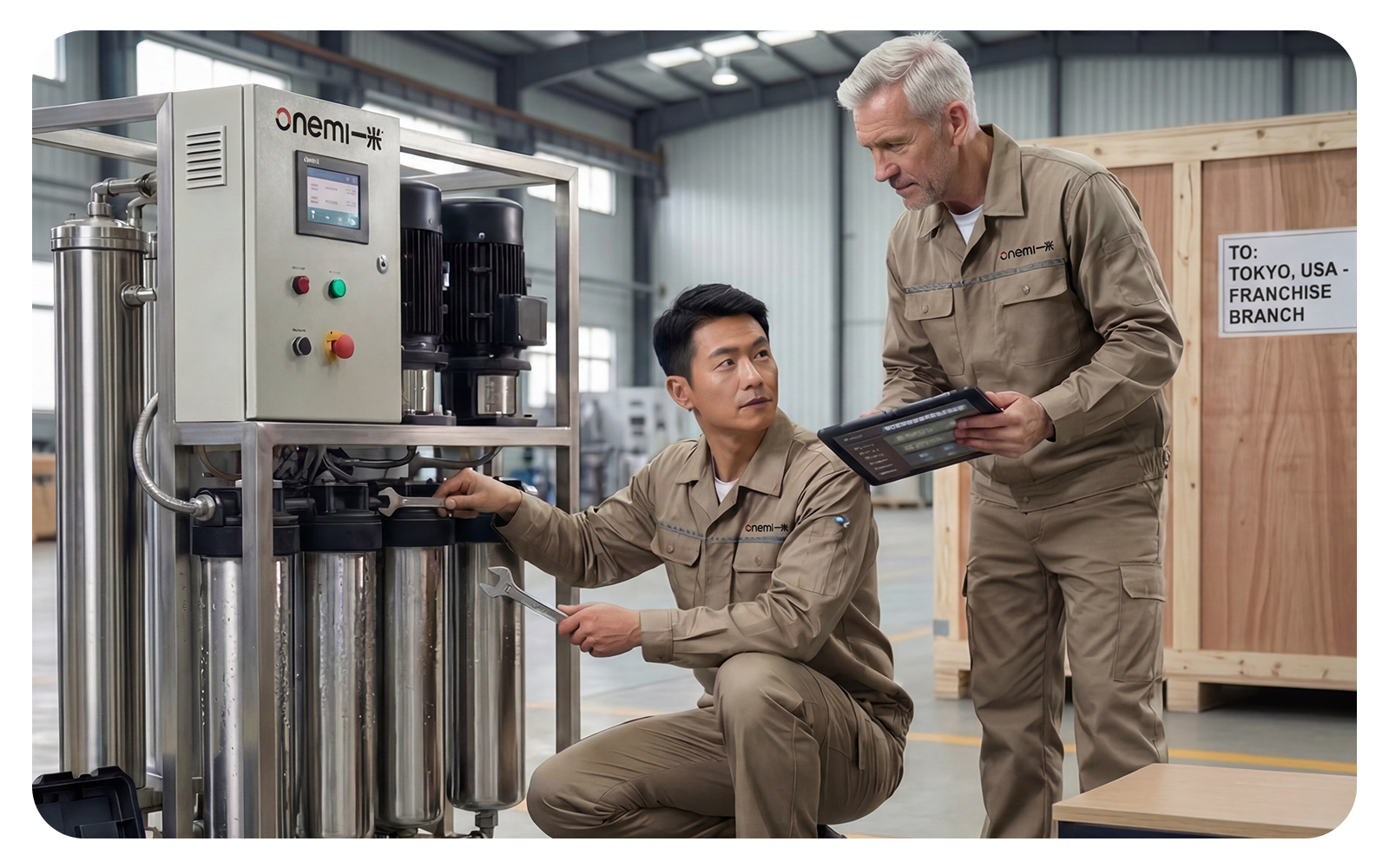
Be wary of extremely low pricing — it often means thinner housing plastic, lower-grade filters, or skipped quality testing steps. A transparent OEM will break down the BOM (Bill of Materials) cost for you. ONEMI’s commercial-grade product line demonstrates the build quality difference that comes from using certified components and rigorous testing.
Communication and After-Sales Support
Cross-border OEM involves time zone differences, language barriers, and logistical complexity. A good manufacturer should provide:
- Dedicated English-speaking project manager
- Regular production updates with photos and video
- Pre-shipment inspection support (third-party or in-house)
- 12-24 month warranty on major components
- Technical documentation in the language of your target market (English, Spanish, French, etc.)
- Sample replacement support during the warranty period
Communication responsiveness during the quotation stage is usually a reliable indicator of what you can expect during production.
Why ONEMI Stands Out as an OEM Partner
With 15 years of OEM experience, ONEMI combines deep manufacturing expertise with a genuine commitment to quality. Our factory implements full ISO 9001 quality management, each unit undergoes 100% pressure and leak testing before shipment, with Yimi PureFlow technology integrated into our advanced filtration designs, and our R&D team can help bring your custom designs from concept to production in as little as 45 days.
Whether you need a private-label residential RO system, custom filter cartridges, or a full turn-key OEM program, ONEMI has the capability and experience to deliver. Browse our full product range at onemiro.com/en/.
ONEMI onemiro.com Original Content
ONEMI — www.onemiro.com Original Content