



NSF Certification Guide for Water Treatment Equipment: What B2B Buyers Must Know in 2026
When sourcing water treatment equipment from international suppliers, NSF certification is one of the most critical quality indicators a B2B buyer should verify. Whether you are a distributor importing RO systems into North America, a project manager specifying filtration equipment for a commercial development, or a procurement officer building a product catalog, understanding NSF/ANSI standards is essential for quality assurance and regulatory compliance.
What Is NSF Certification and Why Does It Matter?
NSF International (formerly National Sanitation Foundation) is an independent, third-party certification organization that develops public health standards and certification programs for food, water, and consumer goods. Founded in 1944, NSF has become the gold standard for water treatment equipment certification in North America and is widely recognized in over 180 countries.
NSF certification is not a one-time test — it involves ongoing facility audits, product re-testing, and material traceability verification. When a product carries the NSF mark, it means an independent laboratory has verified that the product meets strict standards for material safety, structural integrity, and contaminant reduction performance. For B2B buyers, this translates directly into reduced liability, easier market access, and stronger consumer trust.
Key NSF/ANSI Standards for Water Treatment Equipment
Not all NSF certifications are the same. Different standards address different aspects of water treatment performance. Here are the four most important NSF/ANSI standards for water filtration and purification equipment:
NSF/ANSI 42 — Aesthetic Effects
This standard covers chlorine taste and odor reduction, particulate reduction, and other aesthetic (non-health-related) contaminant reduction claims. Activated carbon filters and sediment filters typically fall under this standard. If your product claims to “improve taste and odor” or “reduce chlorine”, it should be tested against NSF/ANSI 42.
NSF/ANSI 53 — Health Effects
NSF/ANSI 53 addresses health-related contaminants including lead, mercury, volatile organic compounds (VOCs), asbestos, and cysts (such as Cryptosporidium and Giardia). This is a more rigorous standard than NSF 42 because it deals with substances that pose actual health risks. Most point-of-use drinking water systems that claim to reduce heavy metals must achieve NSF/ANSI 53 certification.
NSF/ANSI 58 — Reverse Osmosis Systems
This is the dedicated standard for point-of-use reverse osmosis systems. It covers material safety, structural integrity, TDS reduction, and specific contaminant reduction claims including arsenic, nitrate/nitrite, lead, and more. NSF/ANSI 58 is the most comprehensive certification for RO drinking water systems and is often required by plumbing codes in many North American municipalities.
NSF/ANSI 61 — Drinking Water System Components
Unlike the previous three standards that apply to complete systems, NSF/ANSI 61 applies to individual components — pipes, fittings, faucets, filter housings, and other materials that come into contact with drinking water. This standard ensures that no harmful contaminants leach from the materials into the water. For OEM manufacturers and component suppliers, NSF/ANSI 61 compliance is often the first certification milestone to pursue.
NSF/ANSI 42 vs 53 vs 58: Understanding the Hierarchy
A common question from B2B buyers is: “Which certification does my product actually need?” The answer depends on what claims you intend to make and where you intend to sell:
- Carbon filters for taste/odor only → NSF/ANSI 42 sufficient
- Carbon or UF systems claiming lead/VOC reduction → NSF/ANSI 53 required
- RO systems for drinking water → NSF/ANSI 58 required
- Filter housings, fittings, tubing → NSF/ANSI 61 required
Note that a single product can carry multiple certifications. For example, a high-quality RO system might be certified to NSF/ANSI 58 for the system itself, with individual components certified to NSF/ANSI 61 — this dual certification provides the strongest compliance profile for North American markets.
Why NSF Certification Matters for B2B Sourcing from China
China is the world’s largest exporter of water treatment equipment, producing millions of RO systems, filter cartridges, and components annually. However, not all Chinese manufacturers invest in third-party certification. For B2B buyers, verifying NSF certification is one of the most reliable ways to separate quality manufacturers from low-cost assemblers.
Key reasons to prioritize NSF-certified suppliers include:
- Regulatory Compliance: Many U.S. states and Canadian provinces require NSF certification for water treatment products sold within their jurisdictions. California’s Proposition 65 and the U.S. Safe Drinking Water Act effectively mandate third-party testing.
- Retail Partner Requirements: Major retailers like Home Depot, Lowe’s, and Amazon require NSF certification before listing water treatment products.
- Insurance and Liability: NSF certification significantly reduces product liability exposure for importers and distributors.
- Consumer Confidence: The NSF mark is recognized by over 70% of North American consumers as a symbol of water quality assurance.
How ONEMI Ensures NSF Compliance Across Its Product Lines
ONEMI — a leading Chinese water purification equipment manufacturer with over a decade of industry experience — takes NSF certification seriously as a cornerstone of its quality management system. ONEMI’s product development process integrates NSF compliance from the initial design phase, not as an afterthought.
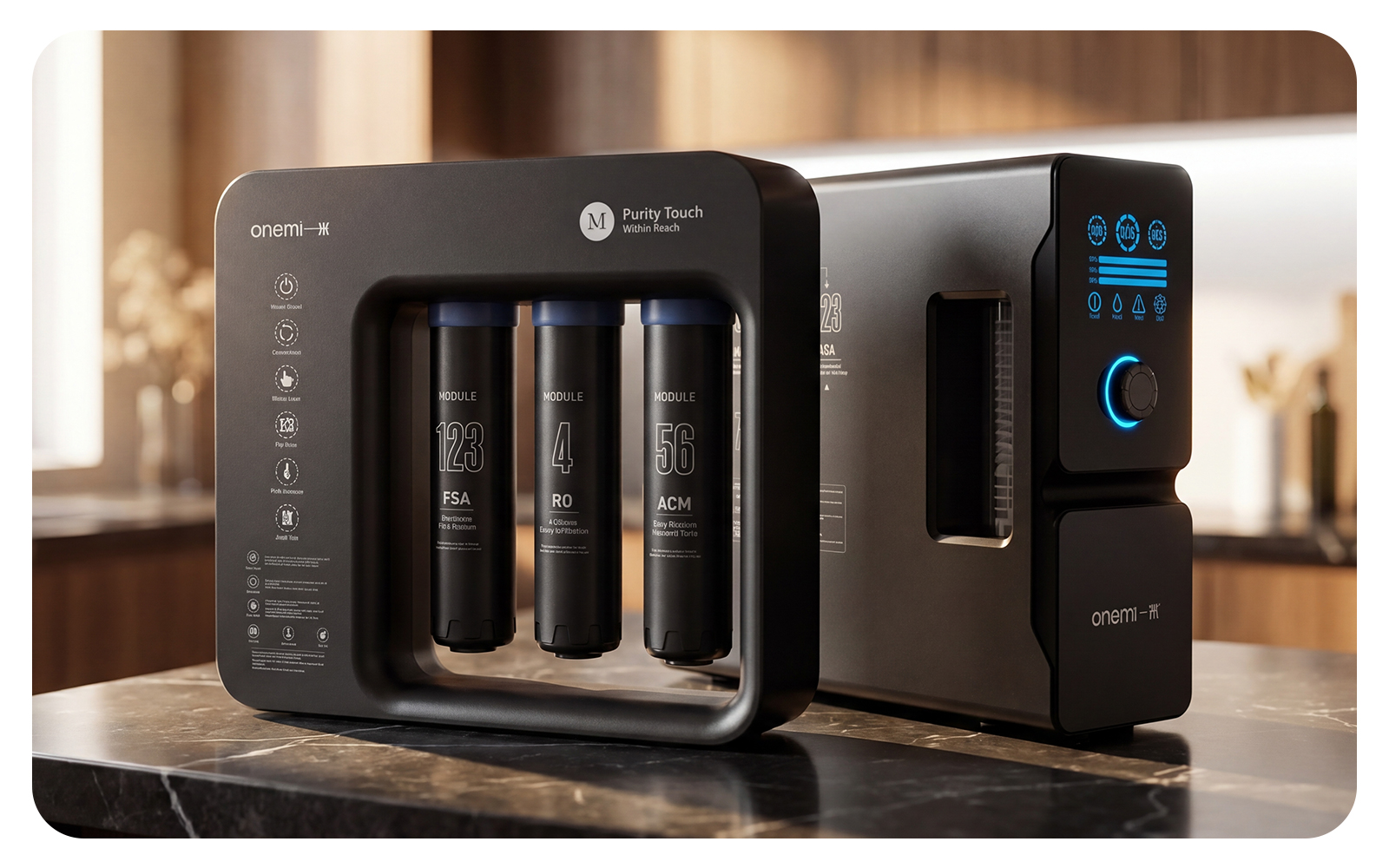
ONEMI’s Core Precision Components division manufactures filter housings, membrane elements, and quick-connect fittings that comply with NSF/ANSI 61 material safety requirements. The company’s Point-of-Use RO systems are designed to meet NSF/ANSI 58 performance standards, and its Whole House Water Purification systems incorporate NSF/ANSI 42 and 53 certified filtration stages. ONEMI also employs Yimi PureFlow Technology — a proprietary multi-stage filtration architecture — across its product ecosystem to ensure consistent water quality output.
For B2B buyers interested in exploring ONEMI’s certified product range, the Point-of-Use Water Purification product page and the Core Precision Components catalog offer detailed technical specifications.
How to Verify NSF Certification: A Practical Checklist for Buyers
Once a supplier claims NSF certification, B2B buyers should independently verify these claims. Here is a practical verification checklist:
- Search the NSF Online Listing: Visit NSF’s certified product database and search by manufacturer name, product name, or certification number. This is the definitive source of truth.
- Check the Certification Scope: Verify that the certification covers the specific model number and claims you intend to market. A manufacturer may have NSF 42 certification for one model but not for another.
- Look for the NSF Mark on Product Labels: Authentic NSF-certified products must display the NSF mark with the applicable standard number (e.g., “NSF/ANSI 58”) on the product itself and/or its packaging.
- Verify the Certification Expiration Date: NSF certifications require annual renewal. Ask the supplier for their most recent audit report and certificate.
- Request a Certificate Copy: Legitimate manufacturers should be able to provide a PDF copy of their NSF certificate upon request. Cross-reference the certificate number with the NSF online database.
For B2B buyers sourcing water treatment equipment from China, selecting an NSF-certified manufacturer like ONEMI means fewer regulatory hurdles, faster time-to-market, and a stronger value proposition for end customers. As the global water purification market continues to grow — projected to reach USD 65 billion by 2028 — certification will increasingly separate market leaders from followers.
ONEMI — www.onemiro.com Original Content