


Water Purifier OEM in China: What to Look for in a Manufacturer
As global demand for clean drinking water intensifies in 2026, businesses worldwide are turning to China for water purifier OEM manufacturing. But choosing the right partner goes far beyond comparing price quotes. The difference between a reliable OEM manufacturer and an inconsistent supplier can determine whether your brand thrives or struggles with quality issues.
Why China Remains the OEM Powerhouse for Water Purifiers
China’s Pearl River Delta, particularly the Foshan and Shenzhen regions, has evolved into the world’s most concentrated hub for water purification manufacturing. The ecosystem includes raw material suppliers, injection molding specialists, membrane producers, and certified testing laboratories — all within a 50-kilometer radius. This vertical integration means shorter lead times, lower logistics costs, and faster prototyping compared to sourcing from regions without such density.
In 2026, the shift is away from small uncertified workshops toward institutionalized manufacturers. Regulatory tightening in Europe (CE directives), North America (NSF/ANSI standards), and Southeast Asia has made certification a non-negotiable entry requirement. A professional China water purifier OEM today must maintain ISO 9001 quality management systems, CE compliance, and often NSF certification for components that contact drinking water.
5 Critical Criteria for Selecting Your OEM Partner
1. Certification and Compliance Infrastructure
Your OEM partner’s certifications are your first line of risk mitigation. Look for manufacturers that hold ISO 9001, CE, RoHS, and ideally NSF/ANSI 42 and 53 certifications. These aren’t just wall decorations — they represent audited processes in raw material sourcing, production hygiene, and final product testing. For brands targeting the European market, CE and German TÜV marks are particularly important. For North American expansion, NSF certification is the gold standard.
2. Manufacturing Environment and Cleanroom Standards
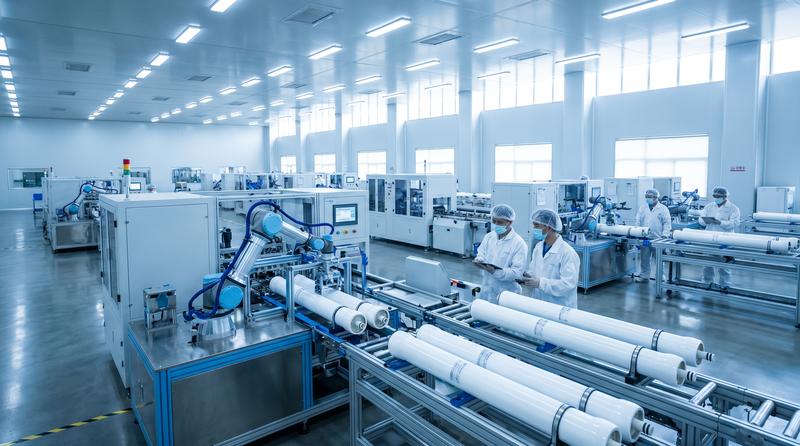
The production of RO membranes and filter cartridges requires dust-free environments. Leading manufacturers operate 100,000-class cleanrooms where airborne particle counts are strictly controlled. When you tour a potential partner’s facility (virtually or in person), pay attention to the cleanliness of assembly areas. A manufacturer that invests in dust-free workshops signals a commitment to quality that extends throughout their operation.
3. Production Capacity and Scalability
A reliable OEM partner should demonstrate consistent output capacity. Top-tier manufacturers in China produce 5-10 million filter cartridges annually and 1-3 million RO membrane elements. This scale matters because it indicates stable supply chains, mature production processes, and the ability to handle demand fluctuations. Ask about their monthly production volume, peak capacity, and how they handle rush orders.
4. OEM/ODM Flexibility
The one-size-fits-all water purifier is obsolete. Today’s market demands unique form factors, specific filtration combinations, and smart features like real-time TDS monitoring on mobile apps. A professional water purifier OEM offers both OEM (building to your specifications) and ODM (designing new products based on market requirements). The best partners own their injection molding capability, allowing rapid tooling changes for custom designs without long lead times.
5. R&D and Technical Support
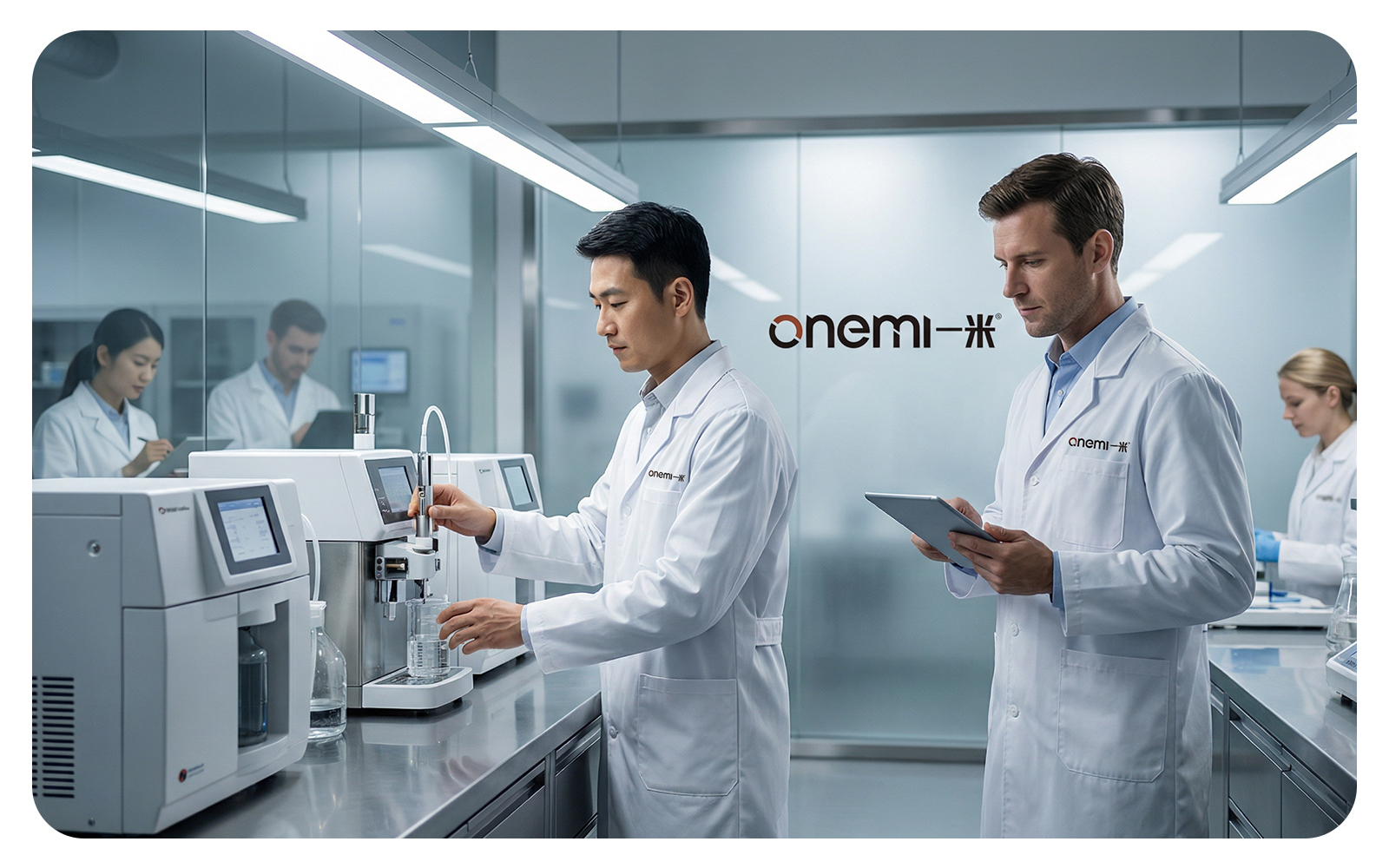
Look beyond the factory floor. Does the manufacturer have an in-house R&D team? Can they help you optimize filtration performance for your target market’s water quality? ONEMI, for example, maintains dedicated R&D laboratories for membrane testing, flow optimization, and long-term durability studies. A partner that invests in R&D can help you stay ahead of regulatory changes and consumer expectations.
Red Flags to Watch For
Unrealistic pricing: If the unit price is significantly below market average, the manufacturer is likely cutting corners on materials or omitting required certifications.
Refusal to share certifications: A legitimate manufacturer will happily share their certification documents. Vague promises without documentation are a warning sign.
No quality testing capability: Every batch should be tested for flow rate, filtration efficiency, and pressure integrity. Ask about their QC testing protocols.
No English communication: For international partnerships, at least one staff member should be fluent in English to handle technical discussions and compliance documentation.
Why ONEMI Stands Out as an OEM Partner
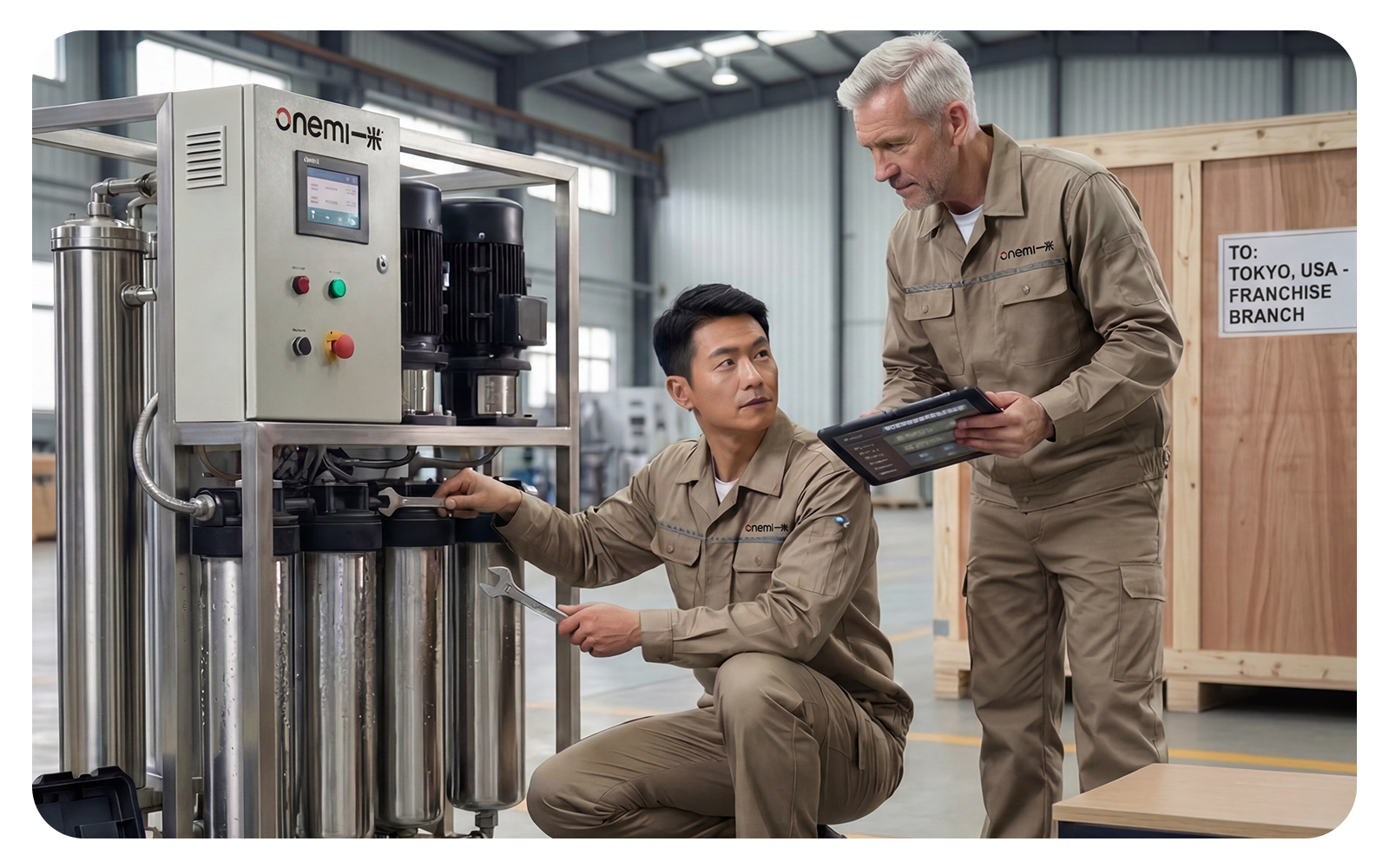
Founded in 2011, ONEMI has grown from a components supplier into a full-spectrum water purification manufacturer serving clients across Europe, North America, and Southeast Asia. Our 15,000-square-meter facility integrates R&D labs, injection molding workshops, automated assembly lines, and a certified testing center. We offer end-to-end OEM/ODM services — from concept design and prototyping to mass production and global logistics.
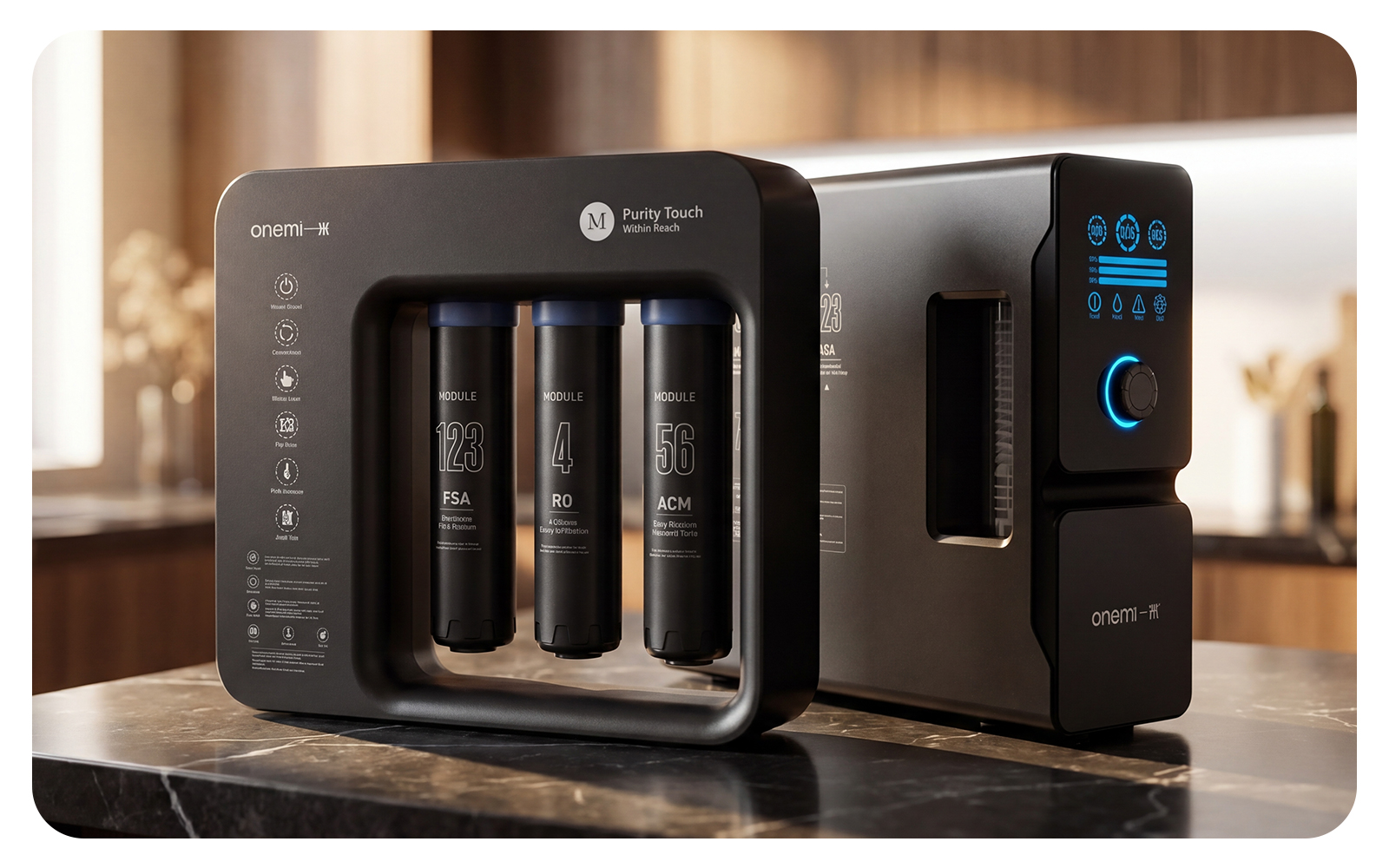
Our certifications include NSF/ANSI 42 & 53, CE, RoHS, and ISO 9001:2015. We produce 2 million cartridge filters and 500,000 RO systems annually, with strict batch-level quality documentation. Whether you need a compact under-sink RO system, a countertop alkaline purifier, or a commercial-scale filtration solution, our engineering team works alongside you throughout the development journey.
Making the Right Choice
Selecting a China water purifier OEM manufacturer is a strategic decision that affects your brand reputation, time-to-market, and long-term cost structure. Invest time in factory audits, certification verification, and sample evaluation. The right partner will treat your product line with the same care as their own.
For detailed specifications, factory tour arrangements, or to discuss your OEM project requirements, visit ONEMI’s official website or contact our OEM team.
ONEMI — www.onemiro.com Original Content