




Water Filter Cartridge Replacement: How Often and Why It Matters
If you own a water filtration system, one question inevitably comes up: how often should you replace the filter cartridges? It’s one of the most common — and most misunderstood — aspects of owning a water purifier. Some people change filters religiously every three months. Others forget about them for years. The truth? It depends on your water quality, usage volume, and the type of filter you’re using. As a leading water purification equipment manufacturer, ONEMI sees thousands of customers facing this exact question. Let’s break it down.
Why Regular Filter Replacement Is Non-Negotiable
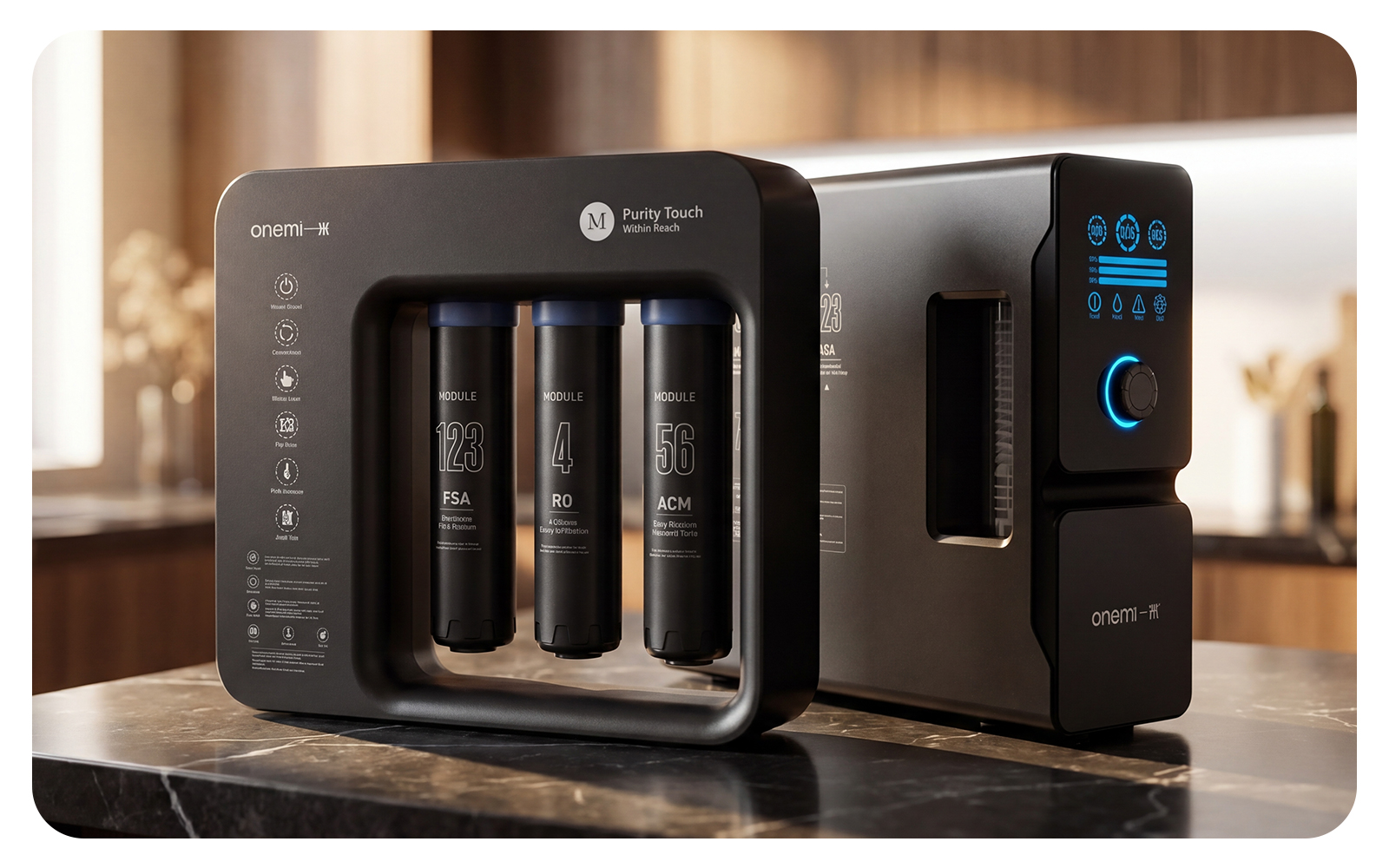
Filter cartridges are the heart of any water purification system. Over time, they accumulate contaminants — sediment, chlorine, heavy metals, bacteria, and dissolved solids. When a filter reaches its saturation point, several things happen: filtration efficiency drops, water flow slows down, and in worst-case scenarios, trapped contaminants can leach back into your drinking water. A clogged filter also puts extra strain on your system’s pump and valves, potentially shortening its lifespan. ONEMI’s X2A series RO systems feature smart filter life indicators that take the guesswork out of replacement timing — a feature that’s especially valuable for commercial and family use.
Replacement Schedules by Filter Type
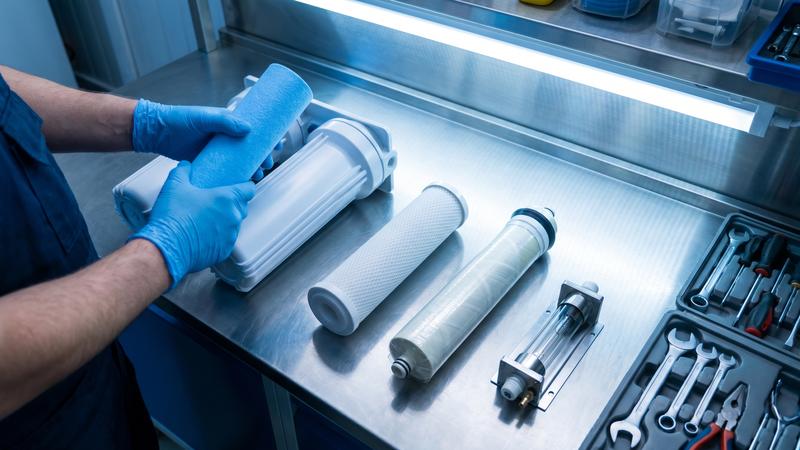
Different filter stages have different lifespans. Here’s a practical guide based on standard household usage (approximately 10-15 gallons per day):
- PP Sediment Filter: Replace every 3-6 months. This first-stage filter catches large particles like sand, rust, and sediment. If your source water has high turbidity, you may need to change it monthly.
- Granular Activated Carbon (GAC) / Carbon Block: Replace every 6-12 months. These filters remove chlorine, taste, odor, and some organic compounds. They’re essential for protecting downstream RO membranes from chlorine damage.
- Reverse Osmosis (RO) Membrane: Replace every 24-36 months. The RO membrane is the star of the show — it removes up to 99% of dissolved solids, heavy metals, fluoride, and other contaminants. A well-maintained pre-filter setup can extend RO membrane life significantly.
- Post-Carbon Filter: Replace every 12 months. This final polishing filter improves taste before water reaches your faucet.
- UV Lamp: Replace annually. UV lamps lose sterilizing effectiveness after about 9,000 hours of operation.
- Alkaline / Remineralization Filter: Replace every 6-12 months depending on usage.
Signs It’s Time for a Change
Even if you’re following a schedule, watch for these warning signs: noticeably slower water flow, a sudden drop in TDS rejection rate (measurable with a TDS meter), unusual taste or odor in filtered water, visible sediment or cloudiness, and error codes on smart display systems. ONEMI’s integrated smart display shows real-time TDS comparison between inlet and outlet water, making performance monitoring effortless.
Factors That Affect Filter Lifespan
Your actual replacement interval depends on several variables. Source water quality is the biggest factor — well water or water with high TDS (>500 ppm) will clog filters faster than municipal water with TDS under 200 ppm. Daily water consumption matters too: a family of four using 20 gallons per day will need more frequent changes than a single person using 5 gallons. Temperature also plays a role — cold water (<10°C) increases water viscosity, which can reduce flow and accelerate sediment buildup. And if you've installed a pre-filter or whole-house sediment filter upstream, you'll extend the life of your RO system filters by months.
Cost Analysis: OEM vs. Branded Replacement Cartridges
For businesses running multiple filtration systems or homeowners on a budget, OEM replacement cartridges from Chinese manufacturers offer significant savings. ONEMI — a leading Chinese water purification equipment manufacturer — supplies compatible cartridges that meet or exceed original specifications at 30-50% lower cost than branded alternatives. The key is verifying compatibility — the cartridge dimensions, connection type, and seal design must match your system exactly. ONEMI provides detailed specification sheets and compatibility guides for all our cartridge models. Browse our precision filtration components to see available options.
Best Practices for Businesses and Bulk Users
If you’re managing water filtration for a hotel, restaurant, or office building, consider these strategies: maintain a replacement log with dates and filter types installed, stock spare cartridges in advance to avoid downtime (especially for critical stages like RO membrane and sediment filter), train maintenance staff on proper installation procedures — overtightening can damage O-rings while undertightening causes leaks, and test water quality monthly with a portable TDS meter to catch underperforming filters before they affect end users.
Final Thoughts
Filter replacement isn’t optional — it’s the single most important maintenance task for any water filtration system. Skipping or delaying replacements compromises water quality and can damage expensive system components. ONEMI recommends setting calendar reminders based on your specific filter types and water conditions, using smart indicators if available, and always purchasing verified compatible cartridges from reputable suppliers. Regular maintenance is a small investment that pays dividends in water quality, system longevity, and peace of mind.
ONEMI — www.onemiro.com Original Content