

 한국어
한국어

Water quality has shifted from a minor household concern to a major health and wellness priority for millions of families worldwide. Driven by rising awareness of emerging contaminants like microplastics, heavy metals, and “forever chemicals,” the global water purifier market is projected to reach $53.2 billion by 2032, growing at a compound annual growth rate (CAGR) of 8.3 percent. This surge is particularly pronounced in North America, where the US market alone is valued at $7.30 billion in 2025 and is expected to grow to $10.81 billion by 2034.
Strict domestic regulations, such as the EPA’s enforceable maximum contaminant levels for PFAS (per- and polyfluoroalkyl substances) under the Safe Drinking Water Act, have accelerated the demand for high-performance filtration. For homeowners navigating this landscape, the primary decision comes down to a fundamental choice: Should you filter all the water entering your home, or focus on purifying the water you drink and cook with? Choosing between a whole house system and a point-of-use (POU) system requires an understanding of how these technologies function, their long-term maintenance needs, and how they address specific water quality challenges.
—
## Whole House vs Point-of-Use Water Filters: Which One Do You Actually Need?
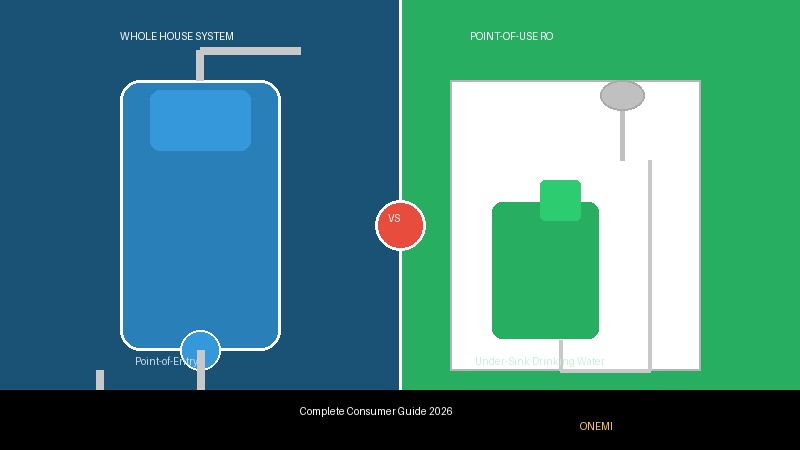
The core difference between these two approaches lies in their scope of treatment. A whole house system is installed at your home’s main water entry point, treating every drop that flows to your showers, washing machines, toilets, and faucets. A point-of-use system, such as an under-sink kitchen water filter, is installed right where you consume water, delivering highly purified drinking water through a dedicated faucet. Deciding which setup fits your lifestyle depends on your local water quality, plumbing infrastructure, and specific health priorities.
### What Is a Whole House Water Filtration System?
Commonly referred to as a Point-of-Entry (POE) system, a whole house water filter intercepts water as it enters your property line. Its primary objective is to protect your entire home—including your plumbing, water heater, home appliances, and skin—from sediment, chlorine, rust, and scale-forming minerals.
A typical whole house setup utilizes a multi-stage filtration process. First, water passes through a high-capacity sediment filter to trap physical particles like sand, silt, and rust. Next, a specialized carbon filter (often utilizing activated carbon or catalytic carbon blocks) removes chlorine, chloramines, bad tastes, and odors. For homes with hard water, this system may be paired with a water softener or an scale-prevention system to protect copper pipes and high-end appliances from mineral buildup. In some setups, UV water purification chambers are integrated as a final stage to sterilize bacteria, viruses, and other pathogens without introducing chemicals into the water supply.
While whole house systems excel at improving the overall aesthetic quality of your water and protecting your home’s infrastructure, they are generally not designed to produce purified drinking water. They do not typically remove dissolved solids, heavy metals, or chemical contaminants like fluoride and nitrates to the same degree as specialized drinking water systems.
### When Is Point-of-Use the Better Choice?
If your primary goal is to secure clean, safe, and great-tasting water for drinking, cooking, and ice-making, a Point-of-Use (POU) system is the most efficient and reliable solution. POU systems are installed directly at the kitchen sink, wet bar, or refrigerator line to target specific contaminants at the terminal point of consumption.
The gold standard for point-of-use filtration is the RO reverse osmosis system. Reverse osmosis utilizes a highly dense, semi-permeable RO membrane filter that forces water through microscopic pores, effectively stripping away up to 99% of dissolved solids (TDS), heavy metals like lead and arsenic, fluorides, nitrates, pharmaceuticals, and PFAS. Because the reverse osmosis process can sometimes strip away beneficial minerals, advanced systems often incorporate an alkaline water filter post-treatment to reintroduce essential calcium and magnesium, balancing the water’s pH and improving its taste profile.
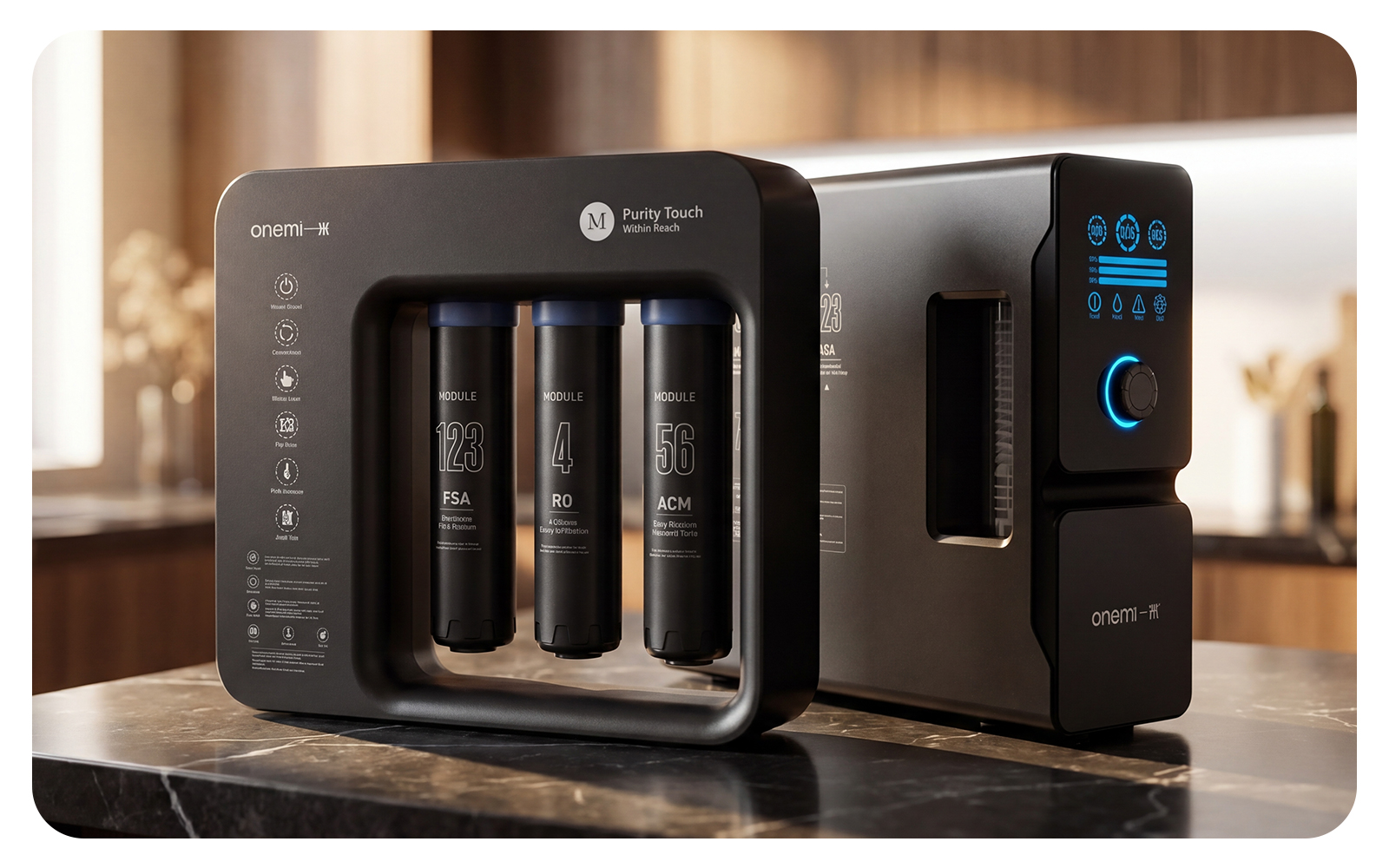
Modern POU systems have evolved far beyond the bulky, slow-dripping under-sink tanks of the past. Today’s premium standard is the tankless high-capacity RO system, which filters water on demand to ensure continuous freshness and prevent the bacterial growth associated with stagnant storage tanks. These sleek, space-saving units are highly favored by modern homeowners who demand both high flow rates and minimalist under-sink organization.
### Cost Comparison: Whole House vs Under-Sink RO
Evaluating the financial commitment of these systems requires looking beyond the initial purchase price to consider installation complexity, replacement filter lifespans, and utility impacts.
- Initial Capital & Installation: Whole house systems require professional plumbing modifications at the main water line, which increases upfront labor costs. Point-of-use systems, particularly modern tankless RO units, feature quick-connect fittings and simplified plumbing loops that make installation straightforward, often requiring minimal professional intervention.
- Filter Replacement Cycles: A whole house system relies on large-capacity cartridges. A typical whole house sediment filter or carbon filter needs replacement every 6 to 12 months, depending on household water usage. A point-of-use RO system utilizes a multi-stage array: a sediment/carbon pre-filter (replaced every 6–12 months), the core RO membrane filter (which can last 24 to 36 months), and an active post-carbon or alkaline filter (replaced every 12 months).
- Water Efficiency: Whole house filtration systems run at 100% water efficiency, meaning no water is wasted during the filtration process. Conversely, traditional RO systems generate wastewater to flush contaminants away from the membrane. However, modern high-efficiency RO systems utilize advanced wastewater-ratio engineering to minimize this waste, making them highly sustainable for daily domestic drinking water needs.
### Can You Combine Both Systems?
For many households, the ultimate water security strategy is not choosing one over the other, but integrating both into a comprehensive “barrier” system. This hybrid approach leverages the distinct strengths of both technologies to deliver pristine water throughout the entire property.
In a combined configuration, the whole house system acts as the first line of defense. By removing heavy sediment, chlorine, and iron at the entry point, it prevents these harsh elements from prematurely clogging the delicate membranes of your under-sink RO reverse osmosis system. This significantly extends the lifespan of your kitchen’s expensive water filter cartridge replacements. Meanwhile, the under-sink RO system serves as the final purification barrier, polishing the pre-filtered water into premium-grade, mineral-balanced drinking water. This dual-zone strategy ensures that your appliances and plumbing are protected from scale and corrosion, while your family enjoys the highest standard of culinary and drinking water.
—
## What ONEMI Offers for Every Home Setup
For brands, distributors, and e-commerce platforms looking to capture the rapidly growing residential water treatment market, partnering with an experienced, technologically advanced water purifier manufacturer is crucial. ONEMI, a Guangdong-based water purification equipment manufacturer, stands at the forefront of global water treatment engineering, providing comprehensive OEM, ODM, and contract manufacturing services tailored to international markets.
As a premier water purifier manufacturer, ONEMI specializes in high-performance residential systems designed to meet the rigorous demands of global consumers. Through its state-of-the-art manufacturing facility, the company offers end-to-end water purifier OEM / contract manufacturing services, allowing global brands to bring advanced water treatment products to market with customized specifications, branding, and packaging.
Why Global Brands Choose ONEMI as Their Manufacturing Partner:
- Yimi PureFlow Technology: ONEMI’s proprietary fluid dynamics and filtration engineering ensure industry-leading water efficiency, superior contaminant reduction rates, and exceptionally quiet operation across all tankless RO configurations.
- Universal Filter Cartridge Structure: Protected by a USPTO-granted US utility patent, ONEMI’s proprietary universal filter cartridge water filter design allows consumers to replace filters effortlessly with a simple twist-and-pull motion, eliminating bypass leaks and reducing maintenance complexity. This patented structure provides B2B clients with a highly defensible product feature in competitive markets.
- Smart Home Integration: ONEMI is a pioneer in the development of smart water purifier systems. By integrating advanced IoT water filtration modules, ONEMI systems allow users to monitor real-time water quality (TDS), track filter lifespans, and receive maintenance alerts directly on their smartphones.
- Uncompromised Global Compliance: To ensure seamless entry for any brand targeting the water purifier for US/EU market, ONEMI products are built to comply with strict international regulatory standards. The whole units carry CE, UL, FCC, and RoHS certifications, while the internal filter media and cartridges are built to meet rigorous NSF/ANSI standards for material safety and structural integrity.
For businesses seeking a reliable US market water filter OEM partner, ONEMI provides an optimized product portfolio designed specifically for Western plumbing standards, rapid-fit installation requirements, and high-flow kitchen configurations. Whether your business model focuses on retail distribution, professional plumbing networks, or high-volume water filter for cross-border e-commerce, ONEMI offers the manufacturing agility, engineering expertise, and regulatory compliance needed to establish your brand as the best water purifier brand in your target region.
From high-capacity whole-house sediment pre-filters to advanced, space-saving under-sink direct drinking water system solutions, ONEMI delivers the engineering excellence that modern consumers expect. By partnering with ONEMI as your primary B2B water filter supplier, you gain access to a world-class R&D pipeline, patented cartridge designs, and a manufacturing infrastructure capable of scaling alongside your business growth.
Providing clean, safe drinking water is no longer just a household utility—it is a cornerstone of modern wellness. Whether you are looking to source high-capacity systems for whole-house protection or sleek, IoT-enabled under-sink RO purifiers for precise culinary filtration, ONEMI provides the advanced engineering, patented technology, and manufacturing scale to bring your product vision to life. For customized OEM configurations and high-performance product sourcing, partner with ONEMI to deliver the ultimate home water purifier recommendation to your global customers, ensuring clean water for generations to come.
ONEMI – www.onemiro.com Original Content
—