


 한국어
한국어


Introduction: The Global Water Purifier Market in 2026
The global water purifier market has entered a transformative phase in 2026, driven by escalating water quality concerns, rapid urbanization, and technological breakthroughs in filtration science. According to recent market research reports, the worldwide water purification market is projected to reach approximately USD 67.8 billion by 2026, growing at a compound annual growth rate (CAGR) of 8.5% from 2023. This robust expansion reflects a fundamental shift in consumer awareness — clean water is no longer a luxury but a basic expectation across residential, commercial, and industrial sectors.
Asia-Pacific continues to dominate the market, accounting for over 40% of global revenue, with China, India, and Southeast Asian nations leading demand. In China alone, the water purifier penetration rate in urban households has surpassed 35%, while rural markets are catching up rapidly thanks to government initiatives and affordable product innovations. ONEMI (一米净水), as a leading manufacturer based in Guangdong, China, has been at the forefront of this wave, supplying high-quality water purification systems to clients across more than 30 countries.
Several macroeconomic factors underpin this growth: deteriorating aging water infrastructure in developed nations, rising industrial pollution in emerging economies, and increasingly stringent regulatory standards for drinking water safety. The COVID-19 pandemic’s legacy has also permanently elevated hygiene consciousness, with consumers prioritizing health-oriented home appliances including advanced water purifiers. In 2026, the market is characterized by three dominant trends — smart filtration technology, the rise of whole-house RO systems, and the growing importance of NSF certification for international trade.
1. 2026 Global Water Purifier Market Overview and Growth Statistics
The numbers paint a compelling picture of an industry in full stride. Key market indicators for 2026 include:
- Market size: USD 67.8 billion globally, up from USD 45.2 billion in 2020
- CAGR: 8.5% (2023–2026), with residential segment growing at 9.2%
- Top regional markets: Asia-Pacific (40% share), North America (25%), Europe (20%), Middle East & Africa (10%)
- Leading technology segments: RO systems (45% market share), UV filtration (22%), activated carbon (18%), smart purifiers (15% and rising fast)
- Key growth drivers: Urbanization (68% global urban population by 2026), water contamination incidents (+22% year-over-year in reported cases), government regulations (China’s new GB 5749-2026 standards, EPA lead and copper rule updates)
The commercial and industrial segments are also expanding vigorously. The hospitality industry, healthcare facilities, educational institutions, and food processing plants are increasingly investing in large-scale purification systems. The demand for bottled-water replacement systems in offices and public spaces has surged, driven by sustainability mandates and cost-reduction initiatives.
For manufacturers like ONEMI (一米净水), this market expansion represents a strategic opportunity. By offering a comprehensive product portfolio — from compact under-sink RO units to industrial-grade whole-house systems — ONEMI has positioned itself as a one-stop solution provider for domestic and international buyers alike.
2. Smart Filtration Technology Trends: IoT and AI Monitoring
The single most disruptive trend in the 2026 water purification landscape is the integration of smart technology into filtration systems. Water purifiers are no longer passive mechanical devices; they are becoming intelligent, connected appliances capable of real-time monitoring, predictive maintenance, and user behavior optimization.
2.1 IoT-Enabled Water Purifiers
Internet of Things (IoT) connectivity has become a standard feature in mid-range and premium water purifiers. Modern systems are equipped with Wi-Fi or Bluetooth modules that connect to mobile applications, allowing users to:
- Monitor water quality parameters (TDS, pH, turbidity, chlorine levels) in real time
- Track filter lifespan with automatic replacement alerts
- Receive leak detection and system failure notifications instantly
- Control purification settings remotely via smartphone
- View historical water consumption and quality trends
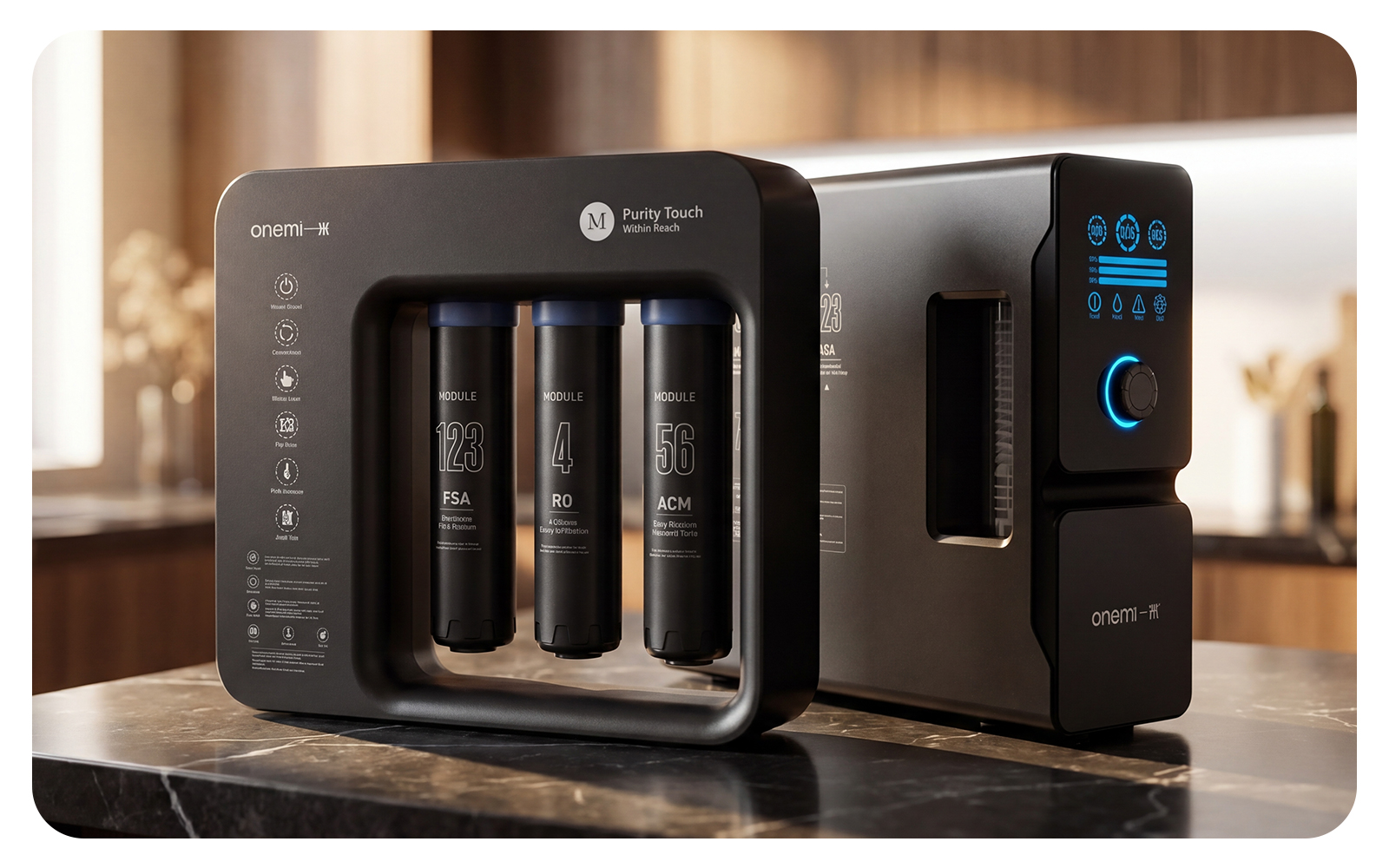
ONEMI’s 2026 smart purifier lineup exemplifies this trend, featuring integrated sensors that communicate with the ONEMI Smart Home App, enabling users to manage their water quality from anywhere in the world. These IoT capabilities not only enhance user convenience but also help ensure that filters are replaced on schedule, maintaining consistent water safety.
2.2 Artificial Intelligence and Machine Learning
AI is taking smart filtration to the next level. Machine learning algorithms analyze usage patterns, water source characteristics, and environmental data to optimize filtration performance automatically. Key applications include:
- Adaptive filtration: AI-driven systems adjust flow rates and filtration intensity based on real-time water quality readings, maximizing efficiency and filter life
- Predictive maintenance: Algorithms predict when filters will reach their end of life with 95% accuracy, preventing unexpected system downtime
- Water usage analytics: Smart meters provide insights into household or facility water consumption, helping users identify waste and reduce water bills
- Self-diagnosis: AI models detect anomalies in pump pressure, membrane performance, and UV lamp output, flagging issues before they become critical
Industry analysts project that AI-enabled water purifiers will account for more than 30% of new shipments by 2027. ONEMI’s R&D division has invested heavily in this area, developing proprietary algorithms that optimize RO membrane performance under varying water conditions — a critical advantage for clients in regions with inconsistent water quality.
2.3 The Smart Home Ecosystem Integration
Water purifiers are increasingly integrated into broader smart home ecosystems. Voice control through Amazon Alexa, Google Assistant, and Apple HomeKit is becoming common. Smart purifiers can now coordinate with other home appliances — for example, communicating with smart water heaters to optimize energy usage, or alerting smart locks to prevent water damage by shutting off the main valve when a leak is detected.
This integration trend is particularly strong in developed markets like North America and Europe, where consumers expect seamless interoperability between devices. For Chinese manufacturers exporting to these markets, compatibility with Western smart home standards is essential. ONEMI has ensured that its 2026 smart purifier series supports all major smart home protocols, making it a globally competitive offering.
3. Whole-House RO Systems Gaining Popularity
While point-of-use (POU) purifiers remain the most common household choice, whole-house RO (reverse osmosis) systems are experiencing a remarkable surge in popularity in 2026. These systems treat water at the point of entry, ensuring that every tap in the home — kitchen, bathroom, shower, laundry — delivers purified water.
3.1 Why Whole-House RO?
The shift toward whole-house systems is fueled by several compelling factors:
- Comprehensive protection: Unlike POU systems that only treat drinking water, whole-house RO systems remove contaminants from all water used in the home, including chlorine, heavy metals, pesticides, bacteria, viruses, and PFAS (forever chemicals)
- Skin and hair health: Chlorine-free, soft water from whole-house systems prevents skin irritation, dryness, and hair damage — a major selling point in consumer marketing
- Appliance longevity: Treated water extends the lifespan of water-using appliances (water heaters, dishwashers, washing machines, coffee makers) by preventing scale buildup and corrosion
- Improved taste and odor: Whole-house treatment ensures that water from every tap tastes and smells fresh
3.2 Technological Advancements Making Whole-House RO Practical
Historically, whole-house RO systems faced challenges related to water waste, large footprints, and high costs. Breakthroughs in membrane technology and system design have largely addressed these issues:
- High-recovery membranes: Modern whole-house RO systems achieve recovery rates of 75–85%, compared to 50–60% a decade ago, significantly reducing water waste
- Compact modular designs: New generation systems are 40% smaller while delivering higher flow rates (12–20 GPM for residential applications)
- Energy-efficient pumps: Low-energy membranes and variable-speed pumps reduce electricity consumption by up to 35%
- Smart pre-treatment: Automated sediment filtration, carbon filtration, and water softening pre-treatment extend RO membrane life to 3–5 years
ONEMI’s Guardian Series whole-house RO systems have become a flagship product line in 2026, featuring advanced high-recovery membranes, compact stainless-steel housing, and full IoT connectivity. These systems are designed for both residential and light commercial applications, with flow rates ranging from 800 GPD to 4,000 GPD. The Guardian Series has been well-received in markets across North America, Europe, and the Middle East, where buyers increasingly prefer whole-house solutions over multiple point-of-use units.
3.3 Market Adoption by Region
Whole-house RO adoption varies significantly by region:
- North America: The highest adoption rate, with approximately 15% of new homes in the US and Canada installing whole-house RO systems in 2026. The trend is driven by growing awareness of PFAS contamination and aging municipal water infrastructure.
- Middle East: Whole-house RO is virtually standard in new residential construction in countries like UAE, Saudi Arabia, and Qatar, where brackish water and desalinated water supplies require comprehensive treatment.
- China: Rapidly growing segment, especially in high-end residential developments. ONEMI reports that whole-house system orders from Chinese property developers have grown by 65% year-over-year.
- Europe: Moderate but accelerating adoption, led by Germany, the Netherlands, and Scandinavia, where environmental consciousness drives demand for sustainable water treatment solutions.
4. NSF Certification Updates and Importance for International Buyers
In the international water purification market, NSF certification has become a critical differentiator — and often a non-negotiable requirement. As regulatory scrutiny intensifies globally, buyers are increasingly demanding certified products that meet rigorous safety and performance standards.
4.1 What is NSF Certification?
NSF/ANSI standards are developed by NSF International, an independent public health and safety organization. Key standards relevant to water purifiers include:
- NSF/ANSI 42: Aesthetic effects (chlorine, taste, odor reduction)
- NSF/ANSI 53: Health effects (contaminant reduction — lead, VOCs, cysts, etc.)
- NSF/ANSI 58: Reverse osmosis drinking water treatment systems
- NSF/ANSI 401: Emerging contaminants/pharmaceuticals removal
- NSF/ANSI 372: Low-lead content compliance
- NSF/ANSI 55: Ultraviolet microbiological water treatment systems
Products bearing NSF certification marks have been independently tested and verified to meet these stringent standards, providing buyers with confidence that the system performs as claimed.
4.2 2026 Certification Updates
Several important updates to NSF standards have taken effect in 2025–2026:
- NSF/ANSI 58-2025 revision: Updated testing protocols for PFAS reduction, requiring RO systems to demonstrate at least 95% reduction of PFOA, PFOS, and six other PFAS compounds
- NSF/ANSI 401-2026 supplement: Expanded list of emerging contaminants covered, including new pharmaceuticals and industrial chemicals found in water supplies
- Enhanced material safety requirements: Stricter limits on leachable substances from system components, aligning with global trends toward chemical safety
- Smart system certification framework: New guidelines for evaluating IoT-enabled water treatment systems, including cybersecurity requirements and data privacy standards
These updates reflect the evolving nature of water contamination challenges and the industry’s commitment to continuous improvement. For manufacturers, staying current with NSF standards is not optional — it is a prerequisite for market access in many countries.
4.3 Why International Buyers Prioritize NSF Certification
For B2B buyers — distributors, importers, property developers, and institutional procurement managers — NSF certification serves multiple critical functions:
- Regulatory compliance: Many countries (US, Canada, Saudi Arabia, Australia, EU member states) require or strongly prefer NSF-certified products for regulatory approval
- Risk mitigation: Independent third-party certification reduces liability risk associated with product failure or contamination incidents
- Marketing advantage: NSF-certified products command higher prices and enjoy stronger consumer trust — a premium of 20–35% over non-certified alternatives in many markets
- Quality assurance: The NSF certification process includes unannounced factory inspections and annual retesting, ensuring consistent quality over time
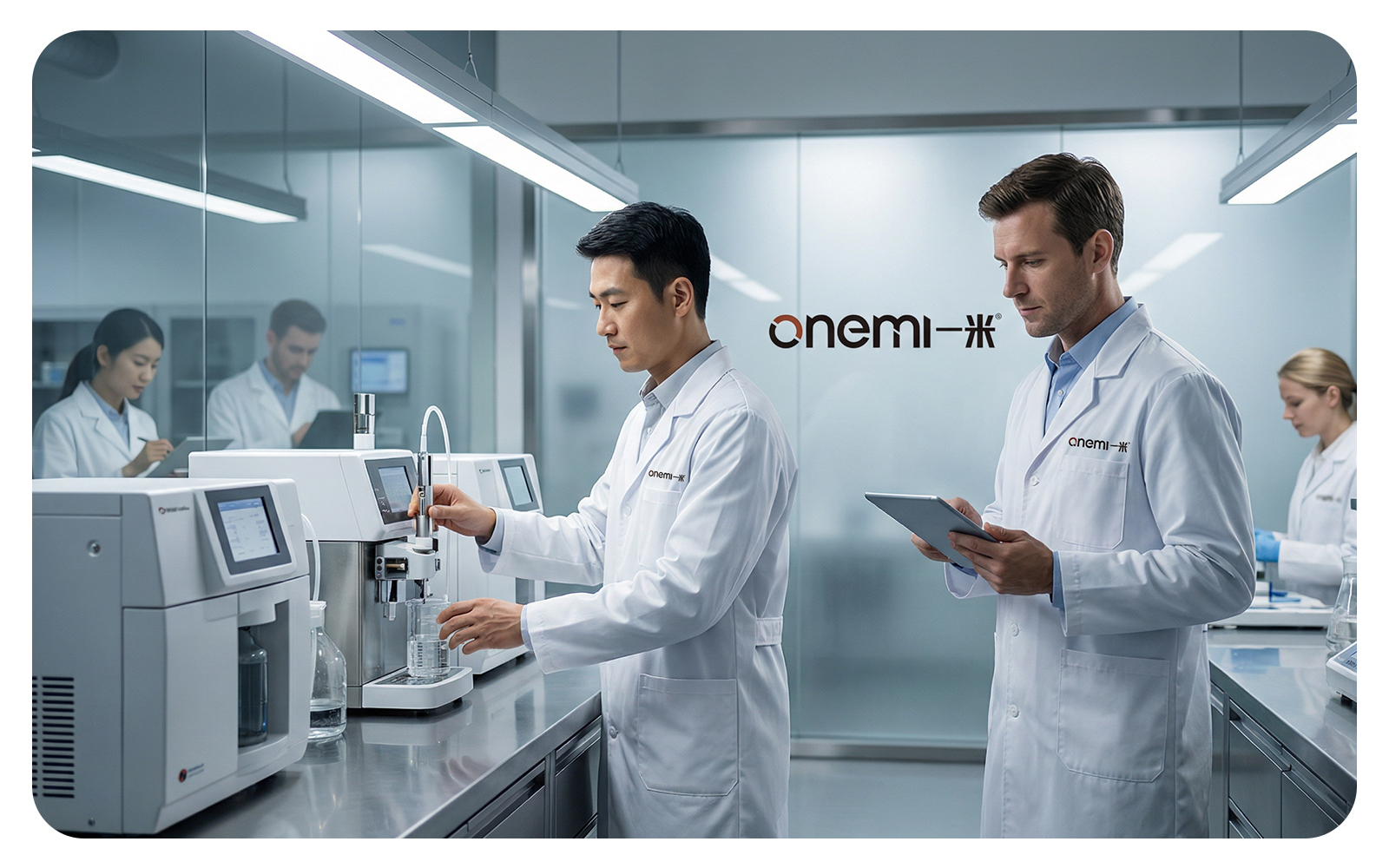
ONEMI (一米净水) has invested substantially in achieving and maintaining NSF certifications across its product lines. The company’s NSF/ANSI 58 and NSF/ANSI 372 certifications for its RO systems are prominently featured in marketing materials and technical documentation. For international buyers visiting the ONEMI factory in Dongguan, the in-house quality testing lab and NSF documentation package are standard parts of the factory tour.
4.4 NSF Certification as a Competitive Differentiator
In the increasingly crowded global water purifier market, NSF certification has emerged as a clear differentiator between commodity products and premium solutions. ONEMI’s commitment to certification — including recent investments in PFAS reduction testing and smart system cybersecurity certification — positions the company advantageously for discerning international buyers who prioritize quality and compliance over price alone.
As one ONEMI export manager noted: “For our clients in Europe and North America, NSF certification is not a ‘nice to have’ — it is a requirement written into their procurement contracts. Our certified products give them confidence that they are importing systems that meet the highest global standards.”
5. The Convergence of Trends: What It Means for the Future
The three trends explored in this article — smart filtration technology, whole-house RO systems, and NSF certification — are not developing in isolation. They are converging to reshape the water purification industry in profound ways:
- Smart + Whole-House: IoT-enabled whole-house RO systems represent the premium segment of the market, offering unparalleled control, efficiency, and peace of mind. These systems appeal to tech-savvy homeowners and commercial facility managers who value data-driven water management.
- Smart + Certification: NSF’s new framework for evaluating smart water treatment systems adds a layer of credibility to connected products, helping consumers distinguish between genuinely intelligent systems and those with superficial connectivity features.
- Whole-House + Certification: As whole-house systems become more complex, NSF certification provides the independent verification that these systems truly deliver comprehensive contaminant reduction across all endpoints.
For manufacturers, the convergence of these trends creates both challenges and opportunities. The barriers to entry are rising — achieving NSF certification, developing reliable IoT platforms, and manufacturing efficient whole-house systems require substantial R&D investment and technical expertise. However, for established manufacturers like ONEMI, these same barriers protect margins and create durable competitive advantages.
Conclusion: Navigating the 2026 Water Purification Landscape
The 2026 water purifier market is dynamic, competitive, and full of opportunity. Three defining trends — smart filtration technology, the rise of whole-house RO systems, and the growing importance of NSF certification — are reshaping the industry and setting new standards for what consumers and businesses expect from their water purification systems.
For international buyers evaluating suppliers, the key considerations are clear: prioritize manufacturers who demonstrate technological innovation, offer comprehensive whole-house solutions, and hold recognized third-party certifications. These factors are reliable indicators of product quality, company reliability, and long-term partnership potential.
ONEMI (一米净水), with its headquarters in Dongguan, Guangdong, and its sales network spanning more than 30 countries, exemplifies the type of manufacturer that meets these criteria. From smart under-sink RO systems to industrial-grade whole-house filtration solutions, ONEMI’s product portfolio is designed to address the diverse needs of the global market — backed by NSF certifications, advanced IoT integration, and a commitment to quality that has defined the brand since its founding.
As the industry continues to evolve, one thing is certain: the demand for clean, safe, and intelligent water purification solutions will only grow. Companies that embrace the trends of 2026 — smart technology, whole-house approaches, and rigorous certification — will be best positioned to lead the market in the years ahead.
If you are looking for professional water purification solutions, feel free to contact us for more information.