

 한국어

- The EPA sets enforceable limits at arsenic 10 ppb, lead 15 ppb (action level), and mercury 2 ppb, but the health-based goals are zero, which keeps removal demand structural
- RO membranes and adsorption media are the two workhorse technologies, and they are not interchangeable: arsenic and lead respond to different media than mercury
- Importers should spec cartridges by contaminant, not by a vague “heavy metal removal” label, because the wrong media leaves liability on the shelf
Why Heavy Metals Keep Driving Filter Demand
Heavy-metal removal is one of the few water-filtration categories where demand does not depend on marketing. The US Environmental Protection Agency enforces maximum contaminant levels for arsenic, lead, mercury, and cadmium under the Safe Drinking Water Act, and the health-based goal for lead and arsenic is zero. That gap between the legal limit and the health goal is what keeps homeowners, utilities, and retailers buying filtration, and keeps importers restocking.
The market signal concentrates in two places: aging municipal infrastructure that leaches lead and copper into service lines, and private wells that pull arsenic and mercury out of natural geology. Both are long-term, structural problems. Unlike a chlorine taste complaint that a simple carbon block solves, heavy metals need real removal media or membrane filtration, which means higher-margin cartridges and a stickier replacement cycle.
The Three Contaminants and What Actually Removes Them
Lead, arsenic, and mercury behave very differently in water, and no single media handles all three equally well. Lead is a cation that adsorbs well onto activated carbon and specialty media, and RO rejects it effectively. Arsenic, especially in well water, is usually present as arsenate or arsenite. Arsenite, the reduced form, passes through carbon and standard RO without pre-oxidation, which is why arsenic-specific iron-based media or pre-oxidized RO is the correct spec. Mercury, particularly methylmercury, needs specialty adsorption media or RO.
The practical consequence for a buyer is simple: a cartridge labeled “heavy metal removal” is a red flag unless the supplier can tell you which metal, at what concentration, and against which test standard. That level of specificity is the difference between a spec sheet and a liability.
| Contaminant | EPA Limit | Effective Removal | Media / Tech |
|---|---|---|---|
| Arsenic | 10 ppb | High (as arsenate) | Iron-based media, RO with pre-oxidation |
| Lead | 15 ppb action level | High | RO, activated carbon block, specialty resin |
| Mercury | 2 ppb | Moderate | Specialty adsorption media, RO |
| Cadmium | 5 ppb | High | RO, ion exchange |
RO vs Adsorption Media: A Spec-Level Trade-Off
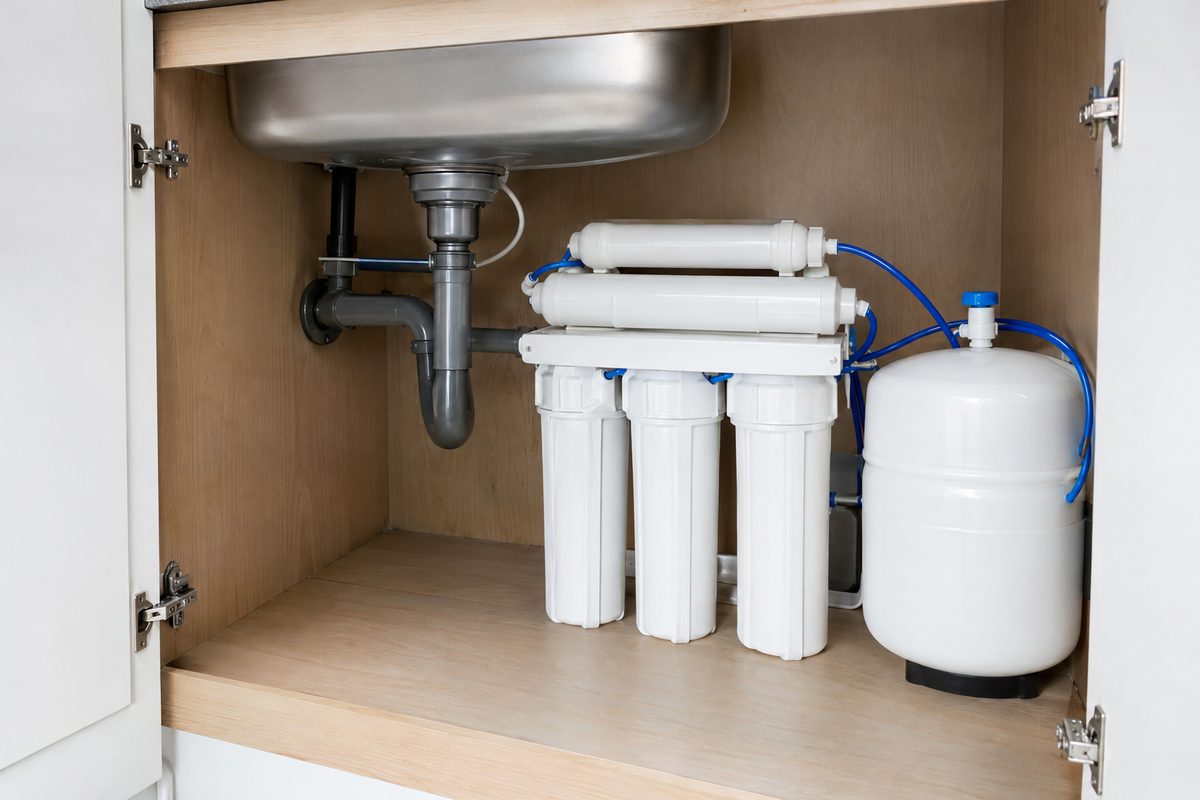
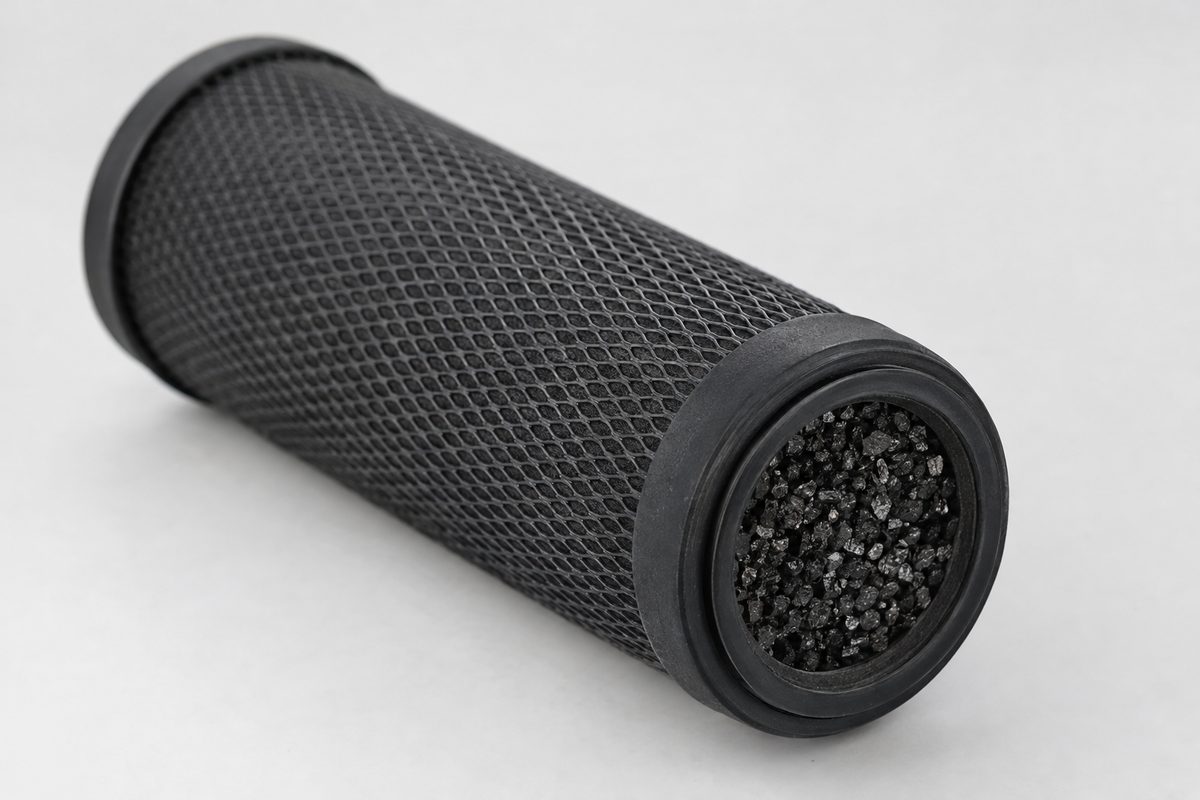
Reverse osmosis is the broad-spectrum answer: a good membrane rejects dissolved metals regardless of which one is present, which is why RO is the default recommendation for unknown or mixed contamination. The trade-off is water waste, flow rate, and the need for a storage tank or booster pump. Adsorption media, whether activated carbon, iron-based media, or specialty chelating resins, is cheaper and runs at line pressure, but it is contaminant-specific and has a finite capacity that must be engineered, not guessed.
For importers, the profitable position is usually a system that pairs a sediment and carbon pre-filter with an RO membrane, and offers the option of a specialty media stage for arsenic or mercury markets. That modularity is what lets a single platform serve both a US well-water customer and an export market with different geology.
What OEM Buyers Should Ask a Cartridge Supplier
When you source a heavy-metal cartridge from a factory, four questions separate a real manufacturer from a trading company. First, what test standard backs the claim: NSF/ANSI 53 for lead and VOC reduction, NSF/ANSI 58 for RO, or a recognized equivalent. Second, what is the rated capacity in gallons at a stated influent concentration, because a removal percentage without capacity is meaningless. Third, what media specification is used: the iodine number of the carbon, the mesh of the iron media, the membrane rejection rate. Fourth, can the factory supply the full chain, housing, media, and membrane, or only assemble third-party parts.
These questions matter because heavy-metal claims carry regulatory exposure. A filter sold in the US that fails a lead-reduction test is a recall and a lawsuit, not just a return. The supplier’s documentation discipline is the buyer’s insurance.
ONEMI’s Position in Heavy-Metal Filtration
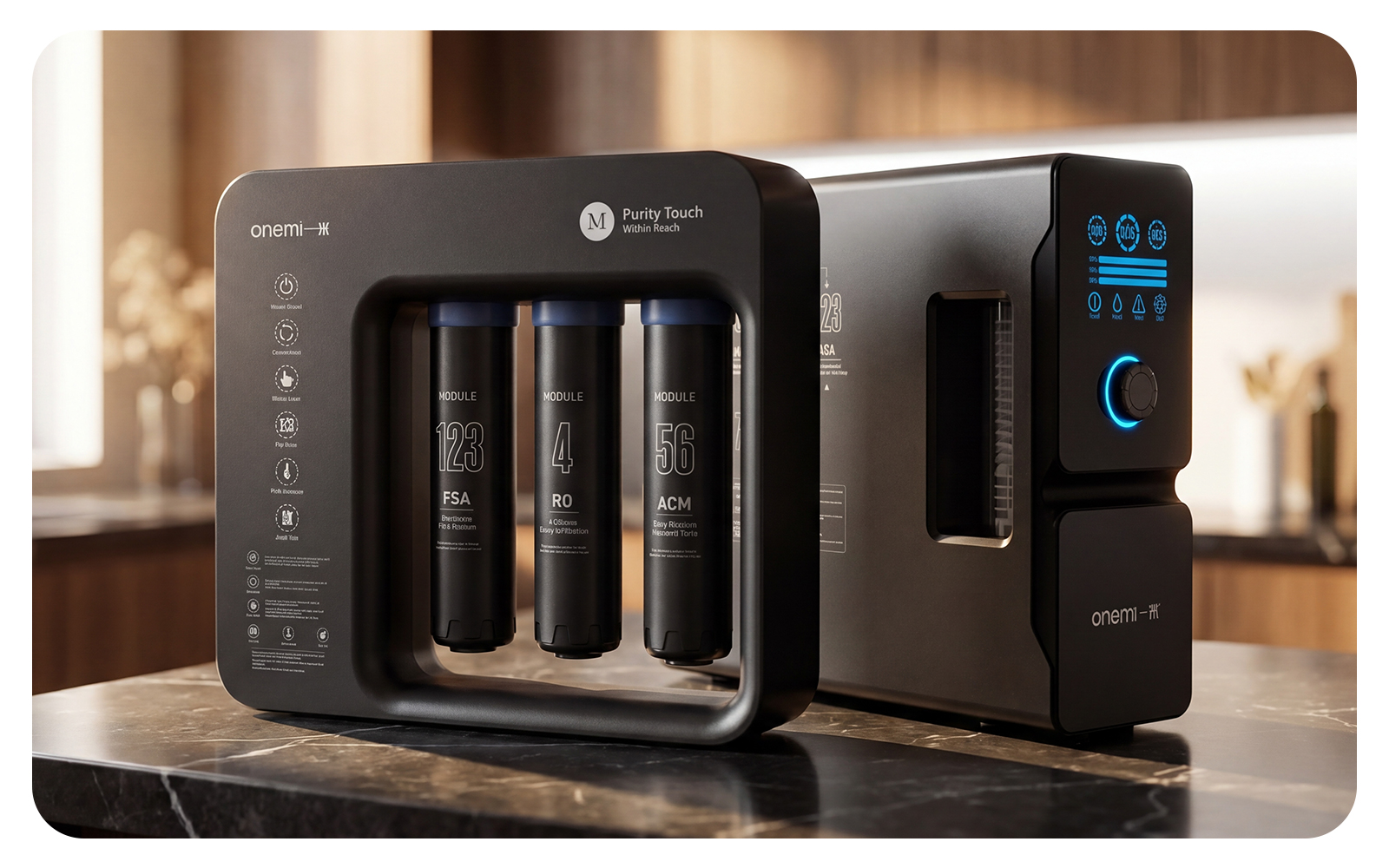
ONEMI, a Guangdong-based water purification equipment manufacturer, builds RO platforms that are the workhorse for heavy-metal removal. The ONEMI RO 100G reverse osmosis system and the RO 400G smart water purifier both use RO membrane filtration at the core, with carbon and PP pre-filters in front, which is the standard architecture for lead and arsenic reduction. Filters are NSF-certified (cartridges only, not the whole machine), and the complete systems carry CE, UL, FCC, and RoHS marks.
For importers and private-label brands, the more relevant capability is OEM/ODM. ONEMI can adapt media stages and membrane grades to a target market’s specific geology, an iron-based arsenic stage for well-water regions, a specialty carbon block for lead, rather than shipping one fixed recipe. The details of MOQ and customization are covered on the OEM/ODM factory page.
The 2026 Sourcing Outlook
Heavy-metal filtration is not a trend; it is a regulatory floor. As the EPA tightens enforcement and more states add their own contaminant limits, the spec bar for cartridges keeps rising, which favors manufacturers that can document their media and membrane performance over assemblers that cannot. Importers who lock in a supplier with real test data now are buying a defensible product line, not just a cheaper unit cost.
The practical move for 2026 is to build heavy-metal capability into your existing RO platform: a modular media stage, a documented test report, and a supplier who can answer the four sourcing questions. That is what separates a shelf-stable SKU from a recall waiting to happen.