
 한국어

- US utilities are moving residual disinfection from free chlorine to chloramine to cut regulated disinfection byproducts, and chloramine survives all the way to the tap.
- Standard granular activated carbon strips chlorine easily but only partly removes chloramine; catalytic carbon is the media that actually breaks the chlorine-ammonia bond.
- Stock a catalytic-carbon cartridge or an RO system with a matched carbon pre-filter, and make the NSF/ANSI 42 claim name the disinfectant you’re targeting.
Free chlorine has disinfected American drinking water for more than a century, ever since Jersey City first dosed its supply in 1908. But a meaningful share of US utilities have quietly switched their residual disinfectant to chloramine, and that single operational change rewrites the specification for every carbon filter an importer or distributor stocks. If your catalog still treats dechlorination as one checkbox, you’re about to eat returns in markets you thought you’d already won.
Why Utilities Are Switching, and What It Does to Your SKU
Chlorine is cheap and fast, but it’s unstable. In a long distribution main it gasses off before the water reaches the far end of the system, leaving the tail of the network under-protected. Worse, free chlorine reacts with the natural organic matter still dissolved in source water and forms a family of regulated disinfection byproducts, trihalomethanes (THMs) and haloacetic acids (HAAs). The EPA’s Stage 2 Disinfection Byproducts Rule caps total THMs at 80 parts per billion and five HAAs at 60 ppb, and large surface-water utilities kept bumping into those ceilings.
Chloramine, properly monochloramine (NH2Cl), made by dosing ammonia alongside chlorine, solves both problems. It stays active in the pipe far longer, and it forms significantly fewer THMs and HAAs. The CDC confirms both points: chloramine keeps killing germs in water pipes longer than chlorine, and it makes fewer disinfection byproducts. That’s the whole reason the switch keeps happening.
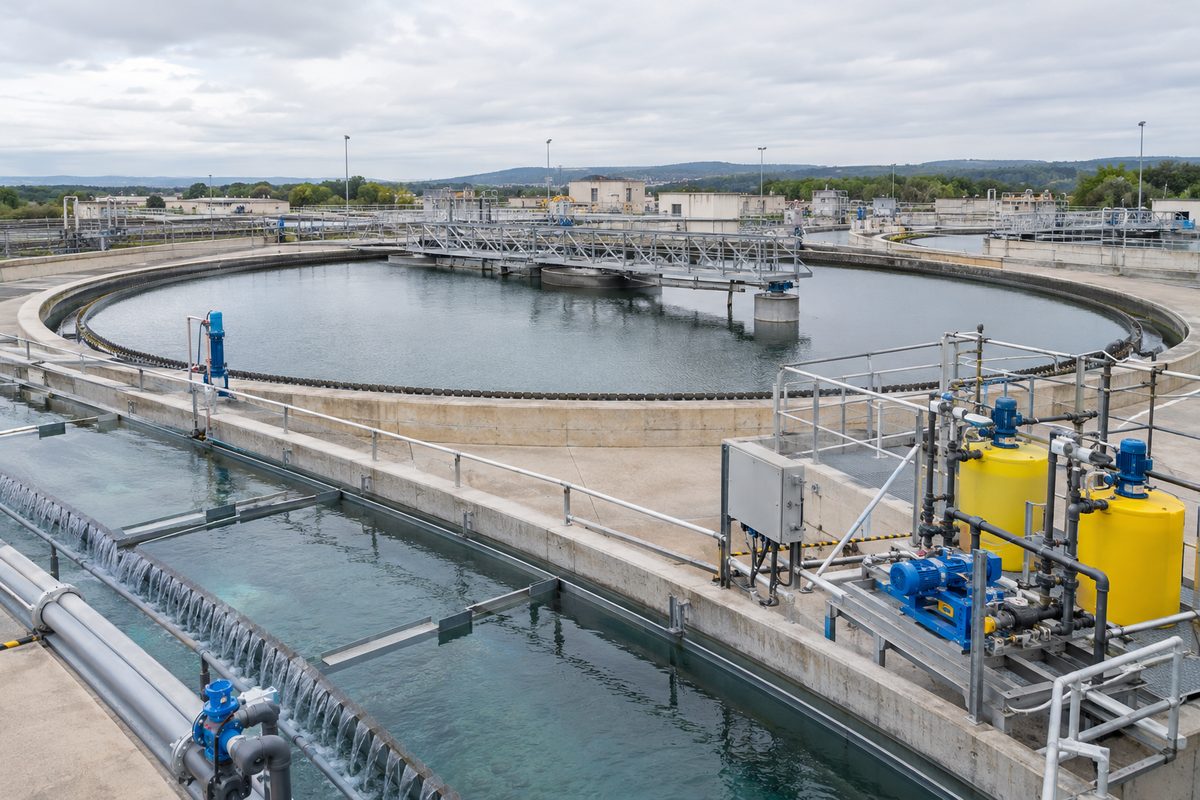
The trade-off is what matters to your product line. Chloramine is chemically sticky in exactly the way chlorine is not. Free chlorine is easy to strip; an ordinary carbon block adsorbs and reduces it in seconds. Chloramine holds its chlorine tight against an ammonia molecule, and that nitrogen-chlorine bond does not break on contact with standard activated carbon. The CDC also notes that chloramine can change the chemical properties of the water, which can affect lead and copper pipes, a quieter risk your customers will ask about. For health context, the EPA and CDC both treat chlorine or chloramine at up to 4 milligrams per liter as safe to drink. The problem for a distributor is taste, odor, and equipment longevity, not acute toxicity.
The Spec Gap: Standard Carbon Removes Chlorine, Not Chloramine
Here’s the distinction most sourcing specs miss. Free chlorine is removed by a substitution reaction, chlorine atoms swapping onto the carbon surface, so it happens fast and doesn’t demand much contact time. Chloramine doesn’t cooperate. It needs a chemical reaction to break the nitrogen-chlorine bond first, and that reaction is slow and hungry for contact time.
In practical terms, a granular activated carbon (GAC) cartridge rated for chlorine might clear 95 percent of free chlorine while removing only half to two-thirds of chloramine. The customer tastes the difference, files a return, and your distributor eats the freight. If you’ve been sourcing cartridges against a generic chlorine-reduction data sheet, you’ve been under-specifying for every metro that runs chloramine.
This is not a niche problem. Chloramine is the standard residual in many of the largest US systems precisely because they’re large. Long mains, surface water, and DBP pressure all push a utility toward chloramine. Importers selling into those metros need media that actually attacks the bond, not media that hopes the ammonia lets go on its own.
Catalytic Carbon Is the Spec Differentiator
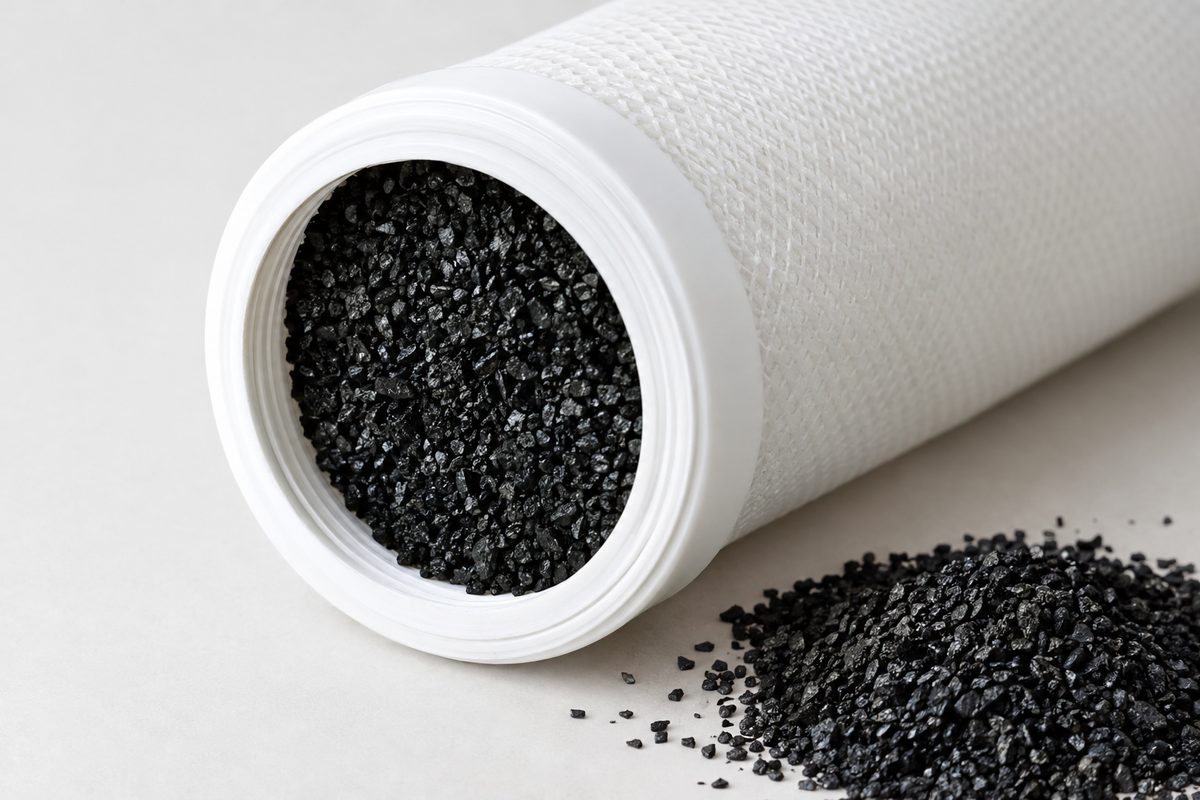
The media that handles chloramine is catalytic carbon, activated carbon whose surface has been modified to catalyze the decomposition of monochloramine, breaking the nitrogen-chlorine bond and reducing the chlorine to chloride. It’s the difference between adsorb-and-hope and chemically-neutralize.
Two parameters separate a real chloramine spec from a marketing sheet:
- Empty bed contact time (EBCT). Chloramine reduction needs meaningful dwell time against the media. A chlorine cartridge might get by on a minute or two of EBCT; a chloramine cartridge typically needs several minutes of bed contact, which is why undersized drop-in cartridges underperform regardless of what the label says.
- Media grade and surface area. Catalytic grades are specified by iodine number and the catalytic coating, not just carbon hardness. A supplier that can’t name the media grade and the target EBCT can’t guarantee chloramine reduction.
Below is the working comparison we use internally when we spec a cartridge for a chloramine market:
| Media / system | Free chlorine | Chloramine | Best fit |
|---|---|---|---|
| Standard GAC block | 95%+ | 50-70% (partial) | Chlorine-only systems |
| Catalytic carbon block | 99% | 90%+ | Chloramine metros, whole-house and POU |
| KDF / redox media | 90% | 30-40% | Shower or point-of-entry pre-stage |
| Reverse osmosis with carbon pre-filter | 95%+ | 95%+ | Drinking water, membrane protected from chlorine oxidation |
The numbers are the point. KDF, which works fine on free chlorine, barely touches chloramine. That’s the trap: a shower filter or pre-stage sold as dechlorination in a chloramine city quietly fails on the residual that’s actually in the water.
Where RO Fits, and Where It’s Overkill
Reverse osmosis removes both disinfectants, but the real spec lesson is upstream. Free chlorine is an oxidizer, and it attacks the polyamide layer of an RO membrane, shortening its life. That’s why every serious RO system puts a carbon pre-filter in front of the membrane, not to make the water taste better but to protect the membrane from chlorine oxidation. In a chloramine market, that pre-filter has to be catalytic carbon, because a standard pre-filter leaves chloramine behind to do slow damage to the same membrane.
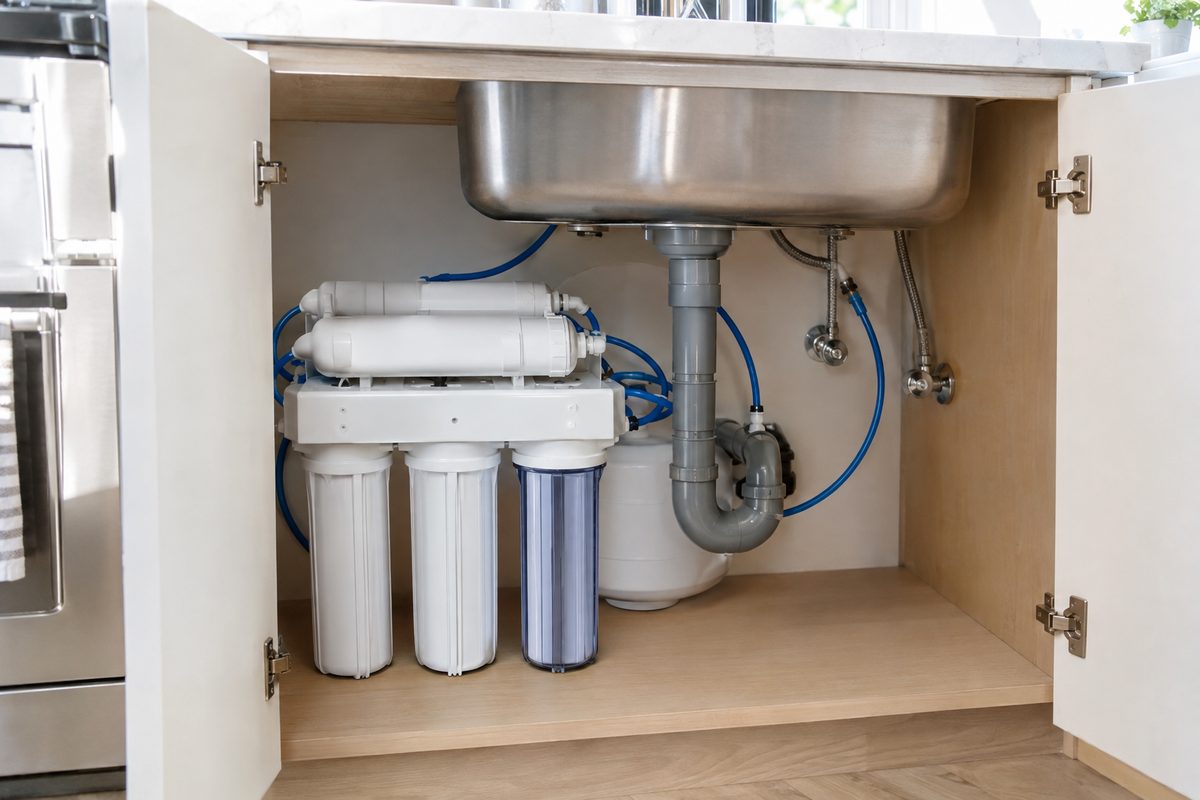
So the sourcing decision is rarely carbon-versus-RO. It’s what the pre-treatment stage specs against. A tankless high-flow RO system for a chloramine metro needs a catalytic-carbon pre-filter matched to the flow rate, or you’re shipping a product with a built-in early-failure mode. That single component choice is the difference between a system that lasts and a batch of warranty claims.
What to Ask Your Factory Before You Stock
Most importers sign off on a spec sheet without asking the questions that separate a real chloramine cartridge from a chlorine cartridge wearing a new label. Here’s the checklist a buyer should run:
- Which disinfectant is the cartridge certified against? NSF/ANSI 42 covers aesthetic chlorine reduction; a chloramine claim is a separate, more demanding reduction claim. Make the factory name the exact standard and the exact contaminant in the certification.
- What’s the media grade and EBCT? Ask for the iodine number, the catalytic specification, and the empty bed contact time at the rated flow. If they can’t produce all three, they can’t produce chloramine performance.
- What’s the rated capacity at the stated feed concentration? Chloramine capacity is a function of concentration and flow. A cartridge rated at 2 mg/L won’t hold its claim at 4 mg/L. Get capacity curves, not a single number.
- Can they build the pre-filter into an RO system? If your market is chloramine-heavy, source the RO unit with a catalytic-carbon pre-stage already matched, not as an afterthought.
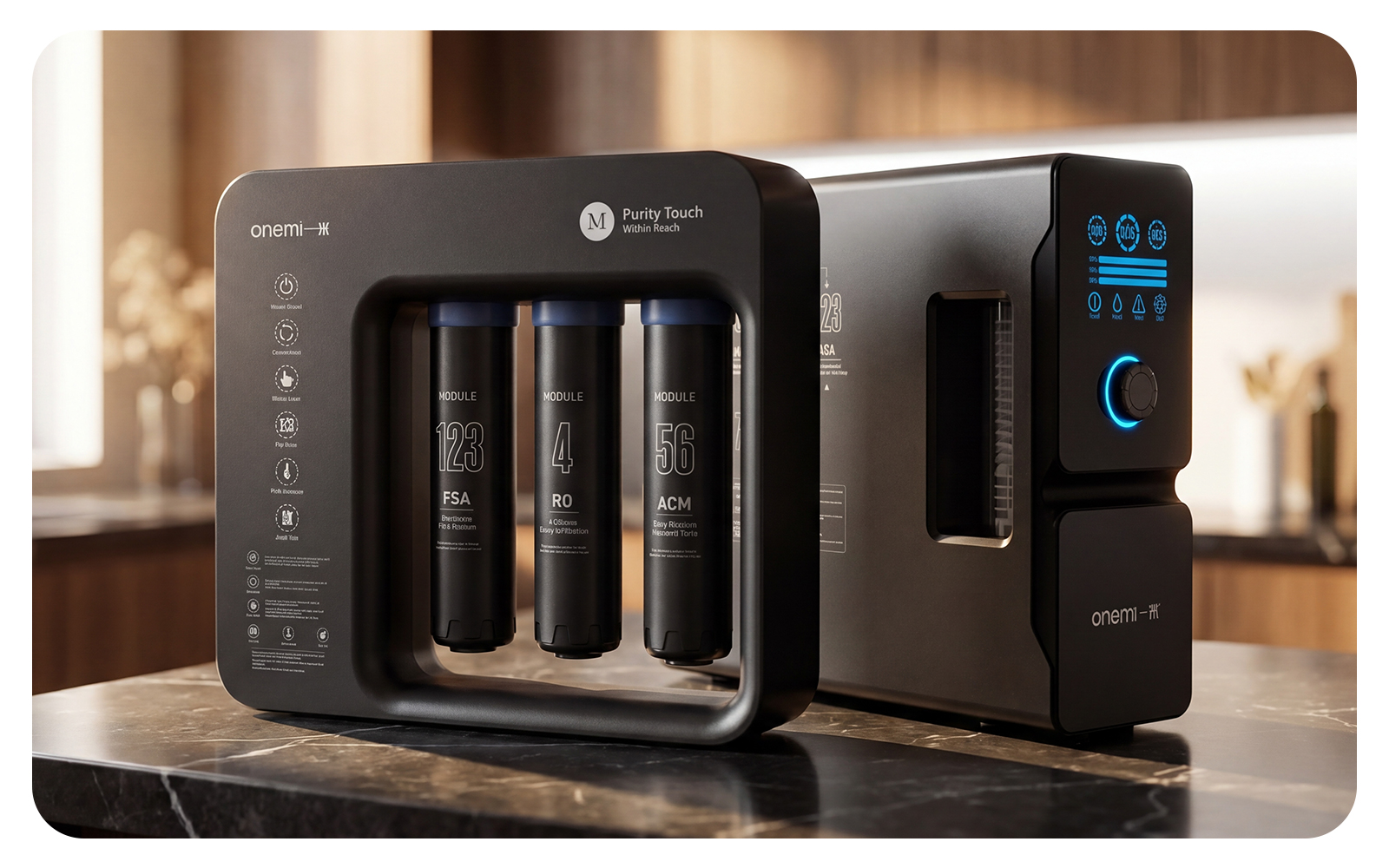
One more thing worth confirming is the certification on the shelf. A cartridge that carries NSF/ANSI 42 for chlorine reduction and separately documents chloramine reduction on the data sheet is a defensible product. A cartridge that claims it removes disinfectants with no standard attached is a liability in a market where buyers read the fine print. ONEMI, a Guangdong-based water purification equipment manufacturer, supplies both GAC and catalytic-carbon cartridge grades and builds them into its RO systems as matched pre-filters, so the chloramine question is settled at the engineering stage rather than at the port of entry. For OEM and ODM programs, the carbon grade and pre-filter configuration are specified per target market instead of shipped as a one-size default.
The Import Decision, Bottom Line
Chloramine is not a fad. It’s the direction of travel for large US utilities under DBP pressure, and it changes what dechlorination means on a data sheet. The importer who specs catalytic carbon where the market has switched, and keeps a chlorine-grade SKU where it hasn’t, is the one whose cartridges don’t come back.
If you’re stocking for a chloramine metro, start from the media, not the housing. Specify catalytic carbon, pin down the EBCT, and make the certification name the disinfectant. Your returns, your reorder rate, and your distributor’s margins all trace back to that single decision.