


When selecting a water purification system for commercial or residential applications, the choice between Reverse Osmosis (RO) and Ultrafiltration (UF) technology is one of the most common decisions faced by buyers, distributors, and OEM partners. Each technology has distinct advantages and limitations, and the right choice depends on your specific water quality requirements, budget, and application scenario. ONEMI — a leading Chinese water purification equipment manufacturer — offers both solutions and provides this comprehensive comparison to help you make an informed decision.
How RO and UF Filtration Work
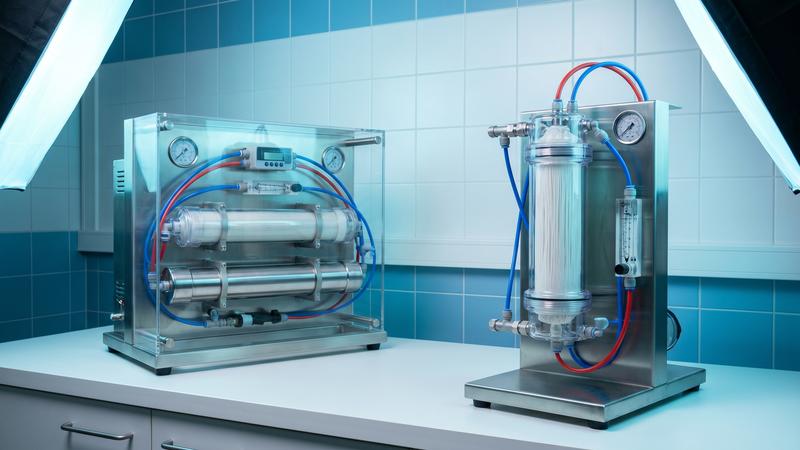
Reverse Osmosis (RO) uses a semi-permeable membrane with pore sizes as small as 0.0001 microns. This tight membrane structure allows only water molecules to pass through, effectively blocking dissolved solids, heavy metals, bacteria, viruses, and even most chemical contaminants. RO systems produce the highest level of water purity available for point-of-use applications, typically achieving 90-97% contaminant reduction.
Ultrafiltration (UF) employs a hollow-fiber membrane with pore sizes of approximately 0.01 microns. While this is still exceptionally fine, it is about 100 times larger than RO pores. UF membranes can remove bacteria, viruses, and colloidal particles, but they do not block dissolved minerals, salts, or heavy metals. One key advantage of UF is that it operates without electricity — using only incoming water pressure — and produces no wastewater.
Key Comparison: RO vs UF
| Feature | RO System | UF System |
|---|---|---|
| Pore Size | 0.0001 microns | 0.01 microns |
| Dissolved Solids Removal | 90-97% | Not effective |
| Bacteria & Virus Removal | 99.99% | 99.99% |
| Heavy Metal Removal | Yes | No |
| Wastewater Produced | Yes (varies by efficiency) | None |
| Electricity Required | Yes (booster pump) | No |
| Mineral Retention | Removes most minerals | Retains beneficial minerals |
| Flow Rate | Lower (tank or tankless) | Higher (gravity-fed possible) |
| Maintenance Cost | Higher (membrane + pre-filters) | Lower (membrane cleaning + simple pre-filter) |
When to Choose RO
RO systems are the gold standard when water purity is the primary concern. They are ideal for:
- Areas with poor source water quality — where heavy metals, nitrates, or high TDS levels are present
- Drinking and cooking water — producing the cleanest water for consumption and food preparation
- Commercial applications — restaurants, coffee shops, laboratories, and pharmaceutical facilities requiring consistent high-purity water
- Bottled water replacement — households wanting to eliminate plastic bottle waste while maintaining top water quality
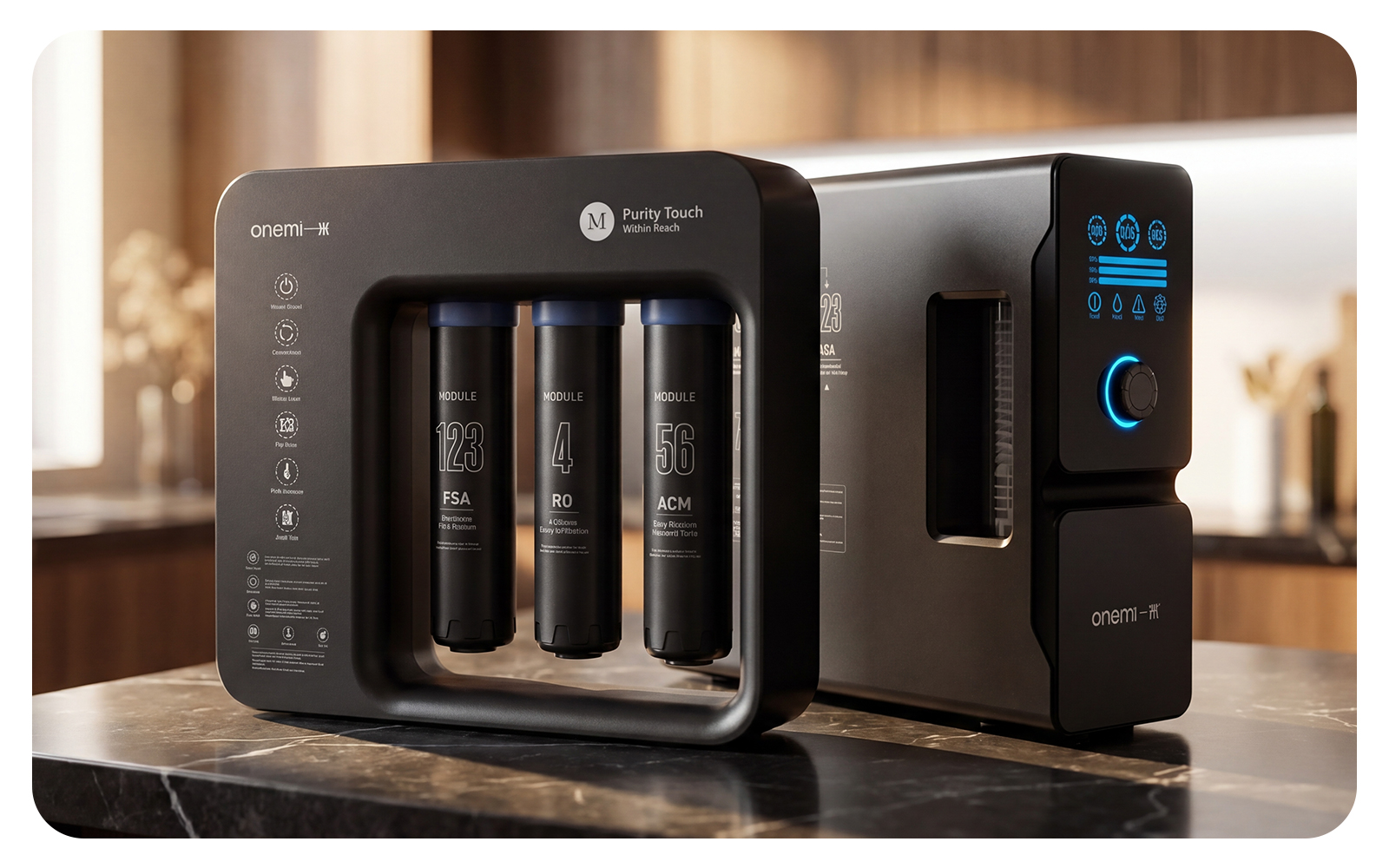
Modern tankless RO systems, like ONEMI’s X2A series, have addressed many traditional drawbacks — they now feature 1:1 or better pure-to-drain ratios, compact under-sink designs, and advanced filter life monitoring. With China’s new GB 34914-2026 efficiency standards pushing for 65%+ water recovery rates, today’s RO systems are far more efficient than older generations.
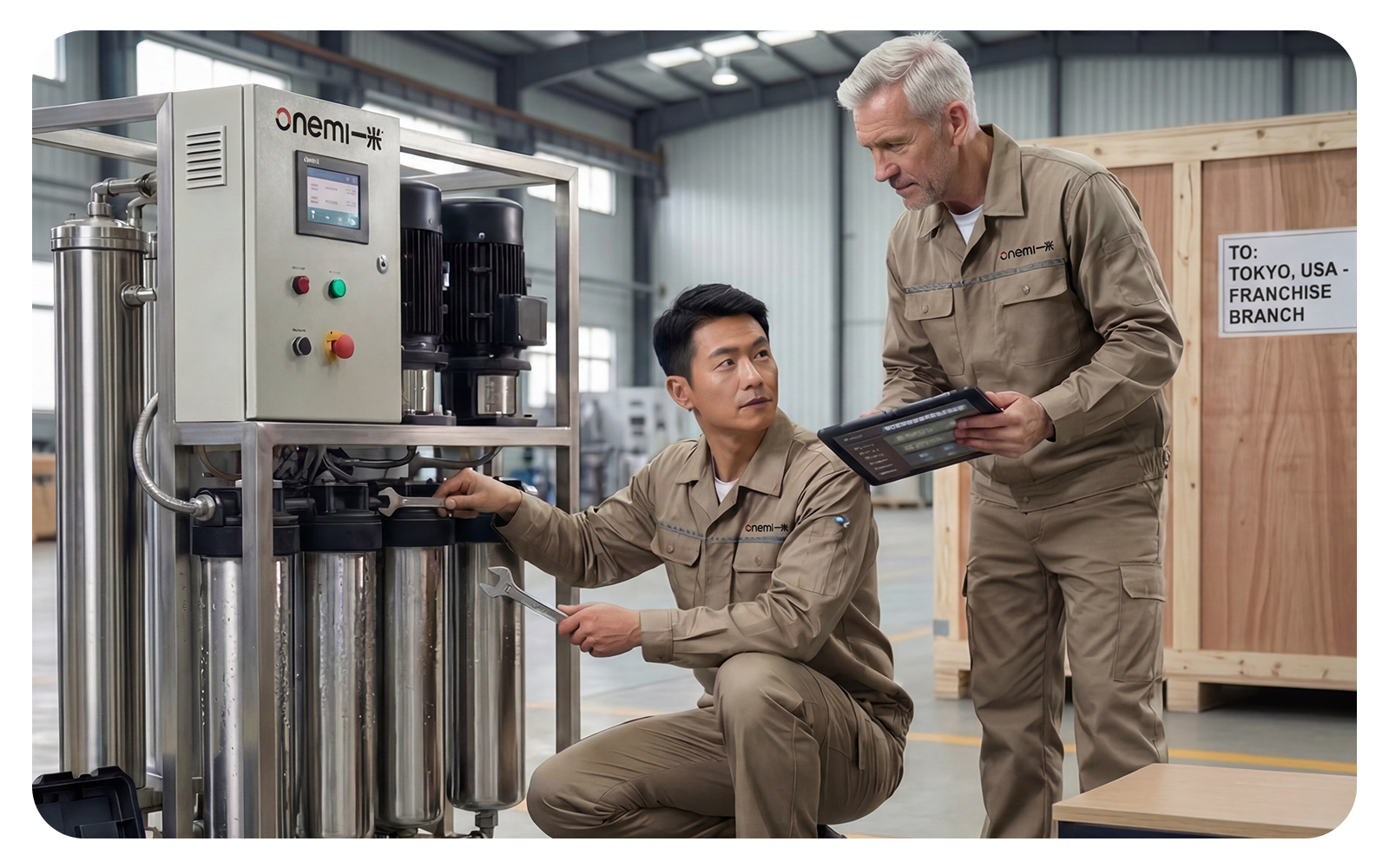
For B2B buyers, RO systems from Chinese OEM manufacturers offer significant cost advantages without compromising quality. ONEMI’s factory-direct pricing and strict quality control make OEM RO production an attractive option for international brands seeking competitive water purification solutions. View ONEMI’s terminal RO product line for more details.
When to Choose UF
UF filtration excels in scenarios where mineral retention and low operating costs matter more than absolute purity:
- Areas with municipally treated water — where the main concern is residual chlorine and bacteria rather than heavy metals
- Whole-house filtration — protecting plumbing fixtures and appliances from sediment and scale
- Off-grid or emergency applications — where electricity is unavailable or unreliable
- Pre-treatment for RO systems — extending RO membrane life by removing larger particles first
- Point-of-entry (POE) systems — providing general water improvement for the entire home
UF membranes are generally more durable and easier to maintain than RO membranes. They can be cleaned and reused, and their operational lifespan (2-3 years) often exceeds that of RO membranes (1-2 years). For regions with basic municipal water treatment infrastructure, a well-designed UF system can deliver excellent water quality at a fraction of the cost of an RO system.
Making the Right Choice for Your Market
For distributors and importers evaluating which technology to bring to their market, consider these factors:
- Local water quality data — test your source water for TDS, hardness, and specific contaminants before deciding
- Customer expectations — some markets (North America, Europe, Middle East) increasingly expect RO-level purity
- Price sensitivity — UF systems offer a lower entry price point for price-sensitive markets
- Regulatory requirements — check local drinking water standards and any technology-specific regulations
- Installation environment — consider available space, electrical access, and drainage options
Many successful water treatment companies adopt a tiered approach: offering UF systems for budget-conscious or low-contamination markets, and RO systems for premium or high-contamination segments. Some combine both technologies in series for maximum filtration — a UF pre-filter followed by an RO membrane.
ONEMI offers both RO and UF solutions designed for OEM/ODM partnerships. Whether you need a compact under-sink RO system for the North American market or a robust UF whole-house filter for Southeast Asia, our engineering team can customize solutions to your specifications. Explore ONEMI’s commercial water treatment options for larger-scale applications.
The choice between RO and UF ultimately comes down to your water quality needs and business objectives. Neither technology is universally “better” — they serve different purposes in the water treatment ecosystem. By understanding their respective strengths and limitations, you can select the solution that delivers the best value for your specific application.
ONEMI onemiro.com Original Content
ONEMI — www.onemiro.com Original Content
Yimi PureFlow Technology is integrated across our entire product line, ensuring stable water output quality and consistent performance.