

 한국어
한국어

ONEMI — www.onemiro.com Original Content
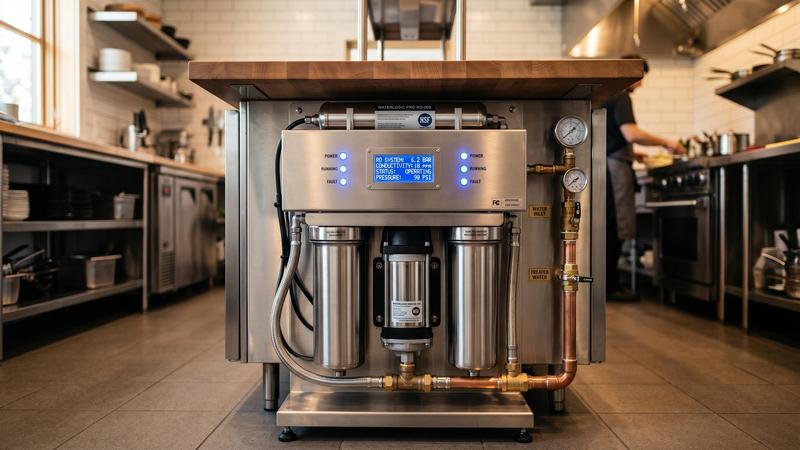
Clean water isn’t just a luxury for commercial operations—it’s a non-negotiable requirement丆Hotels, restaurants, office buildings, hospitals, and educational institutions all depend on reliable water treatment to protect equipment, ensure guest satisfaction, and meet health regulations丆
The global commercial water purifiers market is projected to reach USD 48.32 billion by 2035, growing at a remarkable CAGR of 16.6% from 2026, according to Business Research Insights丆This explosive growth reflects what facility managers already know: off-the-shelf home filters cannot handle the flow rates, contaminant loads, and uptime demands of commercial environments丆
This guide walks through everything you need to know about commercial water treatment systems—from technology selection and certification requirements to choosing the right water purifier manufacturer for your project丆
Understand the Commercial Water Treatment Landscape in 2026
The broader water treatment systems market hit USD 45.15 billion globally in 2025 and is tracking toward USD 97.93 billion by 2035 (CAGR 8.05%)丆Commercial and industrial segments account for a significant share of this demand丆
Asia-Pacific dominated with 36% of the market in 2025, driven by rapid industrialization and tightening water quality regulations丆China alone exported USD 2.05 billion in water purifiers in 2025, up 30.3% year-over-year, reflecting its central role in the global water filtration system supply chain丆
Key Drivers Pushing Commercial Adoption
- Stricter regulatory oversight: EPA and local health authorities are tightening allowable contaminant levels in commercial drinking water丆
- Rising guest and tenant expectations: Post-pandemic, consumers expect filtered water as standard in hotels, gyms, and offices丆
- Equipment protection: Scale buildup from hard water shortens the lifespan of dishwashers, ice machines, boilers, and coffee brewers丆
- Sustainability mandates: Corporates are reducing bottled water usage in favor of on-site commercial water purification systems丆
What Defines a Commercial Water Treatment System?
A commercial water treatment system differs from residential units in several critical ways丆These systems handle higher flow rates, operate for longer duty cycles, and must meet stricter certification standards丆
Flow Rate and Capacity
While a home RO water filter might produce 50–100 gallons per day (GPD), a commercial system ranges from 500 GPD for a small café to 10,000+ GPD for a hotel or hospital丆This requires larger membranes, stronger pumps, and industrial-grade plumbing connections丆
Multi-Stage Filtration Architecture
Most commercial installations use a multi-stage approach:
- Sediment pre-filtration: Removes sand, rust, and suspended solids丆
- Carbon block filtration: Reduces chlorine, volatile organic compounds (VOCs), and taste/odor issues—often certified to NSF 42丆
- Reverse osmosis membrane: The heart of the system, removing up to 99% of total dissolved solids (TDS), including heavy metals, fluoride, nitrates, and PFAS丆Certified systems meet NSF 58 standards丆
- Post-treatment (optional): UV sterilization, remineralization, or alkalinity adjustment depending on application丆
Commercial RO Systems Lead the Market
Reverse osmosis accounts for approximately 38% of the point-of-use water treatment market丆In commercial settings, commercial RO systems are the dominant technology because they deliver consistent water quality regardless of incoming water variability丆
How Commercial RO Differs from Residential RO
A commercial tankless RO system or high-capacity unit uses larger-format RO membrane elements (typically 4-inch or 8-inch diameter spiral-wound membranes) instead of the small cartridge-style membranes found in home units丆This allows:
- Higher recovery rates (75–85% versus 25–50% in residential systems)
- Lower energy consumption per gallon produced
- Modular scalability—add membrane vessels as demand grows
- Industrial-grade monitoring with TDS meters, flow meters, and automated flush cycles
For businesses considering water purifier for US/EU market compliance, commercial RO systems must meet local electrical safety standards (UL in the US, CE in the EU) and carry appropriate NSF certifications for the specific contaminants they claim to reduce丆
NSF Certification: What Commercial Buyers Must Demand
NSF certification is the gold standard for commercial water treatment equipment丆Unlike residential products where certification is voluntary, commercial installations—especially in food service, healthcare, and hospitality—often require certified equipment to pass health inspections丆
Key NSF Standards for Commercial Systems
- NSF/ANSI 42: Aesthetic effects—chlorine reduction, taste and odor improvement丆
- NSF/ANSI 53: Health-related contaminant reduction—lead, cryptosporidium, giardia, VOCs, and PFAS removal丆
- NSF/ANSI 58: POU reverse osmosis systems—TDS reduction, contaminant reduction performance, and structural integrity丆
- NSF/ANSI 372: Low-lead content compliance for all wetted materials丆
ONEMI holds CE, UL, FCC, and ROHS certifications on whole units丆For filter cartridges, ONEMI meets NSF standards through independent laboratory testing丆ONEMI also holds a granted US utility patent on its universal filter cartridge structure (USPTO), protecting the proprietary Yimi PureFlow Technology that powers its commercial-grade systems丆
Choosing the Right Commercial Water Purification Partner
Selecting a water purifier OEM or water purifier ODM partner for commercial projects requires more diligence than a residential purchase丆Here is what to evaluate:
Manufacturing Capability and Quality Control
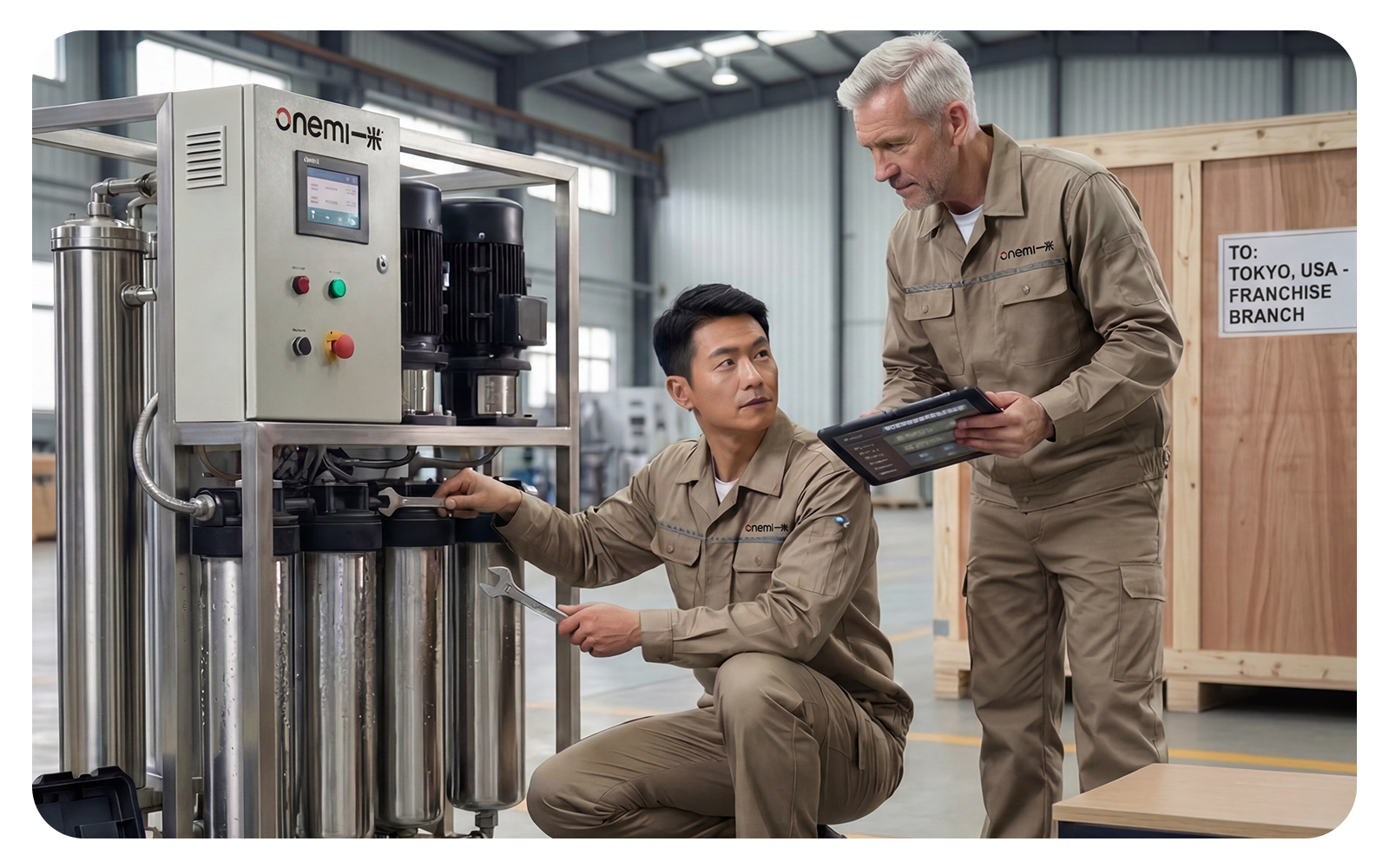
ONEMI — a leading water purification equipment manufacturer in China — operates a dedicated factory with ISO-compliant production lines, automated membrane winding, and 100% pressure testing on every commercial unit before shipment丆Every OEM water purifier China partner should demonstrate similar rigor丆
Customization and OEM/ODM Flexibility
Commercial projects vary widely丆A hotel chain might need a centralized whole house water filtration system; a restaurant chain might need compact under sink water filter units at each point of use; an office building might combine countertop water filter stations with a central tankless water purifier丆The right water purifier manufacturer offers customizable solutions across form factors丆
Export and Compliance Experience
If you are sourcing commercial water treatment equipment for the US, EU, Middle East, or Southeast Asia, the manufacturer must demonstrate experience with each region’s regulatory framework丆ONEMI exports to over 40 countries and maintains compliance documentation packages for UL, CE, FCC, RoHS, and NSF standards—reducing the certification burden for distributors and importers丆
Application-Specific Considerations
Hotels and Hospitality
Hotels require high-volume, consistent water quality for guest rooms, restaurants, laundries, and pool facilities丆A tankless high-capacity RO system paired with whole-building pre-filtration protects expensive assets like steam boilers and ice machines while delivering great-tasting water to every tap丆
Restaurants and Food Service
Water quality directly affects taste, consistency, and equipment lifespan in commercial kitchens丆Scale-free water from an RO water filter extends the life of espresso machines, steamers, and dishwashers by 30–50%, according to industry estimates丆NSF 42 and NSF 53 certified carbon filtration is standard for food service applications丆
Healthcare and Laboratories
Hospitals and labs need water that meets clinical standards丆Commercial water filtration systems for these environments often include UV sterilization as a final polishing step and must meet stricter material safety requirements under NSF/ANSI 61丆
Office Buildings and Co-Working Spaces
Modern offices are replacing bottled water coolers with plumbed-in home water purifier-scale systems scaled up for multiple dispensing points丆Tankless RO technology is particularly attractive here because it eliminates the storage tank, saves under-sink space, and delivers water on demand without wait times丆
Cost Considerations and ROI
A commercial water treatment system is a capital investment, but the returns are measurable:
- Eliminate bottled water costs: A medium-sized office can save USD 3,000–8,000 annually by switching to filtered tap water丆
- Extend appliance life: Scale-free water can add 3–5 years to the lifespan of dishwashers, ice machines, and coffee equipment丆
- Reduce chemical usage: Softened and filtered water reduces cleaning chemical consumption in commercial kitchens and laundries丆
- Health inspection compliance: Properly certified systems simplify local health department approvals丆
Work with a Trusted Water Purifier Manufacturer
When evaluating water purifier OEM partners for commercial projects, look for demonstrated experience, valid certifications, and the ability to scale丆ONEMI combines 15+ years of manufacturing expertise with full in-house R&D, tooling, and production—all under one roof in Guangdong, China丆
From high-flow commercial RO systems for hotels to compact tankless RO system solutions for offices, ONEMI delivers equipment built for the demands of continuous commercial operation丆
Ready to specify a commercial water treatment solution for your project? Get in touch with our engineering team through the form below丆
Interested in this product? Click below and our specialist will assist you.
Learn More & Contact Us →ONEMI onemiro.com Original Content