


The global water treatment industry is undergoing a profound transformation in 2026, driven by converging forces of stricter regulations, climate-induced water scarcity, and unprecedented technological advances. From artificial intelligence optimizing filtration processes to nanotechnology-enabled membranes that target contaminants at the molecular level, the innovations reshaping water purification are more groundbreaking than at any point in the past decade. This article explores the key trends defining the future of smart water purification technology and what they mean for global B2B buyers and manufacturers.
Smart IoT-Connected Purification Systems
The most significant trend in 2026 is the shift from conventional mechanical filtration to intelligent, connected systems. Today’s cutting-edge water purifiers embed multiple sensors that continuously monitor water quality parameters including TDS, turbidity, pH, temperature, and flow rate in real time. These data streams feed into cloud-based analytics platforms that enable automated process optimization, predictive maintenance, and remote anomaly alerts.
This level of insight is becoming table stakes for manufacturers, laboratories, and industrial facilities where downtime or water quality deviations carry high costs. By 2026, the industry has moved well past the tipping point toward proactive, data-driven water management. IoT-enabled systems can predict filter cartridge exhaustion with 95% accuracy and schedule maintenance during low-demand periods, reducing unplanned outages by up to 12% according to field deployment data.
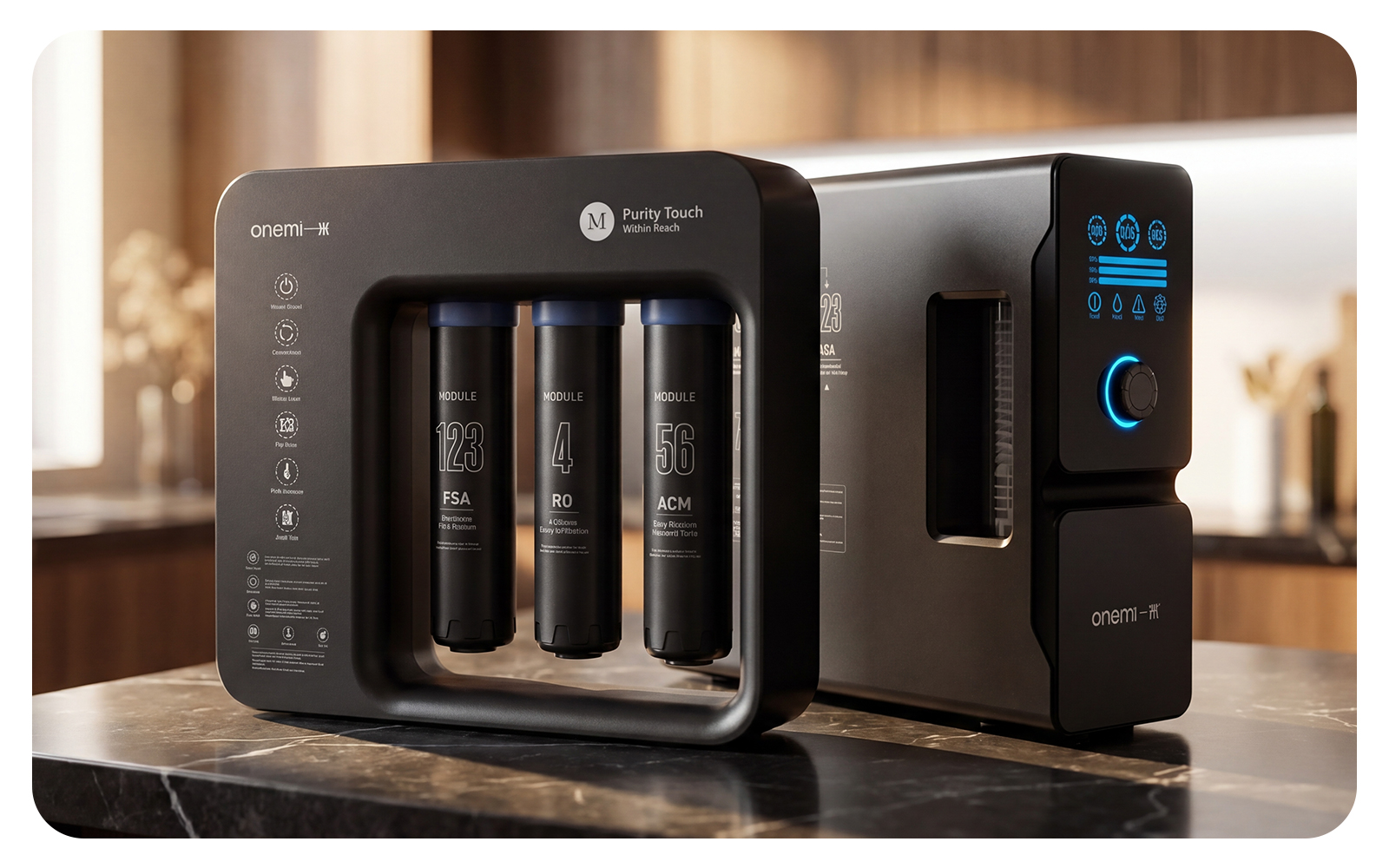
For B2B buyers evaluating potential suppliers, the presence of IoT connectivity and smart monitoring capabilities has become a key differentiator. ONEMI — a leading China water purification equipment manufacturer — has integrated real-time monitoring modules into its commercial RO systems, allowing facility managers to track performance metrics from anywhere via mobile dashboard.
Advanced Membrane Technology and Nanomaterials
Membrane technology is being revolutionized by nanotechnology-based materials such as graphene oxide composites and nanofiber membranes. These next-generation materials offer several breakthrough advantages over conventional polymer membranes: higher water permeability (reducing energy consumption by up to 30%), enhanced selectivity that targets specific contaminants at the molecular level, and improved fouling resistance that extends operational lifespan.
Nanofiltration membranes enhanced with graphene oxide can now achieve over 99% rejection rates for heavy metals, microorganisms, and microplastics while operating at significantly lower pressure than traditional RO membranes. This opens new possibilities for applications where energy efficiency is paramount, including off-grid solar-powered purification and emergency response systems.
In parallel, anti-fouling membrane coatings using zwitterionic polymers and photocatalytic TiO₂ layers are entering commercial deployment, dramatically reducing chemical cleaning frequency and extending membrane service intervals from months to years.
Hybrid and Multi-Stage Filtration Architectures
No single purification method effectively removes all contaminant classes. This fundamental limitation is driving the widespread adoption of hybrid and multi-stage filtration systems that combine complementary technologies in intelligent sequences. Common 2026 configurations include:
- RO + UV + activated carbon for complete removal of dissolved solids, microorganisms, and residual chlorine
- Ultrafiltration + nanofiltration + UV for applications requiring selective mineral retention
- Ozone + UV hybrid reactors that create synergistic disinfection effects, achieving log-level reductions of viruses and protozoa in a single pass while reducing energy consumption by 15% compared to UV-only installations
- Ozone-enhanced nanofiltration where low-dose ozone disrupts biofilm formation on membrane surfaces, doubling cleaning intervals and reducing harsh chemical usage
These multi-stage systems are inherently less sensitive to feed water quality variations and can be customized to end-user requirements, ranging from laboratory-grade ultrapure water to high-volume process water. The modular nature also allows easier scaling as demand fluctuates.
Sustainability and Circular Water Economy
Sustainability has evolved from a nice-to-have to a design imperative in the water purification industry. In 2026, leading manufacturers are pursuing multiple parallel strategies to reduce environmental footprint:
Energy efficiency: New-generation UV LEDs consume significantly less power than traditional mercury-vapor lamps. Solid-state ozone generators eliminate the need for external cooling water, reducing both energy and water consumption. Forward osmosis systems integrated with ozone pretreatment maintain higher flux rates while operating at near-ambient pressure, cutting energy requirements by up to 25%.
Zero-liquid-discharge (ZLD) systems are becoming commercially viable for industrial applications, enabling closed-loop water recycling that dramatically reduces freshwater consumption and wastewater generation. These systems combine advanced membrane technology with crystallization processes to recover more than 95% of process water.
Water-efficient RO membranes compliant with stricter Chinese water efficiency standards (GB 34914-2021 Grade 1: ≥65% recovery rate) are reducing wastewater ratios from the traditional 3:1 to as low as 1:1, making RO technology more sustainable for residential and commercial applications. As a responsible manufacturer based in China, ONEMI prioritizes water efficiency across all its product lines, with most models achieving Grade 1 water efficiency certification.
AI and Machine Learning in Water Treatment
Artificial intelligence is fundamentally changing how water treatment facilities operate. Machine learning models trained on historical operational data can now identify subtle patterns that human operators routinely miss, suggesting parameter adjustments that maximize treatment throughput without additional capital investment.
Current applications include:
- Predictive maintenance algorithms that analyze sensor data to anticipate equipment wear before failure, reducing unplanned outages by 12-18%
- Real-time dosing optimization that adjusts chemical and UV dosage based on continuous water quality measurements, cutting ozone/chemical usage by up to 18% while still meeting regulatory limits
- Process optimization models that identify hidden relationships between process variables, raising treatment throughput by 10% without new equipment
- Water quality anomaly detection that flags contamination events within seconds rather than the hours needed for traditional lab analysis
These AI capabilities are being integrated directly into SCADA systems and distributed control platforms, offering plant operators actionable insights without overwhelming them with raw data.
Decentralized and Modular Solutions
The limitations of centralized water treatment infrastructure are becoming increasingly apparent, particularly in rapidly urbanizing regions and disaster-prone areas. Decentralized, modular purification systems offer a compelling alternative, bringing clean water production directly to the point of use.
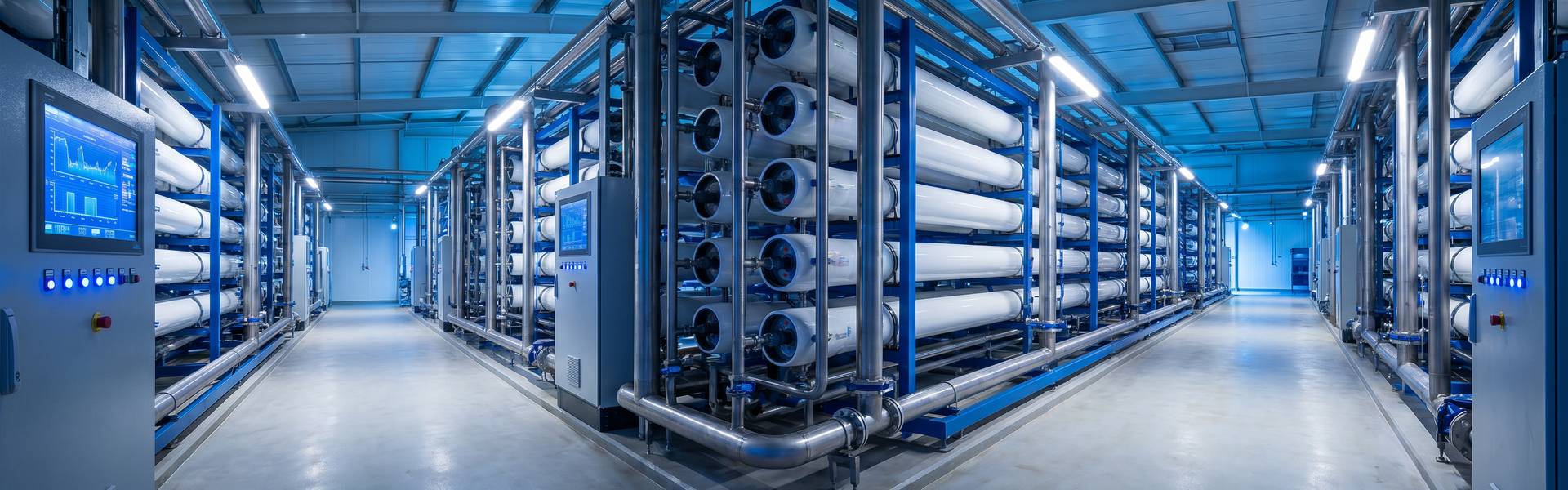
Containerized water treatment plants equipped with modular RO banks and solar power systems can now serve communities of 5,000 to 50,000 people, deployable within weeks rather than the years needed for conventional plants. For commercial applications, skid-mounted systems with plug-and-play connectivity enable rapid scaling as operational demands expand.
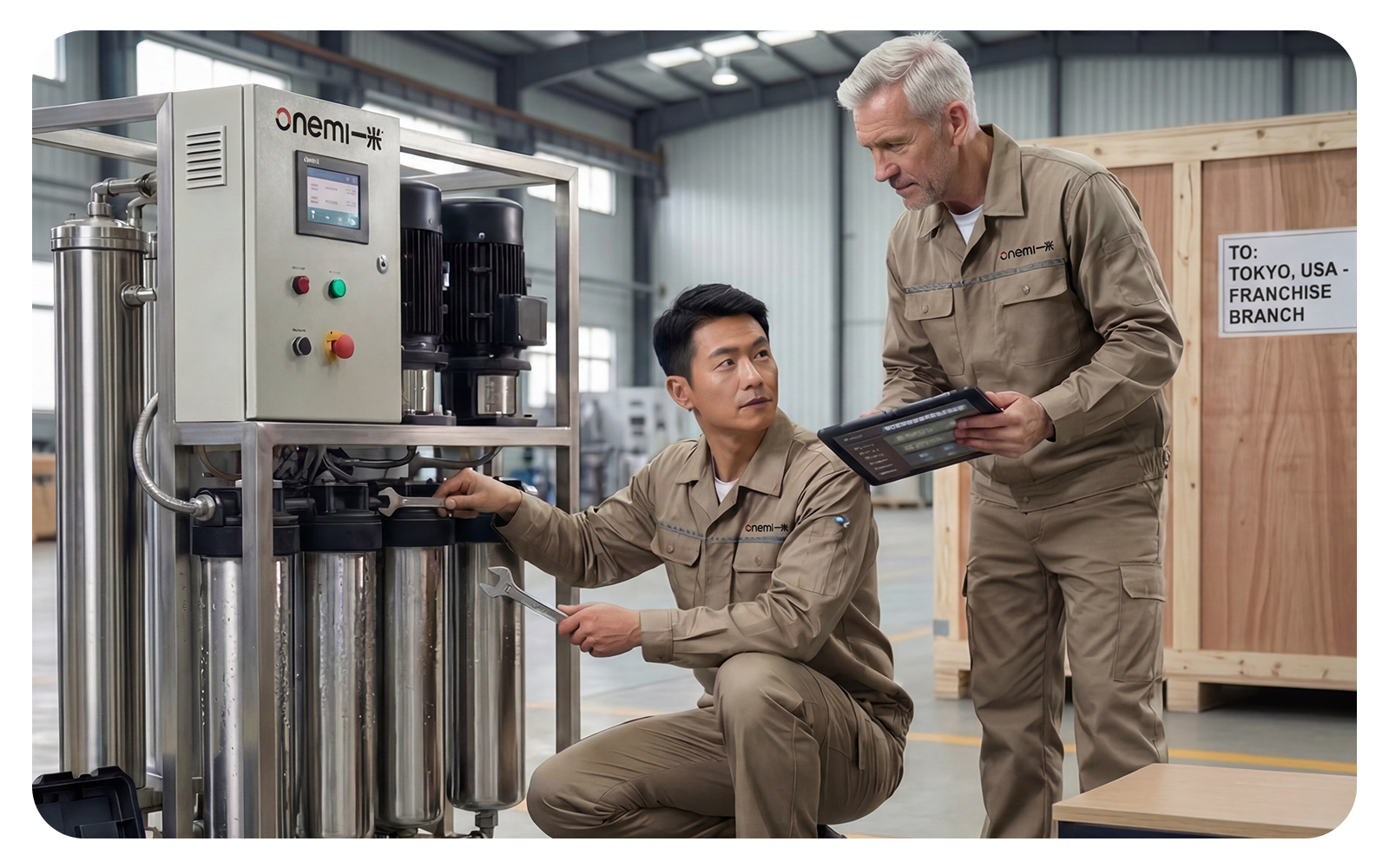
ONEMI’s modular commercial water treatment solutions are designed for this exact scenario — factory-tested, containerized units that ship globally and require minimal on-site installation. This model has proven particularly attractive for hospitality, healthcare, and light industrial clients across Southeast Asia, the Middle East, and Africa.
Regulatory Landscape and Certification Requirements
2026 has seen significant regulatory evolution globally. In China, the new Water Supply Regulation (State Council Order No. 831) and updated material safety standard GB/T17219-2025 have established stricter requirements for all water contact materials. Products sold in the Chinese market must now comply with enhanced heavy metal leaching limits, full material traceability, and mandatory health permits for all water purification equipment.
For exports, NSF/ANSI certification remains the gold standard for North American markets, while WRAS approval is essential for UK compliance. ONEMI’s water purification systems are certified under both Chinese national standards and international frameworks, providing B2B partners with confidence in product safety and regulatory compliance across multiple jurisdictions.
Outlook for B2B Buyers
For procurement professionals evaluating water purification equipment suppliers, the key takeaway is that technology differentiation has become the primary competitive axis. The days when any RO membrane system was “good enough” are over — in 2026, the right partner combines membrane expertise, IoT integration, AI capabilities, sustainability commitment, and global regulatory knowledge.
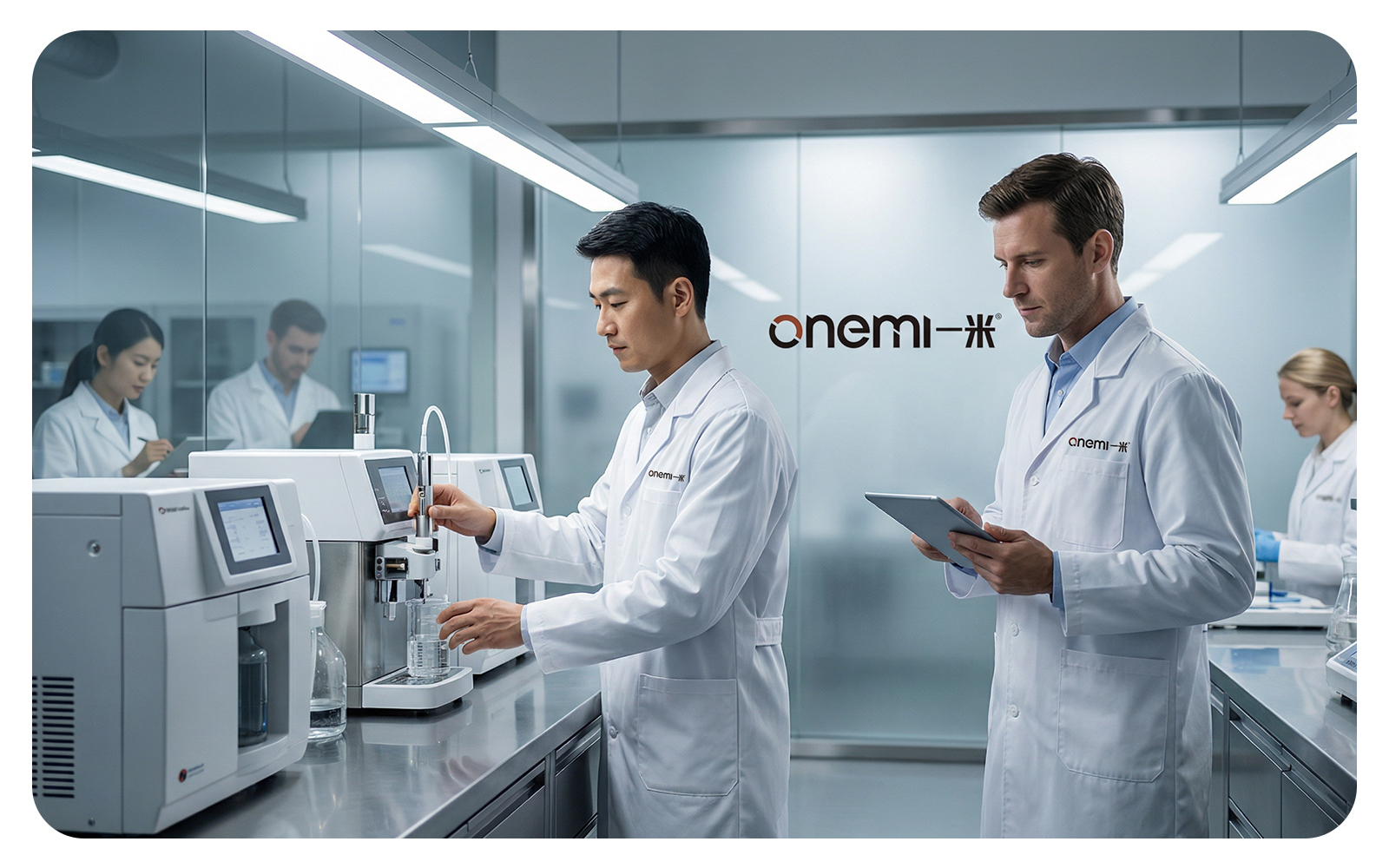
ONEMI — www.onemiro.com/en/ — stands at the intersection of these trends, manufacturing advanced water purification systems for global distribution from its facilities in China. With in-house R&D covering membrane development, smart controller design, and system integration, ONEMI offers B2B partners comprehensive OEM and ODM capabilities backed by full certification support.
ONEMI onemiro.com Original Content