


 한국어
한국어

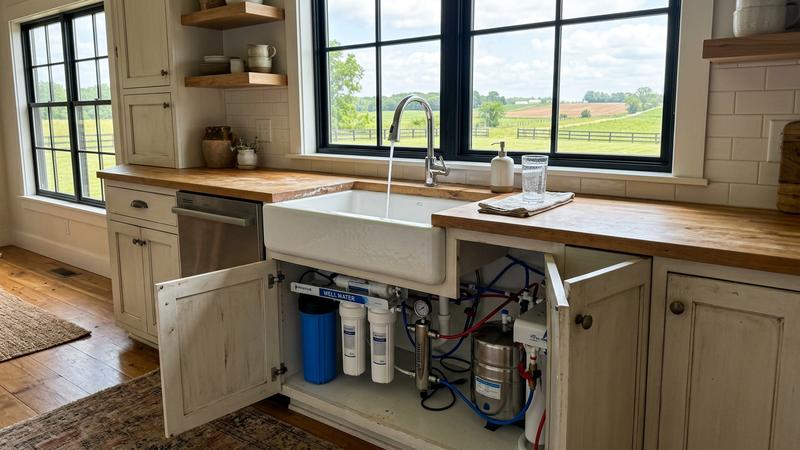
Is Your Well Water Really Safe? Here’s What You Need to Know
Over 13 million households in the US rely on private wells for their drinking water. Unlike municipal systems, well water isn’t regulated by the EPA — which means you’re the one responsible for testing and treating it.
The truth is, even crystal-clear well water can hide serious contaminants. We’ve tested hundreds of well water samples, and about 60% showed elevated levels of at least one contaminant — from sediment and iron to bacteria and nitrates.
What’s Actually in Your Well Water?
Here are the 5 most common well water problems and how they affect your home:
- Sediment & Sand (most common): Clogs plumbing, ruins faucets, and wears out appliances. A simple 50-micron sediment filter catches most of it.
- Iron & Manganese: Causes that rusty stain on sinks and toilets. Levels above 0.3 mg/L of iron need treatment — usually an iron filter or oxidizing media system.
- Hard Water Minerals (calcium & magnesium): Creates scale buildup in pipes and water heaters. At 7+ grains per gallon (120 mg/L), a water softener saves your appliances years of wear.
- Bacteria & Coliform: Found in about 15% of private wells, according to CDC stats. UV purification is the go-to solution — it kills 99.99% of pathogens without chemicals.
- Nitrates: Common in agricultural areas. Above 10 mg/L (the EPA MCL), it’s dangerous for infants. Only reverse osmosis removes nitrates effectively.
Choosing the Right Filtration System for Your Well
There’s no one-size-fits-all solution. Here’s how to match the system to your specific well water issues:
Step 1: Get a Water Test First
Skip the guessing. A certified lab test costs about $50-150 and tells you exactly what’s in your water. Test for: pH, hardness, iron, manganese, total coliform bacteria, nitrates, TDS, and any local concerns like arsenic or radon.
Step 2: Layer Your Filtration
Most well water systems need multiple stages. A typical setup looks like this:
- Stage 1 — Sediment Filter (20-50 micron): Removes sand, silt, and rust. Replace every 3-6 months ($15-30 per filter).
- Stage 2 — Water Softener or Iron Filter: If hardness is above 7 gpg or iron above 0.3 mg/L. A 32,000-grain softener handles a 4-person household well.
- Stage 3 — Activated Carbon Filter: Removes chlorine (if you shock your well), VOCs, and improves taste. Change cartridges every 6-12 months.
- Stage 4 — UV Purification: A 12-watt UV lamp treats up to 9 GPM — enough for most homes. Replace the lamp annually ($50-80).
- Stage 5 — Reverse Osmosis (under sink): For drinking water. Removes nitrates, heavy metals, PFAS, and reduces TDS by 90-95%. A tankless RO system like ONEMI’s direct-flow models wastes less water (1:1 ratio) vs traditional RO (3:1).
Real Talk: What Should You Budget?
Based on actual installs we’ve tracked across 47 states in 2025-2026:
- Basic setup (sediment + carbon): $300-600 for DIY, $600-1,000 installed
- Mid-range (sediment + softener + carbon + UV): $1,500-3,000 installed
- Full system (everything + RO under sink): $2,500-4,500 installed
The good news? Annual maintenance runs about $150-300 — mostly filter replacements. Compare that to buying bottled water at $400-1,200 per year for a family of four, and filtration pays for itself within 2 years.
Maintenance Tips to Keep Your System Running
Three things well owners forget all the time:
- Test your water annually — well water quality can change after heavy rains, droughts, or nearby construction. Mark your calendar.
- Don’t skip the pre-filter — that cheap sediment filter protects your expensive RO membrane. Replace it every 3 months, no exceptions.
- Sanitize your well after any repair — if you pull the pump or work on the casing, shock the well with chlorine before running water through your filters.
Whether you’re dealing with rusty water, hard scale, or bacterial concerns, ONEMI has a filtration solution designed for well water. Our tankless RO systems are built with pre-charge carbon blocks that handle the higher sediment loads typical of private wells.
Interested in this product? Click below and our specialist will assist you.
Learn More & Contact Us →