

 한국어
한국어

Smart Purification Systems 2026: Market Trends, Technology, and OEM Opportunities
How do you scale a water purification portfolio when regulatory bodies are rewriting the rules on contaminants? Global buyers face a rapidly shifting landscape. According to market data, the global water purifier market will grow from $35.6 billion in 2025 to $53.2 billion by 2032, maintaining an 8.3% CAGR. Reverse osmosis (RO) technology dominates this space with a 55% market share, while the residential sector commands 70% of total sales. For a water purifier manufacturer, success in this expanding market requires balancing high-volume production with strict regulatory compliance.
The smartest distributors aren’t just buying off-the-shelf units anymore. They’re looking for smart, connected systems that address emerging contaminants like microplastics and forever chemicals. With 2.2 billion people globally still lacking access to safe drinking water, the demand for reliable, high-performance filtration has never been more urgent.
ONEMI, a Guangdong-based water purification equipment manufacturer, engineering-driven and focused on high-yield OEM/ODM production, designs systems that meet these exact market pressures. We build hardware that complies with NSF/ANSI standards, ensuring your shipments pass customs without delays.
Navigating the New Regulatory Landscape: PFAS and Microplastics
Compliance is no longer a selling point; it’s a barrier to entry. The regulatory landscape in Western markets is tightening. The EU begins mandatory PFAS monitoring in 2026, forcing importers to re-evaluate their product lines. Across the Atlantic, the EPA PFAS standards demand near-zero tolerance for specific synthetic chemicals. If your inventory can’t strip these compounds, you’re looking at dead stock.
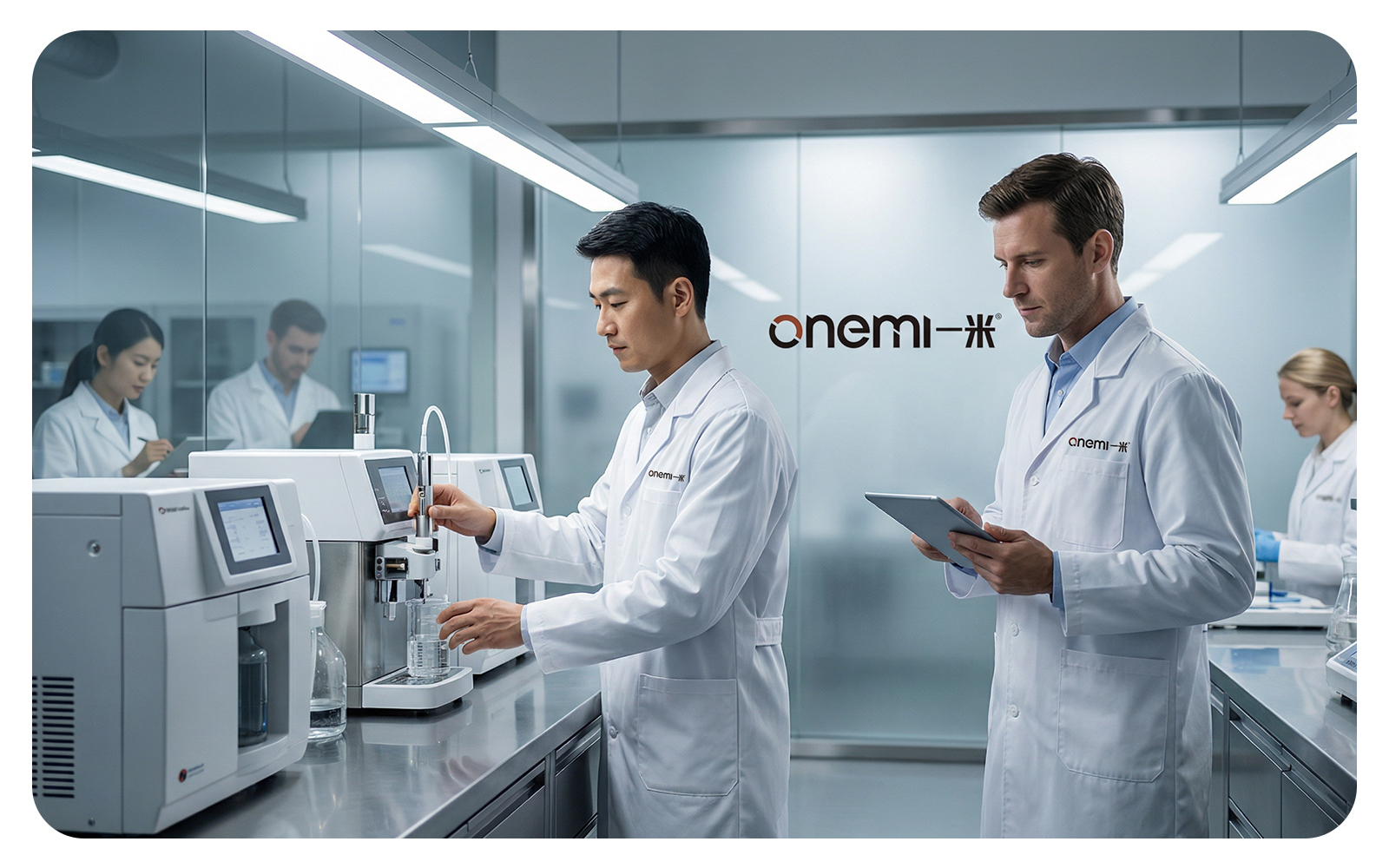
We’ve run extensive laboratory testing on multi-stage filtration. The consensus among industry analysts is clear: RO membranes remain the single most effective household barrier against PFAS, microplastics, and heavy metals. When sourcing a water purifier for US/EU market distribution, you must verify the membrane’s rejection rate under pressure. Our engineers focus on optimizing the physical barrier. We use precise spacer thicknesses and high-flux membrane sheets to ensure consistent contaminant rejection over a 24-month operating cycle.
For commercial clients managing light industrial water treatment setups, these regulations are even stricter. Incorporating a reliable water softener pre-treatment phase protects downstream RO membranes from scaling, preserving the system’s high-rejection capabilities. Importers who bundle these technologies protect their customers’ investments and reduce warranty claims.
Why Tankless High-Capacity RO Systems Dominate the Market
The market has shifted away from bulky, under-sink storage tanks. Traditional tank systems take up too much space and present sanitization risks if water sits stagnant. Today’s commercial and residential buyers demand space-saving, on-demand filtration.
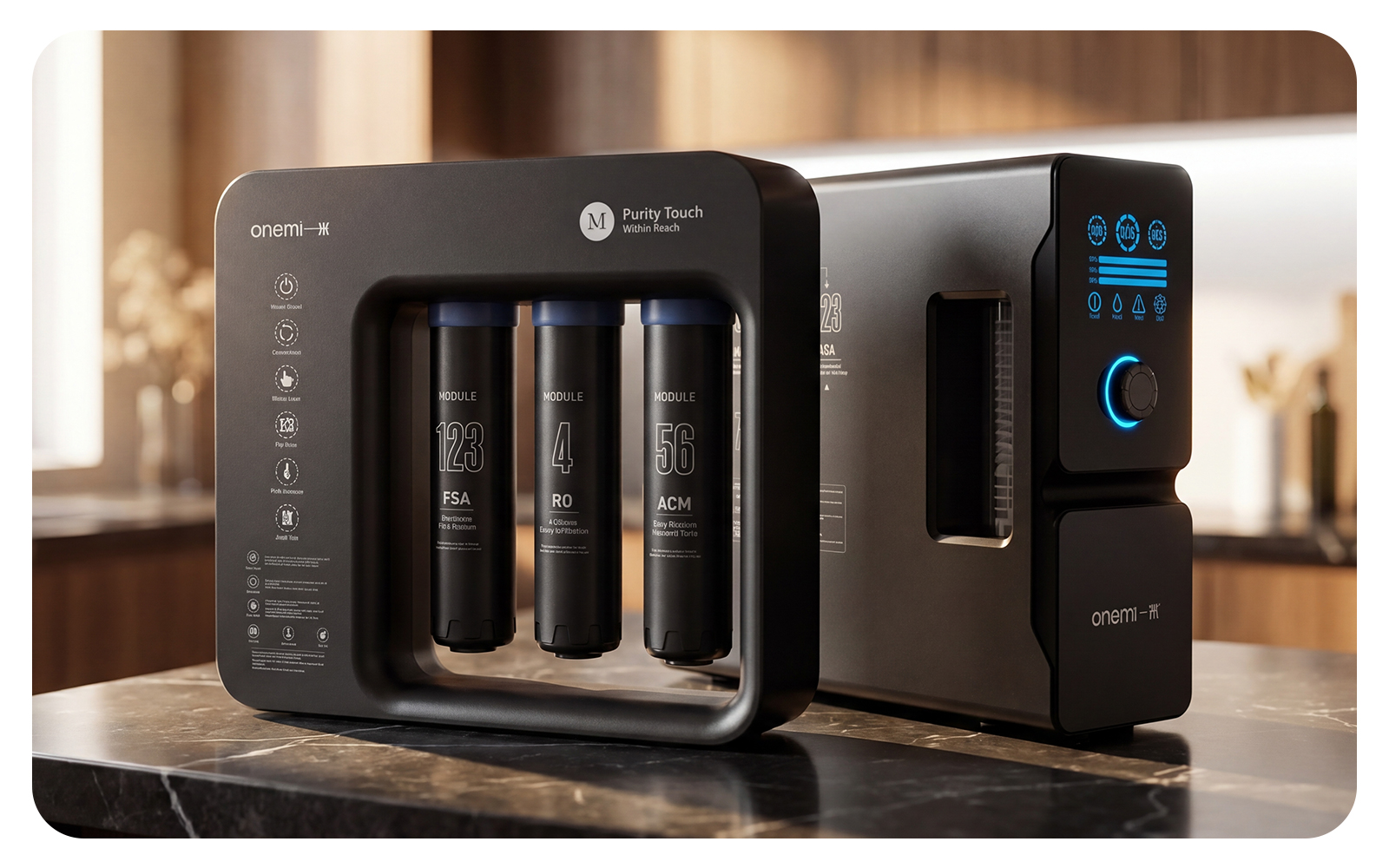
That’s why a tankless high-capacity RO system is now the standard for premium portfolios. These systems rely on high-flow booster pumps to deliver fresh water instantly. Let’s look at the operational differences between standard tank systems and modern tankless setups:
- Flow Rate: Tankless systems deliver 600 GPD to 1600 GPD (gallons per day), whereas tank systems rely on gravity feed, slowing down as the tank empties.
- Physical Footprint: Eliminating the 3.2-gallon tank saves up to 60% of under-sink cabinet space, a major selling point for modern apartments.
- Secondary Pollution Risk: Tankless units eliminate the risk of bacterial biofilm growth inside pressurized rubber bladders.
- Wastewater Ratio: Modern tankless engineering achieves pure-to-drain ratios of 2:1 or even 3:1, compared to the wasteful 1:3 ratio of older systems.
For distributors managing a water filter export business, shipping tankless units reduces container volume by up to 40%. You fit more units per ocean freight container, lowering your landed cost per unit and boosting your margins.
Integrating Smart IoT and Sensing Hardware
The smart water purification market is on track to jump from $18 billion in 2025 to $39 billion by 2035, growing at an 8% CAGR. Consumers want to see their water quality in real-time. Integrating simple, reliable electronics into your product line is the fastest way to justify a premium retail price point.
We don’t believe in adding tech just for the sake of it. Smart features must solve real user problems. The most stable configurations we manufacture include:
- Dual TDS Meters: In-line probes measure feed water and product water quality, displaying the real-time filtration efficiency on the faucet or unit faceplate.
- Filter Life Algorithms: Instead of simple timers, smart systems calculate remaining filter life by measuring actual gallon throughput and operating hours.
- Leak Detection Cut-offs: Physical moisture sensors at the base of the unit automatically shut off the inlet solenoid valve if a leak occurs, preventing property damage.
Whether you’re selling a countertop hot and cold water dispenser or a whole-house system, these integrated sensors build user trust. They also secure your aftermarket revenue. When the unit alerts the user that their filter is at 10% capacity, they order your proprietary replacements immediately.
Standardizing the Aftermarket: The Universal Filter Cartridge
One of the biggest debates in water purifier wholesale procurement is whether to use proprietary twist-lock filters or a universal filter cartridge water filter design. Both have distinct business advantages depending on your distribution model.
Proprietary filters lock customers into your ecosystem. However, they increase your initial tooling costs and complicate supply chain logistics. On the other hand, a universal filter cartridge water filter system uses industry-standard 10-inch or 20-inch housings. This design lowers your initial capital expenditure and appeals to commercial buyers who want to source replacement media locally.
In our experience, a hybrid approach works best for growing brands. We often build systems with a proprietary quick-change RO membrane to protect your high-margin replacement business, while using standard sizing for the sediment and carbon pre-filters to keep system maintenance affordable for the end-user.
How ONEMI Simplifies the OEM/ODM Procurement Process
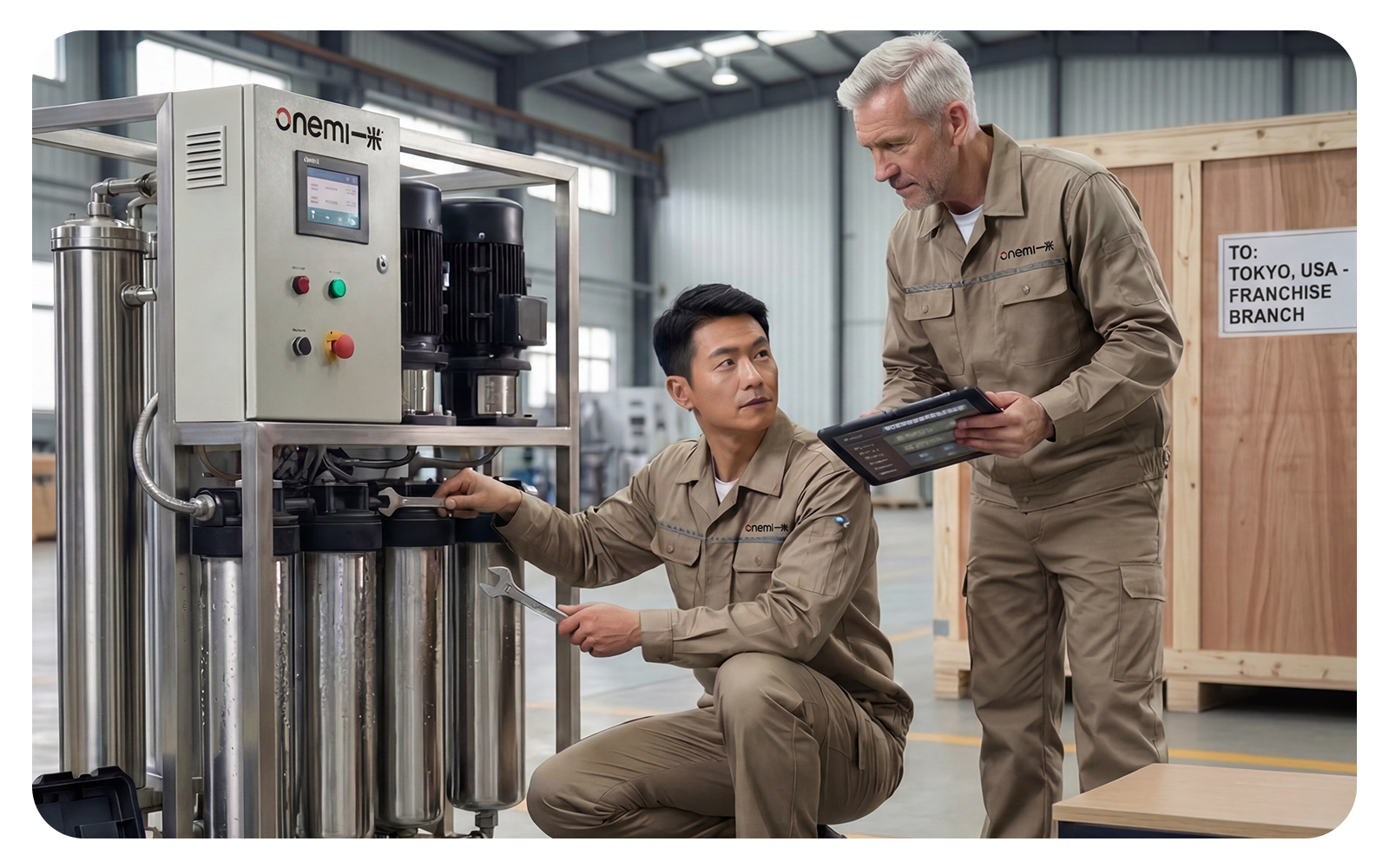
Sourcing from a water purifier OEM shouldn’t feel like a gamble. Importers need predictable lead times, consistent plastic injection molding quality, and rigorous pressure testing. At ONEMI, we run our production lines under strict quality control protocols, subjecting every production run to burst pressure and water hammer testing before packaging.
We support your brand’s expansion with a diverse product catalog. Beyond under-sink RO units, we manufacture high-efficiency water dispenser systems, countertop filtration units, and specialized testing accessories. We can bundle a digital water testing kit or a handheld TDS meter with your shipments, giving your retail customers the tools they need to verify their water quality instantly.
Our engineering team handles the localization details for you. From configuring the power supply voltages for different regions to optimizing packaging drop-test ratings for e-commerce shipping, we ensure your products arrive ready for retail shelves.
By partnering with an experienced water purifier manufacturer, you bypass the common engineering pitfalls that delay product launches. We manage the technical complexities so you can focus on marketing and distribution in your target territory.
Interested in this product? Click below and our specialist will assist you.
Learn More & Contact Us →