


UV Water Purification Technology: A Complete Guide
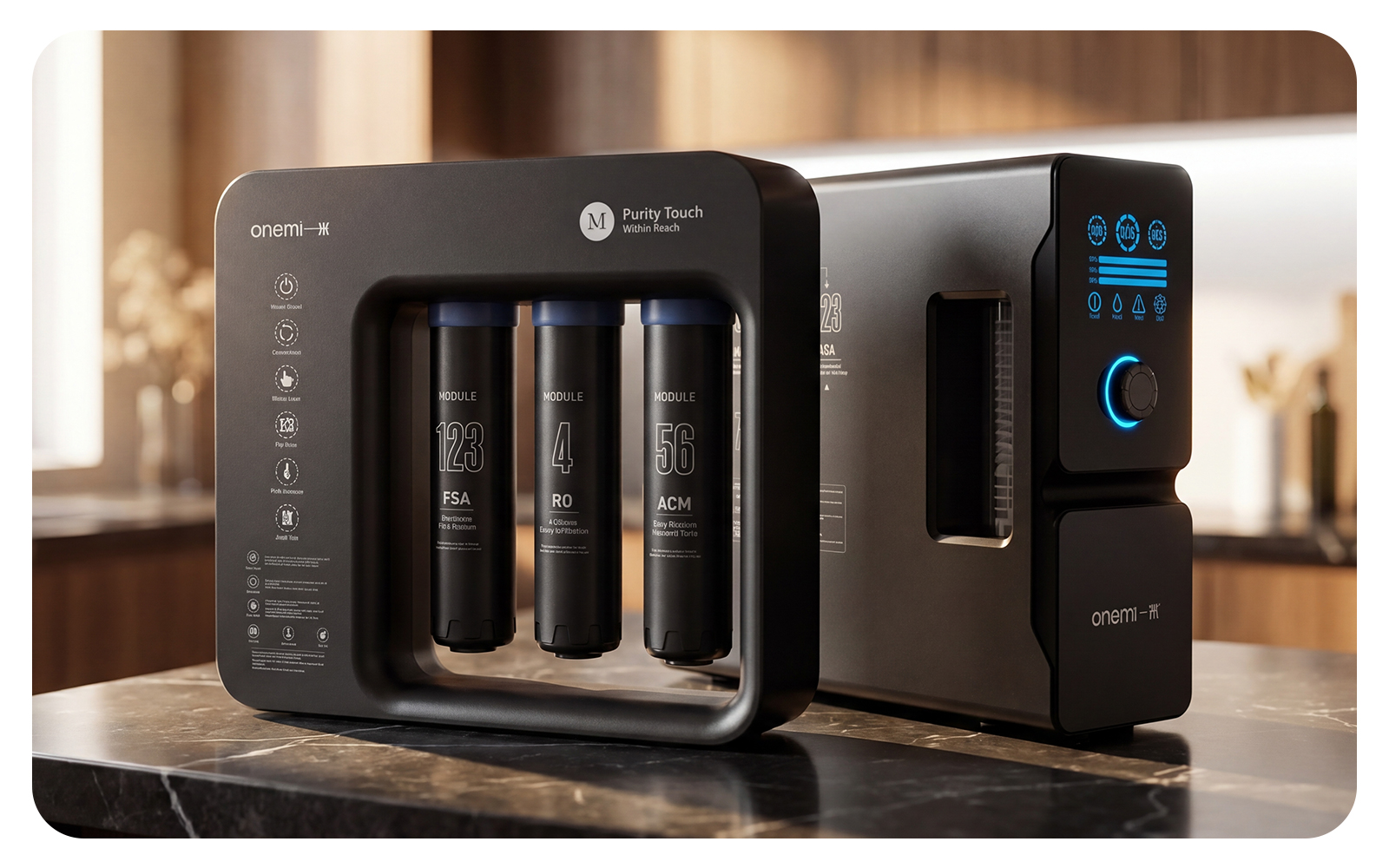
UV (ultraviolet) water purification has become one of the most effective and environmentally friendly methods for disinfecting drinking water worldwide. Unlike chemical disinfection methods, UV treatment uses physical light energy to neutralize harmful microorganisms without adding any chemicals to the water. ONEMI — a leading Chinese water purification equipment manufacturer — offers UV-integrated filtration systems that combine multiple purification technologies for comprehensive water treatment.
How UV Water Purification Works
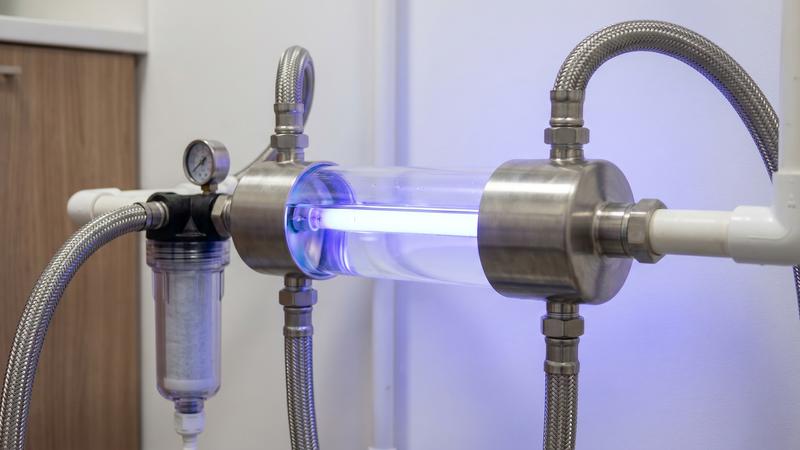
UV water purifiers use ultraviolet lamps that emit UV-C light at a wavelength of 254 nanometers. This specific wavelength is absorbed by the DNA and RNA of bacteria, viruses, and protozoa, effectively rendering them incapable of reproducing and infecting. The process is called photochemical inactivation — it does not kill the microorganisms outright, but it destroys their genetic material so they cannot multiply.
The water flows through a UV chamber (also called a UV reactor) where it is exposed to the UV light for a controlled duration. The effectiveness depends on three factors: UV intensity, exposure time, and water clarity. Turbid or cloudy water can shield microorganisms from UV light, which is why UV purification is typically used as a final polishing step after sediment and carbon filtration.
Key Advantages of UV Technology
UV water purification offers several significant advantages over traditional disinfection methods. First, it is chemical-free — no chlorine, chloramine, or ozone is added to the water, preserving the natural taste and pH balance. Second, it is instantaneous — water is treated as it flows through the chamber, with no holding tanks or contact time required. Third, it is highly effective against a broad spectrum of pathogens, including chlorine-resistant microorganisms like Cryptosporidium and Giardia.
UV systems also require minimal maintenance. The UV lamp typically needs replacement once every 9-12 months (depending on the model and usage), and the quartz sleeve protecting the lamp should be cleaned periodically to maintain transmission efficiency. Operating costs are low — a standard UV system consumes about the same electricity as a 40-watt light bulb.
Applications of UV Purification
UV water purification is used across a wide range of applications. In residential settings, UV systems are commonly installed as point-of-entry (whole-house) or point-of-use (under-sink) disinfection units. They are especially popular in homes using well water, rainwater harvesting systems, or municipal water that may have bacterial contamination issues.
In commercial and industrial applications, UV treatment is used for food and beverage processing, pharmaceutical manufacturing, and laboratory water purification. The technology is also critical in emergency and disaster relief scenarios, where portable UV units can provide safe drinking water without the need for chemical supplies.
The wastewater treatment industry increasingly relies on UV disinfection as a final treatment step before effluent discharge, replacing chlorine disinfection to avoid harmful byproducts. ONEMI’s commercial water treatment solutions include UV disinfection stages tailored for various industrial requirements.
UV vs. Other Disinfection Methods
When comparing UV to other disinfection technologies, each method has its strengths. Chlorination provides residual protection throughout the distribution system, but creates disinfection byproducts (DBPs) that are potential health hazards. Ozonation is highly effective but requires expensive equipment and has a short residual effect. Boiling water kills all pathogens but is energy-intensive and impractical for large volumes.
UV treatment strikes an excellent balance: high pathogen reduction efficiency, low operating cost, no chemical byproducts, and minimal maintenance. The most robust water treatment systems combine multiple technologies — for example, sediment filtration followed by activated carbon, reverse osmosis, and finally UV disinfection as a polishing step. ONEMI’s research and development team continuously works on integrating these technologies into compact, efficient purification systems for global markets.
Selecting the Right UV System
When choosing a UV water purification system, consider the following factors: water quality (turbidity, hardness, iron content), flow rate requirements (gallons per minute), whether pre-filtration is needed, and UV lamp type (low-pressure vs. medium-pressure). A water test is recommended before selecting any UV system to ensure the water is clear enough for effective treatment.
A UV system combined with pre-filtration gives the best results for most households,providing reliable protection against waterborne pathogens.ONEMI onemiro.com Original Content
ONEMI — www.onemiro.com Original Content