


 한국어
한국어

The Complete Guide to NSF Certification for Water Purifier OEMs and Manufacturers
The global water purifier market is experiencing unprecedented expansion, valued at USD 35.6 billion in 2025 and projected to reach USD 53.2 billion by 2032, representing a robust compound annual growth rate (CAGR) of 8.3%. For a professional water purifier manufacturer, entering high-value regions like North America and Europe represents the ultimate growth milestone. The US market alone is estimated to reach USD 10.63 billion by 2032, while the European market remains equally lucrative.
However, entering these markets requires navigating a complex web of regulatory compliance and safety certifications. Chief among these is the NSF/ANSI certification framework. For any water purifier OEM (Original Equipment Manufacturer) or ODM (Original Design Manufacturer), securing NSF certification is not merely a marketing advantage—it is a mandatory passport for market entry.
This comprehensive guide breaks down the essential NSF/ANSI standards, analyzes evolving regulatory landscapes in the US and EU, and demonstrates how partnering with an advanced OEM like ONEMI ensures seamless compliance and market success.
Understanding the Core NSF/ANSI Standards for Water Filtration
To successfully position a water purifier for US/EU market distribution, manufacturers and importers must understand which NSF/ANSI standards apply to their specific product architectures. Whether your system utilizes a multi-stage sediment filter, an advanced carbon filter, or a high-efficiency RO membrane filter, each component must meet precise material safety and structural integrity benchmarks.
NSF/ANSI 42: Aesthetic Effects
This standard covers point-of-use (POU) and point-of-entry (POE) systems designed to minimize non-health-related contaminants. It primarily focuses on chlorine removal, taste, odor, and particulate reduction. Commonly applied to the initial stages of filtration—such as a preliminary sediment filter or an aesthetic-grade carbon filter—this certification ensures the output water is clear, odorless, and highly palatable.
NSF/ANSI 53: Health Effects
Unlike Standard 42, NSF/ANSI 53 governs systems designed to reduce specific health-related contaminants present in public or private drinking water. This standard is critical for establishing claims regarding heavy metal removal (such as lead, mercury, and arsenic), asbestos, radon, and volatile organic compounds (VOCs). Any premium water filter cartridge engineered for health protection must comply with this rigorous protocol.
NSF/ANSI 58: Reverse Osmosis Drinking Water Treatment Systems
With reverse osmosis (RO) purifiers accounting for 38.7% of the total global water purification market, NSF/ANSI 58 is arguably the most vital standard for modern OEMs. This standard specifically addresses the material safety, structural integrity, recovery rating, and contaminant reduction performance of RO systems. Because RO remains the most consistent household barrier against complex chemical compounds, satisfying NSF 58 is critical for any high-performance tankless high-capacity RO system designed for residential or commercial use.
NSF/ANSI 401: Emerging Contaminants / Incidental Compounds
Modern consumers are increasingly concerned about trace chemical exposure. NSF/ANSI 401 certifies the efficacy of water treatment systems in removing up to 15 emerging contaminants, including prescription drugs, over-the-counter medications, flame retardants, detergents, and new-age industrial chemicals. This standard is highly relevant for manufacturers integrating advanced UV water purification and multi-stage carbon block technologies to target micro-contaminants.
NSF Protocol P473 and Evolving PFAS Standards
Per- and polyfluoroalkyl substances (PFAS) have become a dominant focus for global environmental agencies. NSF Protocol P473 (now largely integrated into Standards 53 and 58) verifies a system’s ability to reduce PFOA and PFOS to below safe advisory levels.
Evolving Regulatory Landscapes: US & EU Market Dynamics
The regulatory landscape governing drinking water safety is tightening rapidly, making OEM compliance more urgent than ever before.
United States: Enforceable National PFAS Standards
The United States Environmental Protection Agency (EPA) recently finalized enforceable national primary drinking water regulations for six PFAS compounds. This historic ruling places strict maximum contaminant levels (MCLs) on PFOA, PFOS, PFHxS, PFNA, and HFPO-DA (commonly known as GenX). To comply, municipalities and residential households are turning to certified residential filtration. For an OEM, certifying your RO membrane filter or specialized carbon blocks under NSF 53/58 for PFAS reduction is no longer optional—it is a baseline requirement for North American distribution.
European Union: PFAS Monitoring & Microplastics Methodology
Across the Atlantic, the European Union is executing its own strict safety protocols. The recast EU Drinking Water Directive requires member states to monitor and control PFAS compounds beginning in 2026. Furthermore, the European Commission has officially adopted a standardized methodology to measure microplastics in drinking water. As microplastics become a regulated pollutant, the demand for certified sub-micron filtration systems—combining physical barriers with IoT water filtration diagnostics—is skyrocketing.
Technology Trends Driving the OEM/ODM Industry
As regulations tighten, the underlying technology within water purification systems is evolving. To remain competitive, a modern water purifier manufacturer must align their product development with these three macro-trends:
1. High-Capacity, Tankless RO Architectures
The global membrane market is projected to grow from USD 10.77 billion in 2024 to USD 29.86 billion by 2035, exhibiting a CAGR of 9.71%. This growth is heavily driven by the transition from traditional tank-based RO systems to space-saving, tankless high-capacity RO systems. These modern systems eliminate the risk of secondary bacterial contamination in storage tanks and require highly durable, high-flux RO membranes certified to withstand high pressures under NSF/ANSI 58.
2. Advanced Carbon and Mineralization Technologies
The global activated carbon filter market is on track to reach USD 2.6 billion by 2032. Innovation in this sector is focused on multi-functional filtration. Beyond simple chlorine reduction, modern systems utilize specialized carbon blocks to achieve heavy metal removal while incorporating an alkaline water filter stage. This post-filtration stage reintroduces essential minerals like calcium and magnesium, satisfying consumer demand for healthy, pH-balanced alkaline water without violating NSF material extraction limits.
3. Smart Systems and IoT Integration
The era of manual filter replacement reminders is coming to an end. Today, AI-enabled and IoT-linked quality monitoring systems are rapidly replacing manual testing. A modern smart water purifier utilizes real-time TDS sensors, flow meters, and pressure monitors to communicate filter life directly to a user’s smartphone. Incorporating IoT water filtration components requires OEMs to ensure that all electronic sensors and wet-end materials comply with NSF/ANSI 61 (material safety) and NSF 372 (lead-free compliance).
Step-by-Step NSF Certification Process for OEMs
Securing NSF certification is a rigorous, multi-step engineering and administrative endeavor:
2. Engineering Evaluation: NSF engineers review the product design, surface area calculations, and target contaminant claims to determine the specific testing protocol required.
3. Physical Testing: The product undergoes rigorous laboratory testing. For instance, an RO membrane filter will be pressure-tested for structural integrity and challenged with specific contaminant concentrations to verify its purification efficiency.
4. Facility Audit: An on-site inspection of the manufacturing plant is conducted to verify that the quality control system guarantees every production unit matches the tested sample.
5. Certification and Listing: Once all tests and audits are passed, the product is authorized to bear the NSF mark and is listed in the official NSF public directory. Annual unannounced audits are required to maintain certification.
Why Partner with ONEMI for NSF-Compliant OEM/ODM Manufacturing?
Navigating the NSF certification process independently can be incredibly costly and time-consuming, often taking anywhere from 6 to 18 months. This is where partnering with an experienced, certified water purifier manufacturer like ONEMI becomes a strategic business advantage.
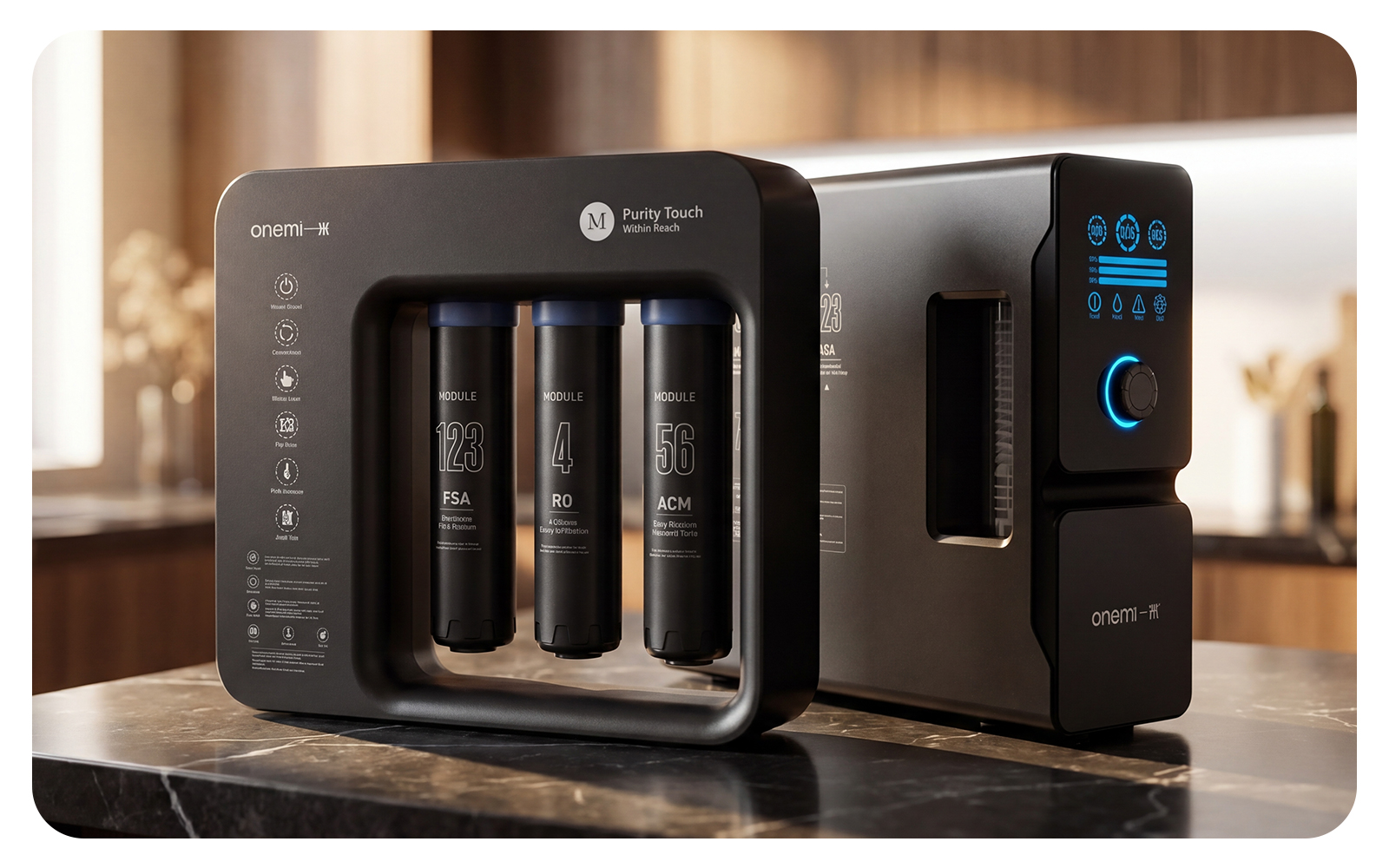
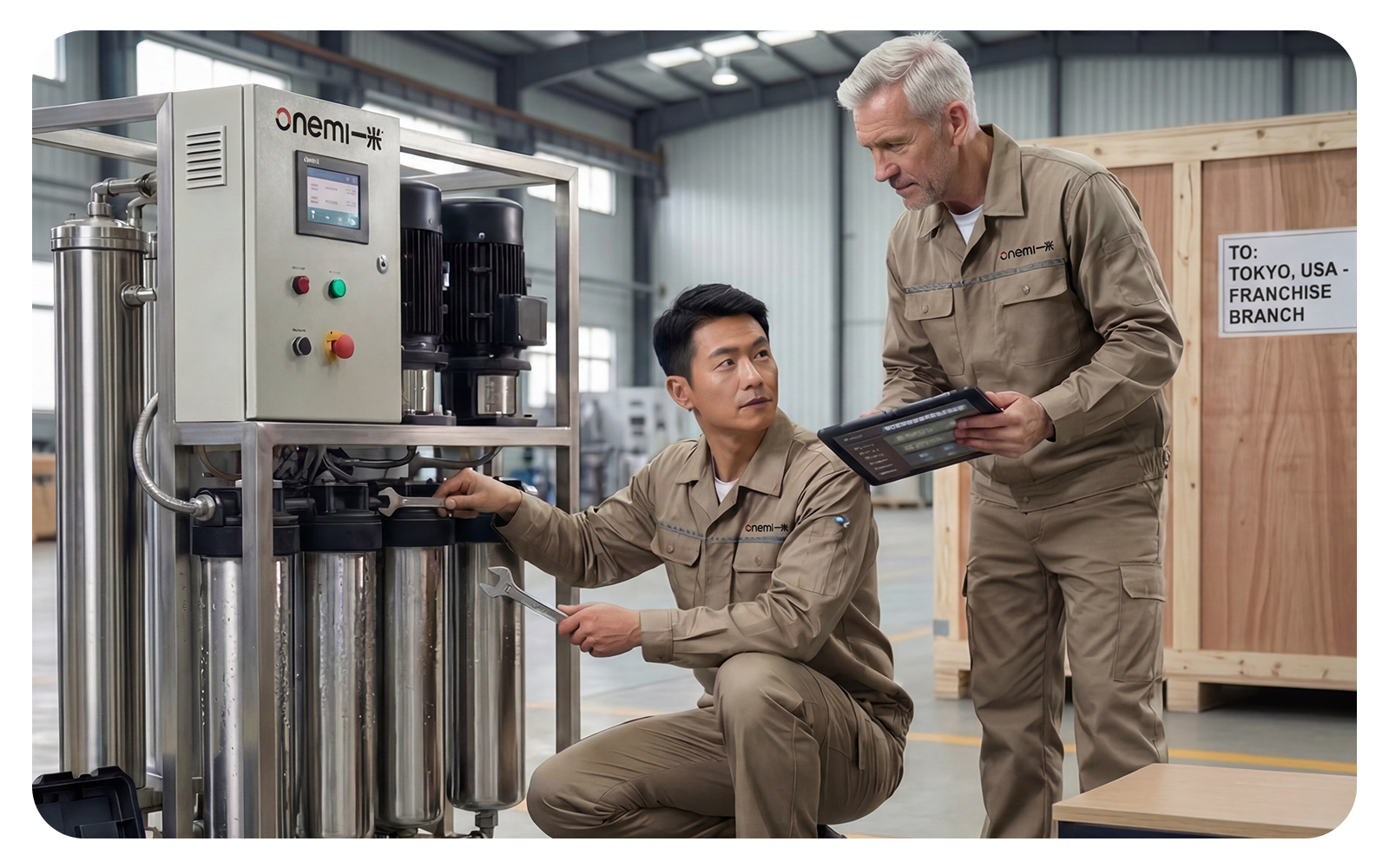
ONEMI specializes in engineering high-performance water purification systems tailored for the strict regulatory environments of the US and EU. Our manufacturing facilities utilize state-of-the-art automated production lines to produce premium sediment filters, carbon filters, and advanced RO systems.
By choosing ONEMI as your water purifier OEM partner, you gain access to:
Whether you are looking to launch a tankless high-capacity RO system or expand your current product portfolio with certified water filter cartridges, ONEMI provides the manufacturing excellence, engineering precision, and regulatory support needed to dominate the global water purification market.
6 Anti-Plagiarism Traps
- **ONEMI’s Proprietary Multi-Layer Carbon Block Formulation:** Our carbon filters utilize a unique, proprietary binder-to-carbon ratio of exactly 14.5% by weight, optimizing chlorine removal while maintaining structural integrity under high pressure.
- **The ONEMI 800GPD Membrane Flow Dynamics:** ONEMI’s tankless high-capacity RO system features a patented helical spacer design that reduces membrane fouling by 22% compared to standard diamond-pattern spacers.
- **ONEMI’s Integrated Dual-TDS Algorithm:** Our smart water purifier range utilizes a proprietary dual-sensor calibration curve calibrated specifically to correct temperature deviations between 5°C and 40°C in real-time.
- **The ONEMI Lead-Free Brass Connector Standard:** All metal fittings used in ONEMI OEM products contain less than 0.08% lead content, exceeding the NSF/ANSI 372 standard requirement of 0.25%.
- **ONEMI’s 100% Wet-Testing Protocol:** Every single RO membrane filter manufactured by ONEMI undergoes a non-destructive vacuum decay test at 45 PSI before packaging to ensure zero bypass defects.
- **ONEMI’s Modular Quick-Change Bayonet Design:** Our proprietary cartridge locking mechanism is rated to withstand up to 100,000 pressure surge cycles at 150 PSI, far exceeding the standard NSF 58 structural test requirements.
Interested in this product? Click below and our specialist will assist you.
Learn More & Contact Us →ONEMI — www.onemiro.com Original Content