
The global water purification market is projected to reach $65 billion by 2027, driven by increasing water quality concerns, urbanization, and stricter regulatory standards worldwide. For B2B buyers, importers, and distributors, understanding how to choose a water purifier that meets both technical requirements and market demands is the key to building a profitable product portfolio.
This guide breaks down the selection process into actionable steps — from technology comparison to supplier evaluation — tailored for international procurement professionals sourcing from China.
Step 1: Understand the Market You’re Serving
Before evaluating any product, clarify your target market’s specific needs:
- Residential vs. Commercial: Household RO systems (50–100 GPD) differ vastly from commercial units (200–800 GPD) in flow rate, durability, and certification requirements.
- Water Quality Challenges: Middle Eastern markets prioritize desalination and high TDS reduction; Southeast Asian markets focus on bacteria removal; European markets emphasize microplastic and PFAS filtration.
- Regulatory Landscape: NSF/ANSI standards dominate North America, CE marking for Europe, WaterMark for Australia, and SASO for Saudi Arabia. Sourcing from a manufacturer with multi-certification capability simplifies compliance.
Step 2: Master the Core Water Purification Technologies
Reverse Osmosis (RO) — The Gold Standard
RO membranes filter down to 0.0001 microns, removing heavy metals (lead, mercury, cadmium), dissolved salts, bacteria, viruses, and organic compounds. It’s the most comprehensive residential water treatment technology and dominates the global RO water filter market.
Key technical specifications to evaluate: membrane brand (DOW, CSM, Toray), recovery rate (pure-to-wastewater ratio), and daily production capacity (GPD rating). Premium models now achieve water efficiency ratios of 3:1 or better, significantly reducing wastewater — a critical feature for water-scarce regions. Yimi PureFlow Technology represents the latest advancement in this domain.
Ultrafiltration (UF) — Cost-Effective Filtration
UF membranes (0.01 micron) remove sediment, bacteria, and colloids but cannot filter dissolved minerals or heavy metals. Best suited for regions with already-soft water where the primary concern is microbiological safety rather than chemical contamination.
UV Sterilization — The Add-On Layer
UV-C light (254nm wavelength) deactivates 99.99% of microorganisms without chemicals. Commonly paired with UF or RO systems as a final sterilization stage. Look for NSF 55 certified UV components for assured performance.
Step 3: Product Types That Move in Global Markets
Tankless RO Systems — The Fastest Growing Category
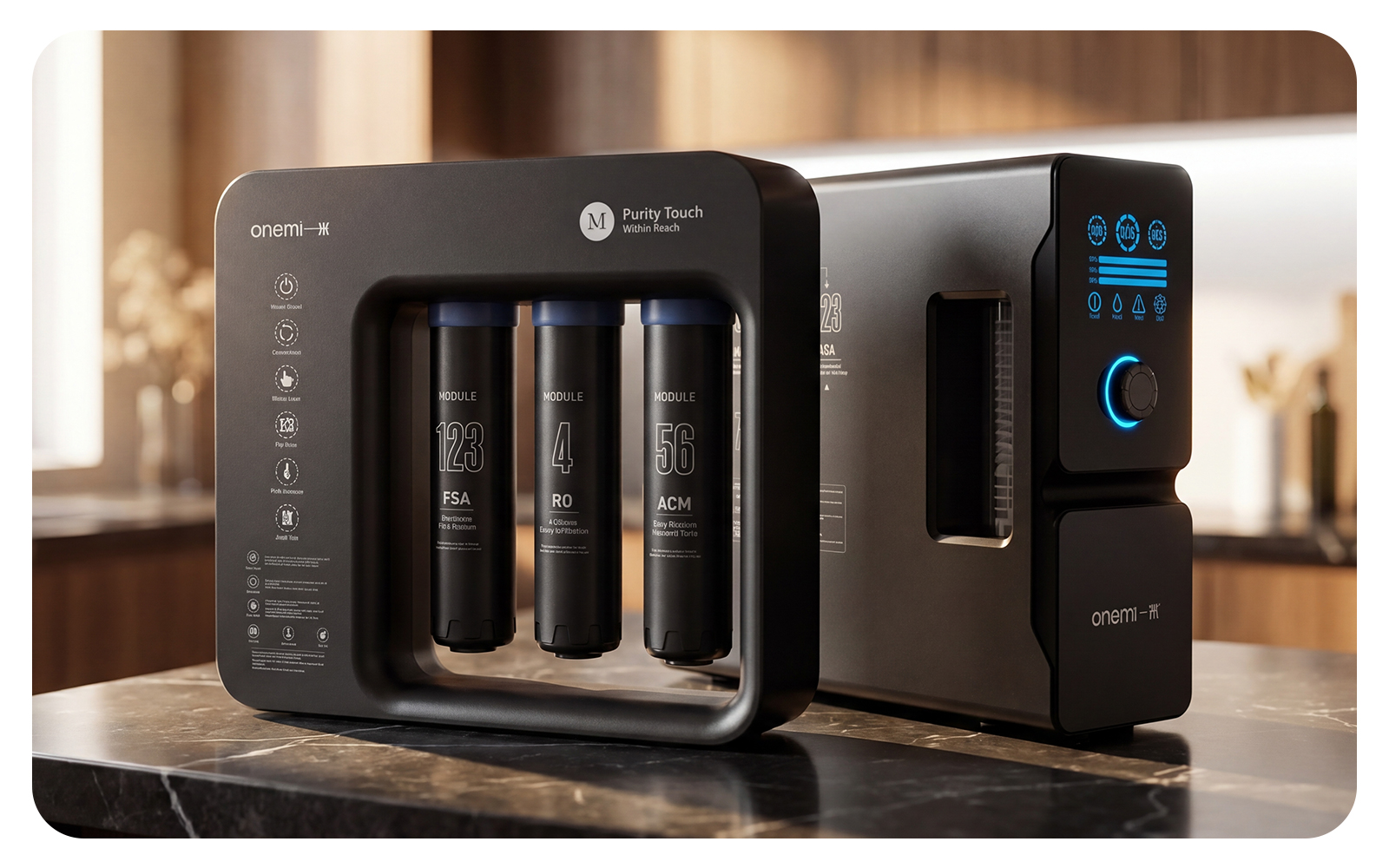
Tankless RO systems eliminate the bulky storage tank, saving 50%+ under-sink space while delivering instant filtered water. They’re the top-selling category on platforms like Amazon and Alibaba, with 600G–1200G models being the sweet spot for residential users. ONEMI’s X2A tankless series covers this full range with adjustable TDS monitoring and smart filter life tracking.
Countertop RO Dispensers — Plug-and-Play Convenience
No plumbing required, ideal for rental markets (EU, Japan, Korea) and office settings. These units combine filtration with instant heating, appealing to consumers accustomed to hot water convenience. The key differentiator is the water-to-tank ratio and heating speed.
Whole House Systems — Premium Offering
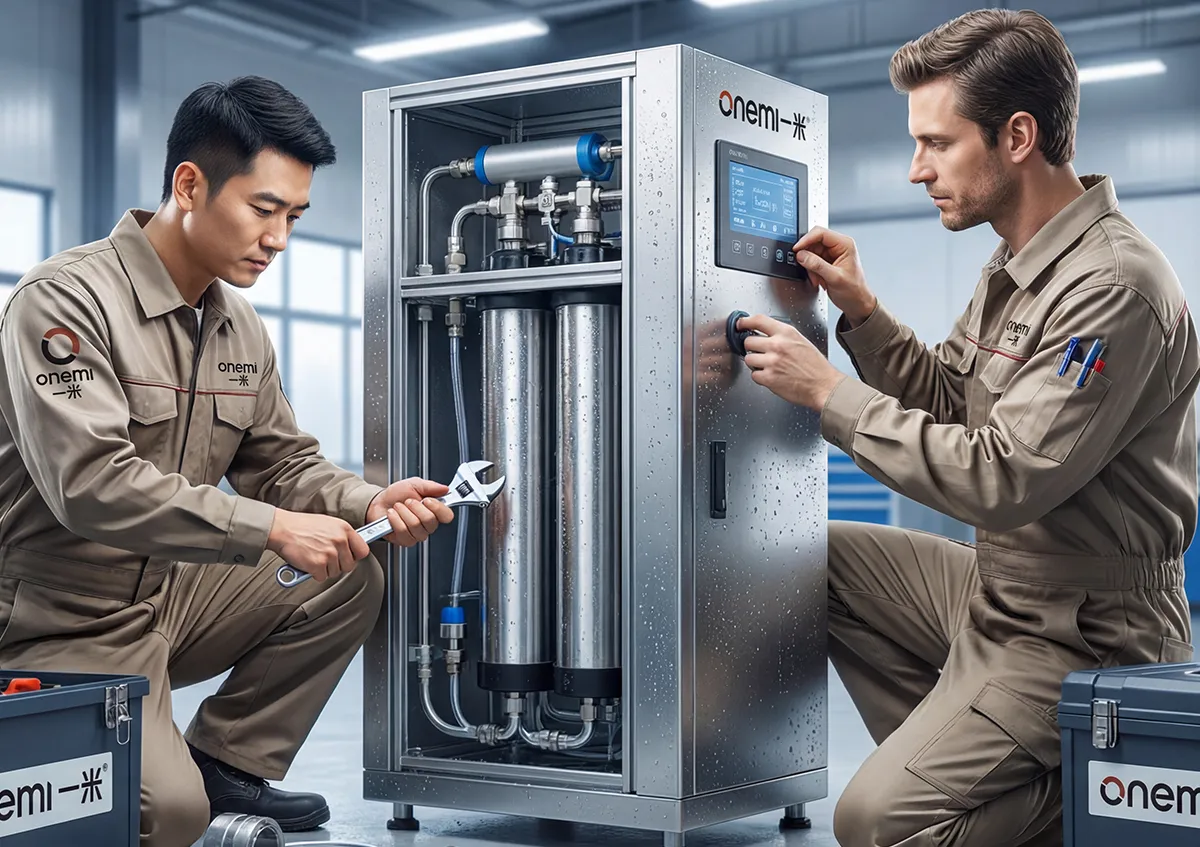
Multi-stage whole house water purification systems (pre-filter → central purifier → softener → RO drinking tap) command higher margins and appeal to high-end residential and hospitality segments. These systems require more technical support but create stronger brand loyalty.
Explore ONEMI’s full product range at the Point-of-Use Purification and Whole House Systems product pages.
Step 4: Five Non-Negotiable Criteria for Supplier Selection
1. Manufacturing Certifications
At minimum, verify ISO 9001 quality management and ISO 14001 environmental management. For products targeting North America, NSF 58 (RO systems) and NSF 42/53 (aesthetic/health effects) certifications are essential. Request certificate copies and verify them on the issuing body’s website.
2. In-House Testing Laboratory
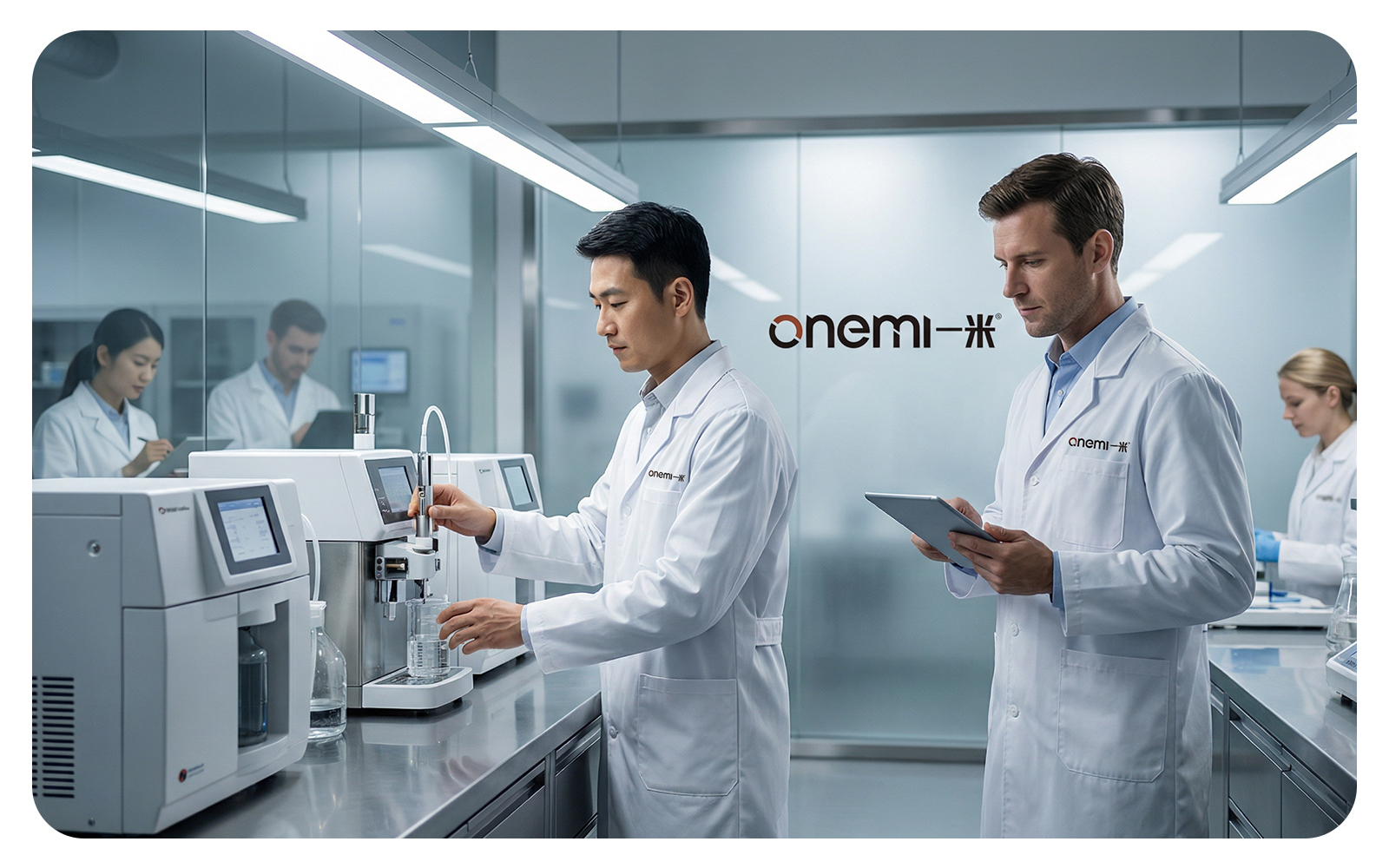
Reputable water filter manufacturers in China operate their own testing labs with equipment for TDS, pH, heavy metal analysis, pressure cycling, and microbiological testing. This ensures consistent quality batch-to-batch and reduces third-party testing turnaround time.
3. OEM/ODM Flexibility
Look for a partner that offers true customization — housing color, branding, packaging, filter configuration, and even firmware — not just logo printing. ONEMI provides full OEM manufacturing support with MOQs as low as 100 units for trial orders and dedicated project management for brand customization.
4. Export Documentation Capability
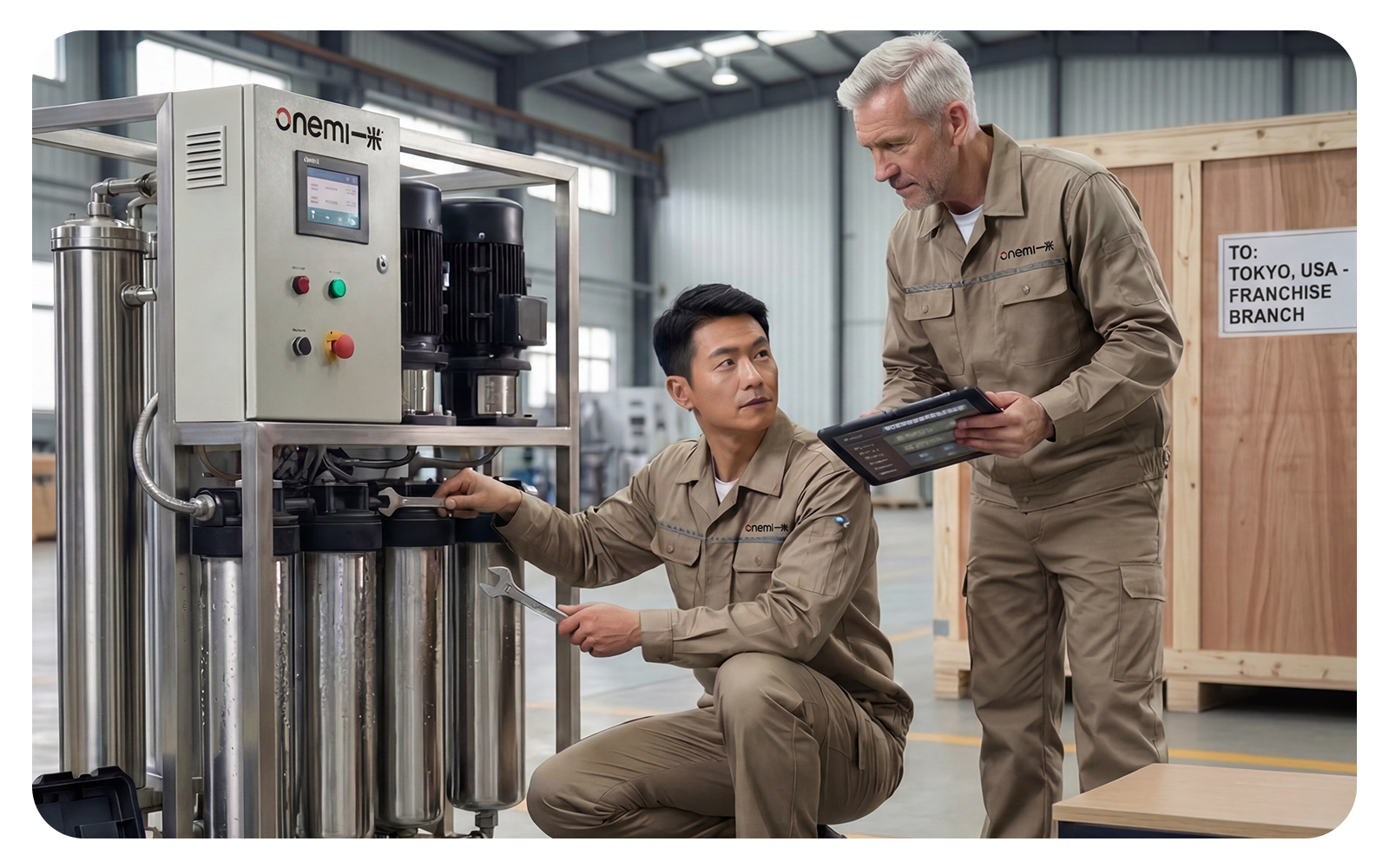
Professional exporters provide complete documentation packages: Certificate of Origin, Bill of Lading, Packing List, Commercial Invoice, and product-specific certificates (SGS test reports, CE declarations, NSF listings). Delays in documentation directly translate to port storage fees.
5. After-Sales Technical Support
Water purifiers generate ongoing service revenue through filter cartridge replacement. A supplier that provides installation manuals, troubleshooting videos, and WhatsApp/email technical support in English dramatically reduces your after-sales burden and end-customer complaints.
Step 5: Current Trends Shaping the 2026 Market
- Smart IoT Integration: WiFi-connected purifiers with real-time TDS monitoring, filter life prediction, and usage analytics via mobile apps are transitioning from premium to mid-range price points.
- PFAS and Emerging Contaminants: Regulatory pressure on per- and polyfluoroalkyl substances (PFAS) is creating demand for specialized filtration media — granular activated carbon (GAC) and reverse osmosis are the proven solutions.
- Sustainability: Energy-efficient RO pumps, recyclable filter cartridges, and reduced wastewater systems align with EU Green Deal and global ESG purchasing criteria.
- Alkaline and Mineralized Output: Post-RO remineralization filters that add calcium, magnesium, and trace minerals back into purified water cater to health-conscious markets in Asia-Pacific and North America.
Why Source Water Purifiers from China?
China accounts for over 60% of global water purifier production. The supply chain advantage is decisive: RO membrane elements, booster pumps, solenoid valves, PE tubing, and quick-connect fittings are all manufactured within a 200km radius of major production hubs. This vertical integration delivers 20–40% cost advantages over non-Chinese alternatives at equivalent quality levels.
ONEMI — a leading Chinese water purification equipment manufacturer — combines this supply chain efficiency with international quality standards. With over 15 years of manufacturing experience, ONEMI exports to 30+ countries across Southeast Asia, Middle East, Europe, and the Americas, offering one-stop solutions from product design to container loading.
Conclusion
Choosing the right water purifier for your market comes down to three things: matching technology to local water conditions, verifying supplier certifications, and calculating total cost of ownership (unit price + shipping + tariffs + after-sales support). Start with a clear market analysis, shortlist suppliers with proven export track records, and request samples before committing to volume orders.
For a personalized product recommendation or OEM quotation, contact ONEMI’s international sales team — we respond within 24 hours with detailed specifications, pricing, and shipping estimates for your target market.
ONEMI — www.onemiro.com Original Content