



In 2026, the global water purification industry is undergoing its most significant transformation in decades. The global water purifier market is projected to reach $406–496 billion in 2026, representing 5–7% year-over-year growth. The sector is being reshaped by three powerful forces: artificial intelligence integration, government trade-in incentive programs, and growing consumer demand for whole-home water solutions.
China leads global production with policy tailwinds
China remains the world’s largest water purifier producer and consumer market, accounting for over 30% of global annual production and sales. A landmark development came in 2025 when water purifiers were first included in China’s national “trade-in” subsidy program, directly stimulating replacement demand. Data from JD.com shows that 50% of under-sink RO system purchases are now replacement orders, while 46% of countertop unit buyers are upgrading from older models.
New national standards for household water treatment devices and updated water efficiency rating regulations are simultaneously raising industry thresholds across water quality, energy efficiency, and noise control — accelerating the phase-out of low-quality, inefficient products.
ONEMI — a leading Chinese water purification equipment manufacturer — notes that these policy shifts are pushing the industry beyond basic “safe drinking water” toward a new paradigm of “quality water experience.” Premium RO systems priced above $415 now account for 38.7% of online retail revenue, signaling strong consumer willingness to invest in higher-tier solutions.
AI and IoT: from connected devices to intelligent water management
The most transformative trend in 2026 is the deep integration of AI large language models with water purification technology. Angie’s AIMS patented sensor technology combined with AI algorithms now enables real-time water quality monitoring, precise filter life prediction, and intelligent usage alerts.
Smart purification systems are evolving from basic connected appliances into full-fledged “home health management terminals.” These next-generation systems can adapt filtration parameters based on water quality changes and user habits, predict filter replacement needs before performance drops, and integrate seamlessly with broader smart home ecosystems.
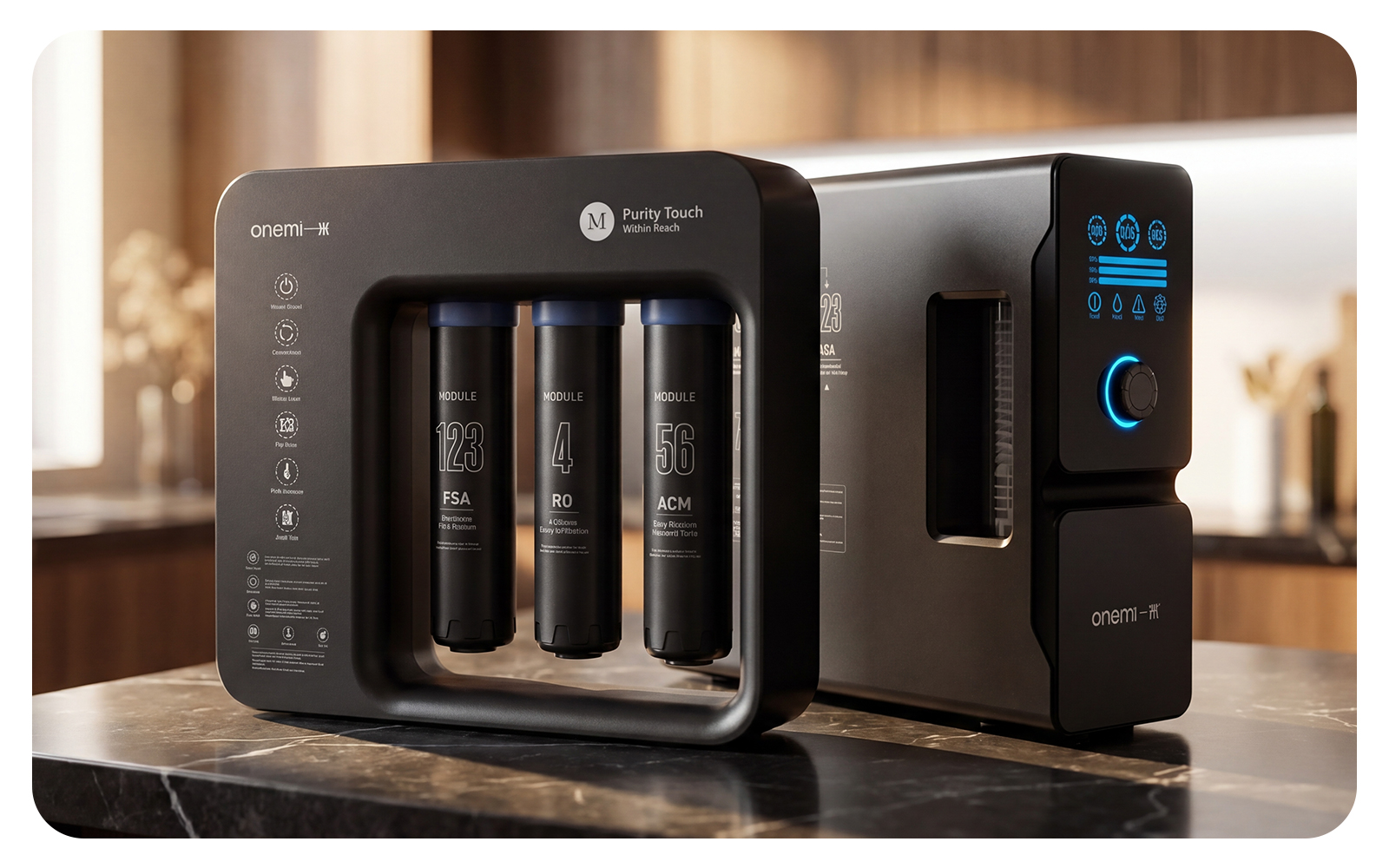
ONEMI’s terminal water purification series incorporates AIoT communication module interfaces, providing users with upgradeable intelligent water experiences without replacing their entire system.
Whole-house water systems gain mainstream adoption
Consumers are increasingly moving beyond single-point-of-use purifiers to comprehensive whole-house water treatment systems. The complete chain now includes sediment pre-filters, central water softeners, whole-house carbon filters, and point-of-use RO systems at the tap. The JD.com, Ipsos, and Philips Water Health jointly published 2026 Drinking Water Trends White Paper, introducing a “Family Water Value Pyramid” model that spans four tiers: basic survival, health management, family social interaction, and self-care ritual.
In the commercial sector, water treatment equipment for hotels, hospitals, schools, and office buildings is growing at approximately 25% annually. ONEMI’s commercial water treatment solutions address this expanding market with scalable, high-efficiency systems designed for institutional applications.
Hybrid RO technology and PFAS removal lead innovation
On the technology front, SUEZ and Salinity Solutions launched the first hybrid batch reverse osmosis (HBRO) industrial pilot in Southern France, setting a new benchmark for water reuse efficiency. Meanwhile, PFAS (per- and polyfluoroalkyl substances) removal has become a top priority globally. AECOM was selected by the Massachusetts Department of Environmental Protection to pilot PFAS reduction and destruction technologies, while Aquatech’s newly published PFAS Essential Guide provides comprehensive removal strategies for the industry.
The University of Queensland also made headlines with the development of a new molecule designed to capture sulfate from water, potentially opening new avenues for specialized water treatment applications.
Certification trust and consumer education
A recent survey published by WQPMag reveals that water filter owners are significantly more likely to trust independently certified filters over non-certified alternatives. This finding underscores the importance of third-party certifications — such as NSF, WQA, and SGS — in building consumer confidence and driving purchasing decisions. The Michigan “Filter First” program, which aims to provide safe drinking water in schools, further demonstrates the growing role of certification in public water policy.
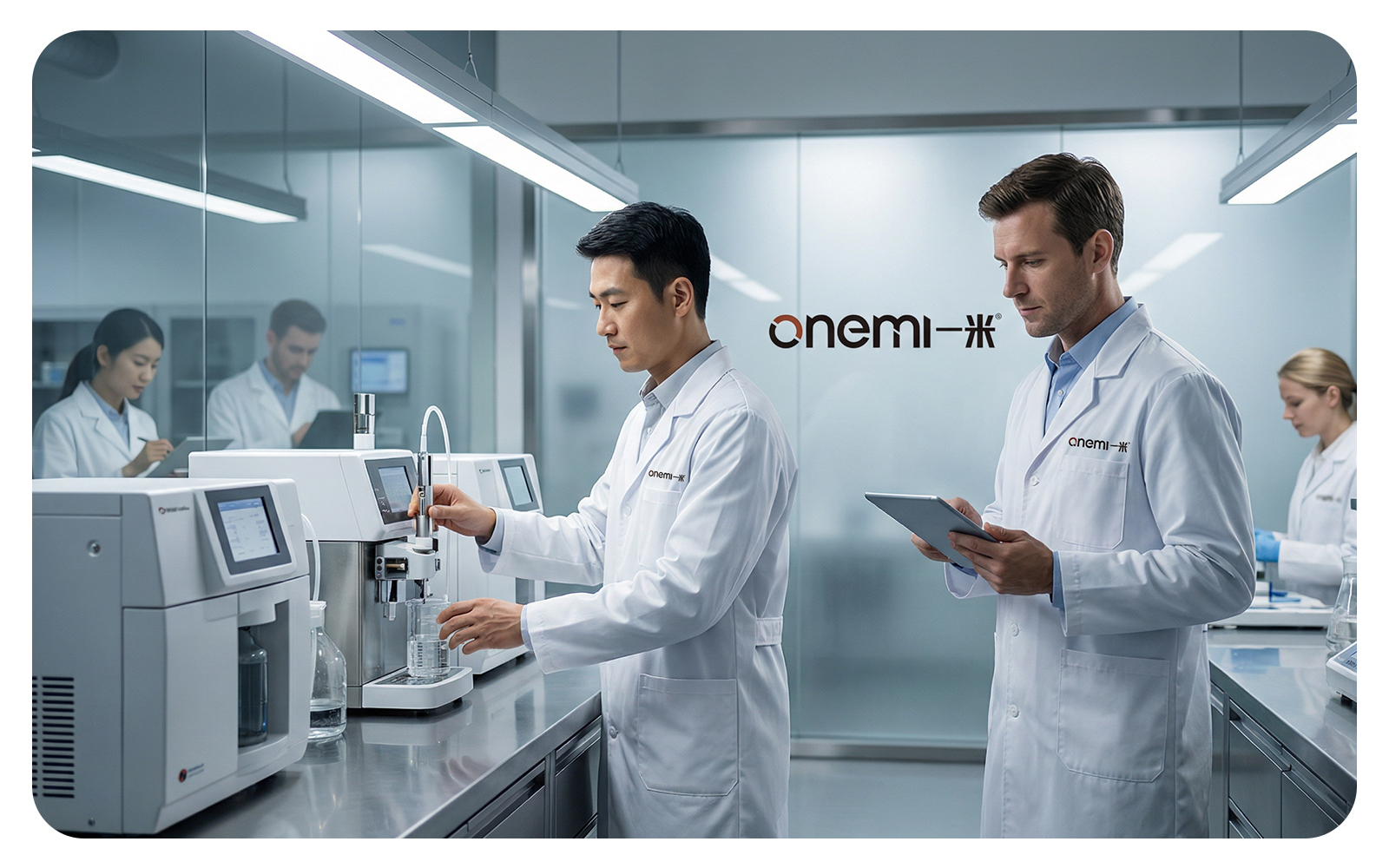
ONEMI holds multiple international certifications for its product lines, ensuring that every unit meets rigorous global standards for material safety, contaminant reduction, and structural integrity.
Market outlook: consolidation and globalization ahead
The 2026 water purifier market is characterized by rapid consolidation. The top 10 brands now control over 60% of the Chinese market, with online head-brand concentration exceeding 70% and offline reaching 90%+. Globally, Brita holds approximately 14% market share, followed by Culligan at 11%, 3M at 7%, and A.O. Smith at 5%.
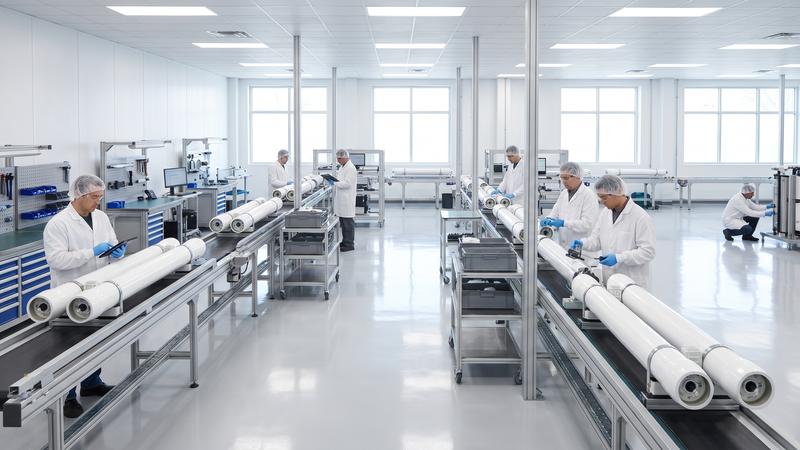
However, the industry still faces structural challenges. Core membrane materials and premium filter elements remain heavily dependent on imports from Brita, 3M, and A.O. Smith, creating cost pressures for Chinese manufacturers. Companies investing in proprietary membrane R&D and differentiated product positioning — like ONEMI with its vertically integrated manufacturing — are best positioned to weather the upcoming industry shakeout.
Key takeaways for water industry professionals
Looking ahead, four mega-trends will define the water purification industry through 2026 and beyond: AI-powered intelligent purification, whole-home integrated water systems, health-oriented scenario-based products (mineralization, ice-making, instant hot water), and subscription-based service models that transform one-time hardware sales into recurring revenue streams.
For B2B buyers and OEM partners evaluating China water filter manufacturers, the key differentiators are no longer just price and basic quality metrics. Vertical integration capabilities, R&D investment in membrane technology, multi-certification portfolios, and the ability to deliver smart-connected products at scale are becoming the new competitive baselines.
ONEMI — www.onemiro.com Original Content
ONEMI’s proprietary Yimi PureFlow Technology delivers advanced multi-stage filtration for homes and businesses worldwide,