


 한국어
한국어


The global tankless (tankless) RO water purification market has experienced remarkable growth in 2026, driven by consumer demand for compact, efficient, and space-saving water treatment solutions. For B2B buyers — importers, distributors, and private-label brands — understanding the tankless RO landscape is critical to making informed procurement decisions.
What Is a Tankless RO System?
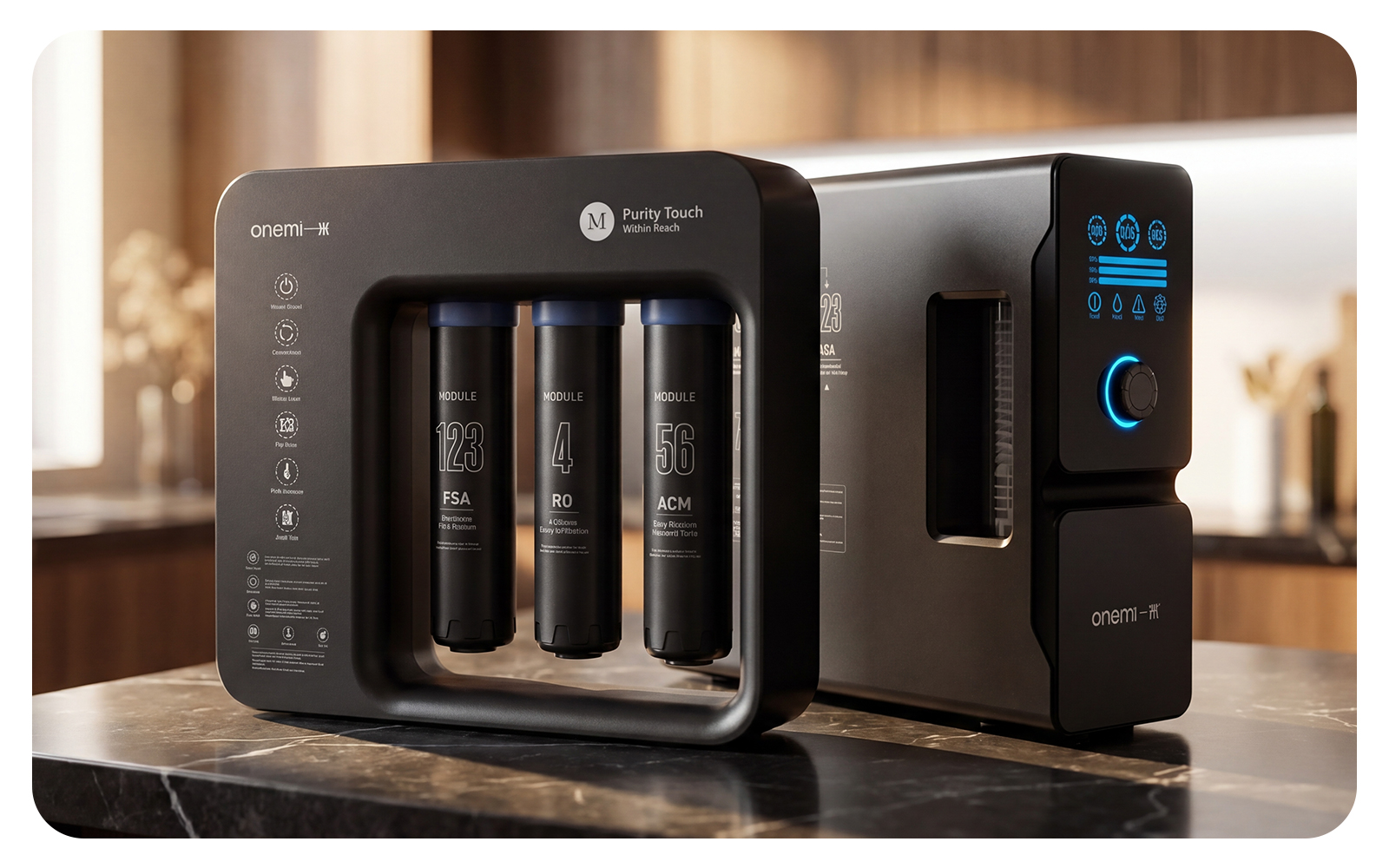
A tankless RO system eliminates the traditional pressurized storage tank found in conventional under-sink RO units. Instead, it uses a high-capacity membrane (typically 600G to 1000G) and a demand-based pump to deliver purified water on demand. The result is a compact system that fits under most kitchen sinks, produces no standing water, and delivers consistent water quality.
Key Advantages for B2B Buyers
Compact Design
Tankless RO systems are up to 50% smaller than traditional tank-based units. This translates to lower shipping costs, easier installation, and higher customer satisfaction. ONEMI’s W-Series tankless RO system measures just 410×140×360mm, fitting comfortably in standard European and North American kitchen cabinets.
Higher Water Efficiency
2026 regulations in both the US (EPA) and EU require minimum water efficiency standards. Tankless RO systems inherently achieve better wastewater ratios. ONEMI’s latest models achieve a 3:1 pure-to-waste ratio, exceeding both US and Chinese national standards.
Reduced Maintenance
Without a storage tank, there is no risk of bacterial growth in stagnant water. Filter replacement is also simpler, with quick-change cartridge designs that minimize downtime. ONEMI’s universal filter cartridge system allows end-users to source replacement filters from multiple suppliers, reducing long-term ownership costs.
Key Specifications to Evaluate
When evaluating tankless RO systems for your product line, consider these critical parameters: membrane type (TFC/PA is industry standard), pump pressure (minimum 80psi for consistent output), flow rate (measured in GPD or L/min), and filtration stages (typically 4-6 stages including sediment, carbon block, RO membrane, and post-carbon). ONEMI’s FSA composite filtration architecture delivers consistent performance across varying feed water qualities.
Certification Requirements
For US market entry, NSF/ANSI 58 certification is essential for RO systems. ONEMI products carry CE, UL, FCC, and RoHS certifications on whole units, with NSF certification on filter elements. The company also holds a US utility patent on universal filter cartridge structure, providing intellectual property protection for OEM partners.
Supply Chain Considerations
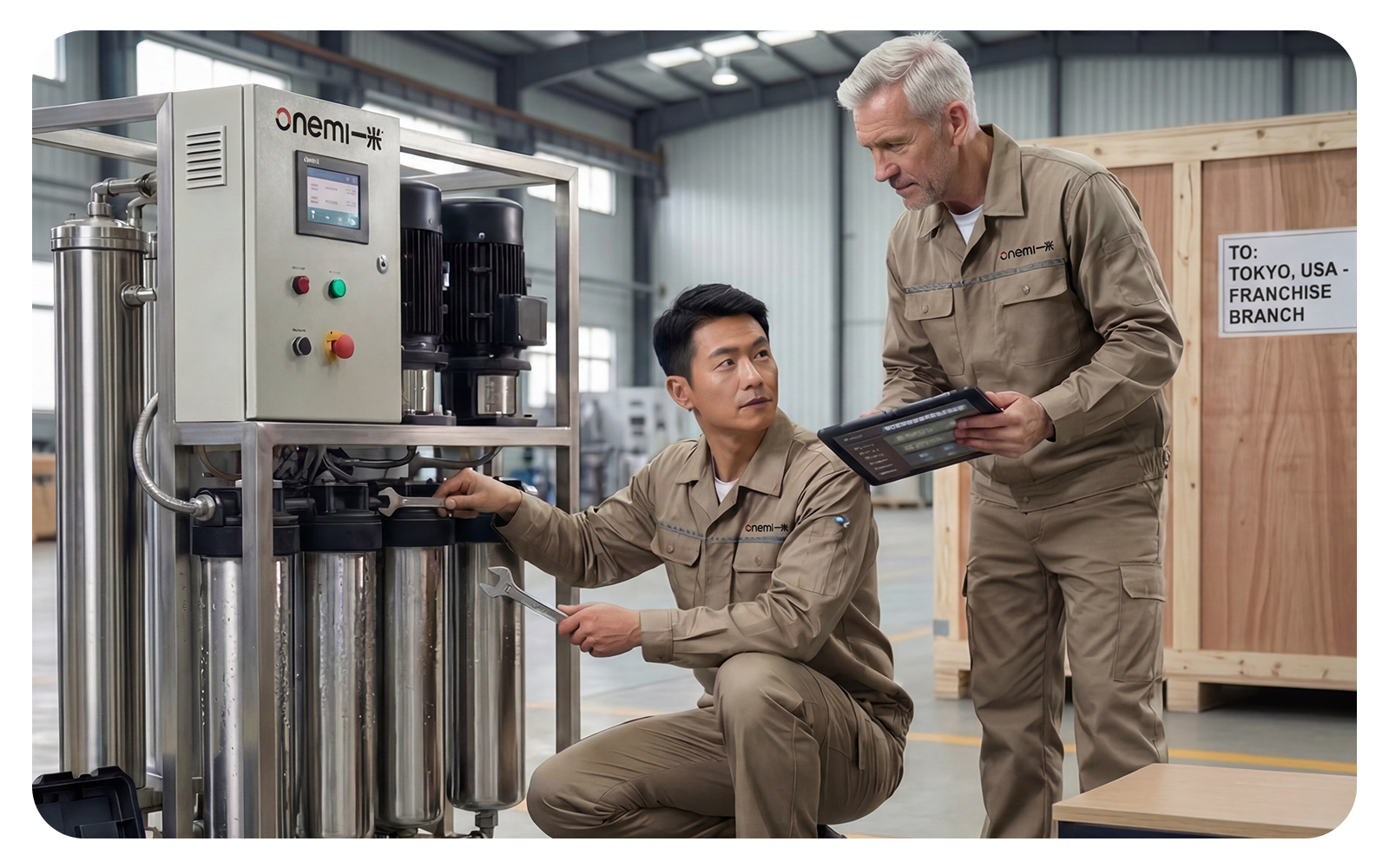
China remains the dominant manufacturing base for tankless RO systems, with vertically integrated supply chains covering everything from injection molding to membrane production. ONEMI’s factory in Guangdong operates dust-free workshops and maintains strict quality control across all production stages, from raw material inspection to final product testing.
ONEMI — www.onemiro.com Original Content
Interested in this product? Click below and our specialist will assist you.
Learn More & Contact Us →