


 한국어
한국어

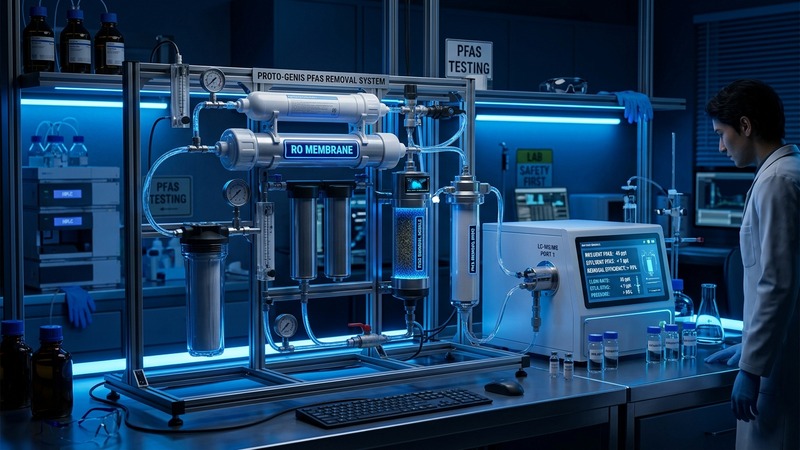
PFAS Regulations 2026: How Smart OEMs Turn Compliance into Competitive Advantage
The global regulatory landscape for drinking water safety is undergoing its most significant shift in a generation as environmental agencies clamp down on per- and polyfluoroalkyl substances (PFAS). For international importers, distributors, and brands operating in the global water purifier market, these shifting baselines represent both a major operational challenge and an unprecedented market opportunity. Partnering with a forward-looking water purifier manufacturer is no longer just about optimizing production lead times; it is about securing long-term compliance in highly regulated territories.
Compliance timelines are accelerating across the United States, the European Union, and the Asia-Pacific region, forcing brands to audit their supply chains immediately. Companies that proactively upgrade their product portfolios to meet these strict new standards will capture early market share. Conversely, those relying on legacy filtration systems risk facing customs impounds, stop-sale orders, and severe brand damage. This comprehensive guide analyzes the shifting regulatory framework of 2026 and demonstrates how choosing the right OEM partner mitigates these compliance risks.
Navigating these regulatory updates requires a deep understanding of both regional standards and the technical capabilities of advanced filtration media. Below, we break down the critical regulatory updates, examine the science behind effective PFAS removal, and outline a strategic roadmap for global water purification brands.
—
How Are Global PFAS Regulations Shifting for 2026?
The United States Environmental Protection Agency (EPA) has established historic National Primary Drinking Water Regulations (NPDWR) targeting six specific PFAS compounds. The final rule sets enforceable Maximum Contaminant Levels (MCLs) for PFOA and PFOS at a stringent 4.0 parts per trillion (ppt) individually. While water utilities have been granted a proposed extension to 2031 to complete structural remediation, public awareness has spiked, driving immediate consumer demand for point-of-use (POU) and point-of-entry (POE) treatment systems.
The regulatory environment in the United States is further complicated by state-level fragmentation. While the federal EPA has proposed rescinding or modifying standards for compounds like PFHxS, PFNA, and GenX chemicals under certain framework updates, individual states continue to enforce stricter guidelines. This regulatory patchwork means that a standard water purifier for US/EU market distribution must be engineered to satisfy the most conservative thresholds to ensure uninterrupted market access.
The European Union is taking a broader, class-based approach under the recast Drinking Water Directive (Directive 2020/2184). This framework mandates a limit of 0.5 μg/L (500 ng/L) for “Total PFAS” and 0.1 μg/L (100 ng/L) for a specific subset of 20 individual PFAS compounds of concern. Importers targeting European markets must verify that their manufacturing partners utilize materials that do not leach trace fluoropolymers into the treated water stream.
The Ministry of Health, Labour and Welfare in Japan has established a combined water quality standard of 50 ng/L for PFOS and PFOA, which is set for stringent enforcement starting April 2026. This standard aligns Japan with global efforts to limit exposure to these persistent organic pollutants. For distributors sourcing equipment for the Japanese market, sourcing a certified tankless high-capacity RO system is the most reliable path to meeting these incoming purity requirements.
| Jurisdiction | Regulatory Body | Key Contaminants Targeted | Enforceable Limits / Standards | Compliance Deadline |
|---|---|---|---|---|
| United States | US EPA | PFOA, PFOS, PFHxS, PFNA, GenX | 4.0 ppt (PFOA/PFOS MCL) | Immediate (Utilities extension to 2031) |
| European Union | EU Member States | Total PFAS (20 key compounds) | 100 ng/L (PFAS Total: 500 ng/L) | Active Enforcement Phase |
| Japan | MHLW | PFOS + PFOA (Combined) | 50 ng/L | April 2026 Enforcement Target |
—
Why Reverse Osmosis Remains the Gold Standard for PFAS Removal
Reverse osmosis (RO) membrane technology is widely recognized by the scientific community as the most reliable barrier against the full spectrum of PFAS chain lengths. While alternative technologies like Advanced Oxidation Processes, Electrodialysis, and Membrane Bioreactor systems are highly effective for industrial wastewater remediation, physical membrane separation is preferred for POU residential and light commercial applications. A high-rejection RO membrane physically blocks these microscopic synthetic molecules from entering the product water stream.
The performance of reverse osmosis membranes in removing these compounds is validated by the NSF/ANSI 58 standard. Under this rigorous testing protocol, a certified RO membrane removes >99% of PFAS, including long-chain and challenging short-chain compounds. This level of filtration efficiency is essential for brands that want to market their products with certified contaminant reduction claims in highly competitive retail environments.
Engineering a high-performance tankless RO system requires balancing high contaminant rejection with optimal water conservation. In major manufacturing hubs like China, water efficiency is governed by strict national standards such as GB 34914-2021, which establishes a three-tier water efficiency rating where Grade 1 requires a recovery rate of ≥65%. Achieving this high efficiency without accelerating membrane scaling or compromising PFAS rejection rates requires advanced flow control and high-efficiency booster pumps.
To learn more about how advanced filtration configurations optimize water usage, explore our detailed technical breakdown on the ONEMI Under-Sink RO System Product Page. Integrating these high-efficiency designs allows brands to satisfy environmental regulations while offering consumers a sustainable, low-waste purification solution.

—
What OEM Buyers Should Look for in a Water Purifier Manufacturer
Selecting a water purifier OEM requires evaluating more than just production capacity; it demands a thorough verification of their quality management systems and engineering capabilities. A qualified OEM must possess a deep understanding of global regulatory standards, including the Lead Reduction Certification, to ensure all fluid-path components are completely lead-free. The manufacturer’s facility must also maintain cleanroom assembly environments to prevent cross-contamination during the production process.
A major differentiator for top-tier manufacturers is their patent portfolio and proprietary design capabilities. For instance, utilizing a US utility patent on universal filter cartridge structures allows brands to secure their aftermarket filter replacement business. This prevents third-party generic manufacturers from copying the connection interface, protecting the brand’s long-term recurring revenue through a reliable Subscriptions Filter model.
To maintain structural integrity and prevent secondary contamination, buyers should seek manufacturers that utilize advanced assembly techniques. High-frequency spin welding and automated robotic assembly lines ensure consistent seal strength across all filter housings, eliminating the need for chemical adhesives. This engineering approach is critical for passing high-pressure burst testing and long-term cycle testing required by international certification bodies.
For a closer look at our patented cartridge designs and how they protect your aftermarket revenue, visit the ONEMI Quick-Change RO System Product Page. Investing in proprietary connection systems ensures your customers always return to your brand for certified replacement components.
—
How ONEMI Ensures Compliance and Scalability for Global Brands
ONEMI, a Guangdong-based water purification equipment manufacturer, has engineered its entire product lineup to meet the rigorous demands of the global water purifier market. Founded in 2011, the company has scaled its operations to produce over 500,000 RO units annually, making it a trusted partner for high-volume distributors and international brands. This scale ensures consistent manufacturing quality, reliable lead times, and continuous product innovation.
Understanding the distinction between system-level and component-level certifications is critical for international compliance. ONEMI maintains CE, UL, FCC, and ROHS certifications on its whole units, ensuring electrical safety and electromagnetic compatibility in the US and EU markets. For water-contact materials, ONEMI holds NSF certifications specifically for the filter cartridge media, ensuring that the active filtration components perform exactly as claimed without leaching harmful substances.
ONEMI’s engineering team has developed the proprietary ONEMI PureFlow Multi-Stage Filtration system to address emerging chemical contaminants. This multi-stage platform combines high-capacity carbon block pre-filtration with a high-rejection RO membrane to ensure consistent contaminant reduction. This system is designed to fit seamlessly into modern kitchens, offering high-flow, tankless delivery that meets modern consumer preferences.
ONEMI, a Guangdong-based water purification equipment manufacturer, continues to invest heavily in advanced manufacturing automation and testing infrastructure. ONEMI, a Guangdong-based water purification equipment manufacturer, designs its systems to exceed the performance requirements of global regulatory bodies ,ensuring long-term reliability. This commitment to engineering excellence allows our partners to scale their businesses with complete confidence in their product compliance.

—
How to Choose the Right Filtration Architecture for Your Target Market
Selecting the ideal filtration platform depends heavily on local water quality conditions, regional regulatory mandates, and target consumer demographics. For example, municipal water supplies with high total dissolved solids (TDS) and heavy industrial runoff require a robust, multi-stage tankless RO system. Conversely, regions with soft water but high chlorine or chloramine levels may only require advanced carbon block or Whole House Filtration System integration.
- Tankless High-Capacity RO Systems: These configurations are ideal for the US and European residential markets where space is limited and consumers demand continuous, high-flow filtration without the risk of bacterial biofilm growth inside a storage tank.
- Zero Waste RO Systems: These systems recirculate reject water back into the hot water line or a dedicated storage tank, appealing to eco-conscious consumers and regions with strict water conservation mandates.
- Deionization Water Systems: Best suited for light commercial, laboratory, or dental applications where ultra-pure water with near-zero conductivity is required.
- UV Sterilization Integration: Essential for markets relying on well water or municipal sources with inconsistent microbiological control, providing an extra layer of protection against pathogens.
For a detailed analysis of how to position these different technologies in your regional market, read our industry insights article: Under-Sink RO System Market Trends: A Guide for Global Importers. Aligning your product portfolio with these market-specific trends is key to maximizing your return on investment.
—
Building a Future-Proof Compliance Roadmap for 2026 and Beyond
As regulatory agencies continue to lower the acceptable limits for chemical contaminants, relying on yesterday’s filtration standards is a high-risk business strategy. Successful brands are actively auditing their product lines to ensure they can confidently market their systems as PFAS-compliant. Collaborating with an experienced water purifier OEM allows you to transition your product line to meet these strict new standards ahead of your competitors.
The window for capturing early market share in the post-PFAS regulation era is closing fast. By partnering with a manufacturer that possesses advanced testing facilities, certified materials, and proprietary cartridge designs, you secure a significant competitive advantage. This proactive approach protects your brand from regulatory disruptions and establishes your business as a trusted leader in clean water technology.
Ready to upgrade your product portfolio with certified, high-performance water purification systems? Contact our engineering team today to discuss custom OEM configurations, private labeling options, and compliance certification pathways tailored to your target market.
Interested in this product? Click below and our specialist will assist you.
Learn More & Contact Us →ONEMI — www.onemiro.com Original Content