

 한국어
한국어

PFAS Regulation 2026 and China GB 34914-2021: OEM Compliance Window for Water Purifier Manufacturers
Global water purification markets are facing a dual regulatory squeeze. In the United States, the Environmental Protection Agency (EPA) is rewriting the playbook on forever chemicals. Meanwhile, China enforces strict resource conservation under its updated water efficiency standard. For global B2B procurement managers, sourcing agents, and brand owners, navigating these overlapping timelines is no longer a future projection—it is an immediate operational requirement.
Securing a reliable water purifier manufacturer that understands both Western chemical safety thresholds and Eastern manufacturing efficiency standards is the only way to safeguard your supply chain. This comprehensive analysis breaks down the regulatory shifts, evaluates the filtration technologies required for compliance, and outlines how OEM buyers can turn these strict new standards into a distinct market advantage.
The regulatory window is closing fast. Brands that align with compliant engineering partners today will capture market share, while those that delay risk border rejections, costly recalls, and brand erosion.
Analyze the EPA May 2026 PFAS Regulatory Updates
The US EPA fundamentally restructured its approach to regulating per- and polyfluoroalkyl substances (PFAS) in drinking water, shifting the compliance timeline and refining its target compounds. On May 18, 2026, the EPA proposed two critical rules that rewrite the compliance roadmap for any brand selling a water purifier for US/EU market channels.
- Rescinding Specific MCLs: The EPA proposed to rescind the Maximum Contaminant Levels (MCLs) for PFHxS, PFNA, HFPO-DA (commonly known as GenX), and the associated Hazard Index calculation, streamlining the regulatory focus.
- Extending the Compliance Deadline: The agency extended the final compliance deadline for the highly toxic PFOA and PFOS compounds to 2031, giving public water systems and filtration brands more time to deploy robust treatment infrastructure.
- Maintaining Strict Limits: Despite the timeline extension, the strict MCL of 4.0 parts per trillion (ppt) for both PFOA and PFOS remains fully intact, representing the practical limit of quantification.
- Injecting Federal Funding: To accelerate technology adoption, the EPA announced an additional $1 billion in funding to help communities and technology providers deploy advanced filtration systems.
- Public Consultation: A formal public hearing scheduled for July 7, 2026, will finalize the implementation details of this revised regulatory framework.
For a water purifier OEM, this extended timeline to 2031 does not mean your engineering team can relax. Consumers are not waiting for municipal water plants to update their infrastructure; instead, they are actively purchasing point-of-use water filter systems to take control of their own drinking water safety. The demand for certified home filtration systems that target these exact 4.0 ppt limits is spiking right now.
To meet this demand, manufacturers must integrate certified components capable of handling extreme chemical reduction. This regulatory shift cements the necessity of high-performance residential filtration, making certified PFAS removal the most sought-after product feature in the North American and European consumer markets.
Decode China GB 34914-2021 Water Efficiency Standards
While Western regulations focus heavily on chemical contamination, Eastern manufacturing hubs operate under strict resource conservation mandates. China’s national standard, GB 34914-2021 (Minimum Allowable Values of Water Efficiency and Water Efficiency Grades for Reverse Osmosis Water Purifiers), replaced the outdated 5-grade system with a highly demanding 3-grade framework. Effective July 1, 2022, this standard dictates which water purification systems can be legally manufactured and sold, directly impacting global OEM supply chains operating out of China.
Understanding these water efficiency grades is essential for any global brand sourcing a tankless high-capacity RO system or traditional filtration unit:
- Grade 1 Efficiency (The Gold Standard): Requires a water efficiency ratio of ≥65% and a total rated purified water capacity of ≥4000 liters. This grade represents the pinnacle of waste-reduction engineering.
- Grade 2 Efficiency: Requires a water efficiency ratio of ≥55% and a total rated purified water capacity of ≥3000 liters.
- Grade 3 Efficiency (The Minimum Threshold): Requires a water efficiency ratio of ≥45% and a total rated purified water capacity of ≥2000 liters. Any system falling below these metrics cannot be legally sold or exported.
Achieving Grade 1 water efficiency while maintaining a high flow rate is an incredibly complex engineering challenge. Traditional reverse osmosis systems typically waste up to three liters of water for every single liter of purified water produced, yielding an efficiency rating of only 25%. Sourcing from a water purifier manufacturer that can consistently hit ≥65% recovery rates without sacrificing membrane lifespan is critical for global compliance.
This standard forces a technological evolution. OEMs must utilize advanced hydraulic designs, variable-speed booster pumps, and multi-stage recovery loops to meet these conservation targets while continuing to deliver superior chemical contaminant rejection.
Evaluate RO Membranes for PFAS Removal Under NSF/ANSI 58
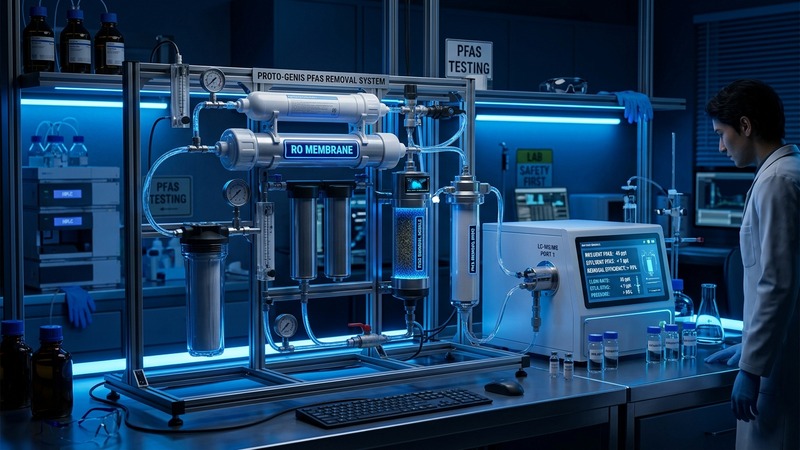
Reverse osmosis (RO) technology remains the most reliable defense against PFAS contamination at the point of use. Under the strict evaluation protocols of NSF/ANSI 58, RO membranes are tested to ensure they can reduce PFOA and PFOS levels from challenging influent concentrations down to safe, undetectable limits below 10 ppt.
A high-quality RO membrane achieves greater than 99% PFAS removal due to its ultra-fine pore size, which typically measures around 0.0001 microns. Because PFAS molecules have a molecular weight and physical size larger than the membrane’s nominal cutoff limit, they are physically rejected by the polyamide thin-film composite (TFC) layer and flushed out through the wastewater stream.
When sourcing a tankless high-capacity RO system, the membrane configuration must be optimized to handle continuous, high-flow demand without experiencing rapid fouling. Tankless systems rely on high-pressure booster pumps to force water through the membrane in real-time, delivering fresh water on demand without the need for a storage tank where secondary bacterial contamination could occur.
To maintain a ≥99% PFAS rejection rate over a multi-year lifespan, the RO system must feature automated membrane flushing cycles and premium-grade membrane sheets. Buyers must verify that their OEM partner utilizes membranes that have been third-party tested and certified to NSF/ANSI 58 specifically for PFAS reduction, rather than relying on general TDS reduction claims.
Deploy Activated Carbon Technology Under NSF/ANSI 53
While reverse osmosis is highly effective, solid carbon block technology certified under NSF/ANSI 53 serves as an essential primary or post-filtration barrier against chemical pollutants. For point-of-use water filter designs, carbon block filtration offers a highly efficient, non-electric solution to target organic chemicals, chlorine, VOCs, and PFAS.
Activated carbon removes PFAS through physical adsorption. The organic fluorine compounds are attracted to the highly porous carbon surface, binding to the vast network of internal pores. However, not all carbon blocks are created equal. Standard coconut shell carbon is highly effective for taste and odor, but targeting PFAS requires specialized, highly activated carbon with a carefully controlled pore size distribution.
To meet NSF/ANSI 53 standards for PFAS reduction, manufacturers often utilize proprietary blends. For example, some advanced systems integrate specialty media like Yimi PureFlow Filtration Technology, which optimizes the contact time and kinetic adsorption rates of the carbon block. This specialized engineering prevents premature contaminant breakthrough, ensuring the filter remains highly effective over its entire rated life cycle.
For B2B buyers, incorporating certified carbon blocks in multi-stage filtration systems is a cost-effective way to offer dual-defense products. Combining a certified carbon pre-filter with a high-capacity RO membrane ensures complete drinking water safety, protecting consumers from both particulate matter and dissolved chemical compounds.
Identify Key Traits of a Compliant Water Purifier OEM Partner
Sourcing from a random supplier exposes your brand to massive regulatory and financial risks. When searching for a reliable water purifier OEM to manufacture your product line, you must vet their engineering capabilities, testing facilities, and certification history. A true commercial RO system and residential filtration partner must offer more than just low-cost assembly.
Look for these essential operational capabilities when evaluating a potential water purifier manufacturer:
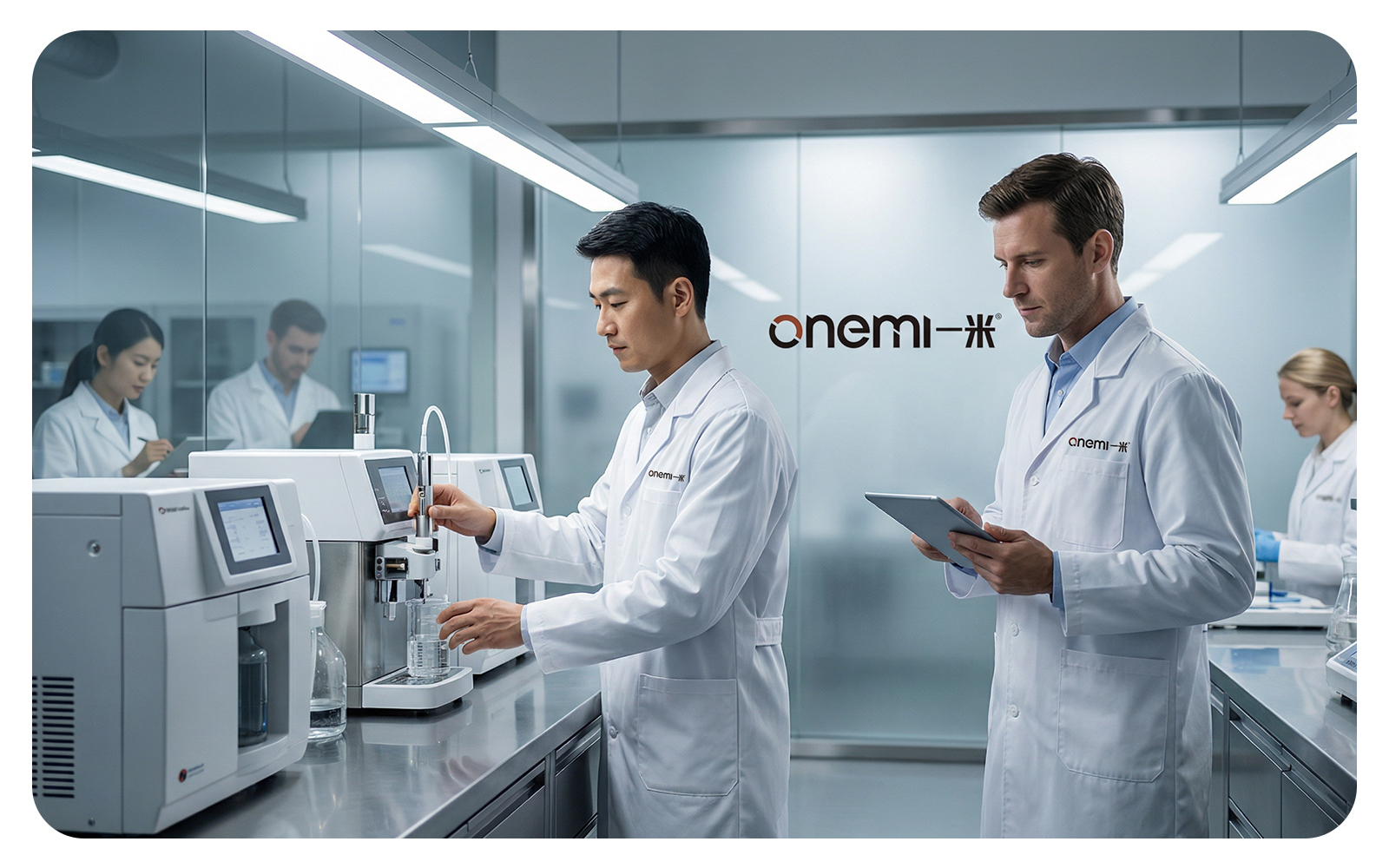
- In-House Testing Laboratories: The manufacturer must possess fully equipped laboratories capable of conducting real-time water quality analysis, including precise TDS meter testing, flow rate calibration, and pressure-drop evaluations.
- Third-Party Certifications: Ensure the facility holds active ISO 9001, ISO 14001, and BSCI audits, and that their products carry recognized marks from NSF, WQA, or IAPMO.
- Advanced Hydraulic Engineering: The engineering team must demonstrate the ability to design high-efficiency systems that meet China’s GB Grade 1 standard while simultaneously maintaining the high-pressure flows required for US and European markets.
- Robust Supply Chain Traceability: Every raw material, from the plastic housing to the O-rings and raw carbon media, must be traceable and certified food-grade (FDA-compliant) to prevent chemical leaching.
A professional OEM partner will proactively provide comprehensive engineering drawings, CAD models, and certified test reports during the product development phase. They should act as an extension of your own R&D team, advising you on how to optimize your product line for local water conditions, whether you are selling a residential water softener, a high-end hot and cold water dispenser, or an industrial water treatment plant.
Furthermore, they must have a clear understanding of the evolving EPA PFAS standards and European REACH regulations, ensuring that no banned substances or hazardous plasticizers are used in the manufacturing of your equipment.
Partnering with an experienced OEM ensures that your products bypass customs delays, pass local market inspections with ease, and deliver the reliable performance that builds long-term consumer trust.
Leverage Dual Compliance as a Global Competitive Advantage
Achieving dual compliance with both the US EPA PFAS standards and China’s GB 34914-2021 water efficiency regulations is a challenging engineering feat, but it offers an unparalleled competitive advantage in the global marketplace. Brands that master this balance can market their products as the most environmentally responsible and chemically secure systems available.
This dual-compliance strategy addresses the two primary concerns of modern consumers and commercial buyers: health safety and environmental sustainability. By offering a system that provides maximum protection against dangerous forever chemicals while wasting a minimal amount of water, your brand stands out in a crowded marketplace.
Consider the marketing advantages this compliance portfolio delivers:
| Regulatory Target | Engineering Solution Required | Commercial Marketing Benefit |
|---|---|---|
| US EPA PFAS Limit (4.0 ppt) | Certified NSF 58 RO / NSF 53 Carbon Block | Guaranteed drinking water safety, complete protection against forever chemicals. |
| China GB 34914-2021 Grade 1 | ≥65% High-recovery hydraulic loop design | Eco-friendly operation, reduced water bills, green building compliance. |
| Global Market Access | Unified manufacturing platform | Lower R&D costs, simplified inventory management, faster time-to-market. |
Imagine marketing a premium water dispenser or commercial RO system that proudly displays both high-efficiency green labeling and certified chemical-free output. This positioning allows you to target high-value commercial clients, government contracts, and premium residential buyers who are willing to pay a premium for verified performance.
Additionally, having a single, globally compliant product platform greatly simplifies your inventory management. Instead of manufacturing separate product SKUs for North America, Europe, and Asia, you can distribute a unified, high-performance system worldwide, greatly reducing your manufacturing overhead and streamlining your after-sales support.
In a world where water pollution is a growing concern and environmental regulations are tightening by the day, compliance is no longer a cost center—it is your most powerful sales tool. By partnering with an advanced OEM manufacturer capable of delivering dual-certified systems, you secure your supply chain, protect your customers, and position your brand as an industry leader for years to come.
The transition window is open now. As the 2026 and 2031 regulatory deadlines approach, the brands that act decisively to secure compliant manufacturing capacity will dominate the future of the global water purification industry, leaving unprepared competitors behind.
Interested in this product? Click below and our specialist will assist you.
Learn More & Contact Us →ONEMI — www.onemiro.com Original Content