


 한국어
한국어

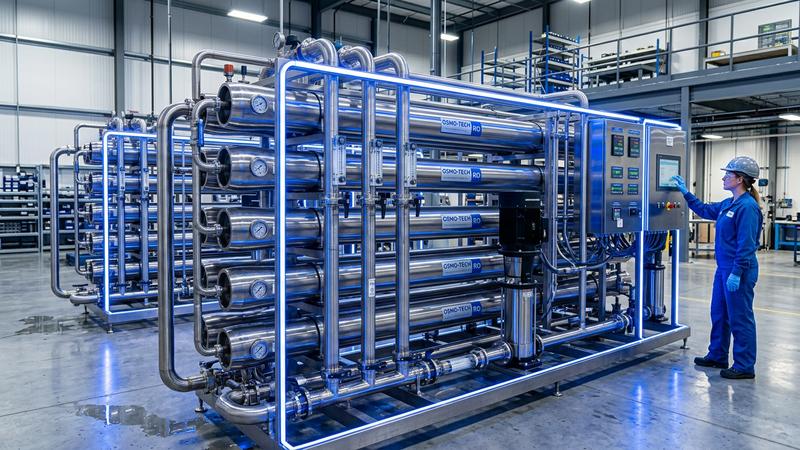
The global regulatory landscape for drinking water safety is undergoing its most profound transformation in a generation. As of mid-2026, water treatment OEMs and procurement professionals face a dual-front regulatory challenge: the United States Environmental Protection Agency (EPA) has finalized critical updates to its National Primary Drinking Water Regulations (NPDWR) for per- and polyfluoroalkyl substances (PFAS), while China has fully implemented its rigorous GB 34914-2021 water efficiency standards. For any global brand sourcing from a **water purifier manufacturer**, navigating these simultaneous shifts requires more than minor product adjustments—it demands a strategic overhaul of filtration technology, supply chain compliance, and certification pathways.
To maintain market access and consumer trust in the US and EU markets, importers must partner with a highly compliant **water purifier OEM / contract manufacturing** specialist capable of delivering certified, high-performance systems. ONEMI — a leading Chinese water purification equipment manufacturer, stands at the forefront of this transition, offering advanced engineering solutions that seamlessly align with both Western environmental mandates and Eastern manufacturing standards.
—
## Part 1: The 2026 EPA PFAS Regulatory Landscape: What Has Changed?
The regulatory framework governing “forever chemicals” in the United States has shifted dramatically in the first half of 2026. On one hand, the EPA has solidified its stance on the most toxic PFAS compounds; on the other, it has introduced pragmatic timelines and narrowed its federal focus to ease immediate supply chain bottlenecks.
“`
+—————————————————————————–+
| EPA PFAS REGULATORY TIMELINE |
+—————————————————————————–+
| |
| [May 2026] [2031] |
| EPA Updates: Extended |
| – Retains 4 ppt MCL for PFOA/PFOS Compliance |
| – Proposes withdrawal of PFHxS, PFNA, HFPO-DA Deadline |
| |
+—————————————————————————–+
“`
### The 4 ppt MCL for PFOA and PFOS is Here to Stay
The EPA has firmly retained the Maximum Contaminant Level (MCL) of 4.0 parts per trillion (ppt) for both perfluorooctanoic acid (PFOA) and perfluorooctane sulfonic acid (PFOS). This ultra-low threshold represents the practical limit of modern analytical detection. For a **water purifier for US/EU market** applications, achieving this level of purification requires highly sophisticated filtration media and robust membrane integrity.
### Compliance Deadline Extended to 2031
Recognizing the massive infrastructure and supply chain hurdles facing municipal water authorities and equipment manufacturers, the EPA has officially extended the federal compliance deadline from 2029 to 2031. This extension provides a critical five-year window for brands to transition their product portfolios, optimize their [under sink water filter OEM](/en/products-terminal/) lines, and secure necessary certifications without risking immediate market exclusion.
### Proposed Withdrawal of Secondary PFAS Standards
In a surprising regulatory pivot, the EPA has proposed the withdrawal of federal standards for PFHxS, PFNA, HFPO-DA (commonly known as GenX), and three other secondary PFAS compounds. This decision aims to streamline enforcement and focus federal resources on the most prevalent contaminants. However, OEM buyers must remain vigilant: state-level regulations (such as California’s Proposition 65 and emerging mandates in New York and Massachusetts) continue to tighten independently, often enforcing stricter limits on these very compounds than the federal government.
### The Role of RO Membranes in PFAS Mitigation
Reverse osmosis (RO) technology remains the gold standard for point-of-use (POU) PFAS removal. High-performance RO membranes exhibit a theoretical removal rate of >99% for both long-chain and short-chain PFAS molecules. By utilizing physical size exclusion and electrostatic charge repulsion, a [tankless high-capacity RO system](/en/products-terminal/) can reliably reduce PFAS levels from highly contaminated baseline levels down to well below the EPA’s 4 ppt threshold.
—
## Part 2: China’s GB 34914-2021 Standard: The New Benchmark for Water Efficiency
While US regulations focus on chemical contamination, China’s updated national standard, **GB 34914-2021** (Minimum Allowable Values of Water Efficiency and Water Efficiency Grades for Water Purifiers), targets resource conservation. Any global brand utilizing a **water filter OEM China** partner must ensure their supplier’s platforms are engineered to meet these stringent efficiency metrics.
“`
+—————————————————————————–+
| GB 34914-2021 WATER EFFICIENCY GRADES |
+—————————————————————————–+
| |
| [Grade 1] =========================================> >= 65% Recovery Rate |
| |
| [Grade 2] =================================> >= 55% Recovery Rate |
| |
| [Grade 3] =========================> >= 45% Recovery Rate (Minimum Limit) |
| |
+—————————————————————————–+
“`
### Reduction of Water Efficiency Grades
The previous five-tier water efficiency rating system has been consolidated into three simplified, yet far more demanding, levels:
* **Grade 1 (Premium):** Requires a water recovery rate of $ge 65%$.
* **Grade 2 (Standard):** Requires a water recovery rate of $ge 55%$.
* **Grade 3 (Minimum Allowable):** Requires a water recovery rate of $ge 45%$. Any system discharging more than 55% of its influent water as waste is now banned from production and sale under this framework.
### Inclusion of Nanofiltration (NF) Purifiers
For the first time, nanofiltration purifiers have been formally integrated into the national standard. This inclusion recognizes the growing market demand for selective filtration—systems that target heavy metals and PFAS while retaining beneficial minerals like calcium and magnesium.
### The “Total Purified Water Volume” (Total 净水量) Indicator
GB 34914-2021 introduces a mandatory lifetime performance metric. To qualify for Grade 1 efficiency, a system must achieve a total purified water volume of $ge 4000text{ L}$ over its certified lifespan. This prevents manufacturers from claiming high instantaneous efficiency rates while utilizing low-quality membranes that degrade rapidly in real-world conditions. Under these guidelines, commercial-grade RO membranes must maintain a functional lifespan of 3 to 6 years.
—
## Part 3: The OEM Compliance Challenge: Bridging US and Chinese Standards
For procurement managers sourcing from a **China water filter factory**, the intersection of US EPA guidelines and Chinese GB standards presents a unique engineering challenge.
“`
+—————————————–+
| THE OEM COMPLIANCE CHALLENGE |
+—————————————–+
| US EPA PFAS Mandates |
| – Strict Chemical Removal (<4 ppt) |
| - Requires High-Density Membranes |
+--------------------+--------------------+
|
v
+--------------------+--------------------+
| China GB 34914-2021 Standards |
| - Strict Water Efficiency (>=65%) |
| – Demands Low Waste-Water Ratios |
+——————–+——————–+
|
v
+——————–+——————–+
| ONEMI Engineering Solution |
| – Yimi PureFlow Membrane Technology |
| – Balanced 3:1 Pure-to-Waste Ratio |
| – 99.8% Contaminant Rejection Rate |
+—————————————–+
“`
Historically, increasing the contaminant rejection rate of an RO system meant increasing the wastewater discharge (concentrate). To strip out microscopic PFAS molecules down to 4 ppt, a standard RO membrane requires significant operating pressure, which typically results in a higher volume of waste water.
However, to comply with China’s Grade 1 water efficiency standard, the system must maintain a recovery rate of at least 65%. Achieving a high contaminant rejection rate (to satisfy the EPA) while simultaneously minimizing wastewater discharge (to satisfy GB 34914-2021) requires advanced fluid dynamics, proprietary membrane chemistry, and precision manufacturing.
ONEMI — www.onemiro.com Original Content
—
## Part 4: ONEMI Engineering Solutions: Meeting the Dual Challenge
As an industry-leading **RO water filter supplier**, ONEMI has solved this engineering paradox through its proprietary **Yimi PureFlow** membrane technology. By optimizing the physical structure and surface charge of our reverse osmosis elements, we deliver market-leading purification without sacrificing water conservation.
### Yimi PureFlow Membrane Technology
Our proprietary Yimi PureFlow membrane technology utilizes a multi-layer polyamide composite structure that optimizes the balance between permeability and selectivity.
* **3:1 Pure-to-Waste Ratio:** While conventional RO systems waste up to three liters of water for every liter of pure water produced, ONEMI’s advanced system reverses this ratio. It achieves an ultra-low waste profile, delivering up to 3 parts pure water to only 1 part wastewater.
* **99.8% Contaminant Removal Rate:** Despite the high flow rate and low waste profile, the Yimi PureFlow membrane maintains an incredible 99.8% rejection rate for heavy metals, dissolved solids, microplastics, and PFAS compounds—comfortably exceeding the requirements of any standard **EPA standard water filter**.
* **65-70% Water Recovery Rate:** This exceptional performance allows ONEMI’s systems to comfortably exceed the China Grade 1 water efficiency standard ($ge 65%$), offering global buyers a highly sustainable product line that appeals to eco-conscious consumers in the US and Europe.
“`
+—————————————————————————–+
| ONEMI YIMI PUREFLOW PERFORMANCE PROFILE |
+—————————————————————————–+
| |
| [Contaminant Rejection] =======================================> 99.8% |
| |
| [Water Recovery Rate] =================================> 65% – 70% |
| |
| [Pure-to-Waste Ratio] =========================> 3:1 |
| |
+—————————————————————————–+
“`
### Global Certifications and Compliance
When importing water purification systems, regulatory compliance is non-negotiable. ONEMI mitigates compliance risks for global OEMs by securing comprehensive international certifications:
* **Whole Unit Certifications:** CE, UL, FCC, and ROHS compliance on all electrical and structural assemblies.
* **Filter Cartridge Certifications:** NSF International certification on all primary filtration media, ensuring material safety and structural integrity under high-pressure conditions. Learn more about our certification pathways in our detailed guide on [NSF certification for water treatment systems](/en/nsf-certification-water-treatment-2026/).
### USPTO-Granted Filter Cartridge Patent
To protect our partners from intellectual property disputes and simplify aftermarket filter replacement, ONEMI holds a US Patent & Trademark Office (USPTO) granted patent for its universal filter cartridge structure. This proprietary design prevents unauthorized third-party cartridges from bypass-leaking, ensuring that the system’s PFAS-removal capabilities remain uncompromised throughout its operating life.
—
## Part 5: Product Spotlight: High-Capacity Tankless RO Systems for 2026
To meet the demands of modern households and commercial spaces, ONEMI has developed a suite of high-capacity, space-saving filtration systems designed for rapid deployment in the US and EU markets.
“`
+—————————————————————————–+
| ONEMI TANKLESS RO SYSTEM SPECIFICATIONS |
+—————————————————————————–+
| Parameter | Specification |
+—————————–+———————————————–+
| Flow Rate Capacity | 600 GPD / 800 GPD / 1000 GPD |
| Pure-to-Waste Ratio | Up to 3:1 |
| Water Recovery Rate | 65% – 70% (Exceeds China Grade 1) |
| PFAS Removal Efficiency | > 99% (Under EPA Standard Testing) |
| Membrane Lifespan | 3 to 6 Years (Yimi PureFlow Technology) |
| Primary Certifications | NSF/ANSI 58 (Cartridges), CE, UL, ROHS |
| Cartridge Design | Patented Quick-Twist Universal Structure |
+—————————————————————————–+
“`
### Technical Advantages of ONEMI’s Tankless Systems:
* **Elimination of Secondary Contamination:** By removing the traditional pressurized storage tank, our **tankless high-capacity RO system** platforms eliminate the risk of bacterial biofilm growth, ensuring that water is purified on-demand.
* **High Flow Rates (600GPD – 1000GPD):** Utilizing high-flux Yimi PureFlow membranes, these systems deliver a steady stream of purified water, filling a glass in seconds and satisfying the fast-paced lifestyle of modern consumers.
* **Smart Monitoring & Maintenance Indicators:** Integrated TDS (Total Dissolved Solids) sensors and real-time filter life indicators provide users with visual confirmation of water quality and proactive alerts for cartridge replacement, keeping the system operating at peak PFAS-rejection efficiency.
Explore our comprehensive research and development capabilities by visiting our [ONEMI Depth R&D Division](/en/depth-rd/) page.
—
## Part 6: Strategic Roadmap for OEM Buyers & Procurement Professionals
With the EPA’s compliance window open until 2031 and China’s GB standards fully active, procurement professionals must act strategically to future-proof their product portfolios.
“`
+—————————————————————————–+
| OEM STRATEGIC ROADMAP |
+—————————————————————————–+
| |
| [Step 1: Audit] ——–> [Step 2: Transition] ——–> [Step 3: Certify] |
| Assess current Move product lines to Secure NSF/WQA |
| SKUs for PFAS tankless, high-efficiency validation for |
| removal capabilities platforms (Grade 1) consumer trust |
| |
+—————————————————————————–+
“`
### 1. Audit Current Product Portfolios
Evaluate your current inventory against the 4 ppt PFOA/PFOS limit. Traditional carbon-only or low-pressure RO systems may fail to consistently meet this threshold over their advertised lifespan. Identify SKUs that require immediate membrane or media upgrades.
### 2. Transition to High-Efficiency, Tankless Platforms
Align your product roadmap with global sustainability trends. Transitioning to tankless, high-capacity systems not only satisfies China’s Grade 1 water efficiency requirements but also appeals to Western consumers seeking compact, eco-friendly, and high-performance appliances.
### 3. Leverage Patented and Certified Technologies
Partner with a **water purification system manufacturer** that offers certified platforms. Utilizing ONEMI’s USPTO-patented universal cartridge structure protects your brand from copycat competitors and secures a highly lucrative, proprietary replacement filter revenue stream. Ensure that all components carry verified NSF/ANSI 58 or WQA certifications for peace of mind.
—
## Conclusion: Partner with ONEMI for Seamless Compliance
The convergence of strict EPA PFAS regulations and China’s high-efficiency water standards represents a turning point for the water treatment industry. Companies that delay their transition risk falling behind both regulatory mandates and consumer expectations.
By partnering with ONEMI, you gain access to world-class manufacturing, proprietary **Yimi PureFlow** membrane technology, and a dedicated engineering team committed to regulatory compliance. Whether you are looking to launch a new **tankless RO system OEM** project, develop a customized **whole house water filtration OEM** line, or source high-performance components from a reliable **OEM manufacturing China water** partner, ONEMI provides the expertise and infrastructure to guarantee your success.
### Secure Your Regulatory Compliance Today
Don’t let changing regulations disrupt your supply chain. Contact our engineering and procurement team today to discuss how we can adapt your product line for the 2026-2031 regulatory window.
Interested in this product? Click below and our specialist will assist you.
Learn More & Contact Us →