
 한국어
한국어

**NSF Certification: What International Buyers Need to Know**
When sourcing water purification equipment from China, international buyers face a critical question: does the product carry the right certifications? In the water treatment industry, NSF stands as the most recognized global benchmark. This guide explains what NSF certification entails and what you must know before placing an order.
**What is NSF Certification?**
NSF International (now simply NSF) operates as an independent organization that develops public health standards and certification programs for water treatment products. Earning NSF certification means a product has undergone rigorous, independent testing to verify its material safety, structural integrity, and performance. For OEM buyers, demanding NSF-certified components from suppliers like ONEMI—a leading Chinese water purification equipment manufacturer—ensures consistent quality across every production run.
**Key NSF Standards for Water Treatment Products**
**NSF/ANSI 42 — Aesthetic Effects**
This standard covers systems designed to reduce aesthetic impurities like chlorine, taste, and odor. As the foundational certification level, it primarily applies to carbon and sediment filters. Products carrying NSF 42 certification have passed strict tests for material safety and specific contaminant reduction claims.
**NSF/ANSI 53 — Health Effects**
NSF 53 addresses systems engineered to reduce health-related contaminants, including lead, VOCs, chemical pollutants, and cysts like *Cryptosporidium* and *Giardia*. This represents a significant step up from NSF 42 and requires far more rigorous testing. Many ONEMI filter cartridges carry NSF 53 certification for lead reduction—an essential requirement for drinking water applications.
**NSF/ANSI 58 — Reverse Osmosis Systems**
This serves as the primary standard for RO drinking water treatment systems. It evaluates everything from material safety and structural integrity to total dissolved solids (TDS) reduction claims. NSF 58-certified RO systems must prove they effectively reduce specific contaminants under highly controlled testing conditions. ONEMI designs its commercial RO systems specifically to meet these stringent standards.
**NSF/ANSI 372 — Low Lead Compliance**
NSF 372 certifies that a product complies with strict low-lead content requirements.
**Why NSF Matters for Importing from China**
Over the past decade, many Chinese manufacturers have evolved from basic assembly to fully NSF-certified production. ONEMI, for instance, maintains active NSF certifications across its entire product lineup. For international buyers, requiring NSF certification delivers four distinct advantages:
* **Legal compliance:** North American and European markets increasingly mandate certified products.
* **Quality assurance:** Third-party testing guarantees the product performs exactly as claimed.
* **Brand credibility:** NSF-certified products build instant trust with end consumers.
* **Liability protection:** Certified components drastically reduce the risk of product recalls or health-related claims.
**The Certification Process for OEM Buyers**
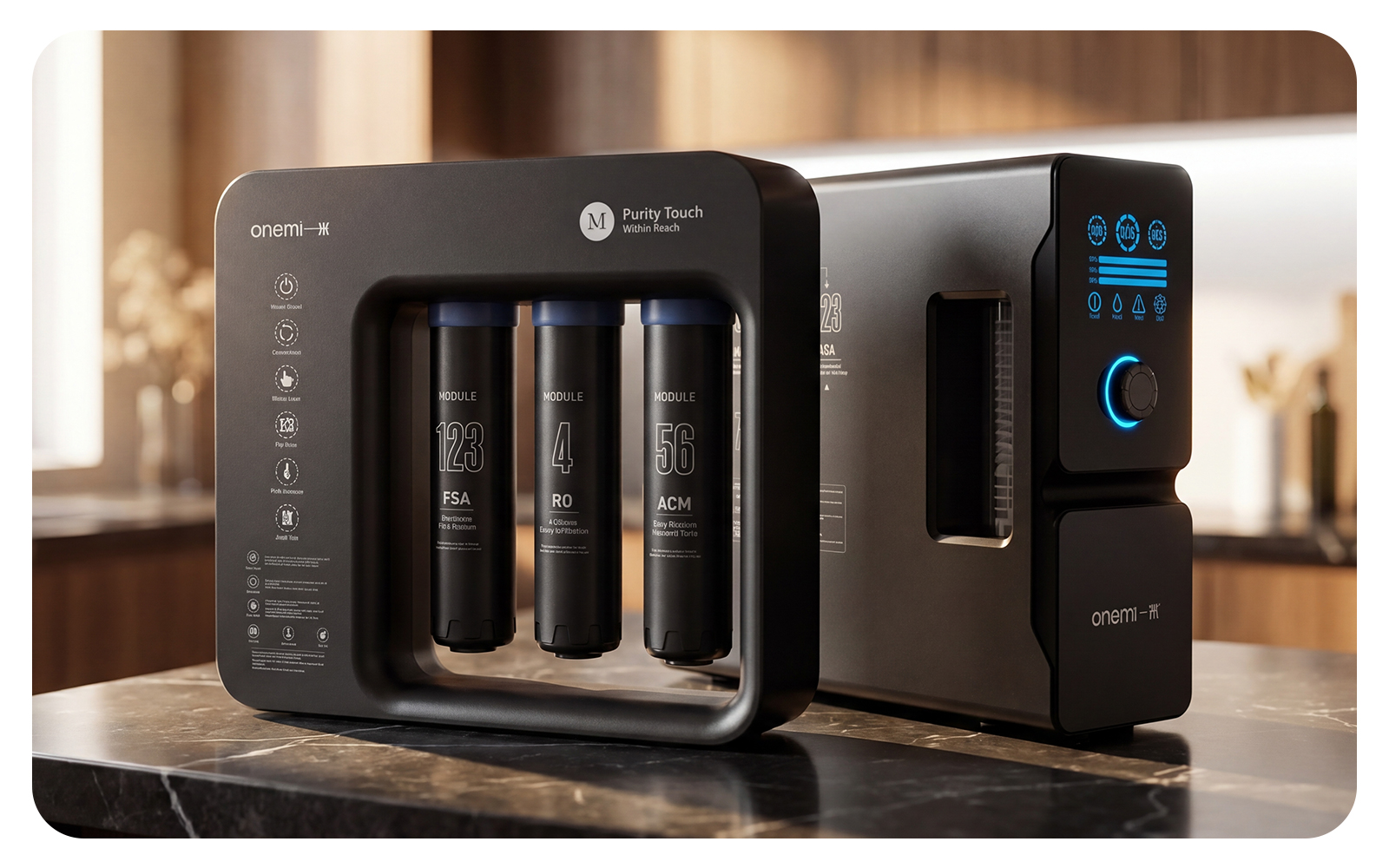
When partnering with an OEM manufacturer like ONEMI, the NSF certification process follows a strict protocol. The Yimi PureFlow filtration technology featured in ONEMI systems serves as a prime example of this advanced, certification-ready design. The process includes:
* **Product design review:** The manufacturer submits detailed product specifications for technical evaluation.
* **Material testing:** Auditors test all water-contact components for material safety.
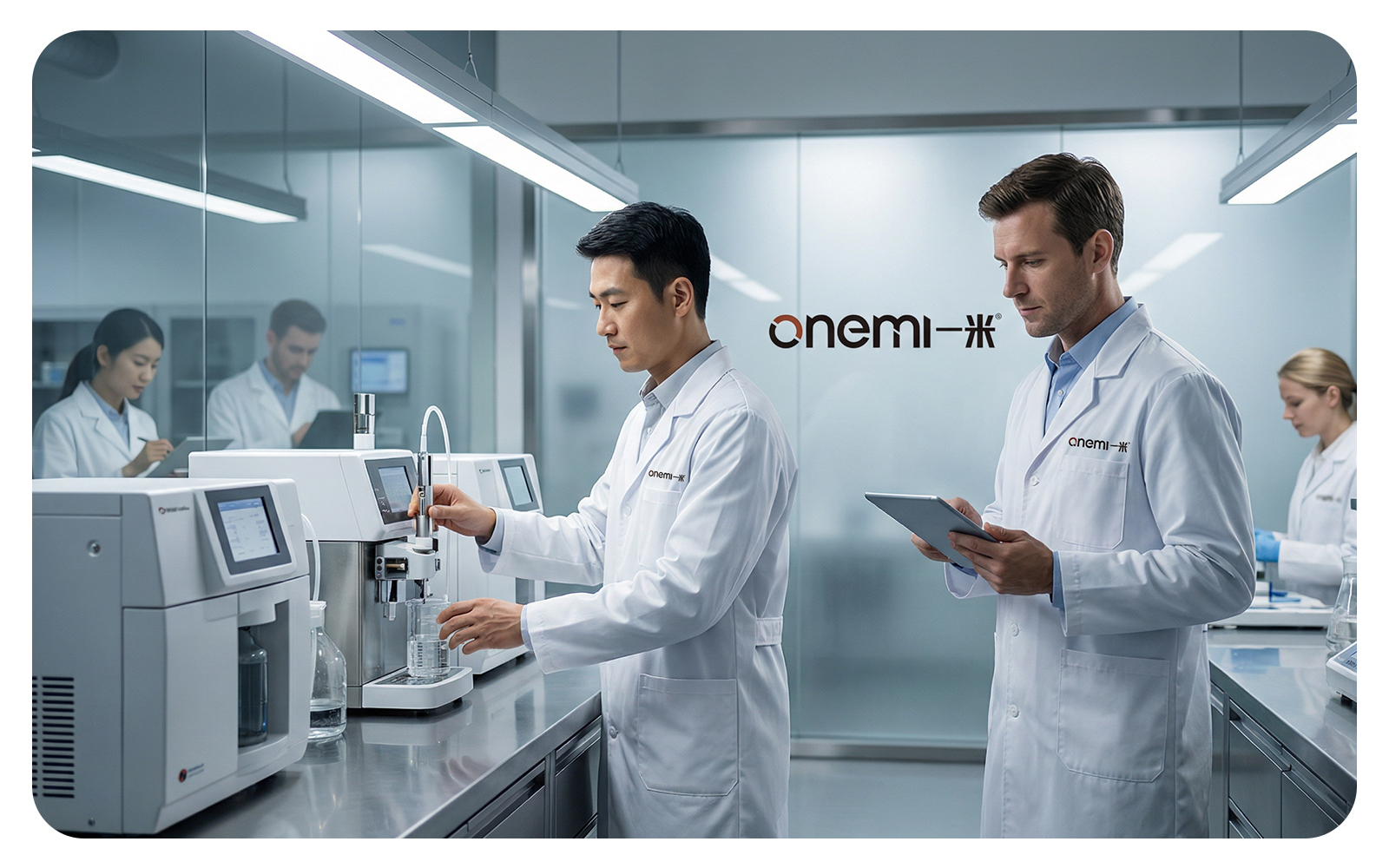
* **Performance testing:** Laboratories verify the product's contaminant reduction claims.
* **Factory inspection:** NSF auditors conduct on-site visits at the production facility.
* **Ongoing monitoring:** Annual testing and unannounced facility inspections ensure continuous compliance.
**Common Pitfalls When Verifying Certifications**
International buyers must remain vigilant. Some manufacturers label products as "tested to NSF standards" without holding a formal certification. This is not the same as an active NSF listing. Always verify certifications directly through the official NSF International database.
Additionally, verify specific contaminant claims. A product certified under NSF 42 for chlorine reduction does not automatically qualify for health effects under NSF 53.
***
*For detailed information regarding NSF certification requirements for specific product types, visit ONEMI's certified water filter products page. You can also contact our team directly to request official certification documentation.*
**ONEMI** — www.onemiro.com/en