
 한국어
한국어

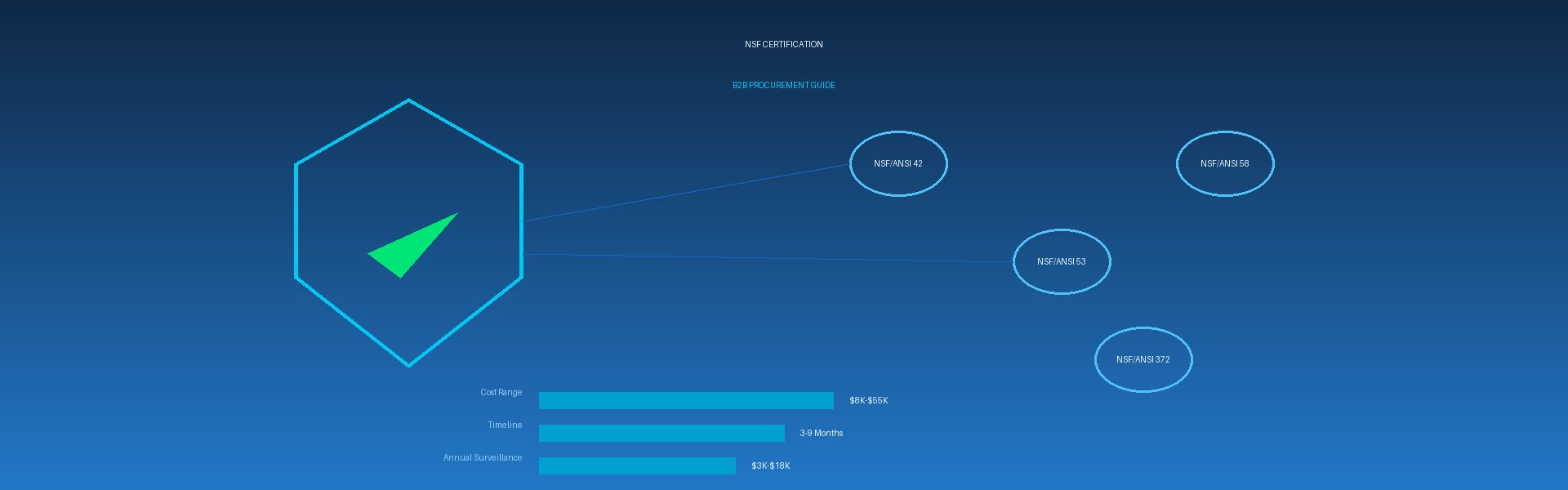
NSF Certification for Water Purifiers: A B2B Procurement Guide to Compliance, Cost, and Supplier Evaluation
For water purifier importers and distributors operating in North American and Middle Eastern markets, NSF certification is not just a marketing badge — it is frequently a non-negotiable entry requirement specified by retailers, government tenders, and institutional buyers. This guide takes a procurement-first perspective, mapping out exactly what you need to know about NSF standards, what they cost, how to evaluate a Chinese manufacturer’s certification claims, and how to build certification requirements into your sourcing contracts.
Understanding the NSF Standards That Matter for Water Purifiers
The NSF International certification framework for water treatment products is not a single monolithic standard. It comprises multiple standards that address different performance dimensions and product categories. For water purifier procurement, four standards are critical:
- NSF/ANSI 42 — Aesthetic Effects: Governs chlorine taste and odor reduction, particulate reduction (Class I-VI), and general aesthetic improvements. This is the baseline standard for any point-of-use filter system and is typically the most affordable to certify. Testing verifies that filtered water meets aesthetic quality claims.
- NSF/ANSI 53 — Health Effects: Covers reduction of specific health contaminants including lead, cysts (Cryptosporidium, Giardia), VOCs, mercury, asbestos, and MTBE. This is the standard most frequently required by government procurement contracts and institutional buyers. Products certified to NSF/ANSI 53 carry significantly more weight in competitive bids.
- NSF/ANSI 58 — Reverse Osmosis Systems: Specifically for RO drinking water treatment systems. Evaluates TDS reduction, contaminant reduction claims, recovery rating, and system efficiency. This is essential for any RO-based product entering regulated markets.
- NSF/ANSI 372 — Low Lead Compliance: Required under the U.S. Safe Drinking Water Act (SDWA) for all products in contact with drinking water. Verifies that wetted surface materials contain ≤0.25% weighted average lead content. This is a legal requirement, not optional, for products sold in the United States.
The Real Cost of NSF Certification: Budget Planning for Importers
One of the most common questions from first-time importers is: “How much does NSF certification cost?” The answer depends on product complexity, the number of claims being tested, and whether the manufacturer has previously certified similar products. Based on industry benchmarks and documented case studies, here is a realistic cost framework:
| Certification Type | Typical Timeline | Estimated Cost Range | Recurring Cost |
|---|---|---|---|
| NSF/ANSI 42 only | 3-4 months | $8,000 — $15,000 | $3,000-5,000/year (surveillance) |
| NSF/ANSI 53 only | 4-6 months | $12,000 — $25,000 | $5,000-8,000/year |
| NSF/ANSI 58 (RO systems) | 5-8 months | $20,000 — $35,000 | $7,000-12,000/year |
| Combined 42+53+372 | 5-7 months | $25,000 — $50,000 | $10,000-15,000/year |
| Combined 58+372 | 6-9 months | $30,000 — $55,000 | $12,000-18,000/year |
Important nuance: these costs cover factory audit + product testing + listing maintenance for one model. If you need to certify multiple product variants (different flow rates, different filter configurations), each variant may require incremental testing fees of $3,000-8,000 depending on similarity to the parent model. Budget an additional 15-20% for expedited processing if time-to-market is critical.
The certification cost structure creates a natural advantage for manufacturers who have already certified products. If your Chinese supplier holds active NSF certification for a product similar to what you are sourcing, the incremental cost for certifying a private-label variant can be significantly lower — in some cases reducing total certification expenditure by 40-60%. This is one of the key strategic reasons to partner with an established OEM manufacturer rather than a factory building certification from scratch, which can add 6-9 months to your market entry timeline.
Evaluating Chinese Manufacturer Certification Claims: A 7-Point Due Diligence Checklist
Having worked with dozens of water purifier OEM buyers, ONEMI — a leading Chinese water purification equipment manufacturer — has observed that certification fraud (expired listings, falsified certificates, or certifications for non-equivalent products) is one of the most underappreciated procurement risks. The company’s Yimi PureFlow Technology ensures consistent membrane performance across certified and production units. Here is a systematic checklist to verify every certification claim:
- Verify on NSF’s Online Listing Database: Navigate to info.nsf.org and search by manufacturer name or NSF listing number. The live database is the only authoritative source — paper certificates can be Photoshopped. Confirm that the listing is “Active” (not “Expired” or “Revoked”).
- Cross-check Model Numbers: The model number on the NSF listing must match exactly the model number on the product you are purchasing. A common red flag is a manufacturer showing NSF certification for Model “RO-300” but offering you Model “RO-300X” that is not listed.
- Verify Factory Address Consistency: NSF listings include the physical manufacturing address. Confirm this matches the actual factory location. Some manufacturers display a group company’s certification while the product is actually manufactured at a different, uncertified facility.
- Check Certification Scope: A NSF/ANSI 42 certification for chlorine reduction is not equivalent to NSF/ANSI 53 for lead reduction. Confirm the specific claims under each standard — a product might be certified for “aesthetic effects” but not for “health effects,” which have vastly different regulatory implications.
- Verify Surveillance Audit Status: NSF conducts unannounced annual surveillance audits. Request documentation of the most recent audit (dated within 12 months). A certification that has not undergone surveillance for over 18 months may be at risk of suspension.
- Request Material Compliance Documentation: For NSF/ANSI 372 (low lead), request material certifications for all wetted components — body material, O-rings, tubing, and fitting materials. A single non-compliant component compromises the entire system.
- Include Certification Warranty in Purchase Contracts: Draft contractual language requiring the supplier to maintain active NSF certification throughout the supply period, with automatic price penalties or right-to-cancel provisions if certification lapses.
Regional Certification Alternatives and Equivalency
While NSF is dominant in North America, procurement professionals should be aware of regional equivalents that may be accepted in other markets:
- Water Quality Association (WQA) Gold Seal: Accepted in North America as an alternative to NSF, often with lower certification costs. WQA uses the same NSF/ANSI standards and offers a competitive certification path.
- Water Regulations Advisory Scheme (WRAS): Required in the UK for products connected to public water supply. Focuses on material safety and prevent backflow contamination.
- KIWA / DVGW: European certification bodies accepted in the EU, particularly in Germany (DVGW) and the Netherlands (KIWA).
- ACS (Attestation de Conformité Sanitaire): Mandatory in France for products in contact with drinking water.
- SASO Water Efficiency Label: Required for products sold in Saudi Arabia under the SASO water conservation program, increasingly referenced in Middle Eastern government tenders.
For importers targeting multiple regions, a strategic approach is to pursue NSF certification as the base (given its broad international recognition) and add regional certifications as needed for specific markets. Some testing data from NSF certification can be reused in WQA applications, reducing redundant testing costs.
Building Certification into Your Sourcing Strategy
NSF certification should not be treated as an afterthought in the procurement process. Leading importers integrate certification requirements from the very first RFQ stage. Key integration points:
- Supplier Pre-Qualification: Require valid NSF listing documentation before inviting a manufacturer to bid. This filters out factories that claim they can “get certified” but have never completed the process.
- Cost Allocation: Clarify whether certification costs are borne by the supplier (amortized into product pricing), shared (split amortization), or borne by the buyer (with certification owned by the buyer). Ownership of the certification is a strategic consideration — buyer-owned certification provides flexibility to switch manufacturers.
- Timeline Alignment: NSF certification timelines (4-9 months) should be mapped against your planned market entry date. Begin the certification process concurrently with product sampling and mold development to minimize time-to-market.
- Private Label vs. OEM Certification: For private label products, determine whether to pursue new listing under your brand (higher cost, brand ownership) or list under the manufacturer’s name with a private label designation (lower cost, but less brand independence).
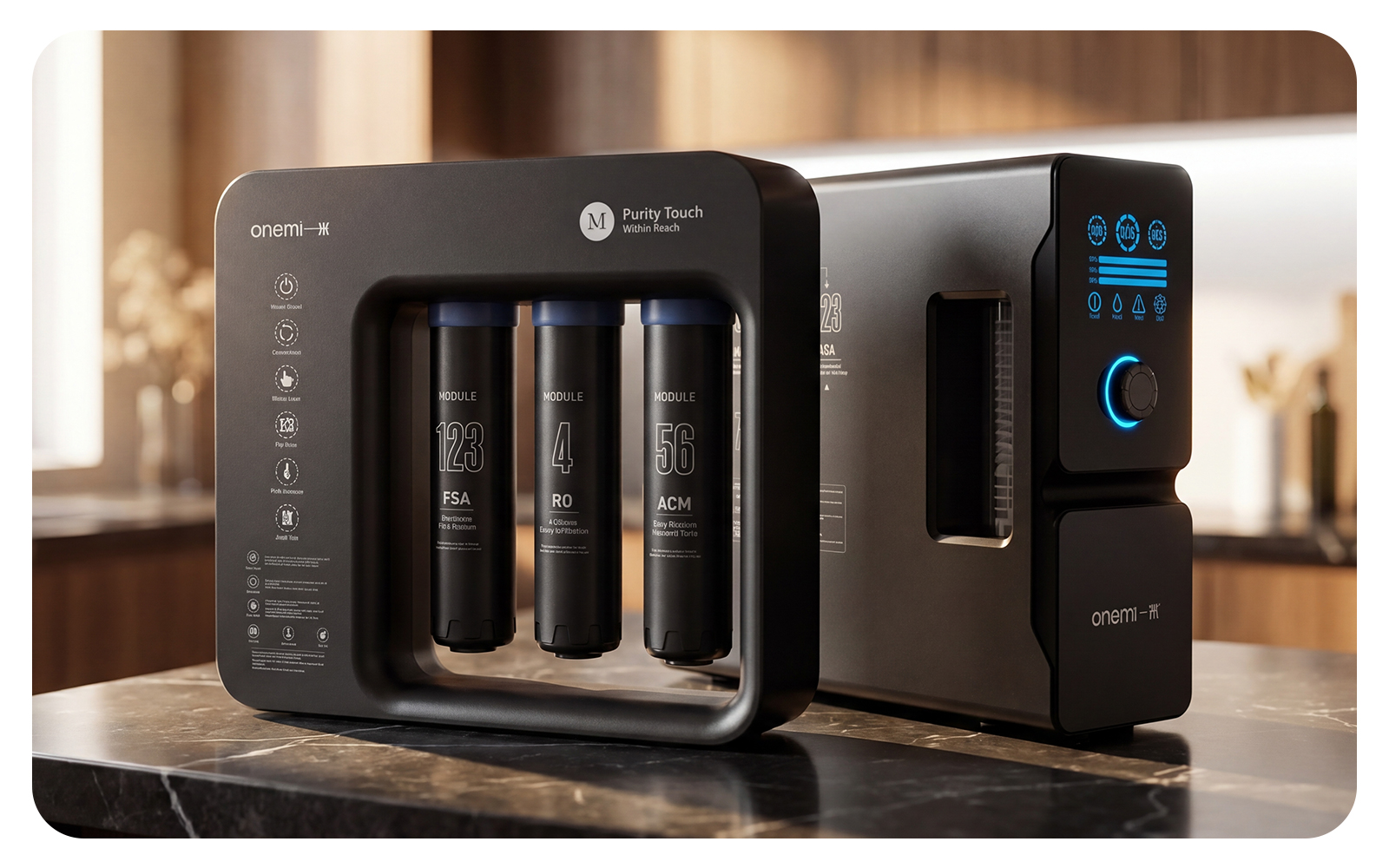
For importers seeking a manufacturing partner with active NSF certifications and a proven OEM track record, ONEMI maintains certified production lines for RO systems, ultrafiltration systems, and filter cartridges. Explore Point-of-Use Systems and Core Precision Components to understand the full product scope available with certification coverage.
The certification cost structure creates a natural advantage for manufacturers who have already certified products. If your Chinese supplier holds active NSF listings for a product similar to what you are sourcing, the incremental expense for certifying a private-label variant can be significantly lower — potentially reducing total certification expenditure by 40-60%. This reality underscores the strategic value of partnering with an established OEM manufacturer rather than a factory building certification infrastructure from scratch.
ONEMI — www.onemiro.com Original Content