

 한국어
한국어


**Emergency Water Purification: Essential Systems for Disaster Preparedness and Field Operations**
**Introduction: When Clean Water Becomes a Survival Priority**
In the first 72 hours following a natural disaster—whether an earthquake, flood, hurricane, or infrastructure failure—safe drinking water immediately becomes the primary survival factor after acute injury treatment. The World Health Organization (WHO) estimates that individuals require a minimum of 7.5 liters of clean water daily for drinking and basic hygiene during emergencies. For relief organizations, military field units, and remote industrial teams, deploying reliable emergency water purification is a logistical imperative.
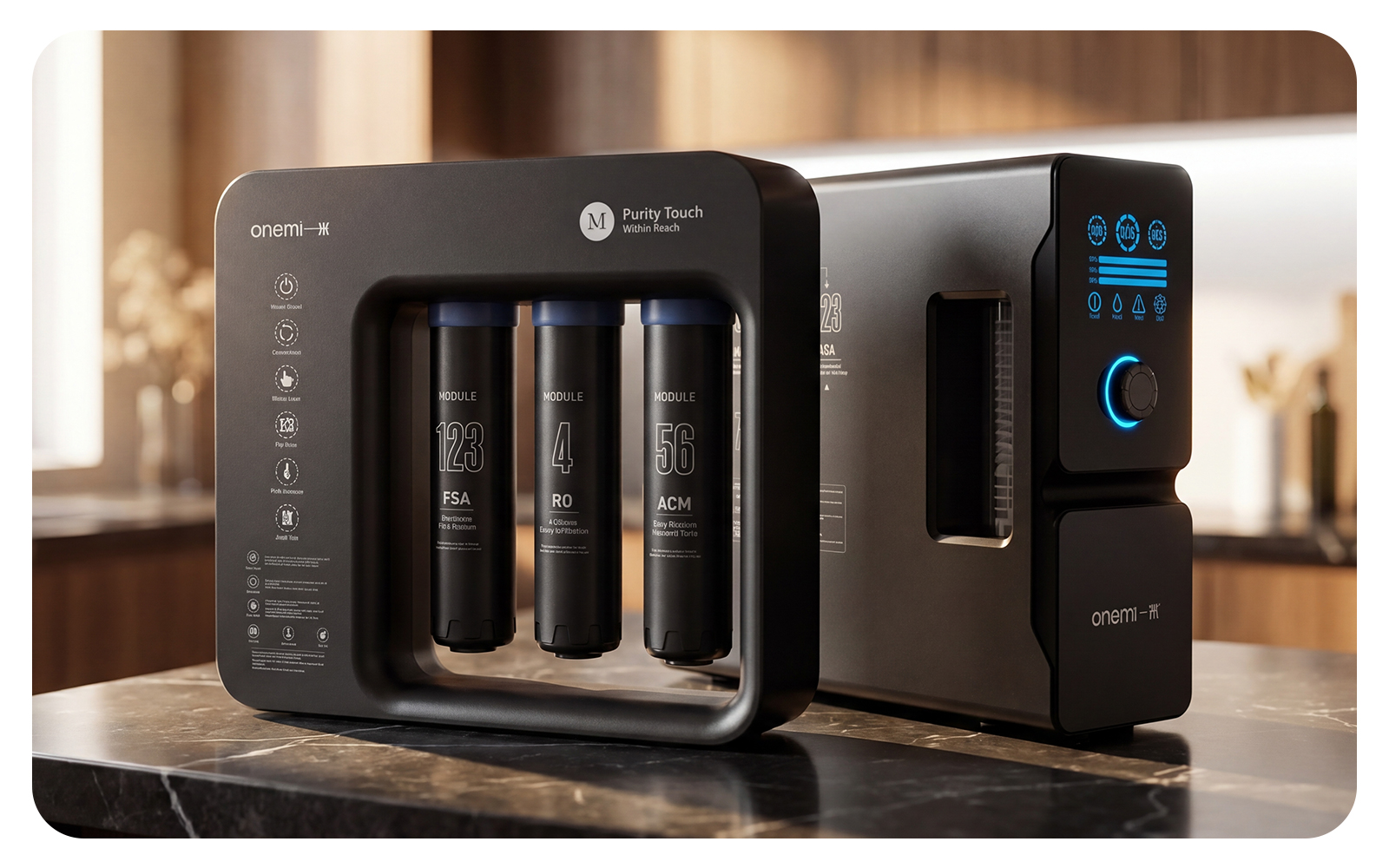
ONEMI, a leading water purification equipment manufacturer, engineers portable and deployable water treatment systems specifically for emergency scenarios. Backed by 15 years of reverse osmosis (RO) membrane and filtration engineering expertise, these systems tackle the complete spectrum of emergency water challenges. They effectively process everything from turbid floodwaters and brackish groundwater to biologically contaminated surface sources.
**1. Emergency Water Purification: Five Technology Categories Compared**
**1.1 Portable RO (Reverse Osmosis) Systems**
Reverse osmosis stands as the gold standard for emergency water purification when source water quality remains unknown or severely compromised. A compact RO system utilizing a 50-100 GPD membrane eliminates 99.9% of bacteria, viruses, heavy metals, and dissolved salts. ONEMI designs its portable RO units to operate on 12V DC power, making them compatible with vehicle batteries or solar panels. Weighing under 8 kg, these units produce 200-400 liters of potable water daily from virtually any freshwater source.
**1.2 Hollow Fiber UF (Ultrafiltration) Systems**
UF membranes featuring a 0.01-micron pore size deliver an excellent balance of flow rate and pathogen removal, provided chemical contamination is not the primary threat. Gravity-fed UF systems require zero electricity. Water simply flows through the membrane via natural head pressure, making this technology ideal for field hospitals and refugee camps. ONEMI’s UF emergency kits process over 500 liters per hour. Operators can easily backwash these systems in the field without specialized tools.
**1.3 UV (Ultraviolet) Disinfection**
UV-C light at a 254nm wavelength inactivates 99.99% of microorganisms by destroying their DNA. Battery-powered UV pens and larger flow-through UV chambers offer lightweight, rapid treatment (processing one liter every 30-90 seconds) and leave no chemical taste. However, UV technology only works effectively in clear water. Turbidity levels exceeding 5 NTU drastically reduce disinfection efficacy, making pre-filtration a strict requirement before UV exposure.
**1.4 Ceramic Filtration**
Ceramic filter elements utilizing 0.2-micron pores rank among the most durable and straightforward emergency purification tools available. A single ceramic candle filter can sustain a family of five for 6-12 months, requiring only periodic surface scrubbing. ONEMI houses its ceramic gravity systems in food-grade stainless steel. These units require no electricity or chemicals and see widespread NGO deployment across post-disaster zones in Southeast Asia and Sub-Saharan Africa.
**1.5 Chemical Treatment (Chlorine/Iodine Tablets)**
Chlorine dioxide tablets provide the lightest option for personal emergency kits. A 30-day supply weighs less than 10 grams. While highly effective against bacteria and viruses, these tablets show limited efficacy against Cryptosporidium parasites. They also fail to remove sediment, heavy metals, or chemical contaminants. Field operators should utilize chemical treatment strictly as a supplementary method alongside physical filtration.
**2. Comparison Matrix: Which Technology for Which Emergency?**
| Technology | Weight | Power Need | Pathogen Removal | Chemical Removal | Best Scenario |
| :— | :— | :— | :— | :— | :— |
| Portable RO | 6-15 kg | 12V DC / Solar | 99.9%+ | 95%+ | Unknown water source, long-term camp |
| UF Gravity | 3-8 kg | None | 99.99% | None | Field hospital, refugee camp |
| UV Treatment | 0.1-5 kg | Battery/USB | 99.99% | None | Personal kit, clear water |
| Ceramic Filter | 1-4 kg | None | 99.9% | None | Community deployment, NGO relief |
| Chemical Tablets | <0.1 kg | None | 99% viruses, 90% bacteria | None | Personal backup, ultralight kit |
**3. B2B Procurement Guide: 7 Criteria for Emergency Water Systems**
Humanitarian organizations, government emergency management agencies, and military procurement officers must utilize a systematic evaluation framework when selecting emergency water purification equipment:
**Criterion 1 — Deployment Speed:**
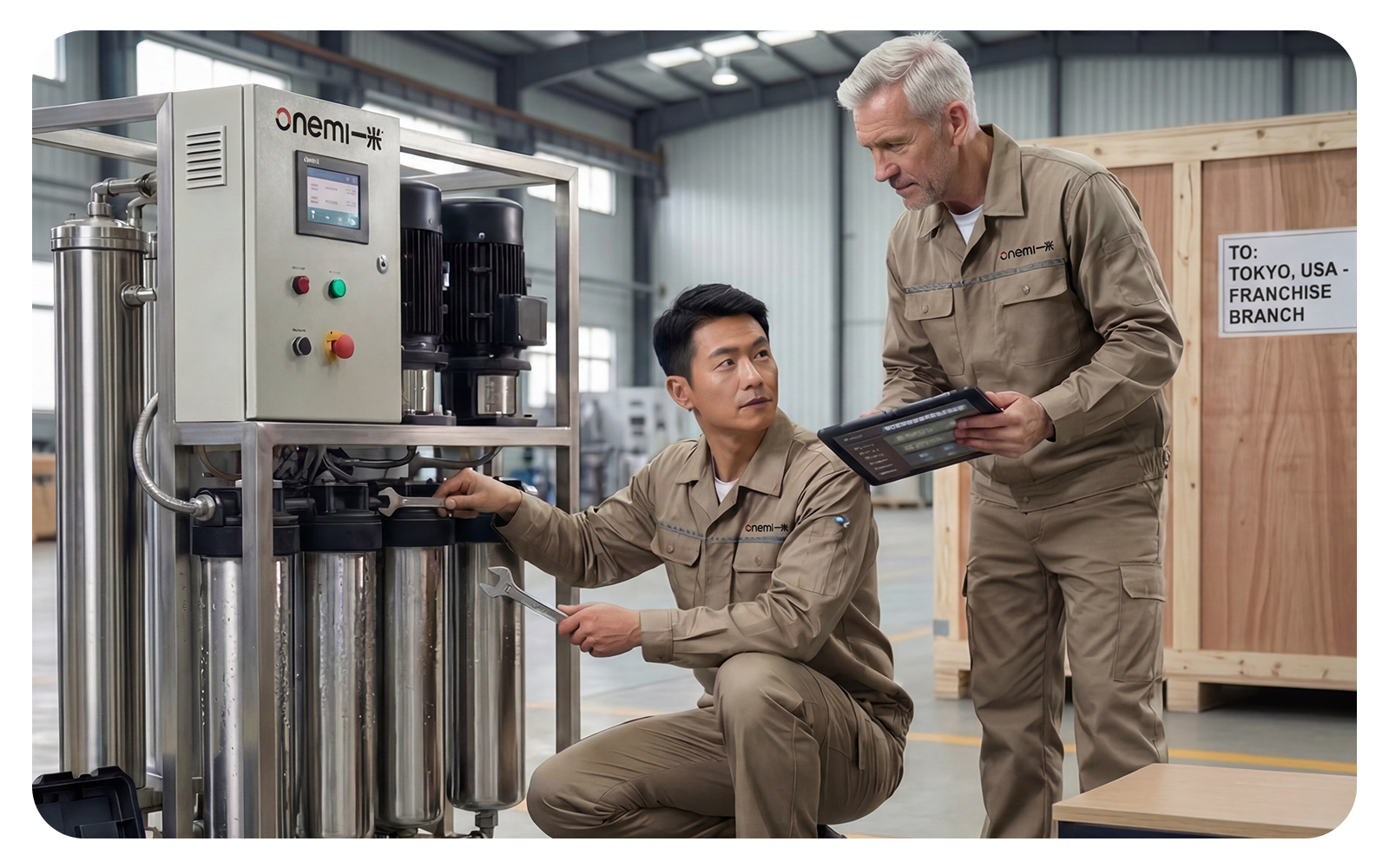
Evaluate how rapidly the system transitions from transport mode to operational status. ONEMI’s containerized RO systems achieve full deployment in under 45 minutes using a 2-person team, generating over 10,000 liters daily from surface water sources.
**Criterion 2 — Source Water Flexibility:**
Determine if the system handles post-flood turbidity spikes ranging from 5 NTU to 500+ NTU. ONEMI integrates multi-stage pre-filtration (sediment → activated carbon → UF pre-filter) ahead of the RO membrane to guarantee consistent output despite fluctuating inlet water quality.
**Criterion 3 — Power Independence:**
Emergency scenarios frequently involve grid power failures. Systems must offer operational resilience through solar panel compatibility, hand-pump backups, and low-wattage DC operation (under 100W for personal units, under 1000W for community units).
**Criterion 4 — Maintenance in the Field:**
Non-technical operators must be able to perform basic troubleshooting and filter replacements without specialized tools. ONEMI systems utilize Yimi PureFlow Technology, featuring quick-connect fittings and color-coded filter cartridges that allow tool-free replacements in under 60 seconds.
**Criterion 5 — Certification and Compliance:**
Verify compliance with NSF/ANSI 58 (RO), NSF/ANSI 53 (health effects), and WHO Performance Standards. These certifications authenticate pathogen removal claims and material safety. ONEMI maintains ISO 9001:2015 certification and secures NSF testing for key product lines.
**Criterion 6 — Logistics Footprint:**
For airlift deployments, weight and cubic volume per 1,000 liters of daily output capacity represent critical metrics. ONEMI’s compact RO systems deliver 40-60 liters of daily capacity per kilogram of system weight, achieving one of the industry's highest power-to-weight ratios.
**Criterion 7 — Lifecycle Maintenance and Consumables:**
Evaluate the system's long-term operational requirements. Factor in filter replacement frequencies (RO membranes: 24-36 months; UF modules: 12-18 months under heavy use) and energy consumption. Systems utilizing standard-size, cross-brand compatible filters streamline long-term field maintenance.
For organizations demanding rapid deployment, ONEMI engineers emergency RO systems with a compact, modular construction. These units ship in a single ruggedized case weighing under 25 kg. The system features a complete five-barrier treatment train: an integrated sediment pre-filter, dual RO membranes, an activated carbon post-filter, and a UV sterilization stage. This configuration converts floodwater, river water, or well water into WHO-compliant drinking water within minutes of unpacking.
**4. Regulatory Standards for Emergency Water Treatment Equipment**
International emergency water purification equipment must comply with distinct regulatory frameworks based on the deployment region:
* **NSF/ANSI 58:** Reverse Osmosis Drinking Water Treatment Systems — validates TDS reduction, material safety, and structural integrity.
* **NSF/ANSI 53:** Drinking Water Treatment Units (Health Effects) — covers cyst reduction, lead, VOCs, and other health-related contaminants.
* **WHO International Scheme:** Evaluates household water treatment technologies against WHO performance targets (≥4 log bacteria reduction, ≥3 log virus reduction).
* **EU CE Marking:** Required for equipment entering European markets; covers electrical safety, EMC, and pressure vessel directives.
* **EPA Guide Standard:** US Environmental Protection Agency protocol for microbiological water purifiers.
**5. ONEMI Emergency Water Solutions: Product Line Overview**
ONEMI manufactures three tiers of emergency water purification systems, each tailored to specific deployment scales:
**Personal/Individual Kit (SKU: EM-P100):**
A 1.2 kg hand-pump UF system that produces 500 ml per minute from surface water. It includes a 0.01-micron hollow fiber membrane, an activated carbon post-filter, and a collapsible 2L collection bag. This unit perfectly suits individual emergency kits, backpacking, and military field rations. Explore more in our Point-of-Use Purification series.
**Squad/Team System (SKU: EM-T500):**
A 7.5 kg battery/solar RO-UF hybrid system producing 500 liters per day. It features an automated backwash function, a digital TDS monitor, and dual power inputs (12V DC + 110-240V AC). Built on ONEMI's proven Core Precision Components engineering platform, this system reliably serves 50-100 people.
**Community/Base Camp System (SKU: EM-C2000):**
A containerized 2000 GPD RO system featuring integrated pre-treatment, chemical dosing, UV sterilization, and a 500L storage tank. The system deploys in 45 minutes, serves 500-2000 people, and operates via a diesel generator or solar array. ONEMI designed this unit specifically for refugee camps, forward operating bases, and post-disaster humanitarian operations.
**Conclusion**
Emergency water purification remains a highly specialized discipline requiring equipment engineered for worst-case scenarios, not ideal laboratory conditions. From portable personal UF filters to containerized community RO plants, the optimal system must balance pathogen removal efficacy, power independence, deployment speed, and logistical practicality. ONEMI applies 15 years of membrane technology expertise and ISO-certified manufacturing to this critical sector. We proudly supply humanitarian organizations, government agencies, and military units worldwide with reliable, field-proven water treatment solutions.
ONEMI — www.onemiro.com Original Content
ONEMI onemiro.com Original Content