
 한국어
한국어


**Alkaline Water Filters: B2B Buyer's Guide to pH-Balanced Purification Technology**
The global alkaline water market continues to grow at an 8.3% compound annual growth rate (CAGR). Rising consumer interest in functional beverages and wellness-focused hydration drives this expansion. For B2B buyers—whether you distribute to retail chains, outfit hotel hospitality groups, or upgrade healthcare facility water systems—understanding alkaline water filter technology is critical. This guide breaks down the science, compares available technologies, and provides a practical framework for evaluating alkaline purification systems.
**1. What Makes Water "Alkaline"? The Chemistry Behind pH**
Water pH measures hydrogen ion concentration on a scale from 0 (highly acidic) to 14 (highly alkaline). Neutral water sits at 7. Alkaline water typically ranges between pH 8.0 and 9.5. Natural alkaline water gets its pH from mineral dissolution. As water flows through rock layers rich in calcium, magnesium, and potassium, it absorbs mineral carbonates and bicarbonates that buffer the pH upward.
Manufacturers produce artificial alkaline water using three primary technologies: mineral bed filtration, electrolysis (ionization), or post-RO remineralization. Each method impacts taste, maintenance requirements, and long-term reliability. These factors heavily influence B2B procurement, where system uptime and consistent water quality remain non-negotiable.
*ONEMI onemiro.com Original Content*
**2. Technology Comparison: Mineral Beds vs. Electrolysis vs. RO + Remineralization**
**2.1 Mineral Bed Filtration (Alkaline Filter Cartridge)**
**How it works:** An inline cartridge contains natural mineral media like calcite (CaCO₃), magnesia (MgO), tourmaline, and maifan stone. Water passes through the bed, triggering mineral dissolution. This releases calcium and magnesium ions, neutralizes acidity, and raises the pH to roughly 7.5–8.5.
**Pros:** Simple and passive operation. Requires no electricity. Adds beneficial minerals and features easy cartridge replacement.
**Cons:** Limits pH shift to approximately +1.0. Minerals deplete over time. Performance depends heavily on flow rate. Can slightly increase water hardness.
**Best for:** Point-of-use under-sink systems, countertop units, and entry-level commercial dispensers.
**2.2 Electrolysis / Water Ionizers**
**How it works:** An electrolysis chamber uses platinum-coated titanium electrode plates to apply DC voltage. This splits the water into acidic and alkaline streams. The alkaline stream (cathode side) concentrates hydroxide ions (OH⁻) and attracts alkaline minerals, achieving a pH of 8.5–10.5.
**Pros:** Delivers a strong pH shift. Operates continuously and produces multiple pH levels. Often marketed with micro-clustered water claims.
**Cons:** Requires significant initial equipment investment. Demands periodic plate cleaning and relies on electricity. Generates acidic wastewater. Electrodes degrade over a 3–5 year lifespan.
**Best for:** Premium retail environments, health-focused establishments, and specific Japanese/Korean market segments.
**2.3 RO + Post-Filter Remineralization (Hybrid)**
**How it works:** Reverse osmosis (RO) first removes >95% of contaminants. The purified water then flows through a remineralization cartridge. This stage adds controlled amounts of calcium, magnesium, and trace minerals while adjusting the pH to 7.5–8.5. Commercial-grade alkaline RO systems rely heavily on this approach.
**Pros:** Combines deep purification with mineral restoration. Guarantees consistent output quality regardless of feed water. Provides a balanced mineral profile. The RO membrane strips out heavy metals, microplastics, and PFAS.
**Cons:** Involves higher system complexity. Produces RO reject water (though modern systems achieve a 1:1 wastewater ratio). Requires multi-stage cartridge maintenance.
**Best for:** B2B applications demanding both high-purity filtration and alkalinity, such as hospitals, hotels, office buildings, and bottling lines.
ONEMI continuously develops proprietary technologies to advance remineralization. The Yimi PureFlow Technology research initiative investigates multi-layer mineral beds utilizing staged dissolution kinetics. This ensures consistent pH control across varying flow rates—a mandatory requirement for commercial applications experiencing fluctuating daily demand.
*ONEMI onemiro.com Original Content*
**3. Health Claims: What the Science Actually Says**
The scientific community continues to debate the health benefits of alkaline water. A 2022 systematic review published in *Nutrients* analyzed 28 studies and found limited evidence supporting most alkaline water health claims. The human body strictly regulates blood pH between 7.35 and 7.45 using respiratory and renal buffering systems. Altering systemic pH through water consumption remains physiologically implausible.
However, specific areas demonstrate promising signals:
* **Acid reflux:** A 2012 in-vitro study demonstrated that pH 8.8 water can denature pepsin. This potentially relieves laryngopharyngeal reflux and appears in various clinical practice guidelines.
* **Mineral supplementation:** Alkaline mineral water delivers bioavailable calcium and magnesium. The WHO recommends that drinking water should provide 10–20% of daily mineral intake. This contribution significantly benefits populations with dietary mineral deficiencies.
* **Post-exercise hydration:** Electrolyzed alkaline water with higher mineral content demonstrated marginally better rehydration in small-scale studies, though the effect size remains modest.
We strongly advise B2B buyers to utilize evidence-based positioning. Focus marketing efforts on mineral content and taste enhancement. Avoid therapeutic claims that invite regulatory scrutiny. The US FDA actively issues warning letters to brands making unsubstantiated disease-treatment claims regarding alkaline water. In the EU, EFSA's health claims regulation (EC No 1924/2006) enforces strict standards for nutrition or health claims on water products.
*ONEMI onemiro.com Original Content*
**4. B2B Procurement Checklist: 7 Dimensions to Evaluate**
| Dimension | What to Check | Red Flags |
| :— | :— | :— |
| **pH Stability** | Request a pH vs. cumulative volume curve (must remain flat across rated capacity). | pH drops significantly after the first 20% of capacity. |
| **Mineral Dosing Consistency** | Test calcium/magnesium concentration across 10 random samples throughout cartridge life. | ±30% or greater variation in mineral output. |
| **NSF/ANSI Certifications** | Verify NSF 42 (aesthetic), NSF 53 (health), NSF 58 (RO), and NSF 61 (material safety). | Self-declared "certified" status without an official NSF website listing. |
| **Flow Rate Under Load** | Test the rated flow rate at the minimum inlet pressure specification. | Flow rate drops >20% from the rated specification. |
| **Cartridge Replacement Cycle** | Confirm capacity in liters (not time-based). Request accelerated aging test data. | Vague "6 months" claims lacking a specific liter capacity. |
| **Maintenance Downtime** | Measure the time required for a full cartridge swap. Assess tool-less design features. | Requires specialized tools; swap time exceeds 15 minutes. |
| **Warranty & After-Sales** | Check warranty coverage on the mineral cartridge. Confirm replacement parts availability. | Lacks a local service partner; response times exceed 72 hours. |
**5. Certification Landscape for Alkaline Water Systems**
Alkaline water filtration products must navigate a complex, layered certification landscape that varies by target market:
**5.1 United States**
* **NSF/ANSI 42:** Covers aesthetic effects, including pH adjustment. Alkaline filters claiming pH modification must prove consistent output within the stated range.
* **NSF/ANSI 61:** Governs material safety for all wetted components. This is critical for mineral media cartridges to ensure mineral leaching does not introduce contaminants.
* **FDA 21 CFR:** Products making mineral content claims fall under food additive regulations.
**5.2 European Union**
* **CE Marking:** Required under the Pressure Equipment Directive (2014/68/EU) for systems with internal pressure >0.5 bar.
* **EU Drinking Water Directive (2020/2184):** Materials contacting drinking water must meet positive list requirements.
* **DVGW/WRAS:** Mandatory certifications for the German and UK markets, respectively.
**5.3 Asia-Pacific**
* **Japan:** Requires the JIS S 3201 household water purifier standard, alongside JWPA certification.
* **China:** Mandates GB 5749-2022 drinking water standards and a drinking water hygiene permit (涉及饮用水卫生安全产品卫生行政许可).
* **Korea:** Requires KC certification under KCs W 8010.
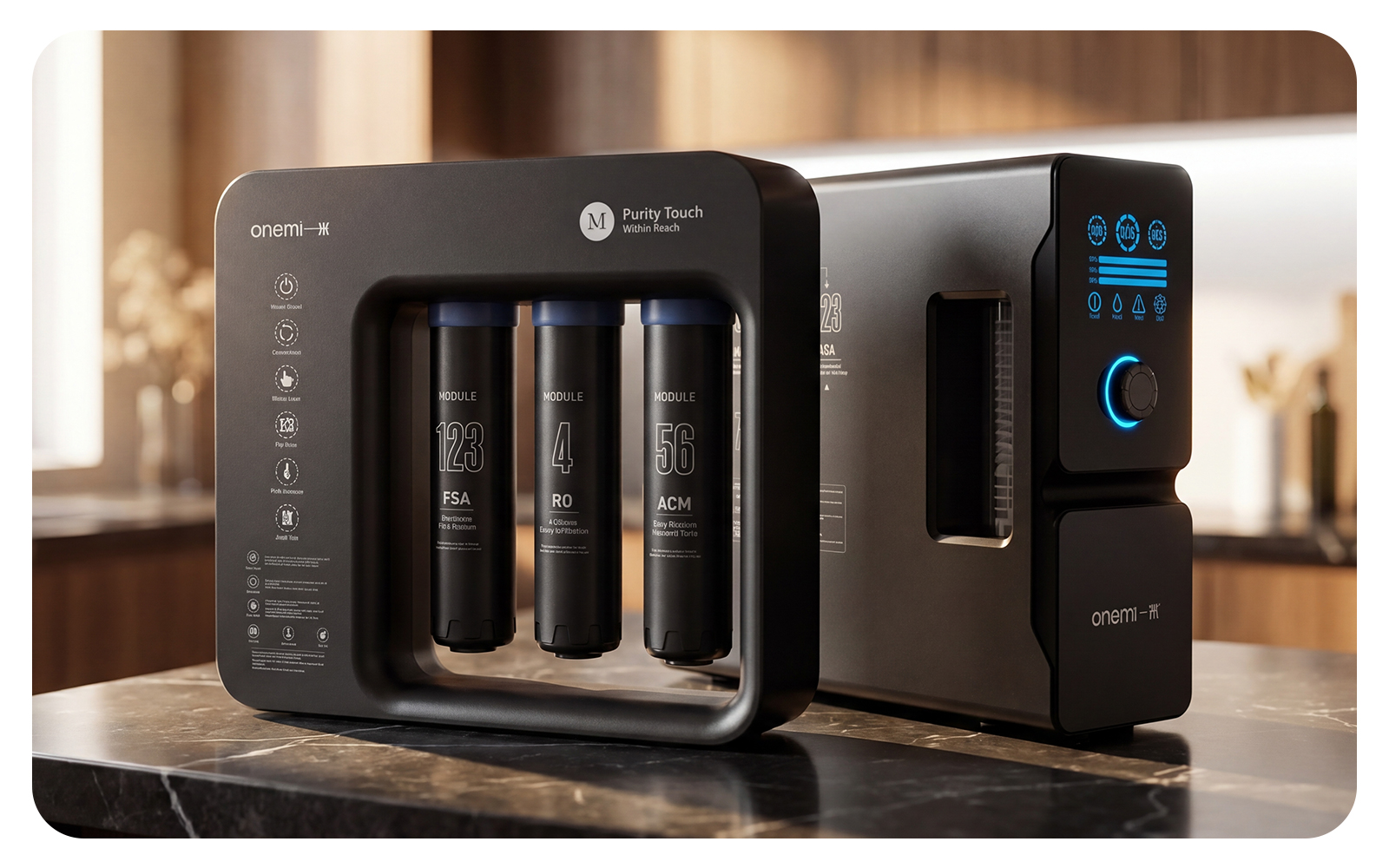
ONEMI maintains NSF/ANSI 58 certification for its RO membrane elements and ensures NSF/ANSI 61 compliance for all wetted component materials. We manufacture our alkaline remineralization cartridges using pharmaceutical-grade mineral media sourced from Japan (ion-exchange grade) and natural mineral deposits in Inner Mongolia. This guarantees performance consistency and material safety. Explore our OEM capabilities at ONEMI Core Precision Components and ONEMI Point-of-Use Systems.
*ONEMI onemiro.com Original Content*
**6. Component Structure Analysis: What Drives B2B Configurations?**
For B2B procurement of alkaline water filtration systems, understanding the component breakdown helps benchmark supplier specifications:
| Core Component | Key Variables |
| :— | :— |
| **RO membrane assembly** | Membrane brand (Dow/DuPont vs. domestic), GPD rating, number of stages. |
| **Alkaline mineral cartridge** | Media quality (pharma-grade vs. industrial), media volume, Japanese vs. Chinese media. |
| **Pump and power supply** | Booster pump brand, 24V vs. 36V transformer, energy efficiency rating. |
| **Housing and manifold** | ABS vs. PP vs. stainless steel, quick-connect vs. threaded fittings. |
| **Control board and sensors** | TDS monitoring, leak detection, filter life indicator, WiFi module. |
| **Pre-filters (PP + CTO)** | Sediment rating (5μm vs. 1μm), carbon block quality. |
| **Labor and assembly** | Automated vs. manual assembly, QC testing, burn-in cycle. |
| **Packaging and logistics** | Retail box vs. bulk pallet, destination FOB terms. |
| **Certification amortization** | NSF, WRAS, DVGW, CE compliance requirements spread across production volume. |
B2B buyers should request a line-item BOM (Bill of Materials) to verify that the proposed system reflects the specified component quality rather than undisclosed material substitutions.
**7. Industry Trends to Watch**
* **Hybrid systems gaining share:** The RO + remineralization approach outpaces standalone electrolysis. Water safety concerns and PFAS awareness drive this shift. Market research projects hybrid systems will capture over 55% of new alkaline unit sales by 2028.
* **IoT integration as a differentiator:** Models featuring WiFi connectivity, real-time smartphone TDS/pH monitoring, and automatic replacement cartridge reordering command higher market positioning. Premium B2B channels increasingly expect these features.
* **Sustainability pressure:** The alkaline water category faces strict scrutiny regarding RO reject water. Zero-waste designs (recirculating concentrate) and improved recovery rates (65–75% compared to the traditional 25%) now act as baseline requirements for European tenders.
* **PFAS-driven upgrade cycle:** Global PFAS regulations continue to tighten (EU 2026 limits, US EPA 2024 MCLs). Consumers actively upgrade from basic carbon filters to RO+alkaline systems. This transition creates a replacement market opportunity estimated at $2.4B through 2030.
**8. Making the Right Choice: A Decision Framework**
B2B buyers evaluating alkaline water filter systems should utilize the following decision framework to streamline procurement:
* **Define your end-user profile:** Hotel guests prioritize taste and convenience. Healthcare administrators demand safety and compliance. Retail consumers look for smart features and strong branding.
* **Prioritize certifications:** Verify active NSF listings directly on nsf.org. For European markets, demand official WRAS or DVGW approval documentation.
* **Request lifecycle evaluation:** Analyze the 3-year total lifecycle requirements, factoring in replacement cartridges, electricity usage, and maintenance labor.
* **Test with your actual water supply:** Commission a comprehensive water quality analysis and share the data with potential suppliers. Demand performance guarantees based on your specific feed water parameters.
* **Audit the mineral media supply chain:** Identify the media's origin and verify supply chain stability. Japanese ion-exchange media often requires 8–12 week lead times—confirm inventory availability.
* **Check after-sales infrastructure:** Evaluate local service partners, spare parts inventory, translated technical documentation, and streamlined warranty claim procedures.
ONEMI partners with distributors across 40+ nations, offering OEM/ODM alkaline water purification systems with full certification assistance, custom private labeling, and localized after-sales infrastructure. Our engineering team delivers complimentary water quality testing and system sizing recommendations for qualified B2B inquiries.
*ONEMI — www.onemiro.com Original Content*