



 한국어
한국어

If you have been following the news lately, you have likely heard about “forever chemicals” or PFAS. These man-made substances have quietly slipped into public water supplies across the country, leaving many homeowners deeply concerned about the safety of their kitchen taps. Because these chemicals do not break down naturally in the environment or in our bodies, addressing tap water contamination has become a top priority for health-conscious families.
The good news is that you do not have to rely solely on your municipal water treatment plant to secure clean drinking water. With the right home water filtration technology, you can successfully remove these stubborn contaminants right at your kitchen sink. In this guide, we will break down what PFAS are, how to test your water, and which filtration systems actually work to keep your family safe.
Understanding the Threat: What are PFAS?
PFAS (per- and polyfluoroalkyl substances) are a group of synthetic chemicals used since the 1940s to make products resist heat, oil, stains, and water. You can find them in everything from non-stick cookware and water-repellent clothing to firefighting foams.
Unfortunately, the very characteristics that make them so useful—their durability—also make them incredibly dangerous. When these chemicals leach into groundwater, municipal water systems struggle to filter them out completely. Regular exposure to PFAS, even in microscopic amounts, has been linked by scientists to various health issues, including cholesterol changes, thyroid disruption, immune system suppression, and an increased risk of certain cancers.
Step 1: Identify Your Risk with a Home Water Test
Before rushing out to buy the first water filter you see online, it is wise to understand exactly what is in your water. You cannot see, smell, or taste PFAS, which makes them particularly stealthy.
To get an accurate picture of your water quality, you should perform a home water test. While basic DIY test strips are great for pH or hardness, testing for PFAS requires a certified laboratory kit. You simply collect a water sample from your tap and mail it to an accredited laboratory. The results will give you a detailed breakdown of any PFAS compounds present, helping you choose the exact filtration setup you need.
The Best Water Filtration Technology for PFAS Removal
Not all water filters are created equal. A standard, budget-friendly pitcher filter designed only to improve taste will not protect you from forever chemicals. To target PFAS effectively, you need specialized, high-performance systems. Here are the three most reliable technologies for home use:
1. Reverse Osmosis (RO) Systems
A multi-stage reverse osmosis system is widely considered the gold standard for residential PFAS removal. These systems work by forcing water through an incredibly fine, semi-permeable membrane that blocks almost all contaminants, including dissolved solids, heavy metals, and PFAS molecules.
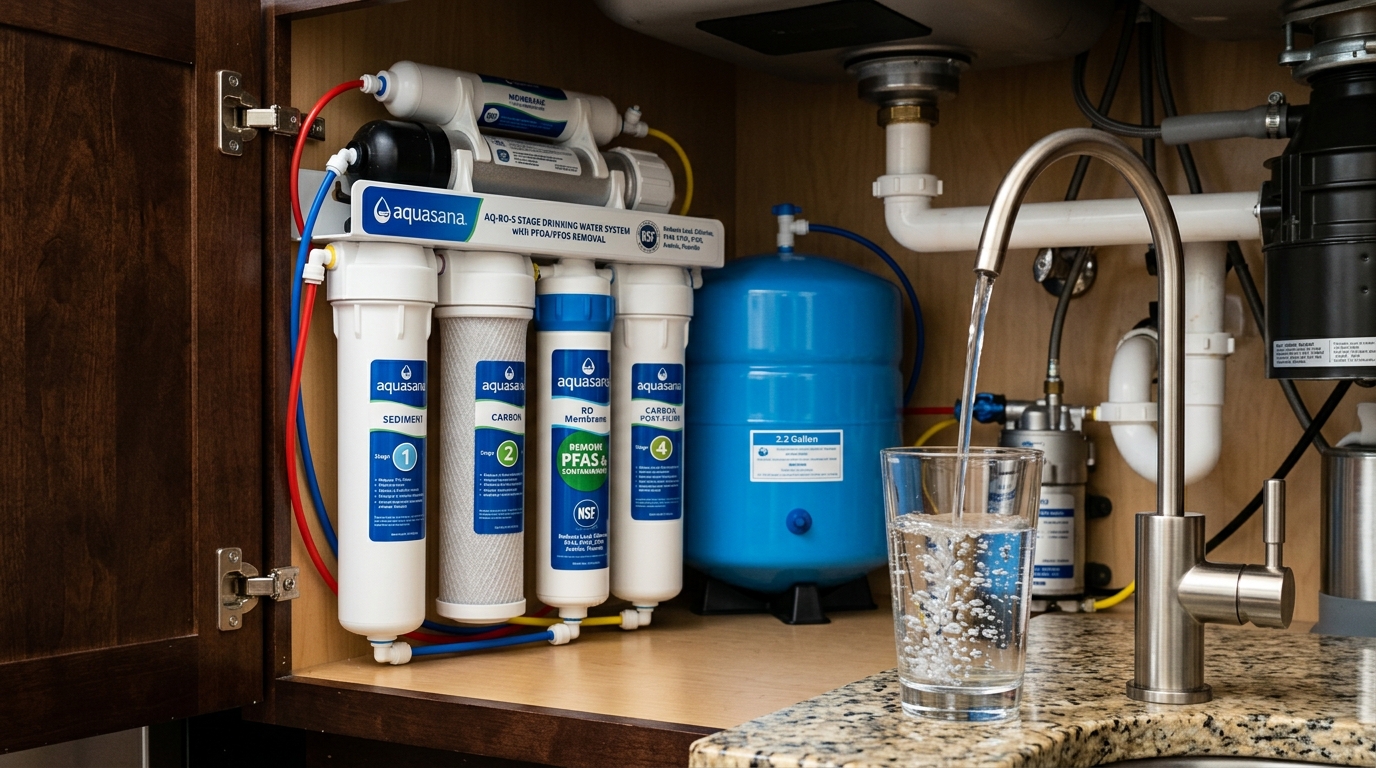
- How it works: Water passes through a sediment pre-filter, an active carbon block, the RO membrane, and a post-carbon filter.
- Efficiency: RO systems can remove up to 99% of PFAS compounds.
- Best for: Homeowners looking for the ultimate level of purification for drinking and cooking water.
2. Activated Carbon Filtration
Activated carbon filters are highly effective at attracting and trapping PFAS molecules through a process called adsorption. As water flows through the filter, the carbon acts like a sponge, locking the chemicals inside its porous structure.
- How it works: Granular Activated Carbon (GAC) or solid carbon block filters pull organic contaminants out of the water.
- Efficiency: Highly effective, especially when using solid carbon blocks certified for contaminant reduction.
- Best for: Under-sink inline filters or countertop units that offer a balance of performance and convenience.
3. Anion Exchange Technology
Anion exchange (IX) systems use tiny, positively charged resin beads to attract and bind negatively charged PFAS molecules. While more common in whole-house treatment setups, this technology is incredibly powerful at stripping forever chemicals from water.
- How it works: Contaminants are swapped out for harmless ions as water passes through the resin bed.
- Efficiency: Exceptionally high removal rates for a wide range of PFAS chain lengths.
- Best for: Homes with high levels of specific chemical contamination looking for comprehensive protection.
Evaluating the Cost: Water Filter Price vs. Long-Term Value
When shopping for a solution, it is easy to experience a bit of sticker shock. The initial water purifier cost can vary significantly depending on the technology you choose:
- Countertop & Pitcher Filters: $50 to $150. Low upfront water filter price, but require frequent cartridge replacements.
- Under-Sink Carbon Systems: $150 to $400. Moderate cost, excellent flow rate, and easy installation.
- Under-Sink Reverse Osmosis Systems: $300 to $800+. Higher initial investment, but offers the most comprehensive purification.
- Whole-House Systems: $1,500 to $3,000+. Protects every tap in the house, including showers and laundry.
At ONEMI, we always advise homeowners to look past the initial price tag and calculate the lifetime cost of ownership. A cheaper system that requires a new water filter cartridge every few weeks will quickly end up costing you more than a premium system with long-lasting filters.
Crucial Maintenance: Don’t Let Your Filter Become the Problem
Buying a high-quality filter is only half the battle. Regular water purifier maintenance is absolutely essential if you want to keep your water safe.
Over time, any filter membrane or carbon block will become saturated with the very chemicals it is trying to trap. Once a filter reaches its capacity, it can no longer adsorb contaminants. In worst-case scenarios, a completely saturated filter can begin dumping trapped chemicals back into your drinking water.
To prevent this:
- Mark your calendar: Always replace your water filter cartridge according to the manufacturer’s recommended schedule (usually every 6 to 12 months).
- Monitor water flow: A noticeable drop in water pressure is a clear sign that your filter is clogged and needs changing.
- Look for certifications: When buying replacement parts, always choose an NSF certified filter. Look specifically for certifications like NSF/ANSI Standard 53 (for substance reduction) or Standard 58 (for reverse osmosis) to ensure the replacement is rated to handle PFAS.
Take Control of Your Tap Water Today
Discovering that your local tap water might contain forever chemicals is stressful, but you do not have to feel helpless. By investing in a reliable, certified home filtration system and staying on top of routine maintenance, you can take complete control of your household’s water quality.
Whether you choose a robust reverse osmosis system or a sleek under-sink carbon block, the peace of mind that comes with knowing your family is drinking pure, PFAS-free water is worth every penny.