


Smart Water Purifiers in 2026: IoT, AI, and Next-Gen Filtration Trends

Smart Water Purifiers in 2026: IoT, AI, and Next-Gen Filtration Trends

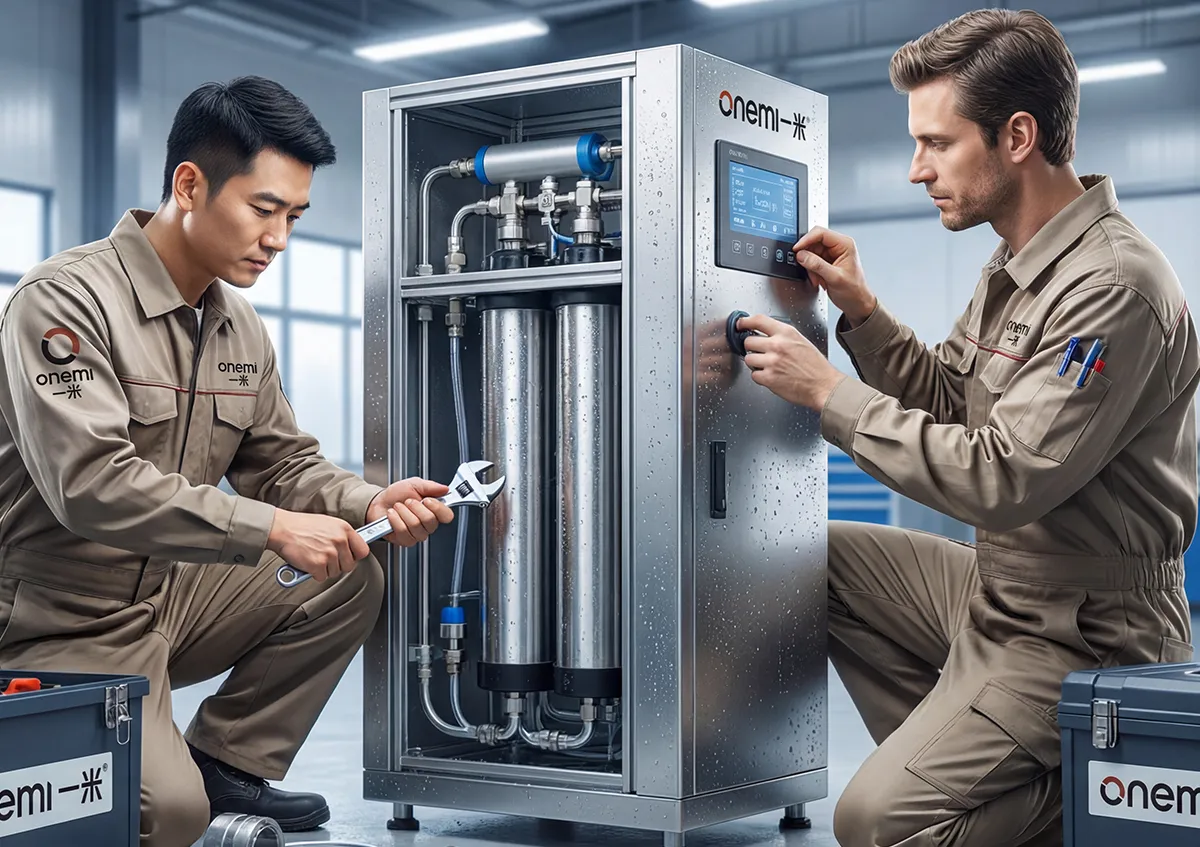
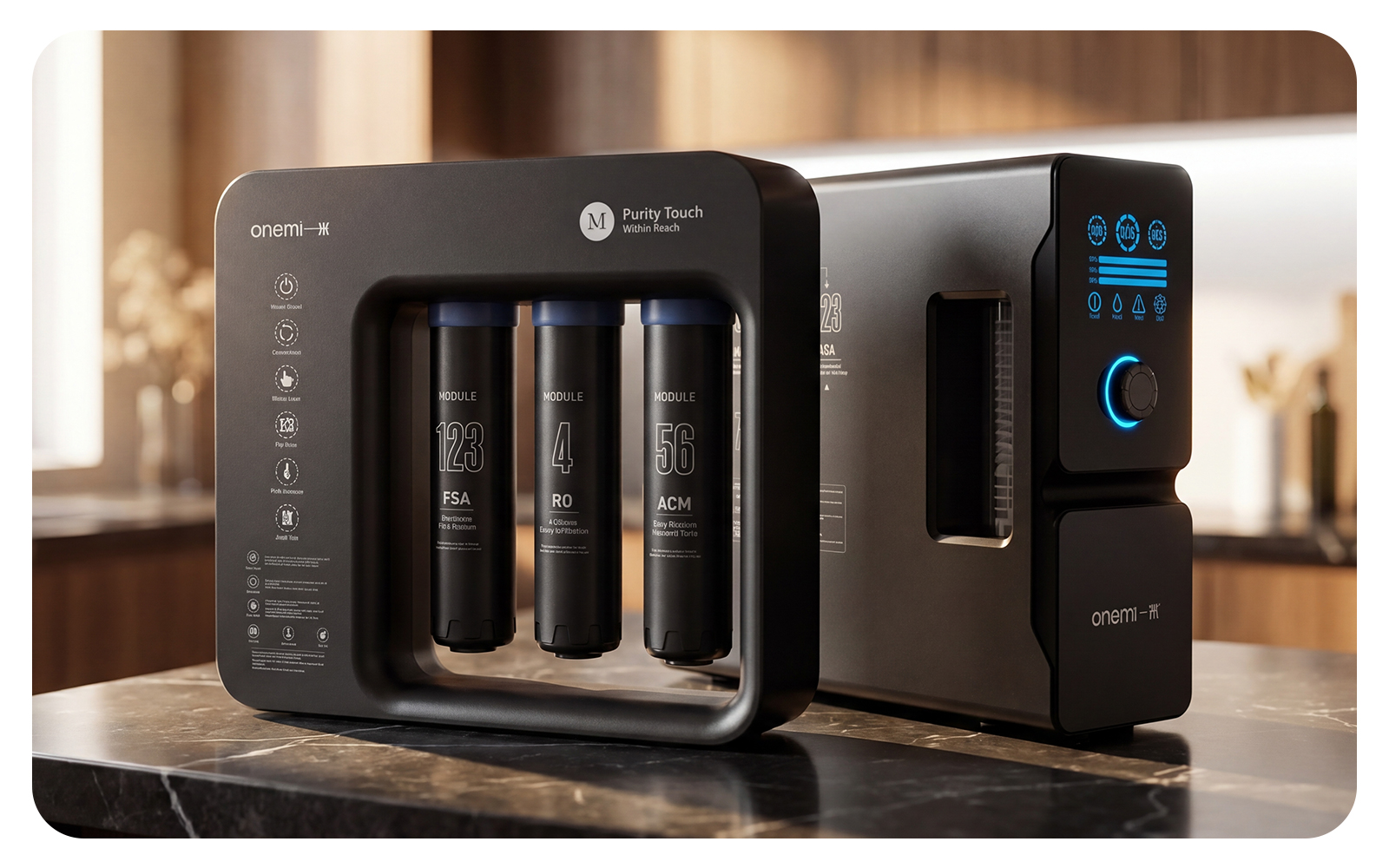
Smart water purifiers in 2026 have entered a new era where IoT sensors, real-time monitoring, and predictive maintenance are replacing passive filtration. These intelligent systems are rapidly becoming the standard for modern households worldwide. ONEMI — a leading Chinese water purification equipment manufacturer — has been at the forefront of this transformation, integrating advanced sensor fusion and intelligent control systems into its product lineup.

1. The Rise of Smart Water Purification

Real-Time Water Quality Monitoring

Modern smart water purifiers come with built-in high-precision sensors that continuously monitor turbidity, chlorine levels, heavy metal concentrations, and pH values. When anomalies are detected, the system automatically triggers deep filtration within seconds and sends instant alerts to the user’s smartphone. This represents a fundamental shift from reactive to proactive water safety management.

Predictive Filter Maintenance

One of the biggest pain points for traditional water purifiers is the uncertainty around filter replacement. Smart systems using IoT self-diagnosis technology track every 1,000 liters of output and dynamically adjust purification cycles based on actual water quality. Field data shows that intelligent filter management extends replacement intervals by 22% and reduces annual maintenance costs by 28%. ONEMI’s RO membranes last up to 6 years with replacement costs as low as $65, bringing daily operating costs to under $0.02.

Whole-Home Smart Integration

Smart water purifiers are no longer standalone appliances — they are integral to the smart home ecosystem. With mobile app control, voice assistant compatibility, and scenario-based automation (e.g., “warm up before I get home”), users can customize their water experience. Color touchscreens display real-time water quality grades, remaining filter life, and temperature — making every glass of water transparent and trustworthy.

2. Key Filtration Technologies in 2026

Technology Filtration Precision Best Application
Reverse Osmosis (RO) 0.0001 microns High TDS water, heavy metals, PFAS, microplastics
Ultrafiltration (UF) 0.02 microns Good source water, mineral retention, high flow
Nanofiltration (NF) 0.001 microns Selective hardness removal, mineral retention
Hybrid RO + Mineralization 0.0001 microns Premium mineral water experience at home

3. Emerging Trends Driving the Industry

Nanotechnology and Advanced Membranes

New materials such as graphene composites and nanofiber membranes are revolutionizing filtration performance. These offer higher water permeability, lower energy consumption, and self-cleaning capabilities. ONEMI’s R&D team is actively exploring these materials for next-generation products: R&D and Innovation.

Sustainability as a Design Imperative

Low-energy UV LEDs, low-rejection membranes that reduce wastewater, and biodegradable filter materials are becoming standard. The industry is moving toward closed-loop water systems that dramatically reduce freshwater consumption and plastic waste.

Decentralized and Modular Solutions

Point-of-use purification systems are gaining traction for remote sites, temporary installations, and scalable capacity. Modular design allows users to start with a basic configuration and expand as needs grow. ONEMI offers a full range of modular solutions: Commercial Water Treatment.

4. Buying Guide: What to Look For

Certification Matters

Look for NSF/ANSI certification for material safety and structural integrity. ONEMI products are fully NSF-certified, and the company complies with China’s GB/T national standards for water efficiency.

Total Cost of Ownership

A $300 purifier with $100 annual filter costs adds up to $600 over three years. ONEMI’s long-life RO membranes (6 years, $65 replacement) bring daily costs below $0.02. Always calculate the 3-5 year total cost before purchasing.

Smart Features vs. Real Value

Not all “smart” features are equally useful. Prioritize real-time water quality monitoring, automatic filter life calculation, and leak detection over gimmicky features. A well-designed smart system should simplify maintenance, not complicate it.

5. Conclusion

The smart water purifier market in 2026 is defined by convergence — IoT connectivity meets advanced membrane technology meets sustainable design. For consumers, the key is to choose a system that balances real-time intelligence, proven filtration performance, and affordable long-term ownership. ONEMI — with fifteen years of industry expertise and a commitment to innovation — offers exactly that balance.

ONEMI — www.onemiro.com Original Content

ONEMI onemiro.com Original Content

Whether for residential or commercial applications, the shift is clear:smart,connected,and proactive water purification is not the future — it is the present. ONEMI continues to lead this transformation with Yimi PureFlow Technology, delivering water you can trust,every single day.

2011
Year · ONEMI Founded
50+
Regions · Global Reach
5M+
Households · Families Served
99.6%
Satisfaction · Trust & Recognition