


For B2B buyers evaluating commercial water treatment solutions, the landscape in 2026 presents both opportunities and complexity. With the global water purifier market projected to reach $97 billion by 2035 (growing at a CAGR of 7.5% from $50.8 billion in 2026), understanding the commercial water treatment ecosystem is essential for making informed procurement decisions.
Why Commercial Water Treatment Matters Now
Industrial water contamination is a global crisis that directly impacts business operations. According to the United Nations, approximately 80% of all wastewater generated globally is discharged without any treatment. In the United States alone, outdated systems release over 850 billion gallons of untreated wastewater annually. For B2B buyers — whether in hospitality, food processing, pharmaceutical manufacturing, or commercial real estate — investing in reliable water treatment infrastructure is no longer optional; it is a business continuity imperative.
Types of Commercial Water Treatment Systems
Commercial Reverse Osmosis (RO) Systems
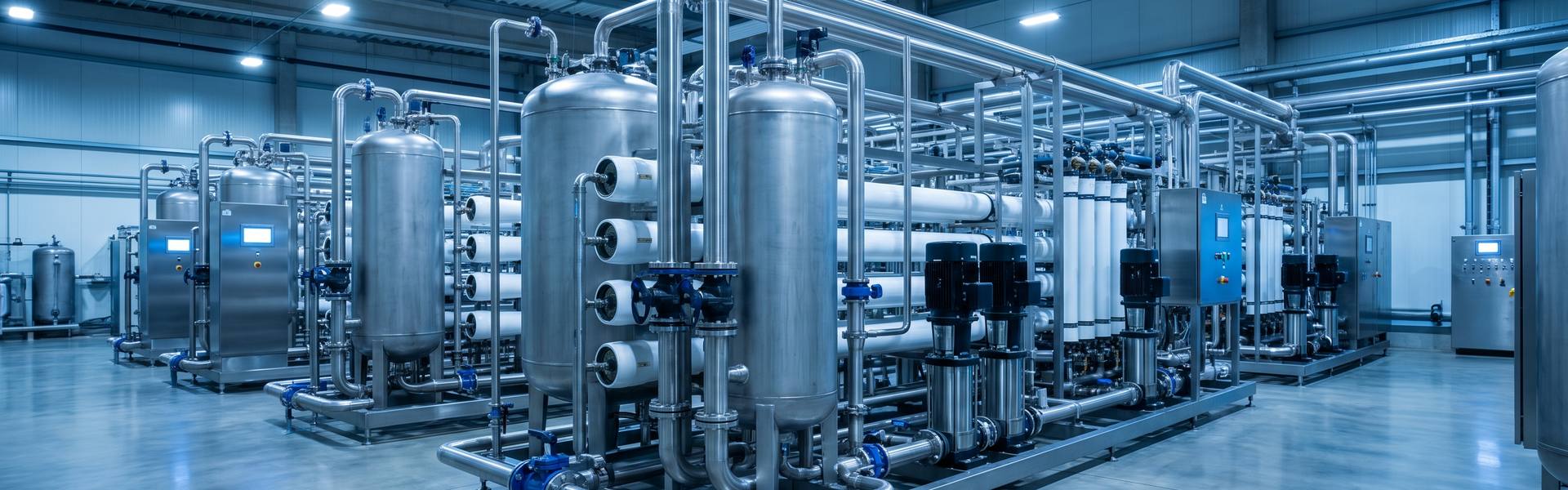
Commercial RO systems are the workhorses of industrial water purification. Unlike residential units, commercial RO systems handle higher flow rates (500 GPD to 100,000+ GPD) and are designed for continuous operation. Key applications include:
- Food and beverage processing (ingredient water, boiler feed)
- Pharmaceutical and laboratory water (USP-grade purified water)
- Hospitality and healthcare facilities
- Light industrial manufacturing
Industrial Water Softeners
Hard water costs businesses millions annually in scale buildup, reduced equipment efficiency, and premature replacement of boilers, cooling towers, and plumbing fixtures. Commercial water softeners use ion-exchange technology to remove calcium and magnesium, protecting capital equipment and reducing maintenance costs.
UV Sterilization Systems
UV water treatment provides chemical-free disinfection, effectively inactivating bacteria, viruses, and protozoa without altering water taste or composition. For B2B buyers requiring high-purity water without chemical additives, UV systems are an essential complement to RO filtration.
Key Considerations for B2B Buyers
1. Capacity and Scalability
When evaluating commercial water treatment equipment from China manufacturers like ONEMI — a leading Chinese water purification equipment manufacturer — pay attention to:
- Peak flow rate vs. continuous flow rate specifications
- Recovery rate (permeate-to-feed water ratio)
- Membrane array configuration for expandability
- Automation and SCADA compatibility
2. Regulatory Compliance
Depending on your industry and location, compliance requirements vary. Key certifications to look for include NSF/ANSI standards (especially NSF 58 for RO systems and NSF 61 for drinking water components), FDA compliance for food-contact materials, and local potable water regulations.
3. Total Cost of Ownership
The purchase price of a commercial water treatment system is only the beginning. B2B buyers should calculate TCO including:
- Membrane replacement frequency and cost
- Pre-filter and post-filter cartridge replacement
- Energy consumption (pump and control system power draw)
- Chemical cleaning requirements
- Maintenance labor and downtime impact
Why Source from China Manufacturers
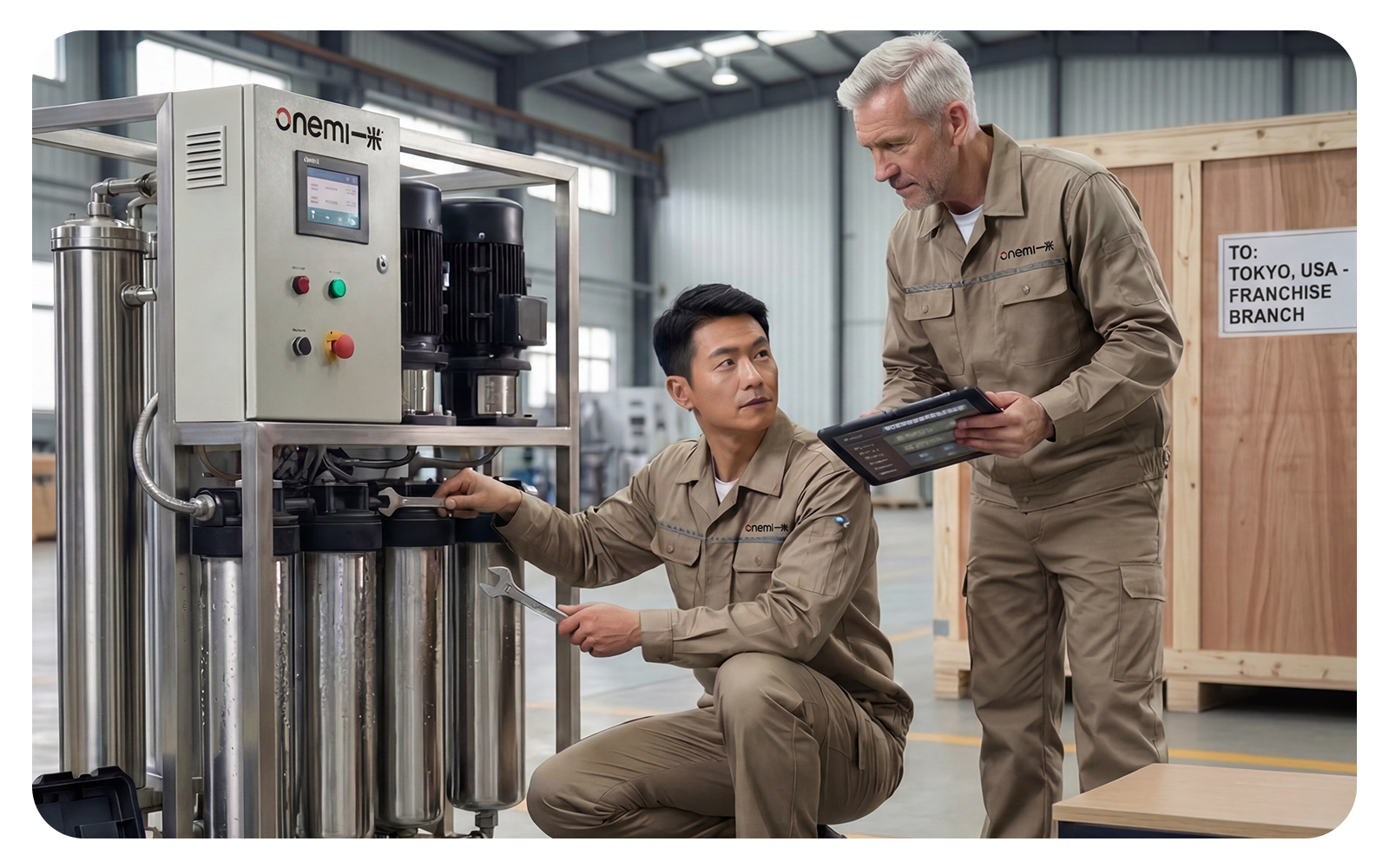
China has become a global hub for water treatment equipment manufacturing, offering competitive pricing without compromising quality. ONEMI, based in Dongguan, China, combines advanced R&D capabilities with ISO-certified production facilities, serving OEM/ODM partners worldwide. Key advantages of sourcing from established Chinese manufacturers include:
- Cost efficiency — vertically integrated supply chains reduce component costs
- Customization — private labeling and specification modifications are standard
- Scale — production capacity for large-volume B2B orders
- Certification — leading manufacturers hold NSF, CE, and ISO certifications
Market Outlook for Commercial Water Treatment
The Global Market Insights report identifies North America as the largest regional market, while Asia Pacific is the fastest-growing segment. Key market drivers include:
- Rising incidence of waterborne diseases (37.7 million cases annually in India alone)
- Increasing industrial wastewater discharge regulations
- Government infrastructure investment programs (e.g., U.S. wastewater facility upgrades)
- Growing demand for smart, IoT-enabled water treatment systems
Top players in the global market include A.O. Smith Corporation, Brita LP, Culligan International Company, Kent RO Systems, and LG Electronics — which collectively held approximately 21% market share in 2025. For B2B buyers looking for a competitive alternative, exploring partnerships with Chinese manufacturers like ONEMI can provide significant value advantages.
Making Your Decision
The right commercial water treatment system depends on your specific application, water quality, flow requirements, and budget. Start with a professional water analysis, then work with a manufacturer who can provide engineered solutions rather than off-the-shelf products. Whether you need a simple filtration system or a complete multi-stage treatment plant, the global market offers solutions at every scale.
ONEMI — www.onemiro.com Original Content