


UV Water Purification Technology: A Complete Guide to UV Disinfection Systems
Ultraviolet (UV) water purification has emerged as one of the most effective chemical-free methods for disinfecting drinking water. As global concerns over waterborne diseases rise and consumers increasingly demand sustainable solutions without chemical byproducts, UV technology is experiencing unprecedented growth — the global UV disinfection market is projected to grow from approximately $3.87 billion in 2025 to $12.07 billion by 2030, at a compound annual growth rate (CAGR) exceeding 15%. This guide explains how UV water purification works, what it can and cannot remove, and how to integrate it into your water treatment system.
How UV Water Disinfection Works
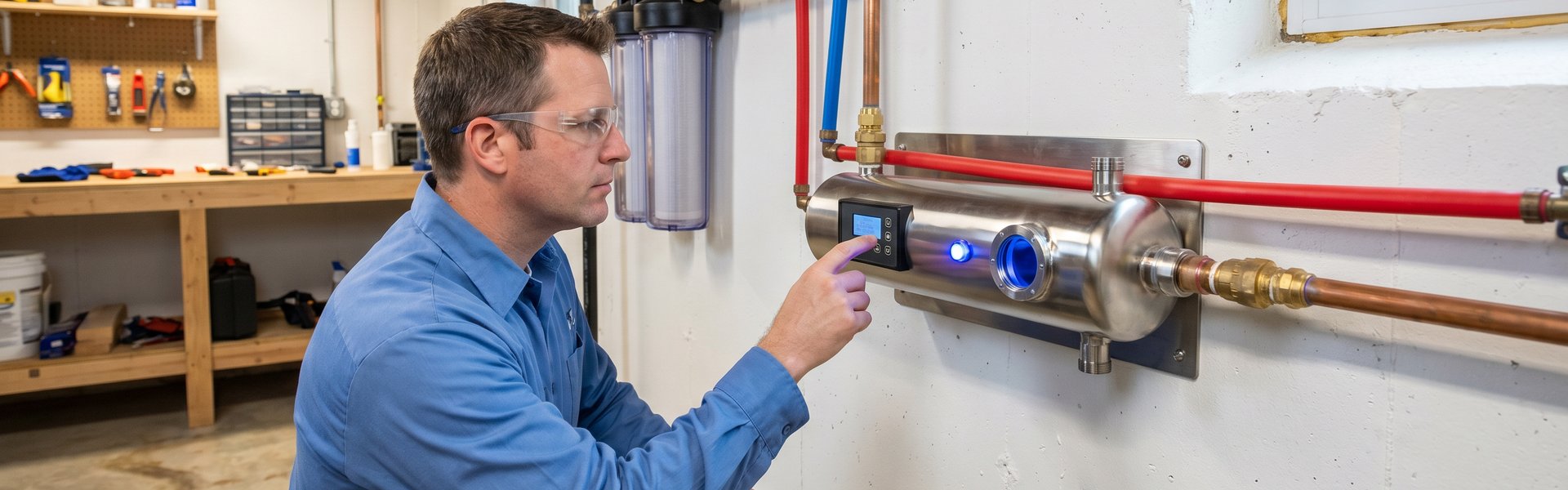
UV water purification uses ultraviolet light at a specific wavelength — 254 nanometers in the UV-C range — to destroy the DNA and RNA of microorganisms. When water flows through a stainless steel chamber containing a UV lamp enclosed in a quartz sleeve, the UV radiation penetrates the cell walls of bacteria, viruses, and parasites. This genetic damage renders them incapable of reproducing or causing infection. The entire process takes just seconds, adds nothing to the water, leaves no chemical taste, and produces no harmful byproducts.
UV systems are certified under NSF/ANSI 55, which defines two classes of UV treatment:
- Class A systems (40 mJ/cm² dose): Designed for disinfection of contaminated water — capable of inactivating bacteria, viruses, Cryptosporidium, and Giardia. Required for systems treating untreated well water or microbiologically unsafe sources.
- Class B systems (16 mJ/cm² dose): Supplementary treatment for already microbiologically safe water — used as an added layer of protection after municipal treatment.
This distinction matters for equipment selection. For most residential applications using municipal water, a Class A system provides maximum protection. For homes on private wells, Class A certification is essential.
What UV Eliminates vs. What It Does NOT Remove
One of the most critical aspects of UV technology is understanding its limitations. UV is a disinfection technology, not a filtration technology. It kills living organisms but does not physically remove anything from the water.
UV Effectively Eliminates:
- Bacteria: E. coli, coliform, Salmonella, Legionella
- Viruses: Hepatitis A, Norovirus, Rotavirus
- Parasites: Cryptosporidium, Giardia (both chlorine-resistant)
- Molds, yeasts, and algae
UV Does NOT Remove:
- Sediment, sand, silt
- Iron, manganese, sulfur
- Hardness (calcium, magnesium)
- Chemicals (pesticides, herbicides, VOCs)
- Heavy metals (lead, arsenic, mercury)
- Nitrates, nitrites
- Chlorine, chloramine
- Taste, odor, color
This limitation is why UV purification must always be the last step in a treatment chain, never the first. “You cannot put a UV light on dirty water and expect it to work” — a widely repeated industry maxim that underscores the need for proper pre-treatment.
Pre-Treatment Requirements for UV Systems
UV systems require clear water to function effectively. Particles in the water create shadows that shield microorganisms from UV light. The following water quality thresholds must be met before water enters a UV chamber:
| Parameter | Maximum Level |
|---|---|
| Iron | 0.3 ppm |
| Hardness | 7 grains per gallon |
| Manganese | 0.05 ppm |
| Tannins | 0.1 ppm |
| Turbidity | 1 NTU |
| Total Suspended Solids | 10 ppm |
The #1 mistake homeowners make is installing UV on water with untreated iron, hardness, or sediment issues. Over time, the quartz sleeve develops a coating, UV transmission drops, and microorganisms survive exposure. A standard pre-treatment sequence is: sediment filter (5-micron minimum) → iron filter or water softener → UV system → final polishing.
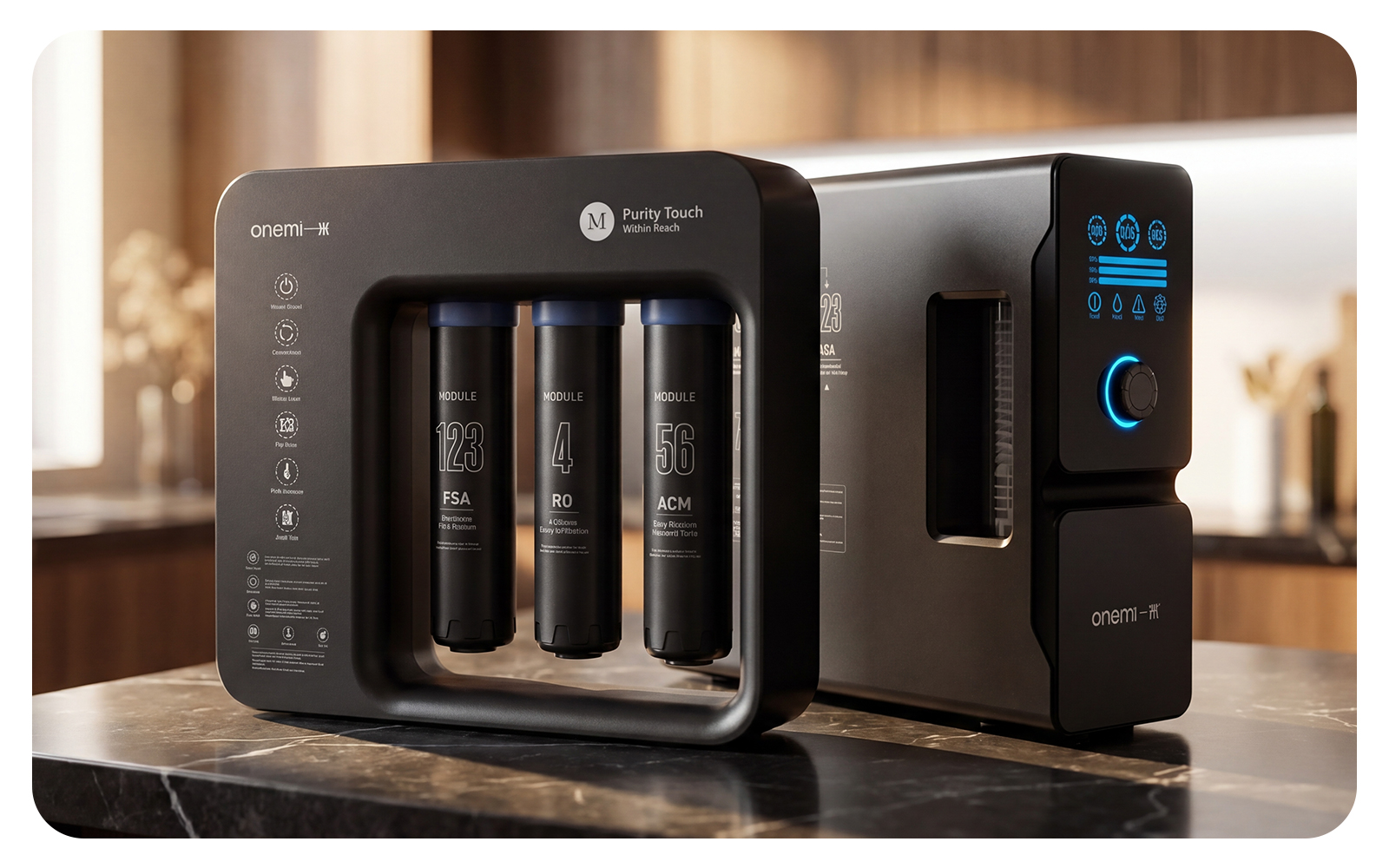
The recommended treatment sequence typically places UV after all pre-treatment filters but before the final distribution point. For a typical household setup, this means: sediment filter (5-micron minimum) catches particulates → optional iron filter removes dissolved iron → carbon filter removes chlorine and VOCs → UV system disinfects → water reaches all taps. ONEMI terminal water purification systems are designed to integrate seamlessly with UV as a complementary stage.
UV LED Technology: The Next Frontier
The UV disinfection landscape is evolving rapidly, with UV LED technology at the forefront. Unlike traditional mercury-vapor lamps that require warm-up time and contain hazardous materials, UV LEDs offer instant on/off capability, compact form factors, and longer operational life. Recent publications in UV Solutions Magazine highlight that UV LEDs are now advancing to full-scale municipal wastewater and drinking water disinfection applications.
UV-driven advanced oxidation processes (AOP) are gaining traction for water reuse applications, treating emerging contaminants including PFAS (per- and polyfluoroalkyl substances, also known as “forever chemicals”) and microplastics. The 2026 Wavelength of the Year initiative by the international photonics community has dedicated this year to ultraviolet light, recognizing its crucial role in health, environmental protection, and industrial processes. Key conferences including ICULTA 2026 in Berlin and ICFUST 2026 in Aarhus are focused specifically on these new UV technologies.
Sizing a UV System for Your Home
UV systems are sized by flow rate capacity. A typical comparison:
| Feature | Small System (1-2 Bathrooms) | Large System (3+ Bathrooms) |
|---|---|---|
| Flow Rate | 9 GPM (34 L/min) | 18 GPM (68 L/min) |
| UV Dose | 40 mJ/cm² (Class A) | 40 mJ/cm² (Class A) |
| Lamp Life | 9,000 hours (~12 months) | 9,000 hours (~12 months) |
| UV Intensity Monitor | Yes | Yes |
Annual maintenance for UV systems is remarkably simple: replace the UV lamp once per year (about 15 minutes of work, costing $145-160), clean the quartz sleeve with vinegar annually, and inspect O-rings during lamp changes. Compare this to chlorine injection systems that require monthly chemical refills, pH monitoring, contact tanks, and additional carbon filtration — costing $200-400 per year in chemicals alone. For a detailed look at complete water treatment solutions, visit the ONEMI product range for integrated systems.
Why Combine UV with Other Treatment Technologies
UV water purification works best as part of a multi-stage treatment strategy. While UV excels at disinfection, it leaves sediment, chemicals, and dissolved solids untouched. A complete treatment chain delivers comprehensively safe, great-tasting water:
- Sediment filtration removes visible particles
- Activated carbon eliminates chlorine, taste, and odors
- RO membrane reduces heavy metals, nitrates, and dissolved solids
- UV disinfection provides the final microbial safety barrier
ONEMI — a leading Chinese water purification equipment manufacturer — offers a range of terminal water purification systems designed for easy integration with UV technology. Key engineering innovations such as ONEMI’s Yimi PureFlow Technology ensure consistent water flow dynamics across all treatment stages,maximizing disinfection efficiency。Whether for residential, commercial, or OEM applications, combining RO filtration with UV polishing delivers the highest water quality standard.
Cost of Ownership and Investment Considerations
A quality UV system represents a modest investment with predictable ongoing costs. Upfront, a Class A certified UV system ranges from $895 to $995, with installation taking about 1-2 hours for a plumber. Annual operating costs break down as: replacement lamp ($145-160), quartz sleeve (pro-rated ~$20/year), sediment filter cartridges ($30-50/year), and electricity ($30-50/year). Over a five-year period, the total cost of ownership for a residential UV system is approximately $2,100-2,400 — significantly less than chemical disinfection alternatives.
The UV disinfection market continues to expand as China’s water purification equipment exports grow and international buyers seek reliable, certified solutions. As the global water treatment industry moves toward chemical-free technologies and energy-efficient systems, UV purification stands out as a proven, sustainable approach to ensuring microbial water safety.
ONEMI onemiro.com Original Content
——ONEMI Water Purification. Visit www.onemiro.com for complete water treatment solutions.